Hunting an Alpine Basin in the Mountain WMUs
The crisp mountain air hits differently when you're preparing to hunt an alpine basin. It's a vast, challenging, and incredibly rewarding environment, but it demands meticulous preparation and a deep understanding of its unique demands. Many hunters feel overwhelmed by the sheer scale and difficulty of these high-elevation hunts, often wondering how to even begin tackling such formidable terrain. This guide will walk you through everything you need to know to effectively hunt Alberta's stunning alpine basins in the Mountain Wildlife Management Units (WMUs), from essential gear to strategic approaches and crucial safety considerations.
Understanding Alberta's Mountain WMUs and Alpine Basins
Hunting in Alberta's mountainous regions is a truly distinct experience, far removed from the rolling farmlands or dense boreal forests. The Mountain WMUs are a world unto themselves, offering breathtaking scenery and some of the most sought-after big game animals in the province. However, they also present unique challenges that require a different skillset and mindset.
The Unique Environment of Alpine Basins
Alpine basins are essentially high-elevation valleys or depressions found above the treeline, often characterized by vast open slopes, rocky scree, persistent snowfields, and sparse, hardy vegetation. These areas typically begin where the trees thin out and eventually give way to tundra-like conditions, usually around 6,000 to 7,000 feet (1,800 to 2,100 meters) of elevation, sometimes lower depending on latitude and specific topography.
The terrain here is rugged and unforgiving. You'll encounter steep inclines, treacherous rock slides, and sudden drops. Weather can change in an instant, transitioning from sunny skies to biting wind, driving rain, or even snow, even in the middle of summer or early fall. The air is thinner, making physical exertion much more demanding. Water sources might be abundant from snowmelt early in the season but can become scarce later on. Understanding these environmental factors is the first step to planning a successful hunt. Game animals in these environments are incredibly adapted, utilizing the vastness and ruggedness to their advantage, making them a formidable challenge for any hunter.
Key Game Species in the Alpine
When you venture into Alberta's alpine basins, you're primarily pursuing specialized mountain game. These are animals built for the high country, and finding them requires keen observation and a willingness to go where others won't.
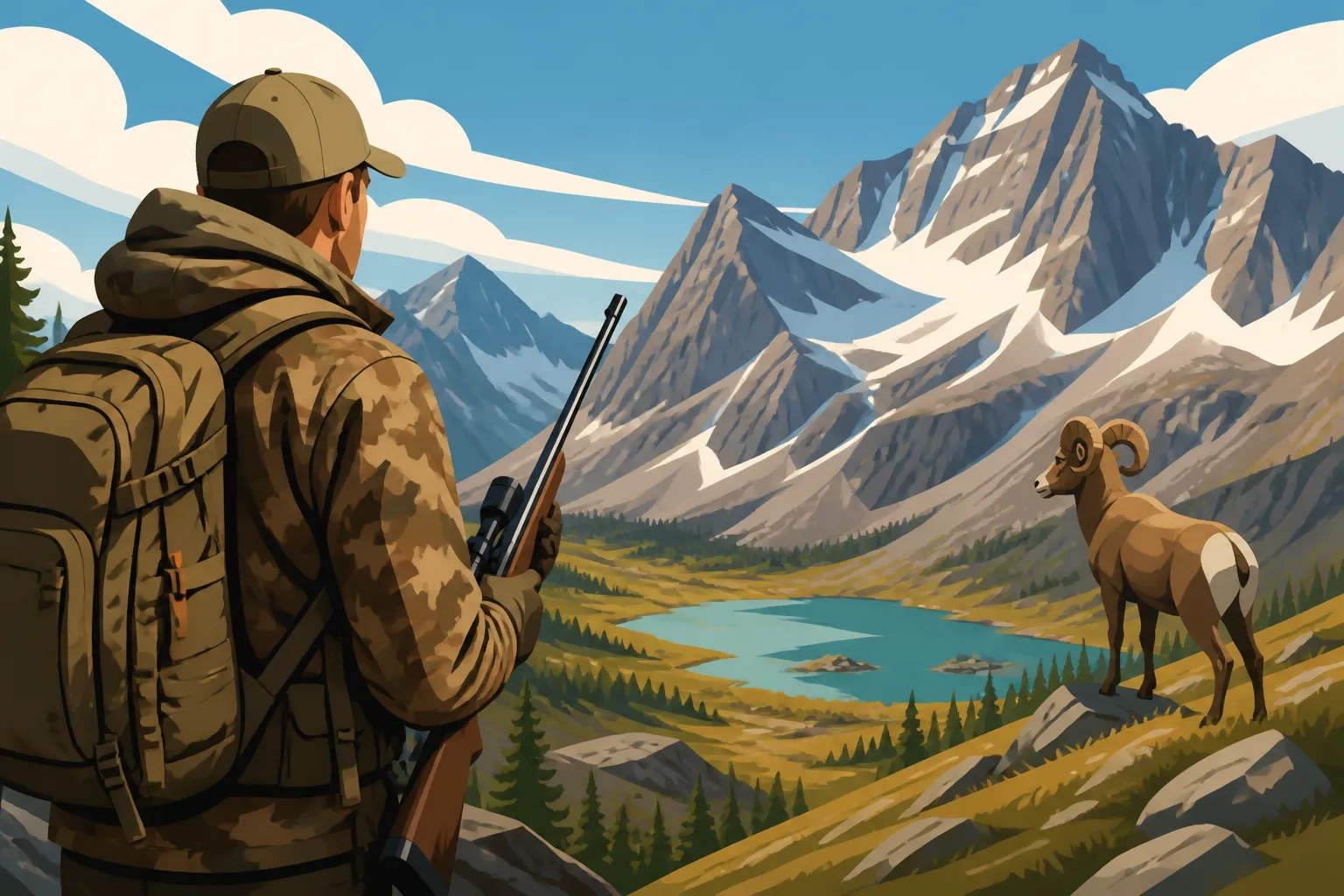
- Bighorn Sheep: The quintessential alpine trophy. Bighorn sheep thrive in steep, rocky terrain where their agility and incredible eyesight give them an undeniable edge. They often frequent high ridges, sheer cliffs, and, of course, the expansive alpine basins where they can feed on grasses and forbs, especially in areas with good escape cover nearby. Look for them on south-facing slopes in early morning or late evening, as these slopes often melt out first and offer nutritious forage. Patience is key when hunting these magnificent animals; it's often a game of glassing for hours, if not days, to locate a legal ram. If you're considering a sheep hunt, research on Bighorn Sheep in Alberta's Mountains is essential.
- Mountain Goats: While less common to draw a tag for, mountain goats inhabit the most extreme, precipitous cliffs and rock faces. You'll find them at even higher elevations than sheep, often clinging to terrain that seems impossible for any large mammal to navigate. Their pure white coats offer camouflage against snowfields and rocky outcrops. Locating them often means looking at the absolute highest, steepest points within a basin.
- Mule Deer: While often associated with badlands or foothills, certain populations of mule deer, particularly in the more western WMUs, will push into the alpine during the summer months, seeking cooler temperatures and abundant forage. They might be found in pockets of subalpine timber bordering the true alpine or even out on the open slopes. These high-country mule deer can be surprisingly large, as they spend the summer packing on weight before retreating to lower elevations with the onset of heavy snows. Mule Deer in Alberta's Open Country provides a broader context, but remember that alpine populations behave differently.
- Elk: Similar to mule deer, some elk herds will utilize higher elevations, especially during the summer and early archery seasons, before the rut kicks them into more traditional breeding grounds or deep cold pushes them down. You might find bachelor bull groups feeding in lush alpine meadows within the basins. Their presence often indicates a slightly gentler, more vegetated basin edge, rather than sheer rock.
Understanding the habits and preferred habitats of these species within the alpine environment is critical for focusing your efforts.
Accessing Remote Mountain Terrain
The allure of alpine hunting is often directly tied to its remoteness. Getting into these areas is rarely a walk in the park and often requires significant effort and planning.
- Hiking/Backpacking: For most hunters, this is the primary mode of access. You'll often hike for several hours, or even days, to reach suitable hunting grounds. This means carrying all your gear on your back, which ties directly into the need for lightweight, efficient packing. Expect to gain significant elevation, cross rough terrain, and potentially navigate through dense timber before breaking out above the treeline. This physically demanding approach is often why Backpacking Into Alberta Sheep Country is a common strategy.
- Horseback: For those with access to horses, or who choose to hire an outfitter specializing in pack trips, horses can greatly reduce the physical burden of getting into deep mountain country. They allow you to cover more ground, carry heavier loads, and establish a base camp further into the backcountry. However, horses also come with their own set of logistics, including feed, handling, and regulations on where they can be used. Willmore Wilderness Park, for example, is famous for Hunting Willmore Wilderness on Horseback.
- Limited Road Access: While some WMUs bordering the Eastern Slopes might have forestry roads that provide a starting point, direct vehicle access into true alpine basins is extremely rare, if not impossible. Roads typically end in the subalpine or foothills, requiring a substantial hike from there. Always consult detailed maps like those from onX Hunt to understand road networks and public land access points. Remember, many of the best alpine basins are found deep within wilderness areas or Public Land Use Zones (PLUZs) with strict vehicle restrictions.
Regardless of your chosen method, expect your journey to the hunting area to be a significant part of the challenge and adventure. Factor in ample time for travel, and don't underestimate the physical demands.
Essential Gear and Physical Preparation for Alpine Hunting
Successfully hunting in Alberta's alpine basins is as much about your physical and mental readiness as it is about hunting skill. The environment demands respect, and your gear choices can literally make or break your hunt.
Packing Light and Smart
Every ounce counts when you're hiking into the high country. Your pack needs to be meticulously organized, containing only what is absolutely necessary for safety, comfort, and success.
- High-Quality Backpack: Invest in a pack that can comfortably carry heavy loads, as you'll be packing out meat and a trophy if successful. Look for an internal or external frame pack with good suspension and plenty of adjustability.
- Layered Clothing System: The mountain weather is notoriously fickle. You need layers that can be added or removed as conditions change.
- Base Layers: Moisture-wicking synthetics or merino wool to manage sweat.
- Mid-Layers: Fleece or puffy insulation for warmth.
- Outer Shell: Waterproof and windproof jacket and pants are non-negotiable. Look for durable, breathable materials.
- Headwear and Gloves: Crucial for retaining heat. Bring a warm hat and at least two pairs of gloves (lightweight and waterproof/insulated).
- For more on this, check out What to Wear on a Late Season Hunt, as even early alpine seasons can feel like late season.
- Sturdy Boots: Your feet are your most important asset. Waterproof, ankle-supporting boots with stiff soles for rocky terrain are essential. Break them in well before your trip!
- Navigation Tools: A reliable GPS device, a detailed topographical map, and a compass are paramount. I always advocate for a digital mapping solution like onX Hunt. It allows you to download offline maps, mark water sources, potential game trails, and escape routes. It also helps immensely with pre-trip scouting by identifying terrain features like benches, saddles, and potential bedding areas from home. Supplement this with a traditional paper map and compass as a backup.
- Optics: High-quality binoculars (10x-15x) are your primary scouting tool in the open alpine. A spotting scope (20-60x) mounted on a lightweight tripod is essential for evaluating animals at long distances, especially for judging rams or goats. You'll spend hours glassing, so clear, bright optics are a must.
- Shelter: A lightweight, durable backpacking tent suitable for mountain conditions, or a bivy sack if you're going ultra-minimalist. Don't forget a warm sleeping bag (rated for colder than you expect) and a sleeping pad for insulation and comfort.
- Cooking System: A small, lightweight stove, fuel, and dehydrated meals. Bring more food than you think you'll need; calories are crucial for energy in the mountains.
- Water Filtration/Purification: You'll need access to clean drinking water. A filter, purification tablets, or a UV purifier are essential.
- First-Aid Kit: Comprehensive and tailored for backcountry use, including blister treatment, pain relievers, and any personal medications.
- Emergency Communications: A satellite messenger or satellite phone is highly recommended, as cell service is non-existent in most alpine areas. This is your lifeline in an emergency.
- Other Essentials: Headlamp with extra batteries, knife, fire starter, repair kit, trekking poles (a lifesaver on steep descents), and bear spray. Remember to carry bear spray in an accessible holster.
| Item Type | Key Considerations | Why It's Crucial in the Alpine |
|---|---|---|
| Backpack | Internal/External frame, 60-90L, good suspension | Carrying heavy loads (meat, gear) over rugged terrain. |
| Boots | Stiff sole, waterproof, ankle support, broken in | Stability, traction, and comfort on steep, rocky, wet ground. |
| Layers | Moisture-wicking, insulating, waterproof/windproof shell | Adapt to rapid temperature and weather changes, prevent hypothermia. |
| Optics | 10-15x binos, spotting scope, tripod | Locating game in vast open basins, judging trophy quality. |
| Navigation | GPS (onX Hunt), map, compass, satellite messenger | Staying found, emergency communication where cell service is absent. |
| Shelter | Lightweight tent/bivy, warm sleeping bag, pad | Protection from extreme weather, restful sleep at altitude. |
| Water | Filter/purifier, multiple bottles | Staying hydrated in a physically demanding environment. |
| First Aid | Comprehensive kit, blister care, medications | Dealing with injuries or illness far from medical help. |
| Bear Spray | Accessible holster, fresh canister | Critical defense in unpredictable encounters. |
Physical Demands and Conditioning
Alpine hunting is not for the faint of heart. It is physically grueling, requiring superior cardiovascular fitness, strength, and endurance. The reduced oxygen at higher elevations means your body works harder, and even simple tasks can become exhausting.
- Cardiovascular Fitness: Start training months in advance. Incorporate activities like running, hiking with a weighted pack, stair climbing, and cycling. Simulate the conditions you'll face by hiking steep trails with a pack weighing 30-50 pounds.
- Strength Training: Focus on core strength, legs, and back. Squats, lunges, deadlifts, and planks will build the muscle groups you need to ascend and descend steep terrain, and to pack out heavy loads.
- Altitude Acclimatization: If you're coming from a lower elevation, try to arrive in the general mountain area a day or two before your hunt to allow your body to begin adjusting. Even a small amount of acclimatization can make a big difference. Symptoms of altitude sickness can include headaches, nausea, dizziness, and fatigue. Listen to your body and don't push too hard if you're feeling unwell. A great resource to consult for pre-hunt readiness is Fitness for an Alberta Sheep Hunt, as the physical demands are very similar.
Navigation and Safety in the High Country
Beyond fitness and gear, your knowledge of navigation and safety protocols is paramount. Getting lost or injured in the alpine can quickly turn dangerous.
- Master Your Tools: Know how to use your GPS, map, and compass intuitively before you're in a stressful situation. Practice finding your location, setting waypoints, and following bearings. Applications like onX Hunt are invaluable for identifying property lines, public land, and even potential water sources, helping you avoid accidental trespass and plan your route efficiently.
- Share Your Plan: Always let someone responsible know your detailed itinerary, including your route, expected return date, and emergency contacts.
- Weather Awareness: Monitor mountain weather forecasts diligently, but always be prepared for sudden, unforecasted changes. Learn to recognize the signs of an approaching storm. Hunting Alberta Winter Weather Safely holds many lessons applicable to alpine conditions, even in warmer months.
- Bear Safety: You're in bear country. Carry bear spray, know how to use it, and store food properly to avoid attracting bears to your camp. Make noise when moving through thick brush, especially in subalpine areas.
- Emergency Procedures: What's your plan if someone gets injured? What if you get separated from your hunting partner? Discuss these scenarios beforehand. A satellite messenger can send pre-programmed "I'm OK" messages or allow two-way communication with rescue services if needed.
Strategies for Locating and Stalking Game in Alpine Basins
Once you're physically prepared and your gear is dialed in, the actual hunt in an alpine basin becomes a game of strategy, patience, and meticulous execution. The vastness of the landscape means traditional "still hunting" or "bush crashing" tactics are largely ineffective.
Effective Scouting and Glassing Techniques
Glassing is the cornerstone of alpine hunting. Your optics will be your best friend, allowing you to cover immense amounts of terrain from a single vantage point.
- Find a High Vantage Point: Your first priority upon entering a new basin should be to ascend to a spot that offers an expansive view. This could be a ridge, a knoll, or a prominent rock outcrop. Set up your spotting scope and binoculars on a tripod for steady viewing.
- Systematic Grid Search: Don't just scan aimlessly. Divide the landscape into sections and methodically grid-search each one. Start close and work your way out, or vice versa. Pay attention to subtle details: a patch of contrasting colour, a flicker of movement, or an unnatural shape. Many hunters find it useful to use a timer, spending 10-15 minutes on each small section before moving to the next.
- Focus on Key Features: Concentrate your glassing efforts on areas where animals are likely to be. This includes feeding areas (lush green pockets, especially on south-facing slopes), bedding areas (often small benches, saddles, or rocky depressions with good escape routes and sun exposure), water sources, and travel corridors (game trails along contours or through broken terrain).
- Utilize GoHunt and onX Hunt for Pre-Scouting: Before you even set foot in the field, use online tools like GoHunt and onX Hunt to identify potential vantage points, animal hotspots, and terrain features. GoHunt often provides valuable draw odds and species information for specific WMUs, helping you narrow down productive areas. onX Hunt is then invaluable for identifying public lands, topographical features, and marking potential routes and glassing locations. This allows you to arrive with a well-researched plan, rather than just wandering.
- Patience is a Virtue: Alpine game can blend in incredibly well. You might glass an area for hours, take a break, and then re-glass it to discover an animal you completely missed. The morning and evening hours, when animals are most active, are prime glassing times, but don't discount midday; animals often bed in spots that offer the best views and escape. For more insights into this, refer to Glassing Alpine Basins for Bighorn Sheep.
Reading the Terrain and Animal Behavior
Understanding how mountain game uses the landscape is crucial for predicting their movements and finding them efficiently.
- Bedding Areas: Animals will seek out bedding areas that offer security, thermoregulation, and good visibility. These are often on benches or small knolls that allow them to see danger approaching from below. South-facing slopes are popular in cooler weather for warmth, while north-facing slopes might be preferred during hot spells. They'll also bed in relation to escape cover, whether that's a cliff face or a dense patch of timber in the subalpine.
- Feeding Patterns: During feeding times (typically early morning and late afternoon/evening), animals will gravitate towards areas with lush vegetation. After snowmelt, new green growth emerges, creating attractive pockets of forage. Observing these patterns helps you predict where animals will be at different times of day.
- Travel Corridors: Animals use established trails to move between feeding, bedding, and watering areas. Look for these faint lines traversing slopes or leading through saddles and passes. These can be prime ambush points, though stalking in the open alpine generally means getting to them rather than waiting for them.
- Wind: The wind in the mountains is notoriously shifty. Swirling thermals in the morning as the air warms and inversions in the evening as it cools can make scent control a nightmare. Always be mindful of the wind direction and how it might carry your scent. Watch the clouds, feel the air on your face, or use a wind indicator to understand its subtle shifts.
The Art of the Stalk in Open Country
Once you've located your target animal and determined it's legal (if applicable, e.g., Judging a Full-Curl Bighorn Ram), the stalk begins. This is often the most challenging and exhilarating part of alpine hunting.
- Plan Your Approach: Before you move, meticulously plan your route to the animal. Consider the wind direction, available cover (even a small rock can offer concealment), and potential escape routes for the animal. Use your onX Hunt app to map out elevation changes and contours that might provide hidden approaches.
- Use the Terrain: The mountain terrain itself is your best cover. Use ridges, gullies, rock formations, and even slight depressions to stay out of sight. Move slowly and deliberately, taking advantage of every fold in the earth.
- Wind is Critical: Never ignore the wind. A stalk upwind is often preferable, but sometimes impossible. You might need to make a long, circuitous route to get into a favorable position. If the wind is swirling or unpredictable, you might need to back off and wait for more stable conditions.
- Patience and Stealth: This cannot be overstated. Move at a snail's pace, pausing frequently to re-evaluate the animal's position and look for other animals that might bust you. Watch for head turns and tail flicks, which can indicate an animal is becoming aware of its surroundings.
- Practice Long-Range Shooting: Shots in the alpine can often be at extended distances, sometimes across valleys. Practice shooting from various field positions and at different angles. Understand your rifle's ballistics and learn to compensate for elevation and wind. Never attempt a shot beyond your ethical limits.
- Be Prepared for Multiple Stalks: It's rare to get it right on the first try. Animals will move, the wind will shift, or you'll run out of cover. Be prepared to back out, re-evaluate, and try again, even if it means losing hours or even a day. This resilience is a hallmark of successful alpine hunters.
Post-Harvest Considerations in the Backcountry
Successfully harvesting an animal in an alpine basin is an incredible achievement, but the work is far from over. Getting your meat and trophy out safely and efficiently is a critical part of the hunt.
Field Dressing and Meat Care in Remote Areas
Proper meat care is paramount in the backcountry, especially when you're far from refrigeration.
- Quick and Clean Field Dressing: As soon as the animal is down, begin field dressing. Remove all internal organs swiftly to allow the carcass to cool. In the open alpine, cooling is generally quicker due to lower ambient temperatures and wind, but direct sun can still be an issue.
- Quartering: For mountain game, quartering the animal is usually the most practical approach for packing. This involves separating the four quarters, backstraps, tenderloins, neck meat, and ribs. For a trophy animal, care must be taken with the cape. For specific guidance on getting a large animal out, you might refer to Quartering a Moose Alone in the Bush, as some principles are transferable.
- Meat Bags: Bring breathable, synthetic meat bags to protect the meat from dirt, flies, and debris. Never use plastic bags, as they trap heat and promote spoilage.
- Cooling and Airflow: Once quartered, hang the meat in the shade if possible, or spread it out on a clean tarp or rock to allow maximum airflow. Even in cool alpine air, allowing heat to dissipate is critical. If temperatures are warm, consider packing the meat immediately to get it to a cooler environment as quickly as possible.
- Proof of Sex and Species: Ensure you retain sufficient proof of sex and species as required by regulations. This typically includes a portion of the hide with natural markings or the head/antlers.
Packing Out Your Trophy and Meat
This is often the most physically demanding part of an alpine hunt. You're exhausted, but the heaviest lifting is yet to come.
- Multiple Trips: Unless you have a large party or are using horses, expect to make multiple trips to pack out your meat and trophy. Divide the load into manageable weights. A general rule of thumb is to carry no more than 25-30% of your body weight, especially over rugged terrain.
- Heavy-Duty Pack: Your sturdy backpacking pack will earn its keep here. Utilize internal frames and load lifters to properly distribute the weight.
- Pace Yourself: Don't try to go too fast. Take frequent breaks, stay hydrated, and watch your footing. Fatigue increases the risk of falls and injury.
- Trail Selection: When packing out, prioritize safety over speed. Choose the most stable and least treacherous route, even if it adds some distance. Your onX Hunt app can help you visualize gentler slopes or more established game trails that might be easier with a heavy load. For general packing insights, Packing Out of Alberta's Mountain WMUs offers a comprehensive overview.
Navigating Weather and Emergency Exits
Even after a successful harvest, the mountains retain their potential for danger. A sudden change in weather or an unforeseen event can turn a triumph into a trial.
- Be Prepared for the Worst: Always have an emergency plan. Know your exit routes, and be aware of areas prone to rockfalls, avalanches (if late season), or flash floods.
- Don't Rush: The temptation to get off the mountain quickly with your prize is strong, but haste can lead to accidents. Take your time, especially on difficult terrain.
- Contingency for Weather Delays: If a storm rolls in while you're packing out, be prepared to hunker down. This means having extra food, water, and shelter for an unplanned overnight stay. Your meat will likely be fine in cold, stormy conditions, but your safety is paramount.
- Check in Regularly: If you have a satellite messenger, provide regular updates to your emergency contact. This allows them to monitor your progress and initiate help if you miss a scheduled check-in.
Hunting an alpine basin in Alberta is an experience that will test your limits and reward you with unparalleled memories. By preparing thoroughly, understanding the unique environment, mastering your tools, and approaching the hunt with patience and respect, you significantly increase your chances of a safe and successful adventure in the high country.
Disclaimer
This article is for general informational purposes only and does not constitute professional advice. Laws, prices and regulations vary by location and change over time. Consult a qualified professional for guidance on your specific situation.