Non-Resident Access to Alberta Crown Land
One of the biggest hurdles for non-resident hunters eyeing the vast opportunities in Alberta is figuring out where you can actually hunt. The idea of "Crown Land" sounds simple enough, but the reality of accessing it, understanding its nuances, and navigating the regulations from afar can feel like deciphering a secret code. This guide is here to unravel the complexities of non-resident access to Alberta Crown Land, offering practical advice and breaking down the specific steps you'll need to take to plan your hunt effectively.
Understanding Alberta's Crown Land Landscape for Non-Residents
Alberta is renowned for its abundant wildlife and diverse landscapes, much of which falls under the category of "Crown Land" – land owned by the provincial government. For non-resident hunters, the assumption might be that all Crown Land is simply open for public use, but the reality is far more intricate. It’s not a simple free-for-all; access can vary significantly based on the specific land designation, the wildlife management unit (WMU) it falls within, and even the time of year. Knowing these distinctions is absolutely critical before you even think about packing your bags.
Distinguishing Green Area from White Area
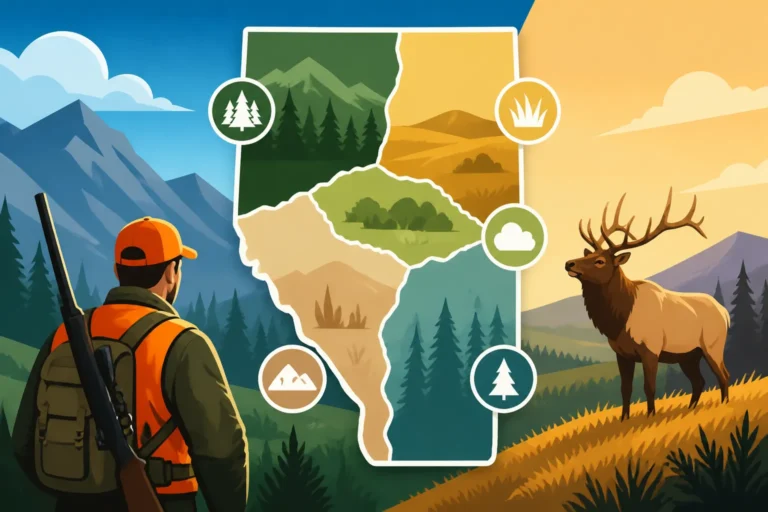
Alberta's Crown Land is broadly categorized into two main areas: the Green Area and the White Area. This distinction is one of the most fundamental you'll need to grasp. The Green Area, predominantly found in the northern and western parts of the province, is largely forested public land, managed primarily for forestry, recreation, and wildlife. This is often where hunters envision vast, untouched wilderness, and for the most part, public access is generally permitted for hunting, subject to specific regulations and seasonal restrictions.
However, even within the Green Area, not all land is created equal. There are designated Public Land Use Zones (PLUZs), conservation areas, and other specific land-use directives that can impact how you move through and hunt these areas. It's a sprawling mosaic, and while it offers incredible opportunities, it demands a thorough understanding of localized rules. The White Area, on the other hand, is generally the settled, agricultural region of Alberta, found in the central and southern parts of the province. While it contains significant private land, there are also parcels of Crown Land mixed in. Accessing Crown Land in the White Area often involves different considerations, as these parcels might be leased for grazing or other agricultural purposes, requiring you to understand specific access rules that apply to them. You absolutely cannot assume open access just because it's Crown Land.
Navigating Public Land Use Zones (PLUZs) and Grazing Leases
Within the Green Area, you'll encounter Public Land Use Zones (PLUZs). These are areas designated for specific types of recreational use, including hunting, but they come with their own set of rules regarding vehicle use, camping, and other activities. For a non-resident, understanding these rules is paramount to avoid fines or conflicts. Some PLUZs might have restrictions on Off-Highway Vehicles (OHVs), while others might require specific permits for certain activities. It's crucial to consult the official Alberta government resources for each specific PLUZ you plan to hunt in. These zones are designed to manage pressure and protect sensitive ecosystems, so respecting their regulations is not just about legality, but also about ethical hunting and preserving the resource.
Then there are grazing leases, which are particularly common in the White Area and some parts of the Green Area. These are parcels of Crown Land that have been leased to private individuals (ranchers, farmers) for livestock grazing. While these are still Crown Land, they are not open to unrestricted public access. Alberta's Recreational Access Regulation generally allows for recreational access to these lands, but there are specific stipulations. For non-residents, this means you often need to contact the leaseholder to inform them of your intent to enter, or in some cases, you might even require explicit permission, especially if you plan on driving or engaging in activities that could interfere with their operations. It’s a courtesy that goes a long way, and frankly, it's the law in many instances. You can learn more about this by reading Finding Access on Alberta Crown Land.
Navigating the Rules and Regulations for Non-Residents
As a non-resident, the rules for hunting in Alberta carry additional layers of complexity compared to those for residents. It's not just about understanding where Crown Land is; it's about understanding how you, specifically, are permitted to interact with it and its wildlife. This often means facing specific requirements that are designed to manage non-resident hunting pressure and ensure compliance with provincial laws. Failing to grasp these distinctions can quickly turn a dream hunt into a frustrating, or even illegal, experience.
The Hunter Host Requirement
One of the most significant regulations for non-resident Canadian hunters (those from other Canadian provinces or territories) is the Hunter Host requirement. If you're not an Alberta resident, you generally must be accompanied by an eligible Alberta resident Hunter Host while hunting big game or wild turkeys. This isn't just a recommendation; it's a legal necessity. Your Hunter Host needs to meet specific criteria, including being an Alberta resident, holding a valid Wildlife Certificate, and not having been convicted of certain wildlife offenses.
This regulation ensures that non-residents have someone familiar with local laws, ethics, and practices. It's designed to help you hunt responsibly and within the spirit of Alberta's conservation efforts. Finding a reliable Hunter Host well in advance of your trip is crucial, as their availability can make or break your hunting plans. This person is essentially your local guide and a key to understanding the specific nuances of the area you plan to hunt. For a deeper dive, check out Hunting Alberta With a Hunter Host.
When a Guide or Outfitter Becomes Necessary
For non-resident alien hunters (those from outside Canada, primarily the United States), the rules become even more stringent. With very few exceptions, non-resident aliens are required to hunt big game or game birds with a licensed Alberta outfitter or be hosted by an immediate family member who is an Alberta resident. This is a fundamental difference and dramatically impacts how you'll plan your hunt. You cannot simply come to Alberta, buy a tag, and head out to Crown Land on your own for most big game species.
This requirement means that your access to Crown Land for hunting will typically be facilitated through an outfitter who has specific allocations for certain WMUs and species. The outfitter will handle the permitting, guide you, and ensure you comply with all local regulations. While this adds to the cost, it also simplifies many logistical challenges for hunters unfamiliar with the territory. It’s important to research and book with a reputable outfitter well in advance, as their schedules fill up quickly. Understanding these requirements is key, so don't miss reading Rules for Non-Residents Hunting Alberta and Hunting Guides and Outfitters in Alberta.
General Hunting Regulations Applicable to All
Beyond the non-resident specific rules, you, like all hunters, must adhere to Alberta's general hunting regulations. This includes having a valid Wildlife Identification Number (WIN) Card, purchasing the necessary hunting licences and tags for the species you intend to pursue, and respecting season dates and bag limits for specific Wildlife Management Units (WMUs). Whether you're a resident or non-resident, ignorance of these rules is no excuse.
You'll also need to be familiar with rules regarding blaze orange requirements, legal shooting hours, firearms transportation, and ethical hunting practices. For example, knowing the difference between antlered and antlerless deer seasons, or understanding which WMUs have mandatory CWD testing requirements, is vital. It’s not just about getting onto Crown Land; it’s about hunting legally, safely, and ethically once you’re there. Resources like the Alberta Hunting Regulations are your best friend here, providing detailed information that changes regularly.
Practical Steps for Planning Your Non-Resident Crown Land Hunt
Okay, so you've grasped the fundamental distinctions of Crown Land and understood the non-resident specific rules. Now, let's talk practicalities. Planning a hunt as a non-resident requires meticulous preparation, especially when targeting Crown Land, which can be remote and challenging. It’s not simply a matter of picking a date; it involves extensive research, utilizing modern tools, and often connecting with local knowledge.
Leveraging Digital Mapping Tools
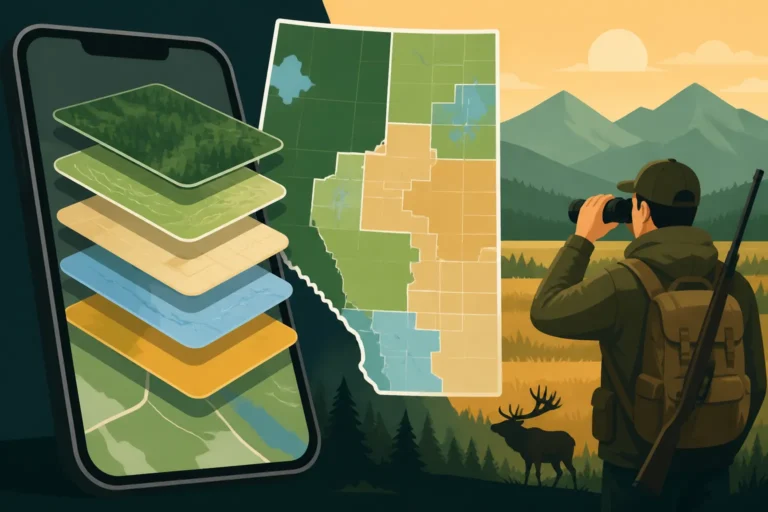
In today's hunting world, digital mapping tools are absolutely indispensable, especially for non-residents scouting unfamiliar territory. Platforms like onX Hunt have revolutionized how hunters identify and access public land. These tools allow you to visualize Crown Land boundaries, private land ownership, WMU lines, and topographical features right on your phone or computer. You can scout potential hunting areas from home, identify access points, locate potential bedding areas, and mark points of interest like water sources or pinch points.
For a non-resident, this means you can spend less time guessing and more time strategically planning. You can identify those crucial pockets of Crown Land surrounded by private property or pinpoint trails and cutlines that lead deep into productive areas. Similarly, services like GoHunt offer a wealth of data, often including draw odds and harvest success rates, which can indirectly help you determine high-potential WMUs that contain significant Crown Land. While these tools can't replace boots on the ground, they are an invaluable first step in understanding the terrain and identifying potential hunting zones. Make sure to download maps for offline use, as cell service can be spotty in many remote Crown Land areas. For more on this, check out Scouting With Satellite Imagery in Alberta.
Understanding Wildlife Management Units (WMUs)
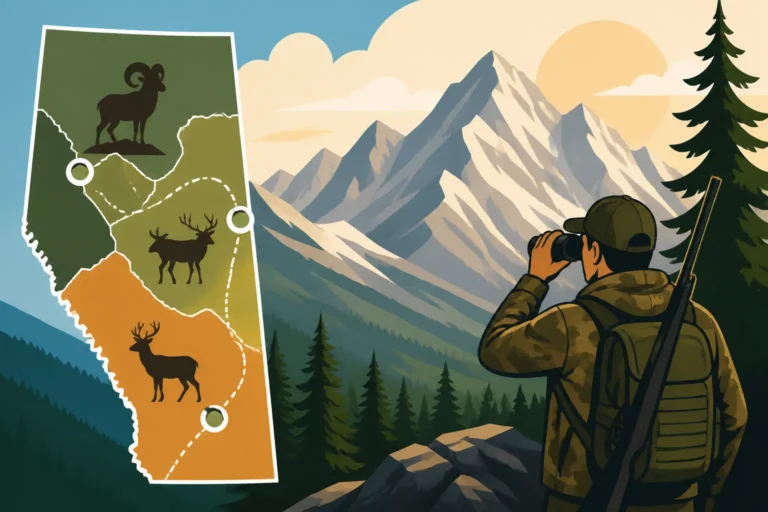
Alberta is divided into numerous Wildlife Management Units (WMUs), and these are the backbone of hunting regulations. Every licence and tag you purchase will be specific to a WMU or a group of WMUs, dictating what species you can hunt, during which seasons, and with what weapon. For non-residents, this means your Crown Land hunt needs to align perfectly with the WMU boundaries and the species seasons available in that unit. You can't just pick a piece of Crown Land; you need to ensure it's in a WMU where you are legally permitted to hunt your target species.
The type and availability of Crown Land can vary wildly from one WMU to another. Some WMUs are almost entirely White Area with little public access, while others, particularly in the Green Area, are predominantly Crown Land. Your choice of WMU will therefore directly influence your ability to find accessible Crown Land and the species available there. Consult the Alberta Hunting Regulations to cross-reference WMU boundaries with Crown Land maps from resources like onX Hunt or Alberta's Recreational Access Mapping Tool. This integrated approach is essential for a compliant and successful hunt. If you're new to this, a review of Alberta's Wildlife Management Units would be extremely helpful.
Securing Accommodations and Logistics
When hunting Crown Land as a non-resident, especially in more remote Green Area regions, planning your accommodations and logistical support is critical. Unlike a fully outfitted hunt where everything is provided, if you're coming with a Hunter Host, you'll often be responsible for your own camp setup. This could mean random camping on Crown Land where permitted, or finding designated campgrounds. Remote Crown Land often lacks amenities, so you'll need to be self-sufficient with food, water, first aid, and emergency communication.
Consider your travel time, fuel availability, and the nearest towns for supplies. If you're bringing a quad or side-by-side, familiarize yourself with Alberta's OHV trail rules, particularly in PLUZs. For non-residents flying into Alberta, transporting firearms requires specific procedures, including a Non-Resident Firearm Declaration. Driving across the border with firearms also has its own set of rules you need to understand beforehand. Every detail matters, from where you'll sleep to how you'll get your game out. Planning for these contingencies ensures a safer and more enjoyable experience. Don't forget to have a reliable vehicle, especially if you're venturing into areas with less developed roads.
Tools and Resources for Non-Resident Hunters
Planning a non-resident hunt on Alberta's Crown Land can feel like a full-time job, especially with all the regulations and geographical considerations. Thankfully, there are a number of excellent tools and resources available that can significantly streamline your planning process, helping you move from feeling overwhelmed to feeling confident and prepared. These tools are designed to provide the critical information you need to make informed decisions and navigate the landscape effectively.
Official Government Portals and Maps
Your first and most authoritative source of information should always be the official government of Alberta websites. The Alberta Environment and Parks website (often referred to by the general public as "AEP") is where you'll find the current Hunting Regulations, WMU maps, information on PLUZs, and details about the Recreational Access Regulation. These are living documents, updated annually, so always ensure you're referencing the most current version. While the website might not be as user-friendly as a commercial app, it's the definitive source for legal information.
Many non-residents overlook the value of Alberta's own online mapping tools. The province offers various interactive maps, sometimes through services like the "GeoDiscover Alberta" portal, which can display Crown Land boundaries, forestry roads, and PLUZs. While they might not have all the bells and whistles of commercial apps, they are official and invaluable for verifying land status. It's an essential cross-referencing tool to use in conjunction with other resources, ensuring that the information you're acting upon is accurate and up-to-date.
Commercial Mapping Applications
For ease of use and comprehensive data layering, commercial mapping applications are a non-resident hunter's best friend. onX Hunt, for example, is widely popular for its ability to overlay property boundaries (private, Crown, municipal, etc.) directly onto satellite imagery and topographic maps. This allows you to quickly identify accessible Crown Land, see trails, forest cover, and elevation changes. Its ability to download maps for offline use is also critical, as many prime Crown Land hunting areas are well outside cell service. You can mark waypoints, track your movements, and navigate confidently, even in remote areas.
Another excellent resource is GoHunt, which, while primarily known for its draw odds and data analysis for Western US states, often provides valuable insights into general game movements, habitat analysis, and planning tools that can be adapted for Alberta hunting. While it may not have specific land ownership layers for Alberta in the same way onX Hunt does, its broader analytical capabilities can inform your choice of WMU and approach. These apps drastically reduce the uncertainty of navigating unfamiliar terrain and are well worth the investment for any serious non-resident hunter.
Connecting with Local Knowledge and Hunter Communities
While digital tools are powerful, they can't replace local knowledge. If you're coming to Alberta with a Hunter Host, lean heavily on their expertise. They know the roads, the common game crossings, and the specific nuances of the area you're hunting. Beyond that, engaging with online hunting forums or social media groups focused on Alberta hunting can be incredibly beneficial. You can ask questions, learn about general area conditions, and sometimes even get tips on publicly accessible areas (though specific "honey holes" are rarely shared!).
Attending hunting expos or conventions where Alberta outfitters and residents are present can also provide invaluable face-to-face opportunities to learn and connect. Locals often know about lesser-known public access points, specific challenges in certain WMUs, or current game populations that might not be immediately obvious from a map. Building these relationships, even virtually, can greatly enhance your preparation and success, offering insights that no map or regulation book can fully convey. Remember, hunters are often a tight-knit community, and a friendly, respectful approach can open many doors.
| Crown Land Type | Key Characteristics | Non-Resident Access Considerations |
|---|---|---|
| Green Area (Forestry) | Vast, forested, public land for recreation, wildlife. | Generally open for hunting, but specific PLUZ rules apply (e.g., OHV restrictions). Non-resident Canadians need a Hunter Host for big game. Non-resident aliens need an outfitter or immediate family member host for big game/game birds. Remote, requires self-sufficiency. |
| White Area (Agricultural) | Settled, mixed private and Crown land parcels. | Crown land parcels often leased for grazing. Recreational Access Regulation applies: generally allowed, but contact leaseholder is highly recommended or required for certain activities/duration. Same Hunter Host/Outfitter rules as Green Area for non-residents. |
| Public Land Use Zones (PLUZs) | Designated areas within Green/White Area for specific uses. | Always consult specific PLUZ rules for vehicle access, camping, and other activities. These rules can be strict and differ between zones. Hunter Host/Outfitter rules for non-residents remain consistent. Great for backpack hunting or horse access where permitted. |
| Provincial Grazing Reserves | Large tracts of Crown Land managed for livestock. | Public access typically permitted, but specific rules apply to protect livestock and infrastructure. Often require contacting the supervising authority or grazing association. Hunting within grazing seasons may be complicated. Again, Hunter Host/Outfitter rules apply for non-residents. |
| Wildlife Management Units (WMUs) | Regulatory zones dictating seasons, limits, species. | Crucial for all hunters. Crown Land access within a WMU means adhering to that WMU's specific regulations. Non-residents must align their hunt with WMUs where they are legally permitted to hunt their target species with their specific licence/host/outfitter status. Essential to cross-reference with land ownership maps. |
Disclaimer
This article is for general informational purposes only and does not constitute professional advice. Laws, prices and regulations vary by location and change over time. Consult a qualified professional for guidance on your specific situation.