How Far to Walk From an Alberta Forestry Road
It's a classic scenario: you pull your rig off an Alberta forestry road, see a promising trail or a patch of fresh sign, and think you're golden. But all too often, within a few hundred yards, you start seeing boot prints from other hunters, or the forest just feels… empty. Game animals, especially the big ones, are incredibly adept at avoiding areas with consistent human presence, and forestry roads, by their very nature, invite that traffic. This guide will walk you through how to think about the optimal distance to get off the beaten path, turning those frustrating road hunts into successful deep-woods adventures.
Understanding Forestry Road Dynamics
Forestry roads are a hunter's blessing and a curse. They open up vast tracts of public land that would otherwise be inaccessible, but they also funnel hunters into predictable patterns, and game animals are quick to catch on. It's crucial to understand how these roads shape both human and wildlife behavior if you want to find success.
The Double-Edged Sword of Easy Access
On one hand, forestry roads provide incredible access to areas that were once true wilderness. Imagine trying to get into some of Alberta's northern boreal forest without these arteries; it would be a monumental bushwhack. These roads allow us to explore new territories, set up camps, and retrieve game more efficiently. They connect us to diverse habitats, from the mixedwood forests to the foothills. This is why many of us rely on them heavily, especially when exploring new Wildlife Management Units (WMUs). They're not just roads; they're gateways.
However, this accessibility is a double-edged sword. Every hunter has access to the same roads, and come opening weekend, these areas can feel more like a highway than a wilderness trail. This increased human presence fundamentally alters how wildlife uses the landscape. What looks like prime habitat right off the road might, in reality, be a ghost town during daylight hours, simply because the animals have learned to avoid it. Knowing Hunting Alberta's Foothills Country or Hunting Alberta's Boreal Forest Country means knowing how these roads function within those specific landscapes.
Hunter Pressure and Game Behavior Near Roads
Animals are not dumb. They quickly learn that areas closest to roads are high-risk zones, especially during hunting season. Whitetails, mule deer, moose, and elk all adapt their movements to minimize contact with humans. This often means becoming more nocturnal, moving into thicker cover, or relocating to areas where human disturbance is minimal. You might see tracks crossing the road at night, or fresh sign just off the shoulder, but the animals making them are likely long gone or hunkered down in a sanctuary far away.
Think about it from a deer's perspective: every day, vehicles rumble by, doors slam, and human scent drifts through the air. Any animal that sticks around in plain sight isn't likely to survive long. This leads to a selection pressure where the wariest animals are the ones that thrive and reproduce. So, the deer you do see right next to a busy road are often the young, inexperienced, or those pushed out of prime habitat. To find the mature animals, the ones with impressive racks or the sheer body mass that tells you they've lived a long, wary life, you need to go where they feel safe.
The Green Area vs. White Area Context
When we talk about forestry roads, we're almost exclusively talking about Alberta's Green Area. This is the forested, publicly owned land managed primarily for forestry, energy, and recreation. Contrast this with the White Area, which is primarily agricultural land, often privately owned. The rules and dynamics for hunting in these two areas are vastly different. On Crown land within the Green Area, you generally have far more freedom to roam, but also more potential for shared pressure. Understanding Alberta's Green Area and White Area is fundamental.
In the Green Area, forestry roads are built and maintained for industrial purposes, but they also provide access for us hunters, anglers, and outdoor enthusiasts. However, these roads are not always public access. Some may be gated, leased, or have seasonal closures. Always check for current regulations and restrictions. The key takeaway here is that within the Green Area, the sheer scale of public land means that while roads concentrate access, there's almost always "more country" beyond the visible road network, just waiting for a hunter willing to put in the legwork.
The "Sweet Spot" Distance for Hunters
So, how far is far enough? There's no single magic number, but there's definitely a "sweet spot" that maximizes your chances without completely exhausting you. This distance often lies just beyond where most casual hunters are willing to venture.
Beyond the Immediate Pressure Zone
The vast majority of hunters operate within a relatively short distance of their vehicles. It’s a common human trait to seek the path of least resistance. On a busy forestry road, you’ll typically find the heaviest hunter presence within the first 200 to 500 yards. This is where most people will walk, call, or still-hunt before deciding to move on to another spot. Beyond this initial zone, the pressure tends to drop off significantly.
This immediate pressure zone acts like a buffer. Animals know this, and they’ll either slip past it during low-light hours or establish their core bedding and feeding areas outside of it. Your goal is to get beyond this buffer, into territory where the animals feel more secure. This doesn't mean you need to walk for hours on end, but it does mean consciously pushing past that initial easy-access zone that so many hunters gravitate towards. You're looking for pockets of quiet, undisturbed habitat that the animals can rely on.
Balancing Effort and Reward
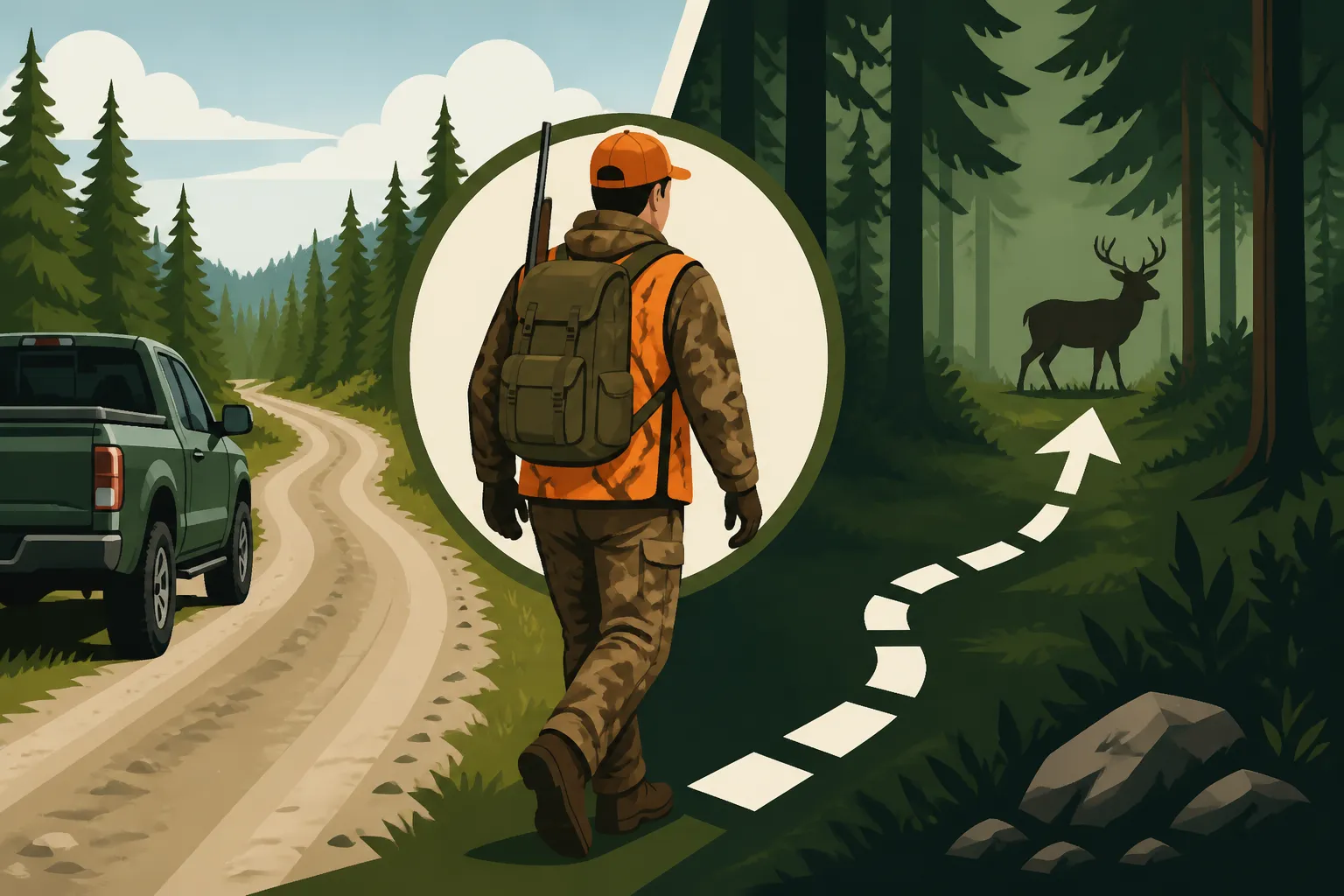
Finding that sweet spot is a delicate balance. You want to walk far enough to get away from the immediate road pressure, but not so far that you're exhausted, making excessive noise, or jeopardizing your ability to pack out an animal. For many hunters, this optimal distance often falls between 1 to 2 kilometers (approximately 0.6 to 1.2 miles) from the main road. At this distance, you've likely left 80-90% of other hunters behind and entered an area where game feels significantly more comfortable moving during daylight.
This 1-2 km range isn't a hard and fast rule, but a general guideline. It's often where the effort of a decent walk starts to pay dividends in terms of less disturbed game. Of course, this assumes relatively normal terrain. If you're slogging through thick muskeg or climbing a steep ridge, that 1 km can feel like 5. The reward here isn't just seeing animals; it's seeing calm animals, ones that haven't been pushed or educated by constant human scent and noise. They're more likely to respond to calls, more likely to hold still, and generally offer a much better hunting experience.
Species-Specific Distances
The ideal walk-in distance can also vary depending on the species you're pursuing. A crafty old whitetail buck in a high-pressure area might require you to push even further than a moose in the dense boreal forest.
- Whitetail Deer: These animals are incredibly adaptable and pressure-sensitive. In areas with high hunting pressure, especially in mixedwood or aspen parkland, pushing 1.5 to 3 kilometers (about 1 to 2 miles) might be necessary to find those undisturbed pockets. They'll often bed in the thickest cover they can find, sometimes just a kilometer or two off the road, and only move to feeding areas at dusk and dawn. Consider White-Tailed Deer, Alberta's Most Hunted Big Game for more on their habits.
- Mule Deer: Often found in more open, broken country or badlands, mule deer might not seek the same kind of dense cover as whitetails, but they still prefer areas with less human intrusion. If you're Hunting Mule Deer in the Badlands Coulees or on a prairie ridge, a 1 to 2 km walk might put you in sight of bucks using those deeper coulees or ridges as sanctuaries. They rely on their eyesight, so getting out of sight of the road is key.
- Moose: In the vastness of Alberta's boreal forest, moose sometimes don't feel the same immediate pressure as deer right off forestry roads. However, larger bulls will still prefer quiet pockets of timber, beaver ponds, or willow flats. A walk of 0.8 to 1.5 kilometers (0.5 to 1 mile) can often get you into good moose country. They are often found in areas that are simply harder to access quickly. For more, read Moose Across Alberta's Boreal and Foothills.
- Elk: These herd animals can be found in various habitats. In the foothills or mountain fringe, they might push several kilometers into rugged terrain to escape pressure. If you're hunting elk in more open or agricultural areas near the Green Area fringe, they might only be a kilometer or two off the road, but in incredibly dense cover or on private land where they feel safe. Understanding Elk in Alberta's Mountains and Farmland can help.
Factors Influencing How Far You Should Walk
While general distances are helpful, the reality of hunting is that every situation is unique. Several factors will dictate whether you need to walk further, or if a shorter hike will suffice. Being able to read these signs and adapt your strategy is what separates successful hunters from those who just hope for the best.
Terrain and Cover Considerations
The type of terrain and the density of the cover profoundly impact how far you need to walk. In extremely thick, nasty country – think dense spruce bogs, tangled blowdowns, or steep, brushy ravines – animals often don't need to go as far to find sanctuary. The tough going acts as a natural deterrent for most hunters. In these spots, a 500-meter (about a third of a mile) walk might feel like 2 kilometers and effectively get you away from pressure. The terrain itself does the work of separating you from other hunters.
Conversely, if you're in more open, walkable forest, like mature aspen stands or areas with well-worn game trails, you'll likely need to push further. The easier the walking, the more likely other hunters are venturing into those areas. Using mapping tools like onX Hunt can be a game-changer here. You can identify areas of thick cover, topographical features like creek bottoms or ridges, and plan a route that takes you away from the obvious access points. Don't just look for "walkable" ground, look for "uninviting" ground that holds game.
Time of Year and Weather Conditions
Seasonality and weather play a huge role in animal movement and hunter pressure. Early archery seasons, especially when the weather is warm, often mean animals are still in their summer patterns and might be less pressured. But as rifle season opens, and especially as the rut approaches, animals become more active, and so do hunters. This usually means you need to increase your walk-in distance.
Cold, wet, or snowy weather can also impact your strategy. A fresh snowfall can make tracking easier but also makes moving quietly more challenging. Deep cold might push animals to sheltered areas, which could be closer or further from roads depending on the available thermal cover. More importantly, really nasty weather often keeps casual hunters at home. This is your chance! If you're prepared for Hunting Alberta Winter Weather Safely, you might find that a shorter walk on a bitterly cold, snowy day yields incredible results, simply because you're the only one out there. Consider how a Hunting a Frozen Muskeg Trail can change your access dynamics.
Your Physical Fitness and Gear
Let's be real: not everyone is built for a 5-kilometer bushwhack with a heavy pack. Your physical fitness is a critical factor in determining how far you can effectively hunt from a road. Pushing yourself too hard means you'll be tired, noisy, and potentially compromise your safety, especially if you get an animal down deep in the bush. Be honest with yourself about your capabilities. It's better to hunt a well-chosen, shorter distance effectively than to overextend yourself and fail.
Your gear also plays a role. Are you wearing comfortable, broken-in boots suitable for long walks? Do you have a backpack that distributes weight well? Are you carrying essential safety gear like a first-aid kit, fire starter, and navigation tools (like your onX Hunt app with downloaded maps)? Having the right gear, and being physically ready, allows you to confidently push further. If you plan to retrieve an animal, also consider how you'll get it out. A longer walk-in means a longer pack-out. This is where planning can save you a world of hurt.
Strategizing Your Walk-In Hunt
A successful walk-in hunt isn't just about putting one foot in front of the other. It requires deliberate planning and execution, leveraging modern tools and old-school woodsmanship to outsmart both the game and other hunters.
Using Mapping Tools for Scouting
Before you even step out of the truck, pull up your onX Hunt app or another robust mapping system. This is invaluable for seeing topography, property lines, and potential pinch points far from the road. Look for natural funnels, unlogged timber blocks, deep ravines, or ridges that run parallel to the road. These are the kinds of features that animals use to travel safely, and they often lead to bedding or feeding areas that are just out of reach for the road-bound hunter. Reading Alberta's Crown Land Layers on onX is a skill worth developing.
Satellite imagery, whether through onX Hunt or dedicated services, can reveal old cutlines, seismic lines, or obscure trails that aren't on standard maps but can offer easier walking for a certain distance. Look for changes in vegetation density, areas of regenerating timber, or creek bottoms that might offer hidden travel corridors. Mark potential glassing points, bedding areas, and water sources. Tools like GoHunt also offer a wealth of information and articles that can inform your pre-hunt scouting, giving you a broader understanding of game behavior in similar habitats. Scouting With Satellite Imagery in Alberta will give you a leg up.
Planning Your Route and Exit
Never just wander into the bush. Plan your route carefully, both in and out. Consider the wind direction – always try to approach your hunting area with the wind in your face or quartering, so your scent blows away from where you expect to find game. Identify potential landmarks for navigation, especially if you're not solely relying on GPS. In thick timber, it's incredibly easy to get turned around.
Your exit strategy is just as important. If you get an animal down, how will you get it out? Is the terrain too steep for a game cart? Will you need to quarter it and make multiple trips? Knowing the terrain and potential challenges beforehand can prevent a nightmare scenario after a successful hunt. Think about walking into a promising Hunting a Forestry Trunk Road Pullout and how you'd extract an animal from that spot. If you're going deep, a plan for meat care, especially in fluctuating temperatures, is vital.
The Importance of Silent and Slow Movement
Once you've committed to a walk-in hunt, the way you move becomes paramount. This isn't a stroll in the park; it's a deliberate, calculated infiltration. Move slowly, deliberately, and silently. Take five steps, then stop and scan, listening intently. Animals will often hear or see you before you see them. Use your binoculars constantly, picking apart every patch of cover.
Avoid making unnecessary noise. Your pack shouldn't rattle, your clothing shouldn't swish, and your footsteps should be as quiet as possible. This is where quality gear, practiced movement, and patience pay off. The slower you move, the more you'll see, and the more likely you are to surprise an animal in its sanctuary, rather than alerting it to your presence. Remember, the further you walk, the more invested you are, and the more important it is to capitalize on that investment with patient, silent hunting tactics.
| Species | Recommended Walk-In Distance (Approximate) | Terrain Considerations | Key Behaviors to Consider |
|---|---|---|---|
| Whitetail Deer | 1.5 – 3 km (1 – 2 miles) | Dense aspen, mixedwood, river breaks | Highly pressure-sensitive, seek thick cover, nocturnal |
| Mule Deer | 1 – 2 km (0.6 – 1.2 miles) | Coulees, prairie ridges, broken badlands | Rely on eyesight, use elevation for security, often move in small groups |
| Moose | 0.8 – 1.5 km (0.5 – 1 mile) | Boreal forest, muskeg edges, willow bottoms, beaver ponds | Prefer wet, dense areas; less pressured by visual contact than deer |
| Elk | 1 – 4 km (0.6 – 2.5 miles) | Foothills timber, mountain benches, agricultural fringes | Herd animals, can be pushed far into backcountry, seek secure bedding |
| Black Bear | 0.5 – 2 km (0.3 – 1.2 miles) | Thick timber, berry patches, clearcuts | Often opportunistic, less wary in spring, use dense cover for security |
Disclaimer
This article is for general informational purposes only and does not constitute professional advice. Laws, prices and regulations vary by location and change over time. Consult a qualified professional for guidance on your specific situation.