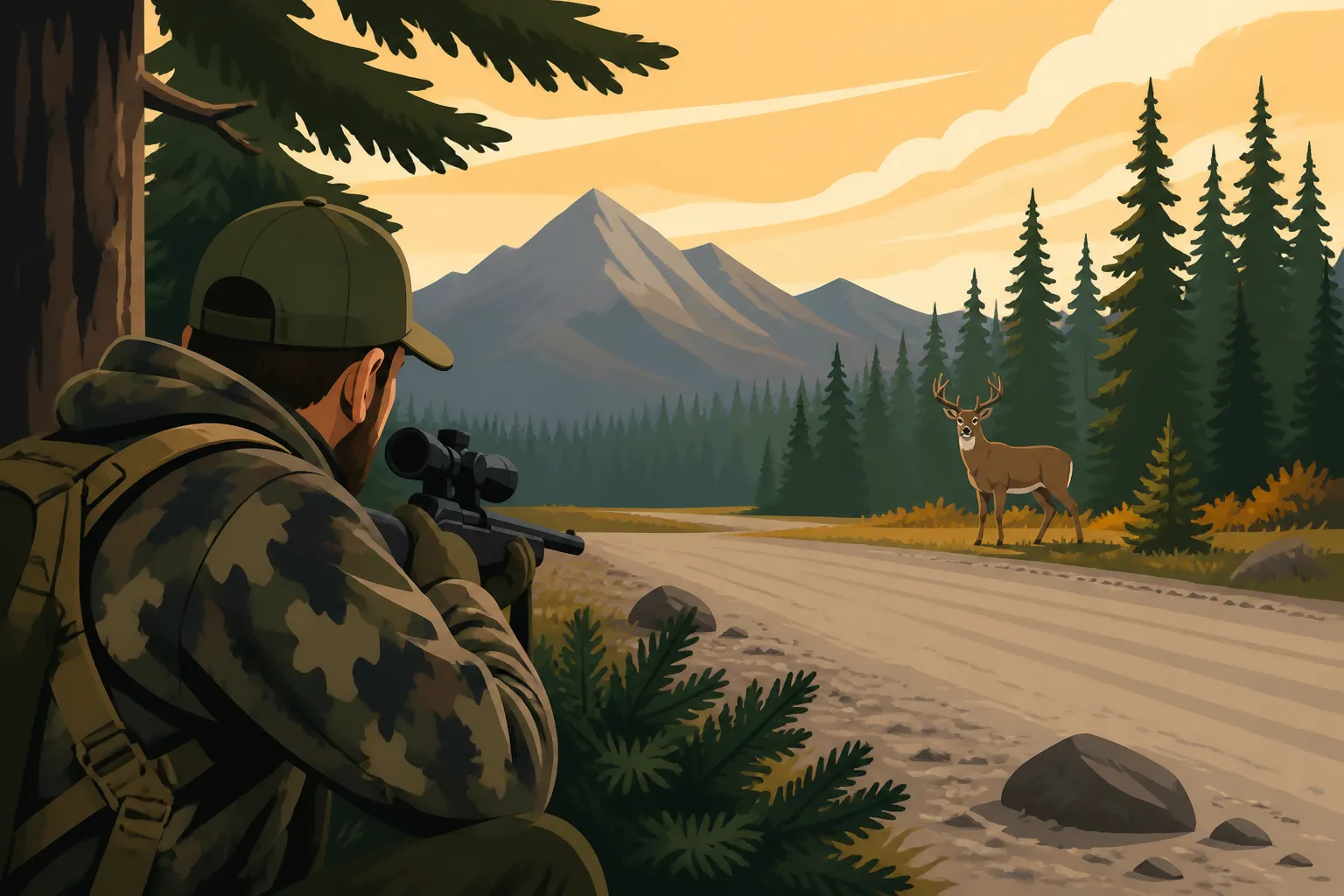
Hunting a Forestry Trunk Road Pullout
Many hunters find themselves driving Alberta's scenic Forestry Trunk Road (FTR), admiring the views but often wondering where the accessible, less-pressured hunting spots actually are. The constant flow of traffic can make pullouts seem like mere rest stops, discouraging exploration. This guide will show you how to look beyond the obvious, leveraging FTR pullouts as strategic access points to productive hunting grounds and transforming your approach to these overlooked areas.
Understanding the Forestry Trunk Road and Its Unique Access
The Forestry Trunk Road isn't just another stretch of pavement; it's a vital artery that carves its way through Alberta's vast Green Area, primarily linking you to the rugged foothills and majestic mountains. For many, it's the gateway to true wilderness hunting, whether the quarry is a wary whitetail, a towering bull elk, or a massive moose. This long, often gravel-surfaced or roughly paved road, stretching for hundreds of kilometers, is a backbone from which countless smaller access points, trails, and, crucially, pullouts emerge.
The "Green Area" refers to the extensive forested Crown lands that are generally open to public hunting unless specifically signed otherwise. This is a key distinction from the "White Area," which is predominantly private or agricultural land. Along the FTR, you'll be almost exclusively within the Green Area, meaning that the vast tracts of land on either side are typically huntable. This sheer scale is both its greatest asset and its biggest challenge for hunters – knowing where to begin can feel overwhelming. The FTR itself, while a travel route, functions more as a broad access corridor. The immense amount of ground it makes reachable is why it's such a critical resource. Hunters often spend hours traversing the FTR, glassing distant slopes, looking for fresh tracks, or scouting specific terrain features. Grasping this fundamental role is the first step to truly harnessing its potential, and it's why every pullout, regardless of its size, holds the promise of being a launchpad for a successful hunt.
What Makes the FTR Special for Hunters?
The FTR provides unique access to a diverse range of ecosystems, from dense coniferous forests to aspen parkland fringes and open alpine meadows. This environmental diversity means a wider variety of game species call these areas home. Unlike private land, which requires permission, most of the land accessible directly from the FTR is Crown land, free for public use, provided you adhere to regulations. This accessibility is a huge draw for hunters, but it also means understanding how to get away from the immediate road-pressure and find pockets of less-disturbed habitat.
The road itself often follows natural contours, running through river valleys, over ridges, and past numerous creeks. These topographical features are precisely what attract and hold game. Knowing how to read the landscape, even from your vehicle, can give you clues about where animals might be bedding, feeding, or moving between areas. It’s an endless puzzle, and each twist and turn of the FTR can reveal a new piece. For those venturing into this region, understanding the lay of the land is paramount. Hunting Alberta's Foothills Country delves deeper into the unique challenges and rewards of this particular landscape.
Types of Pullouts Along the FTR
Not every pullout along the FTR serves the same purpose or offers the same hunting potential, and understanding the distinctions is crucial. You'll encounter a spectrum, each with its own characteristics and strategic value. Some are no more than simple wide spots in the gravel, barely large enough for one or two vehicles, often used by travelers for a quick photo op or to check a map. These are frequently overlooked by other hunters searching for more obvious access points, and that's precisely why they can be golden. Don't dismiss these unassuming spots; they can provide direct, low-pressure access to excellent territory if you're prepared to put in the effort on foot.
Then there are the more substantial pullouts, which typically coincide with a notable natural feature like a creek crossing, a scenic viewpoint, or the clear start of a recognized hiking trail or OHV access route. These larger, more established pullouts tend to see a higher volume of traffic from various outdoor enthusiasts, including hikers, campers, and ATV riders. While their popularity might suggest increased hunting pressure, they can still offer fantastic opportunities, especially if you're willing to venture further afield than the average day-user. They often feature a more defined gravel parking area, sometimes even an old fire pit or picnic table, indicating a history of use.
Finally, you'll find pullouts that truly act as primary gateways into the deeper backcountry. These might lead directly into Alberta's Public Land Use Zones, or PLUZs, or provide access to extensive networks of old logging roads, seismic lines, or designated ATV trails. These are the "gold mines" for hunters looking for serious penetration into remote areas. They represent the more significant access points, frequently utilized by outfitters, dedicated backpack hunters, and those employing ATVs or horses for transport. The specific type of pullout you choose as your starting point should always be a deliberate decision, aligning perfectly with your personal hunting style, your target species, and the level of physical exertion and commitment you're prepared to invest.
Scouting and Selection: Turning a Pullout into a Prime Spot
Finding a Forestry Trunk Road pullout is one thing; identifying its hunting potential is another entirely. The trick is to see beyond the immediate roadside and envision the landscape as a deer, elk, or bear would. This takes a combination of modern technology and old-fashioned boots-on-the-ground effort.
Pre-Season Digital Scouting for Pullout Potential
Before you even think about driving down the FTR, your most effective tool will be digital scouting. Platforms like onX Hunt and GoHunt are absolutely essential for meticulously analyzing the terrain surrounding any potential pullouts. Begin by zooming in on high-resolution satellite imagery to pinpoint key features: look for subtle changes in timber density, the hard edges where forest meets open ground, the winding paths of creek bottoms, the unique patterns of old clearcuts, and any slight variations in elevation that might offer cover or serve as natural travel corridors for game. Pay close attention to any "fingers" of timber that extend out into more open areas, or depressions in the landscape that could indicate water sources or sheltered bedding locations.
Crucially, scout for anything that resembles historical logging roads, faint seismic lines, or even barely visible game trails that appear to branch off from a specific pullout. These are often hidden highways for game, and for hunters, they offer a relatively easy and quiet path to move away from the noise and disturbance of the main road. Utilize the topographic layers in your app to thoroughly understand the steepness and contours of the terrain. A pullout that seems utterly unremarkable from the roadside might, upon digital inspection, reveal an incredible hidden valley or a perfect, secluded ridge system just a few hundred yards inland – features visible only from an aerial perspective. This type of remote reconnaissance is invaluable; it saves immense amounts of time, fuel, and physical effort during the actual hunting season. Scouting With Satellite Imagery in Alberta can give you an edge by highlighting these subtle, yet crucial, terrain features.
Always cross-reference your digital findings with any historical data you can access. Sometimes older maps or aerial photos will show timber cuts that have since regenerated, creating incredibly dense and nutrient-rich browse that is irresistible to deer and elk. Seek out areas that exhibit a healthy mix of mature timber, actively regenerating clearcuts, and open meadows – this kind of habitat diversity is absolutely critical for supporting a thriving population of various game species. As you identify promising locations, mark them meticulously on your GPS app, creating specific waypoints for future on-the-ground exploration. And don't forget to consider the prevailing wind patterns for the specific season you plan to hunt, and how those winds might influence your strategic approach from a chosen pullout. Reading Alberta's Crown Land Layers on onX is another invaluable skill for this phase of planning.
On-the-Ground Reconnaissance
Once you've zeroed in on your most promising digital targets, there's simply no substitute for getting boots on the ground during the off-season or in the early weeks before the main hunting pressure begins. Drive the FTR and physically investigate the pullouts you've marked. Does the satellite imagery accurately reflect the current ground conditions? Are there fresh tracks, rub lines, or old scrapes? Is there evidence of palatable forage, or distinct signs of bedding areas? This vital step is where you either confirm your digital hunches or wisely abandon less-promising spots.
Take the time to walk at least a few hundred yards into the timber from any pullout that looks promising. Actively search for old, faint trails, obvious game crossings, and subtle terrain breaks that were not apparent from the road. Frequently, a thick, overlooked patch of alders or willows just off the FTR can conceal a heavily used game trail that leads directly to secluded feeding or bedding areas. This ground truthing is absolutely critical for understanding the localized wind currents, assessing the ambient noise factors, and accurately gauging the actual difficulty of traversing the terrain. You might find yourself exploring Hunting an Old Logging Road in the Foothills that branches off directly from a pullout.
Pay meticulous attention to all forms of game sign, not just fresh tracks. Old scat, well-worn trails, browsed vegetation, and even discarded shed antlers can provide valuable intelligence about which animals are consistently using the area and at what times of the year. Always consider how far you are genuinely willing to hike or ride from the pullout. A spot that initially looks fantastic on a map but quickly becomes an impenetrable tangle of dense bush might not be worth the effort unless you're truly prepared for an intense bushwhack. Remember, the primary objective is to strategically distance yourself from the immediate pressure found along the road, not simply to find a convenient parking spot.
Hunting Strategies for FTR Pullouts
Effective hunting from an FTR pullout is all about outsmarting the game that are accustomed to human presence, and getting into areas where they feel safe. It requires patience, keen observation, and the willingness to move beyond the easy access.
The "Walk-In" Advantage from a Pullout
The most common error hunters make when utilizing FTR pullouts is failing to venture far enough from their vehicle. The vast majority of "road hunters" will rarely leave their trucks, perhaps walking only a hundred yards or so into the bush. The true strategic advantage of a pullout emerges when you commit to using it as a deliberate starting point to penetrate significantly deeper into the surrounding wilderness. Aim to walk at least a mile, and ideally two or more, from where you've parked your vehicle. This critical distance is often all it takes to escape the immediate human pressure and reach areas where game animals feel considerably more secure and exhibit their natural behaviors.
As you walk in, adopt an incredibly slow and deliberate pace. Constantly scan your surroundings, utilize your binoculars frequently to scrutinize every shadow and movement, and pay close attention to the subtle sounds of the forest. The wind is your absolute master in these situations – always hunt directly into it or with a prevailing crosswind to ensure your scent doesn't carry ahead of you and alert unseen game. The diverse terrain found when Hunting Alberta's Foothills Country presents a complex mix of open and heavily treed areas, making precise wind management an indispensable skill. Focus your attention on natural funnels, elevated saddles, and flat benches, as these are prime locations where game animals frequently travel between their bedding and feeding grounds.
For those truly committed to maximizing their reach and time in the field, consider employing a "spike camp" approach for deeper penetration. If a particular pullout offers access to genuinely remote country, packing in a lightweight tent, a warm sleeping bag, and enough food for a night or two can dramatically elevate your odds of success. This strategy allows you to be in the heart of the hunting area for both first light and last light, which are universally recognized as the most active periods for big game, without the arduous and time-consuming commute back to your truck. Even a minimalist bivy sack setup can extend your range and significantly increase your effectiveness.
Utilizing Terrain and Cover
The typical foothills terrain surrounding much of the FTR is characterized by a series of rolling hills, deeply cut creek drainages, and a mosaic of mixed timber stands. Learning to effectively use these topographical features to your advantage is paramount. In the early morning, focus your efforts on the sunny, south-facing slopes and ridges, as game often moves to these areas to warm themselves after a cool night. Conversely, in the afternoon and evening, shift your attention to shaded draws, north-facing slopes, and dense timber where animals are likely to bed down to stay cool and hidden. Actively seek out natural benches that offer obvious travel corridors, or saddles in ridges that serve as consistent crossing points.
Embrace thick cover; it is your ultimate ally. Never shy away from hunting dense stands of regenerating timber, tangled willow thickets, or even areas of mature but dense coniferous forest. While these areas can be incredibly challenging to navigate, they provide superior security cover for game, particularly for older, more experienced animals that have learned to avoid open, exposed areas. Often, the path of least resistance for a hunter is not the most productive path to find game. These dense pockets, frequently located just a short, arduous walk from a pullout, can hold a trophy buck or a formidable bull that has learned to evade pressure. You might find yourself meticulously working your way through a prime Hunting a Foothills Bench Above a Creek, a classic travel route for big game.
Always remember that game animals, especially deer and elk, are creatures of habit. They will instinctively utilize the path of least resistance when moving between their essential resources – food, water, and bedding – but they will always do so with a primary focus on security. Identifying these consistent travel routes, whether they manifest as subtle game trails barely visible through the underbrush or more obvious, well-worn paths, is a critical skill. Use prominent geographical features like beaver ponds, the edges of old burns, or unique rock formations as reliable reference points to help you orient yourself and understand game movement.
Calling and Still-Hunting Tactics
Depending on the specific game species you're pursuing and the time of year, calling can be an exceptionally effective tactic when hunting from a strategically chosen FTR pullout. During the peak of the rut, for instance, a well-executed elk bugle or a series of deer grunts can pique the curiosity of nearby animals and draw them into range. Bugling Elk in Alberta's Foothills from a carefully chosen position with good cover and visibility can transform a quiet morning into an adrenaline-pumping encounter. Even subtle doe bleats or fawn distress calls, when used sparingly and realistically, can be highly effective for attracting both whitetails and mule deer. Always position yourself judiciously, ensuring you have ample cover and a clear line of sight, before initiating any calls.
Still-hunting represents another immensely powerful and often underutilized tactic. This method involves moving through the habitat with extreme slowness and deliberate stealth, taking only one or two cautious steps, and then pausing for several minutes to meticulously scan your surroundings, listen intently for subtle sounds, and carefully observe every detail. Employ your binoculars to pick apart every shadow, every clump of brush, and every potential hidden form. This approach is particularly potent in dense timber or along creek bottoms, where animals might be bedded or moving with extreme stealth. While the FTR itself often experiences significant vehicle traffic, just a few hundred yards off the main road, the woods can be surprisingly quiet and undisturbed.
If your scouting efforts have revealed a consistent game trail or a well-used feeding area, consider employing ambush hunting tactics. This involves setting up a portable stand or finding excellent natural cover downwind of where you anticipate animals will travel or feed. This strategy demands a considerable amount of patience and typically requires a solid understanding of the daily patterns and routines of the local game. Early morning and late evening hours are prime times for an ambush, especially when positioned near water sources or preferred feeding plots, if they exist. Should you be fortunate enough to harvest an animal, don't forget the critical importance of proper Meat Care in Alberta's Cold and Warm Swings, especially if temperatures are fluctuating.
Respecting the Land and Other Users
Hunting from FTR pullouts also carries a responsibility to the land and to all other users. Being a good steward ensures these opportunities remain available for everyone.
Understanding Public Land Use Zones (PLUZ) and Regulations
While the vast majority of the land accessible from the FTR is Crown land, it's essential to understand that many of these areas, particularly in the foothills and mountains, are managed as Public Land Use Zones (PLUZs). These zones are specifically designated areas of public land with tailored management plans, and they often come with detailed regulations concerning activities like random camping, the use of Off-Highway Vehicles (OHVs), and even specific hunting methods. It is absolutely paramount that you meticulously consult the current Alberta Regulations to ascertain any specific restrictions or requirements for the Wildlife Management Unit (WMU) you intend to hunt within. Resources such as the Using Alberta's Recreational Access Mapping Tool are incredibly helpful for clarifying boundaries, permitted uses, and specific rules that apply to different zones.
Always ensure you are fully aware of any active fire bans, seasonal closures, or temporary access restrictions. Wildfires, for example, can drastically alter both access routes and hunting opportunities, so checking current conditions immediately before heading out is an indispensable safety measure. Furthermore, always respect posted signage, even if its meaning seems ambiguous. When in doubt, it is always best to err on the side of caution and assume a restriction applies.
Crucially, familiarize yourself thoroughly with Alberta Blaze Orange and Safety Rules, especially when hunting during general seasons. These aren't merely suggestions; they are fundamental requirements for your safety and the safety of everyone else sharing the woods. Even if not legally mandated in a particular area or during a specific season, wearing blaze orange or blaze pink is an exceptionally smart and responsible choice to ensure you are highly visible to other hunters, hikers, and recreationists, drastically reducing the risk of accidental shootings.
Minimizing Impact and Practicing Ethical Hunting
The principle of "Leave No Trace" is absolutely paramount when hunting from FTR pullouts. This means packing out everything you brought in, and ideally, even a little more by picking up any litter you might encounter. This includes spent bullet casings, empty food wrappers, and any other refuse. Maintaining a pristine environment ensures that these invaluable public lands remain open, enjoyable, and ecologically healthy for current and future generations of hunters and outdoor enthusiasts. Ethical hunting extends far beyond merely adhering to the letter of the law; it encompasses being a conscientious and responsible steward of the land and its wildlife.
It is equally important to rigorously respect all private land boundaries. While the FTR primarily traverses public Crown land, there can be smaller, interspersed pockets of private property or agricultural grazing leases. Always know your precise location using reliable tools like Reading Alberta's Crown Land Layers on onX or detailed physical maps. Under no circumstances should you trespass. If you find yourself needing to retrieve game that has crossed onto private land, always, always seek permission from the landowner beforehand. A polite knock on a door, even if it feels a bit awkward, goes an incredibly long way in fostering positive landowner relations and ensuring continued access for hunters.
Finally, be highly mindful and courteous toward other users of these shared landscapes. The FTR and the areas it accesses are popular destinations for hikers, campers, OHV riders, horseback riders, and various other outdoor recreationists. Sharing the landscape responsibly means exhibiting common courtesy, yielding the right-of-way on trails, and making your presence clearly known, especially if you are carrying a firearm. Avoiding confrontations and consistently demonstrating respect for all outdoor enthusiasts helps to cultivate a positive public image of hunters.
Essential Gear and Safety for FTR Pullout Hunting
While hunting from an FTR pullout might seem "accessible," venturing even a short distance from your vehicle into Alberta's backcountry demands serious preparation. Safety and proper gear are non-negotiable.
Navigational Tools and Communication
Even when beginning your hunt from a seemingly convenient roadside pullout, venturing into Alberta's expansive backcountry mandates a high level of navigational preparedness. A dependable GPS unit or a smartphone equipped with a specialized hunting application like onX Hunt is an absolute necessity. Crucially, always download offline maps for the entire area you plan to cover, as reliable cell service along much of the FTR is typically nonexistent. Make it a habit to mark your vehicle's precise location, identify critical terrain features, and record any significant game sign you encounter.
Beyond digital aids, it is imperative to always carry a physical map and a compass, and, most importantly, possess the skills to use them proficiently. Batteries can die, electronic devices can fail unexpectedly, and a traditional map and compass can literally be a lifesaver in such circumstances. Augment these tools with a satellite messenger or a satellite phone. These devices are invaluable for emergency communication when you are well beyond the reach of cellular networks. They allow you to send check-in messages to loved ones and, critically, to transmit an SOS signal to emergency services if a serious incident occurs.
Always carry a whistle as a simple yet effective signaling device; three short, distinct blasts is a universally recognized distress signal. Before heading out, ensure that someone responsible knows your precise hunting plan, including your intended location, your planned route, and your estimated time of return. This "trip plan" is a straightforward yet absolutely vital safety measure. The foothills terrain can be disorienting, and it is remarkably easy to lose your bearings, particularly as daylight fades or when weather conditions rapidly deteriorate.
Weather Preparedness and Emergency Kit
Alberta's foothills weather is notoriously unpredictable and can shift dramatically in mere moments, regardless of the season. A bright, sunny morning can quickly transform into a sudden snowstorm or a torrential downpour. Always dress in multiple layers, utilizing synthetic or wool clothing that efficiently wicks moisture away from your skin and retains insulating warmth even when wet. It is non-negotiable to pack high-quality rain gear, even if the forecast appears perfectly clear. Carrying extra warm layers, a reliable warm hat, and durable gloves is absolutely essential, particularly during the changeable shoulder seasons of spring and fall.
Your emergency kit must be comprehensive and robust. Beyond standard first aid supplies, include critical items such as multiple fire starters (waterproof matches, a reliable lighter, and a fire steel), a powerful headlamp with a complete set of spare batteries, an emergency shelter (like a space blanket or a lightweight bivy bag), high-energy, non-perishable food, and an ample supply of water. A multi-tool or a sturdy knife, a length of paracord, and a small folding saw are also incredibly useful additions. If you plan to hunt during the colder months, a well-stocked Winter Truck Kit for an Alberta Hunt should be considered mandatory.
Always carry sufficient water for the entire duration of your planned outing, plus an additional reserve for unexpected emergencies. If you intend to rely on natural water sources, pack a high-quality water filter or purification tablets. Being properly equipped for sudden, unforeseen weather changes or an unplanned overnight stay in the backcountry could literally be the difference between a minor inconvenience and a life-threatening situation. Furthermore, take extra precautions and ensure you are thoroughly prepared if you plan on Hunting Alberta Winter Weather Safely as your hunt extends into the colder parts of the season.
| Pullout Type | Typical Characteristics | Ideal Hunting Style / Entry Method | Common Game Potential | Key Considerations |
|---|---|---|---|---|
| Simple Roadside | Wide spot for 1-2 vehicles; no obvious trail. Often subtle. | Deep walk-in (1+ mile), still-hunting, bushwhacking. | Whitetail, Black Bear | Least obvious, potentially less pressure. Requires effort. |
| Trailhead / OHV | Marked access to established trails; gravel parking area. | Longer hikes, multi-day spike camps, ATV access (if permitted). | Elk, Moose, Mule Deer | Higher traffic from other users. Good for deep penetration. |
| Scenic Overlook | Designated viewpoint; often limited immediate access down. | Glassing distant slopes, strategic calling (elk/moose). | Elk, Sheep (distant) | Primary use is observation; look for less obvious side trails. |
| Old Logging Road | Unmaintained, potentially overgrown or gated track. | Vehicle access (if open), long walk-ins along the road. | Whitetail, Bear, Moose | Excellent for covering ground quietly. Check gate status. |
| Creek Crossing | Pullout where the road crosses a significant water source. | Follow creek bottoms, ambush points, water source for game. | Deer, Moose, Bear | Can be muddy; great for tracking, but often bottlenecks. |
Disclaimer
This article is for general informational purposes only and does not constitute professional advice. Laws, prices and regulations vary by location and change over time. Consult a qualified professional for guidance on your specific situation.