Hunting a Reclaimed Well Site
Finding those hidden gems, those overlooked pockets of land where game animals feel safe and unpressured, can be one of the biggest challenges for any hunter in Alberta. Often, these spots aren't sprawling wilderness but rather small, inconspicuous areas that blend into the landscape, like a reclaimed well site. This guide will walk you through understanding what these sites are, how to find them, and how to effectively hunt them, turning what might seem like an industrial scar into a promising hunting opportunity.
Understanding Reclaimed Well Sites in Alberta
In Alberta, the oil and gas industry has a significant footprint, but alongside development comes a commitment to environmental reclamation. A "reclaimed well site" is a perfect example of this process, and understanding what it entails is key to appreciating its potential for hunting.
What is a Reclaimed Well Site?
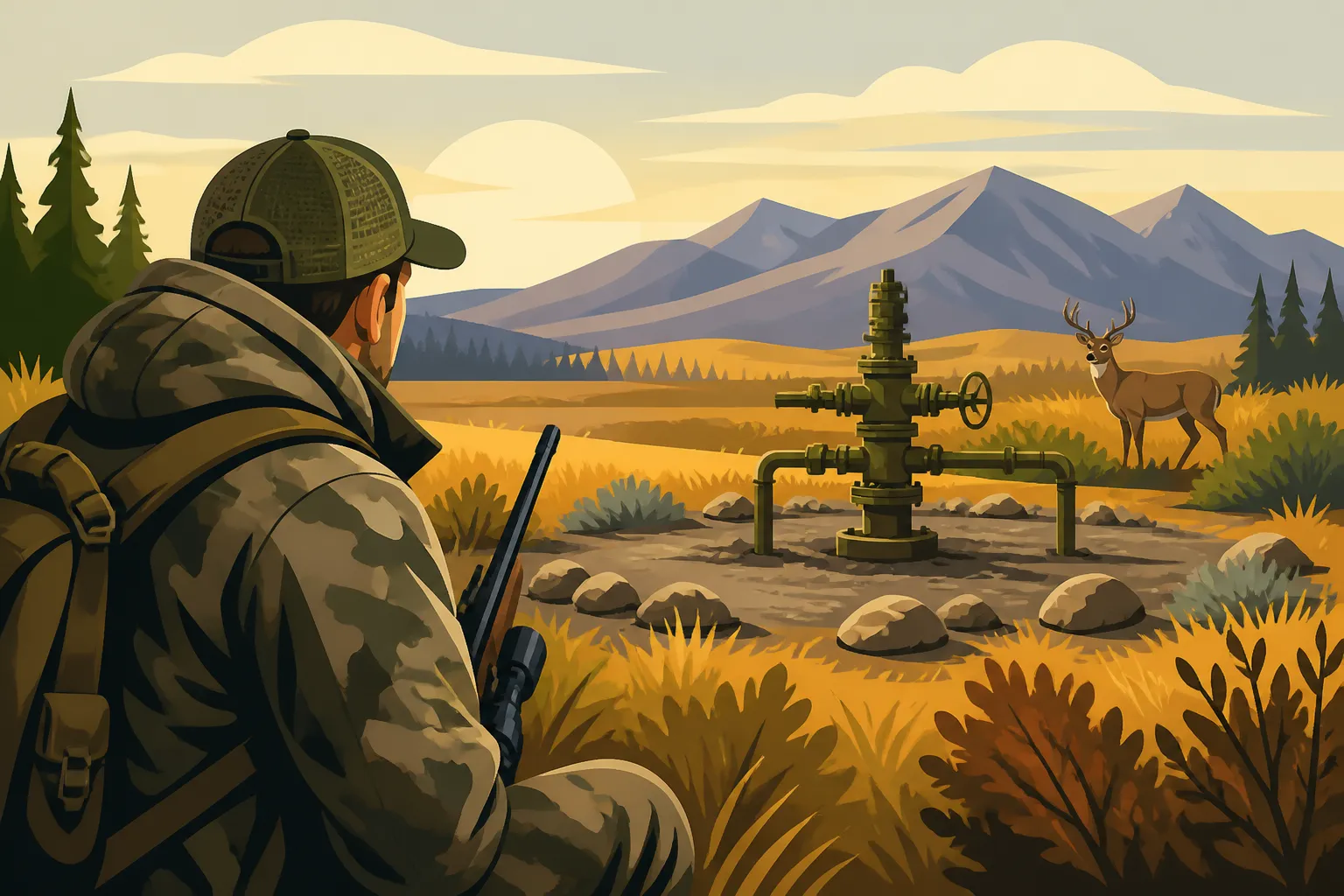
When an oil or gas well is no longer productive, the site undergoes a process called reclamation. This means the infrastructure – wellheads, pipelines, and associated equipment – is removed, and the land is restored as closely as possible to its original state. The goal is to return the land to an ecologically self-sustaining state, often mimicking the surrounding natural habitat. This process isn't just about removing visible signs of industry; it involves decontaminating soil, re-contouring the land, and replanting native vegetation.
The timeline for full reclamation can vary significantly. Some sites might be mere grassy patches a few years after abandonment, while others might take decades to fully blend back into a mature forest or prairie. What's left behind is often a distinct, relatively open area within a larger forested or agricultural landscape, or a slightly different vegetation pattern that can act as a natural clearing or transition zone. These sites can range in size from a small half-acre pad to several acres, each presenting unique features for wildlife.
Why They're Often Overlooked by Hunters
It's easy to drive past a reclaimed well site and dismiss it as just another industrial remnant, assuming it holds no real value for hunting. Many hunters, myself included at times, tend to focus on what they perceive as "pristine" wilderness or expansive agricultural fields. The industrial history of these sites can make them seem unappealing or even barren. There's also a common misconception that because they were once disturbed, they won't attract game, or that the ongoing reclamation efforts mean they are constantly being monitored or are off-limits.
This oversight is precisely what makes them so valuable. While some hunters are pushing deeper into the bush or vying for spots in popular zones, these smaller, less obvious areas often fly under the radar. Animals, however, aren't as discerning as we are. They simply seek food, water, and cover, and a well-reclaimed site can offer all three, sometimes with less human disturbance than other accessible areas. Hunters who take the time to learn about and scout these locations can often find pockets of game that others miss entirely.
The Ecological Benefits for Wildlife
Despite their industrial past, reclaimed well sites often become ecological hotbeds, acting as magnets for various game species. The very process of reclamation creates beneficial conditions. When a site is disturbed and then replanted, it often results in a diverse mix of early successional vegetation. This includes grasses, shrubs, and young trees that provide excellent browse for deer and moose, and vital cover for small game and birds.
Consider a well site reclaimed in a dense boreal forest. The clearing opens up the canopy, allowing sunlight to reach the forest floor, promoting the growth of berry bushes, saplings, and tender shoots – prime food sources. The edge habitat created between the open site and the surrounding mature forest is inherently valuable. Deer love to browse along these edges, and moose will often use them to access new growth. For upland birds like ruffed grouse, the mix of young aspen, willow, and clover can be ideal for feeding and drumming. These areas also often feature residual clumps of vegetation or slightly mounded terrain from earthworks, offering bedding cover that might not be found in uniform surrounding timber or fields.
Scouting and Identifying Productive Reclaimed Well Sites
Finding a reclaimed well site is one thing; determining if it's a productive well site for hunting is another. This requires a combination of modern mapping tools and old-fashioned boots-on-the-ground scouting.
Using Mapping Tools to Locate Them
The first step in finding these overlooked hunting spots is often digital. Modern mapping applications are invaluable for identifying reclaimed well sites, as they often have layers that show past industrial activity or land use. Tools like onX Hunt or GoHunt are excellent for this. Many of these platforms allow you to view different satellite imagery layers, historical maps, or even land ownership boundaries.
Start by looking for circular or square clearings in forested areas, or distinct patches of different vegetation within larger fields. Sometimes, you'll see faint lines leading to these clearings, which are old access roads or pipeline rights-of-way that have also been reclaimed. While these mapping apps might not explicitly label every "reclaimed well site," they often show the "disturbance areas" or previous land use. Compare current satellite imagery with older imagery if available; a site that looked like an active well pad a few years ago might now be in a state of reclamation. For identifying public versus private land, these apps are crucial. Finding Alberta Public Land Boundaries is essential here, as you'll want to ensure you're within legal hunting areas or know whom to ask for permission. Also, don't forget to use the official Alberta government mapping tools, which can show land status and active leases. Using Alberta's Recreational Access Mapping Tool can be incredibly helpful for identifying specific land classifications and access points.
Ground Scouting for Sign and Features
Once you've identified potential sites on a map, it's time to hit the field. Ground scouting is absolutely critical to confirm the potential of a reclaimed well site. What looks good on a satellite image might not translate to good hunting ground in reality, and vice-versa.
When you're boots on the ground, look for classic game sign: tracks, droppings, rubs, and fresh browse. Pay close attention to the transition zones – the edges where the reclaimed site meets the surrounding forest or field. These are natural travel corridors. Look for heavy trails entering and exiting the site, especially near thicker cover. Note the type of vegetation present. Is there good browse? Are there berry bushes? Is there dense cover for bedding or hiding? A site with a mix of young, palatable vegetation and nearby mature timber often offers the best of both worlds. Look for any water sources nearby, even small depressions that hold moisture. Topography, even subtle changes, can funnel animals. A slight rise might offer a bedding area with good visibility, or a low spot might offer shelter from the wind. Don't be afraid to walk the entire perimeter and crisscross the interior. Often, animals will follow the perimeter or specific trails within the site.
| Feature Type | What to Look For | Why It's Important for Hunting |
|---|---|---|
| Vegetation | Young saplings, berry bushes, tall grasses, clover patches, brush piles | Provides browse (food) for deer/moose, cover for all game, nesting sites for birds. |
| Topography | Slight depressions, humps, old berms, variations in elevation | Offers thermal cover, bedding areas, natural funnels for animal movement. |
| Edges | Transition between well site and forest/field, old access roads/cutlines | High traffic areas, natural travel corridors, prime browsing/feeding zones. |
| Game Sign | Tracks, scat, rubs, fresh browse lines, active trails | Confirms presence of target species, indicates recent activity and travel patterns. |
| Cover | Dense shrubs, thickets, standing deadfall, un-mowed areas | Provides security, bedding, and thermal protection for animals. |
| Water | Low-lying damp spots, small puddles after rain, nearby creek/slough | Essential resource; animals will visit for hydration, especially in dry conditions. |
Access Considerations for Reclaimed Well Sites
Access is paramount. Just because you see a spot on a map doesn't mean you can hunt it. Reclaimed well sites can be found on both Crown (public) and private land, and the rules differ significantly. If the site is on Crown land, you generally have legal access, but you still need to respect any specific Public Land Use Zone (PLUZ) rules or road closures. Hunting Alberta's Crown Land details these important distinctions. Consider how you'll get in and out, whether on foot, ATV, or truck, and be aware of any restrictions on vehicle use.
If the reclaimed well site is on private land, you absolutely must obtain explicit permission from the landowner before stepping foot on it. This is not just a courtesy; it's a legal requirement in Alberta. Asking a Grazing Leaseholder for Access or directly approaching the landowner of deeded property is the correct protocol. Always carry proof of permission when hunting private land. Sometimes, these sites might be located within a grazing lease, which means you'll need permission from both the leaseholder and potentially Alberta Environment and Protected Areas (AEPA) depending on the specific lease rules and land designation. Remember, industrial activity, even on reclaimed sites, can sometimes be ongoing, with maintenance crews visiting, so awareness and courtesy are key.
Effective Hunting Strategies for Reclaimed Well Sites
Once you've located and scouted a promising reclaimed well site, it's time to develop a strategy to hunt it effectively. These areas, due to their unique characteristics, often require a slightly different approach than typical bush or field hunting.
Hunting Deer and Moose on Reclaimed Sites
Reclaimed well sites can be absolute magnets for both whitetail and mule deer, and often moose, especially if the site is within their preferred habitat. For whitetails, these sites frequently provide excellent edge habitat and diverse forage. They'll use the fringes of the site for browsing and often feel secure bedding in the thicker cover along the perimeter or in any small patches of dense growth left within the site. A classic strategy is to set up a stand or ground blind overlooking the transition zone where the site meets the heavier bush. If there's an old access trail or cutline leading to the site, deer will almost certainly use it. Hunting a Cutline Intersection for Whitetails is a great strategy to employ here, as the intersection of a reclaimed trail and the well site perimeter creates a natural pinch point. Focus on morning and evening hunts, as deer will often move onto the site to feed, especially if it offers desirable forage like clover or young aspen.
Mule deer, especially in more open, rolling country, will also frequent these sites for feeding and bedding. They might use any slight elevation changes on the site to gain a vantage point before moving into heavier cover. Spot-and-stalk can be effective here, especially if the site has enough undulations or remaining brush to facilitate a stealthy approach. Just be mindful of the wind, as these open areas can be tricky.
Moose, particularly in the boreal forest or foothills, are drawn to the regenerating vegetation on reclaimed sites. They love the young willows, aspen, and other woody browse that thrives in these disturbed areas. Early season, when the leaves are still tender, can be very productive. They often browse heavily on the edges, making these perfect spots for an ambush. If the site is near a beaver pond or marshy area, even better, as moose often combine browsing with access to water. Hunting Moose Along Cutlines and Seismic Lines is a technique that directly applies to the linear access routes that often lead to these sites.
Bear and Upland Bird Opportunities
Don't overlook reclaimed well sites for other species. Black bears are opportunistic feeders, and a well site rich in berry bushes, clover, or young aspen shoots can be a prime food source, especially in spring and early fall. If the site is within bear country, scouting for scat, overturned logs, or claw marks on trees near the perimeter can indicate bear activity. Setting up a strategic stand or blind downwind can offer a good opportunity, but always be bear aware.
Upland birds also thrive in the diverse habitats created by reclaimed well sites. Ruffed grouse love the mixed forest edges and regenerating aspen and willow thickets. Sharp-tailed grouse and Hungarian partridge might be found in sites bordering agricultural fields or prairie, where the grasses and shrubs offer cover and seeds. Walking the edges of these sites, especially with a good bird dog, can flush birds. Listen for drumming grouse in the spring, or look for dust baths and droppings. The mix of cover and food makes them ideal for birds. Ruffed Grouse Hunting Alberta's Bush Trails shares tactics that are easily transferable to the brushy perimeters of reclaimed sites.
Timing Your Hunt
The best time to hunt a reclaimed well site largely depends on the species you're targeting and the specific characteristics of the site.
- Early Season (September/October): For deer and moose, early season can be fantastic. The vegetation is lush, providing ample food. Deer are still in summer patterns, often feeding more openly. Bears are actively foraging for berries.
- The Rut (Late October/November): For whitetail and mule deer, the rut can draw bucks to these sites as they cruise for does. Does will often use these clearings and edges for feeding and security. Look for fresh rubs and scrapes along the perimeter.
- Late Season (December): In deeper snow, reclaimed sites, especially those offering good browse or thermal cover, can concentrate animals. Deer will often yard up in thicker patches of cover that might include the brushier parts of a reclaimed site or the surrounding timber. Moose might be found heavily browsing the woody stems.
- Spring Bear: As noted, spring is prime for bears on these sites as they seek out early green-up.
- Upland Birds: Fall, after the leaves begin to drop, is excellent for upland birds, making them easier to spot and allowing dogs to work more effectively.
Always consider weather conditions. Overcast or lightly rainy days can sometimes encourage animals to be more active and visible in these open areas. Windy conditions, however, can make scent control and hearing game challenging.
Respecting the Land and Other Users
Hunting on or near reclaimed well sites comes with a unique set of responsibilities. These areas are living examples of industry's commitment to restoration, and as hunters, we must ensure our presence supports, rather than hinders, these efforts.
Environmental Stewardship on Reclaimed Sites
Our mantra should always be "leave no trace." This is especially true on reclaimed sites where active restoration might still be ongoing. Treat the land with the utmost respect. This means packing out everything you pack in, including spent shell casings, food wrappers, and any other garbage. Avoid damaging new plantings or disturbing signs of reclamation work. If you're building a ground blind, use natural materials sparingly and ensure it blends in and can be easily removed. When hanging a treestand, use non-invasive methods that won't harm trees, and remember to remove it at the end of the season. Treestand Rules on Alberta Public Land will give you specific guidelines.
Beyond "leave no trace," consider the broader impact. Drive only on designated access roads. Avoid creating new trails or cutting across sensitive vegetation. Be mindful of potential soil erosion, especially on sloped sites, and park vehicles in a way that doesn't churn up the ground or block access for others. Remember, these sites represent a significant investment in environmental recovery, and hunters can be excellent stewards by demonstrating responsible land use.
Coexistence with Industry and Landowners
It's entirely possible that even on a "reclaimed" well site, some industrial activity might still occur. This could be routine maintenance, environmental monitoring, or further reclamation efforts. Always be aware of your surroundings. If you encounter active equipment or personnel, give them a wide berth and respect their work area. A friendly nod or wave can go a long way in fostering good relations. They might even be able to offer insights into game movement or access if you approach them respectfully.
If the site is on private land, maintaining a positive relationship with the landowner is paramount. Always re-confirm permission annually. Inform them of your presence and your hunting plans. Leave gates as you found them – open if open, closed if closed. Report any unusual activity you notice on their land (e.g., trespassing, dumping). Offering to help with a small chore, like picking up some trash or closing a forgotten gate, can build immense goodwill. These small actions help to ensure that reclaimed well sites, whether on public or private land, remain viable and accessible hunting opportunities for all of us who appreciate their unique potential.
Disclaimer
This article is for general informational purposes only and does not constitute professional advice. Laws, prices and regulations vary by location and change over time. Consult a qualified professional for guidance on your specific situation.