Alberta WMUs Reachable Only on Horseback
Many hunters dream of escaping the crowds and truly immersing themselves in Alberta's vast wilderness, but finding those remote, unpressured areas can feel like an impossible puzzle. While quads and trucks offer access to much of the backcountry, there are still special corners of this province where the only way in—and more importantly, the only way out with an animal—is on horseback. This guide will take a deep dive into those specific Wildlife Management Units (WMUs) that truly require horses, detailing the unique challenges and incredible rewards of such an adventure.
The Lure and Logistics of Horseback-Only WMUs
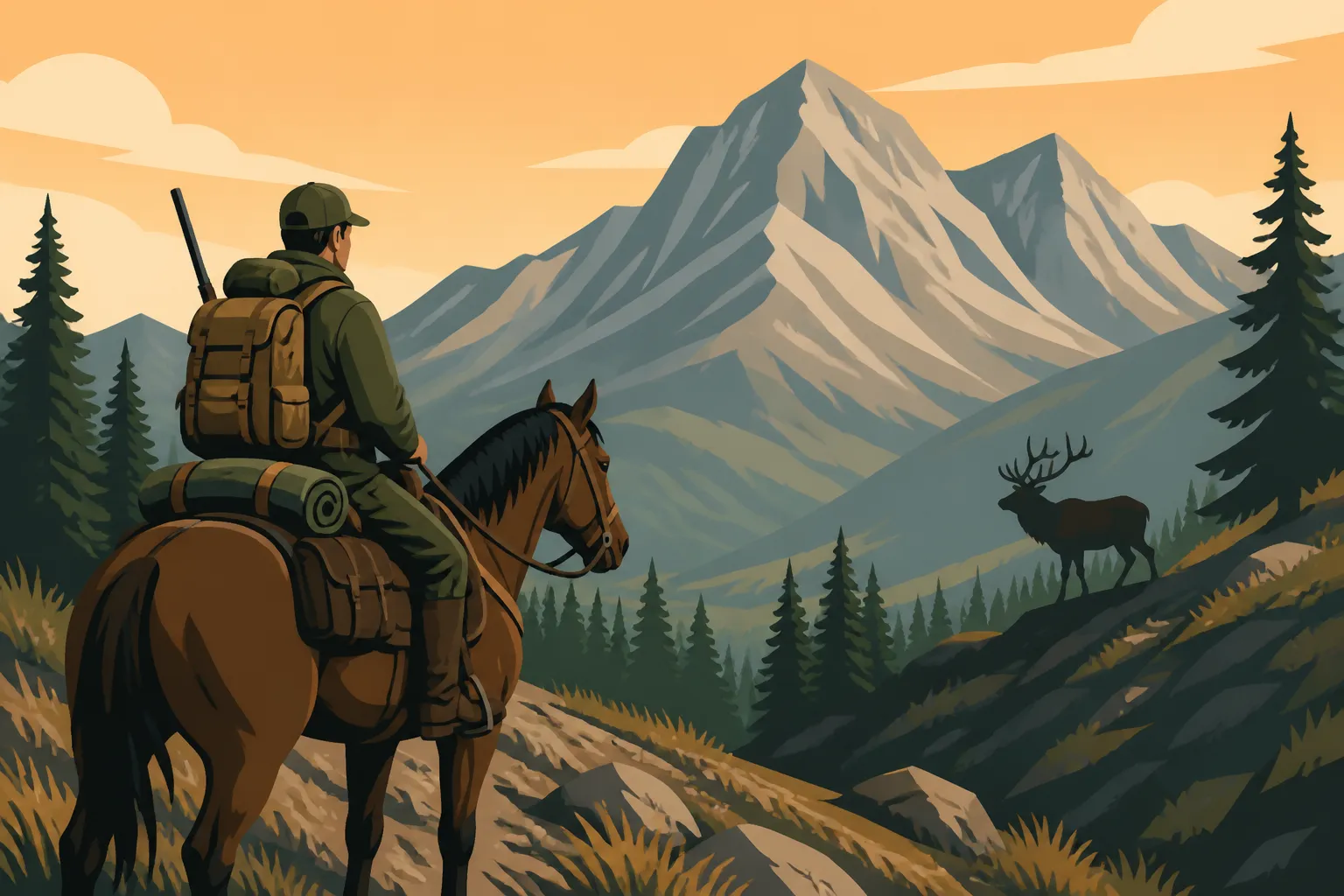
The idea of a horseback hunt conjures images of rugged individuals, vast landscapes, and a profound connection to the past. It's a different kind of hunt, one that demands more preparation, more grit, but ultimately offers an experience few hunters ever get to taste.
Why Go Where Roads Don't?
Let's be real, it's not easy. Hauling horses, packing gear, navigating challenging terrain – it's a lot of work. So why do hunters put themselves through it? The answer lies in the deeply satisfying pursuit of true wilderness. In these remote WMUs, the hunting pressure often drops significantly because most hunters simply can't or won't make the effort to get there. This means you're often finding game that's less educated, animals that live out their lives with less human interference. It's where you might stumble upon an old bull moose that's seen a hundred seasons, or a bighorn ram that's grown a full curl largely unbothered.
Beyond the game, it’s about the experience itself. There's a profound sense of solitude and self-reliance that comes from being deep in the backcountry, miles from the nearest road, with only your horses and your hunting partners. You hear the wind, the distant howl of a wolf, the crack of a branch underfoot – not the rumble of an ATV. It truly feels like stepping back in time, connecting with the hunting traditions that shaped our heritage.
The challenges inherent in getting to these places also add to the reward. When you finally reach that alpine basin or that hidden muskeg edge after days of travel, the sense of accomplishment is immense. It's not just a hunt; it's an expedition, a testament to your perseverance and skill. For many, this deeper connection to the land and the hunt is what keeps them coming back year after year, enduring the hardships for those fleeting moments of raw, untamed wilderness.
Identifying Horseback Terrain on a Map
Pinpointing areas truly exclusive to horseback travel isn't always as simple as looking for "no road" signs. Sometimes, a trail might appear on a map, but it's impassable for vehicles or even quads due to extreme washouts, fallen timber, or incredibly steep grades. This is where detailed topographic maps and satellite imagery become your best friends. Services like onX Hunt and GoHunt offer invaluable layers that can show you old seismic lines, faint game trails, and contour lines that immediately scream "horse country."
When you're poring over these maps, look for large tracts of land devoid of any designated roads, especially those with significant elevation changes, dense timber patches, or numerous river and creek crossings. Pay close attention to the gradient indicated by contour lines; tightly packed lines mean steep terrain, which often leads to impassable sections for motorized vehicles. Also, research the specific Public Land Use Zones (PLUZs) within the WMU you're eyeing. Many PLUZs have explicit restrictions on motorized access, making them prime candidates for horseback-only hunting.
Using high-resolution satellite imagery is crucial for verifying what looks like a trail. A faint line might just be an old game trail or a deactivated logging spur that's completely overgrown. Conversely, a section that looks impenetrable from a topo map might reveal a hidden game trail that, while rough, is traversable on horseback. Don't forget to leverage tools like Scouting With Satellite Imagery in Alberta to meticulously plan your routes, identify potential campsites, and spot natural barriers that would deter anyone without horses. This detailed reconnaissance is key to a successful and safe trip into true horseback terrain.
The Physical Demands and Preparation
Underestimating the physical demands of a horseback hunt in Alberta's remote WMUs is a common mistake. It's not just about riding a horse; it's about being prepared for anything. You'll be spending long days in the saddle, often over uneven ground, climbing and descending steep hills, and navigating through dense brush. This requires a level of physical fitness that goes beyond what's needed for a typical truck hunt. Your core strength, leg endurance, and overall stamina will be put to the test, especially when you dismount to hike into a promising basin or follow a fresh track.
Beyond your own fitness, the health and training of your horses or mules are paramount. These aren't joyrides; your animals will be carrying you and all your gear, sometimes for many miles and multiple days. They need to be in excellent condition, accustomed to backcountry travel, crossing water, and handling unexpected wildlife encounters. This often means months of conditioning and careful feeding leading up to the hunt. You'll also need specialized equipment like sturdy packing saddles, panniers, hobbles, and possibly even a portable electric fence to keep your animals secure at camp.
Safety is another huge consideration. In these remote areas, help is often days away. You need to be self-sufficient and capable of handling emergencies for both yourself and your animals. This includes carrying comprehensive first aid kits, having a satellite communication device, and knowing basic veterinary care for your stock. Planning for unexpected weather, potential injuries, and knowing how to troubleshoot gear failures are all part of the rigorous preparation required for a successful and safe horseback hunt. The more prepared you are, the more you can enjoy the hunt rather than constantly battling unforeseen challenges.
Prime Alberta WMUs Requiring Horseback Access
Alberta boasts some incredible wilderness areas where horses aren't just an option, but a necessity. These regions offer unparalleled opportunities for adventure and hunting truly wild game.
The Bighorn Backcountry and Its Challenges
When we talk about horseback-only access, the Bighorn Backcountry immediately springs to mind. This sprawling region, encompassing portions of WMUs like 432, 434, and 436, is legendary for its rugged beauty and the big game it holds. It's part of Alberta's mountain and foothills country, characterized by towering peaks, deep valleys, and extensive tracts of old-growth timber that are simply too dense for any vehicle to penetrate. Access points are limited, and once you leave the main staging areas, you're quickly into country where horses are the only practical mode of transport.
Hunting here means embracing the vertical. You'll be climbing ridges, traversing steep slopes, and glassing vast alpine basins for bighorn sheep, mountain goat, elk, and moose. The challenges are real: unpredictable weather can bring snow in August or sudden thunderstorms, trails can be washed out, and creek crossings can swell into formidable obstacles. But the rewards are equally immense. The solitude is profound, and the chance of encountering an animal that has rarely seen a human hunter is significantly higher. Many hunters plan multi-day or even multi-week expeditions into this area, establishing spike camps as they move deeper into the mountains. For more specific insights into this demanding but rewarding hunt, check out Hunting the Bighorn Backcountry.
Success in the Bighorn isn't just about hunting skill; it's about mountain savvy, horsemanship, and sheer perseverance. Packing out a heavy animal from these elevations is a monumental task, often requiring multiple trips with pack animals. This isn't a quick weekend hunt; it's an investment in time, effort, and serious preparation. But for those who undertake it, the memories forged in this remote wilderness often last a lifetime.
Willmore Wilderness Park and Adjacent Zones
North of Jasper National Park lies Willmore Wilderness Park, a vast expanse of protected mountain wilderness that, by provincial decree, prohibits all motorized access. This means no quads, no dirt bikes, no trucks – just foot traffic and horses. It's a true stronghold for those seeking the ultimate backcountry experience, where the sense of wildness is palpable. WMUs adjacent to Willmore, especially along its eastern and northern boundaries, often share this characteristic of extremely limited motorized access, forcing hunters to rely on hooves and muscle power.
Hunting in Willmore and its surrounding remote zones often targets trophy bighorn sheep, mountain goat, elk, and moose. The park itself is massive, and venturing deep within requires weeks, not days, of travel. The terrain is classic Rocky Mountain: high alpine meadows, glacial valleys, dense subalpine forests, and formidable river crossings. Planning a hunt here is an undertaking that rivals serious mountaineering expeditions. You'll need reliable horses, extensive packing knowledge, and a robust understanding of navigation in truly wild country. For hunters specifically looking at this unique challenge, Hunting Willmore Wilderness Park Requires delves into the specifics.
The remoteness of Willmore means that game animals are often less wary and can grow to impressive sizes, offering opportunities for truly once-in-a-lifetime trophies. However, the sheer scale of the landscape and the lack of infrastructure also mean that any emergency can become a life-threatening situation. Hunters here must be completely self-reliant, carrying all their supplies and having robust contingency plans. It’s an adventure that demands respect, but for those who are prepared, it offers a glimpse into a wilderness that has remained largely untouched by modern machinery.
Remote Pockets of the Northern Boreal Forest
While the mountains are the most obvious candidates for horseback-only access, the vastness of Alberta's northern boreal forest also hides WMUs and pockets of land that are practically impenetrable without horses. We're talking about areas far removed from the main forestry roads, where old cutlines have long since grown over, and the terrain is dominated by muskeg, dense jackpine and spruce stands, and numerous unbridged rivers and creeks. WMUs like the northern reaches of 520, 524, and 526, particularly those sections away from major logging operations or human development, can fit this bill perfectly.
In these zones, the challenge isn't elevation as much as it is sheer density and wetness. Muskegs can swallow vehicles whole, and thick willow and alder stands can make walking an exhausting chore. Horses, with their ability to navigate swampy ground and push through heavy brush, become essential. They can carry you and your gear across terrain that would bog down any ATV or leave you utterly spent on foot. Moose and black bear are the primary big game species here, thriving in the dense cover and abundant water. Wolves are also prevalent, adding to the truly wild atmosphere. For specific tips on navigating these challenging environments, consider researching Hunting a Boreal Muskeg Edge.
These northern hunts require a different kind of preparation than a mountain hunt. You'll need horses that are comfortable with mud and water, and gear that can withstand constant dampness. Mosquitoes and black flies can be legendary, so protective clothing and repellents are non-negotiable. Navigation can be tricky in the monotonous timber, so a reliable GPS and map are vital. While not as visually dramatic as the mountains, the boreal forest offers its own unique brand of wilderness hunting for those willing to venture deep into its silent, green depths on horseback.
Practicalities of Horseback Hunting in Alberta
Embarking on a horseback hunting trip isn't something you decide to do on a whim. It's a complex undertaking that requires significant planning, investment, and often, specialized skills.
Securing Stock and Equipment
The first, and arguably most critical, step for a horseback-only hunt is securing your stock. Do you own horses or mules? Are they seasoned pack animals accustomed to hauling heavy loads over rough terrain? If not, you'll need to consider renting from an outfitter or a specialized pack outfit. When choosing, don't just look for an animal that can walk; you need one that is calm, strong, sure-footed, and experienced in the specific environment you'll be hunting. A green horse in true backcountry is a recipe for disaster.
Beyond the animals themselves, the equipment list is extensive. You'll need sturdy riding saddles that fit both you and your horse comfortably for long hours. More importantly, you'll need reliable pack saddles – either traditional sawbuck or Decker types – along with heavy-duty panniers, manties, and ample rope for secure diamond hitches. Your gear needs to be waterproof and compartmentalized for easy access. Essential items include hobbles or a portable electric fence system for securing your animals overnight, feed for the duration of your trip (especially if natural forage is scarce or snow-covered), and basic vet supplies for your stock.
It's a significant investment, both in terms of upfront cost and the ongoing care and training if you own your animals. Many hunters start small, perhaps with a single pack horse for short trips, before building up to the capability for multi-week expeditions. The quality and reliability of your stock and gear can make or break a backcountry hunt, so cut no corners here.
Camp Setup and Logistics in the Backcountry
Setting up camp in horseback-only WMUs is an art form. Unlike road-accessible areas where you might just pull up a trailer, you're packing everything in on your animals. This means prioritizing lightweight, durable, and functional gear. Your choices typically boil down to either a base camp or multiple spike camps. A base camp, often set up near a reliable water source and good forage, serves as your central hub. From there, you might make day rides or set up lighter spike camps for a night or two closer to the actual hunting grounds. For an idea of suitable shelters, consider Wall Tent Camps in Alberta's Backcountry.
Choosing a camp location involves more than just a flat spot. You need safe pasture for your horses (away from steep drops or potential bogging hazards), easy access to clean water for both humans and animals, and a sheltered area from the elements. Bear safety is paramount; food must be properly hung or stored in bear-proof containers, and cooking areas kept separate from sleeping areas. This is especially true in areas where grizzlies roam. All waste must be packed out, following strict Leave No Trace principles.
Logistics also extend to your daily routine. Who is responsible for saddling, feeding, and watering the horses? How will you manage your food supply to minimize weight while ensuring adequate nutrition for days or weeks in the field? How will you keep gear dry in wet weather? Every aspect of camp life in the backcountry needs to be meticulously planned, rehearsed, and then executed with efficiency to ensure the comfort and safety of both the hunters and their invaluable four-legged companions.
Navigating and Safety on the Trail
Navigation in remote, horseback-only WMUs can be incredibly challenging, especially in dense timber or featureless muskeg country where landmarks are scarce. Relying solely on a compass and paper map, while essential backup skills, might not be enough. A robust GPS unit with detailed topographic maps preloaded is non-negotiable. Devices like onX Hunt offer excellent offline map capabilities, showing trails, terrain features, and property boundaries even without cell service. Having multiple navigation tools, including a satellite communicator like a Garmin inReach or a Zoleo, is critical for safety. These devices allow you to send and receive messages, access weather forecasts, and, most importantly, trigger an SOS in an emergency, even when miles from civilization. You can learn more about these tools in Satellite Messengers in the Backcountry.
Safety on the trail also extends to managing your animals. Horses can spook, slip, or get injured. Knowing how to safely lead a string of pack animals, manage river crossings, and navigate steep, rocky sections is vital. Always be aware of potential hazards like fallen trees, hidden holes, or unexpected encounters with wildlife that could trigger a stampede. A well-stocked first aid kit for both humans and horses, along with basic repair tools for tack and equipment, should always be part of your pack.
Developing an emergency plan is crucial. Before you leave, inform someone reliable of your exact route, planned dates, and expected return. Share your satellite messenger contact information. Discuss what to do if someone gets injured, a horse goes lame, or you get separated from your party. In these truly remote areas, you are your own first responder, and preparation for the worst-case scenario is not just smart; it's essential for survival.
The Unforgettable Experience
A horseback hunt in Alberta's remote WMUs is more than just a hunt; it's an immersive journey into the wild, a test of spirit, and an experience that shapes you as a hunter and an individual.
The Reward of Deep Wilderness
There's something truly magical about waking up deep in the Alberta backcountry, the only sounds being the rustle of the wind through the pines and the soft snorting of your horses as they graze. The sheer silence is often the first thing people notice, a stark contrast to the constant hum of modern life. In these horseback-only WMUs, you're far removed from cell towers, vehicle noise, and the general clamor of civilization. This solitude allows for a profound connection with nature and a deep sense of peace that's hard to find anywhere else.
The feeling of self-reliance is immense. Every meal eaten, every mile traveled, every obstacle overcome is a testament to your own skills and preparation. You're not just hunting; you're living off the land, navigating by instinct as much as by GPS, and trusting in your animals and your partners. This fosters a sense of accomplishment that a roadside hunt simply cannot replicate. You are part of an ancient tradition, mirroring the journeys of trappers, explorers, and Indigenous peoples who moved through this landscape long before roads existed.
Moreover, the quality of the hunting experience is often elevated. While success is never guaranteed, the opportunity to encounter unpressured game, to truly observe their natural behavior without the constant intrusion of human activity, is a reward in itself. It's about the entire journey, the vistas, the challenges, and the camaraderie around a campfire under a sky thick with stars, rather than just the trophy. It’s an adventure that resets your perspective and deepens your appreciation for the wild places that still exist.
Game Recovery and Meat Care in Remote Areas
Filling a tag in a horseback-only WMU is a tremendous accomplishment, but it's only half the battle. Now comes the truly challenging part: recovering your animal and ensuring the meat is cared for properly, often miles from any cooler or processing facility. This is where your pack animals earn their keep, but even with them, it's a monumental task. You'll likely be quartering the animal on the spot, meticulously removing all meat, and potentially caping for a trophy. For detailed guidance, Quartering a Moose Alone in the Bush offers valuable insights, even if you're with a partner.
The weight of an elk or moose is staggering, and even deer can be a significant load. Expect to make multiple trips with your pack horses, carefully loading each quarter into game bags to keep it clean and allow for airflow. Proper meat care in the field is paramount, especially if temperatures are mild. The meat needs to cool quickly to prevent spoilage. This means getting it out of the hide, off the bone if possible, and hanging it in the shade, ideally with a breeze. Fly nets and clean game bags are your best friends here.
The journey back to the truck or staging area will be slow and deliberate, with your horses heavily laden. This is why planning your recovery route in advance, including potential water sources for thirsty animals, is as important as planning your hunting route. Getting that hard-earned meat out of the backcountry and back to civilization is often the most physically demanding part of the entire trip, but the satisfaction of a freezer full of wild game makes every aching muscle worth it. Additional tips on this arduous process can be found in Packing Out of Alberta's Mountain WMUs.
Respecting the Land and Its Legacy
Hunting in these remote, horseback-only WMUs is a privilege that comes with significant responsibility. Because these areas are pristine and relatively untouched, the impact of human activity is much more pronounced. It is incumbent upon every hunter to practice impeccable Leave No Trace principles. This means packing out everything you pack in, including all garbage, spent cartridges, and even food scraps. No trace of your camp should be visible when you leave. Dispose of human and animal waste properly, away from water sources.
Beyond the physical impact, there's a responsibility to respect the wild character of the land itself. Avoid creating new trails or disturbing sensitive ecosystems. Be mindful of existing trails, using them whenever possible to minimize your footprint. Practice ethical hunting, ensuring clean kills and diligent game recovery, demonstrating respect for the animals you pursue. The goal is to leave the wilderness as wild and undisturbed as you found it, preserving its integrity for future generations of hunters and outdoor enthusiasts.
These remote WMUs offer a rare opportunity to connect with a landscape that remains largely as it has been for centuries. By treating it with the utmost respect and adhering to responsible backcountry practices, we ensure that the legacy of horseback hunting in Alberta's wild places will continue to thrive for years to come. It’s about being a steward of these incredible resources, recognizing that our presence is temporary, but the land endures.
Disclaimer
This article is for general informational purposes only and does not constitute professional advice. Laws, prices and regulations vary by location and change over time. Consult a qualified professional for guidance on your specific situation.