Alberta WMUs That Need a Quad
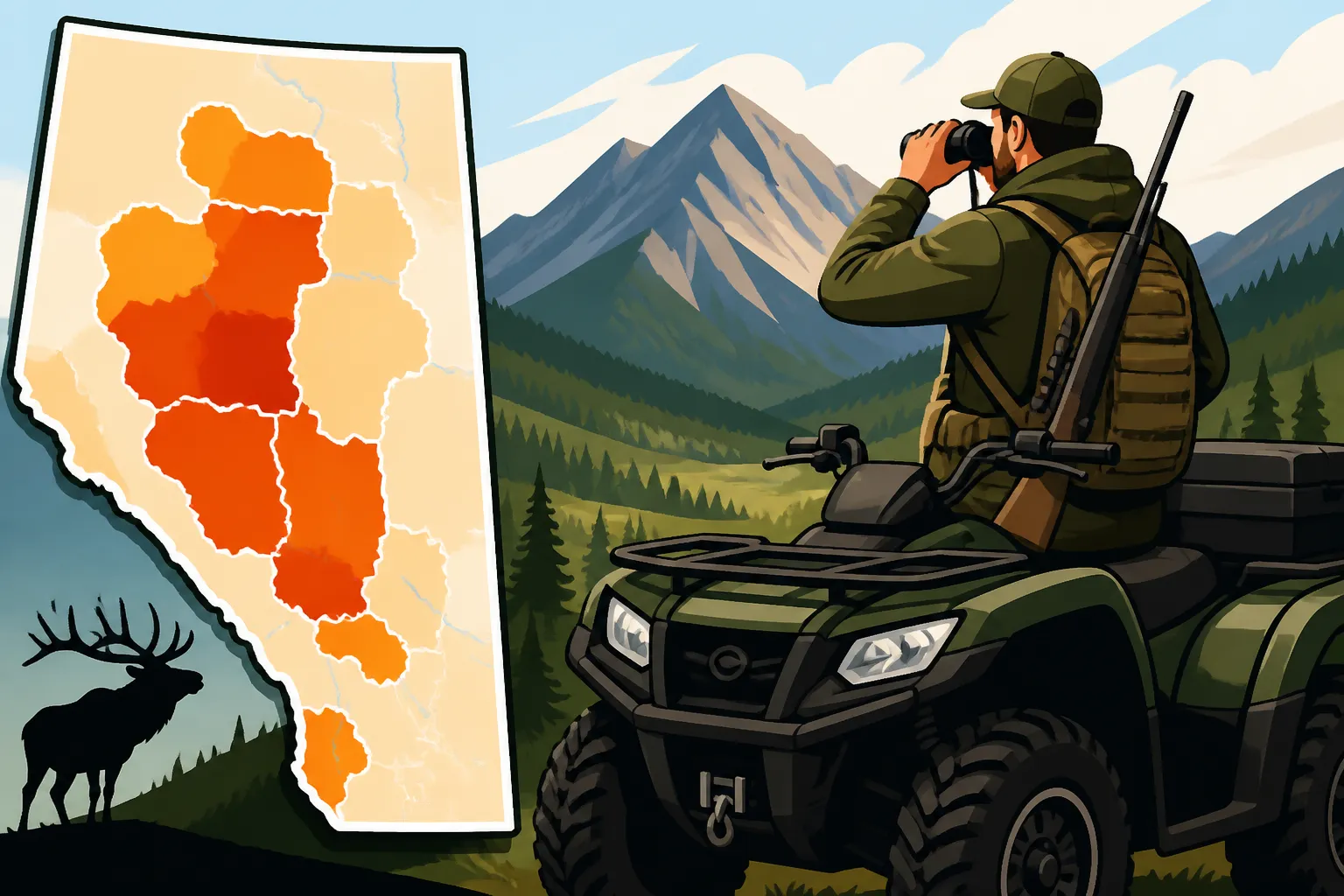
Navigating Alberta's vast and varied hunting landscapes can be a real head-scratcher, especially when you're trying to figure out how to get off the beaten path and away from the crowds. Many hunters dream of those remote honey holes, but accessing them can be a huge hurdle. This guide is all about shedding light on specific Alberta Wildlife Management Units (WMUs) where bringing a quad isn't just a convenience, but a near-essential piece of your hunting puzzle.
Understanding Alberta's Access Challenges Beyond Pavement
Let's face it, not every prime hunting spot in Alberta is conveniently located right off a paved highway or even a well-maintained gravel road. A lot of the best opportunities, particularly for big game, lie deep within country that requires more than just a 4×4 truck. This is where the rubber meets the trail – or more often, the mud and muskeg.
The Reality of Alberta's Backcountry Roads
When you look at an Alberta map, you'll see a spiderweb of lines that look like roads, but the reality on the ground can be starkly different. In many parts of the Green Area, particularly the vast stretches of boreal forest or the rugged foothills, what starts as a decent gravel road can quickly degrade into a rutted track, an old logging road swallowed by alders, or a barely discernible seismic line. These routes are often maintained sporadically, if at all, and a single heavy rain or a winter's worth of freeze-thaw cycles can turn a passable trail into an impassable bog. You might encounter deep water crossings, sudden washouts, or massive blowdowns that demand a level of off-road capability far beyond what a typical pickup can offer. Trying to push a full-size truck down these trails can quickly lead to getting stuck, damaging your vehicle, or worse, spending valuable hunting time just trying to extract yourself.
Why a Quad Becomes a Necessity, Not a Luxury
In these challenging environments, a quad, or an ATV, isn't just for hauling out an animal – it's your primary mode of transportation to even reach the hunting grounds. Picture this: you've scouted a promising area deep in a WMU that's miles from the nearest maintained road. On foot, it would take you hours, possibly a full day, just to get in, leaving you exhausted before the hunt even begins. With a quad, you can cover that distance efficiently, saving your energy for the hunt itself. Beyond pure travel, the ability to navigate through thick brush, cross small creeks, climb steep grades, and manage muddy sections makes a quad indispensable. It extends your effective hunting range significantly, allowing you to bypass easily accessible, heavily pressured areas and get into those quiet zones where mature animals often seek refuge. When you finally connect with an animal, the quad becomes your retrieval lifeline, turning what could be a multi-day packing nightmare into a manageable task.
Key Characteristics of Quad-Dependent WMUs
So, what makes a WMU scream "bring a quad!"? It's not always obvious just by looking at a map, but there are some tell-tale signs and geographical features that should immediately tip you off that two extra wheels (or four, if you're thinking side-by-side) are going to be your best friend.
Remote and Undeveloped Road Networks
The most obvious sign of a quad-dependent WMU is its road infrastructure – or lack thereof. We're talking about areas where the gravel ends and the faint two-track trails begin, often with no signs of recent vehicle traffic. You'll find these WMUs characterized by an intricate network of old logging roads that haven't seen a grader in years, or even decades. These tracks become overgrown, with young trees and brush encroaching, demanding a smaller, more nimble vehicle to push through. Often, these areas are crisscrossed by a grid of seismic lines – narrow, cut paths through the bush from oil and gas exploration – which, while offering access, are rarely maintained and quickly become muddy trenches or impassable obstacles, particularly in wet conditions. Terrain features like extensive muskeg (those notoriously boggy peatlands) are common in northern WMUs, and while you might find a way around on foot, a quad makes it far less arduous and safer. Similarly, steep, rocky grades or frequent, unbridged creek crossings in the foothills require the clearance and traction an ATV provides. You might be Hunting an Old Logging Road in the Foothills and suddenly find it turns into a steep, rocky climb that no truck could manage.
Deep Penetration for Less Pressure and Better Success
One of the biggest advantages of utilizing a quad in these challenging WMUs is the ability to achieve "deep penetration." Simply put, the harder it is to get somewhere, the fewer other hunters you're likely to encounter. This significantly reduces hunting pressure, especially on public land. Animals, particularly mature ones, quickly learn to avoid areas with high human activity. By using a quad to access areas several miles beyond where the average hunter will walk, you're getting into places where deer, moose, and elk feel more secure and are more likely to exhibit natural patterns of movement. This often translates to better opportunities for spotting, stalking, and ultimately, success. You might find untouched meadows, unpressured bedding areas, and rutting corridors that rarely see a human boot print. A solid GPS mapping app like onX Hunt or GoHunt becomes invaluable here, showing you exactly how far off the main drag you can get, and where potential quad trails exist, which might not even be marked on physical maps.
Game Retrieval and Camp Logistics
Let's be brutally honest: harvesting a large animal like a moose or an elk in remote country without a quad is a monumental task. The sheer weight and bulk of a quartered animal, combined with difficult terrain, can turn a successful hunt into an exhausting, multi-day ordeal requiring multiple trips and incredible physical exertion. A quad transforms this challenge. With a small trailer or a sturdy front/rear rack, you can significantly reduce the number of trips needed, preserve the meat better by getting it out faster, and conserve your own energy. Beyond game retrieval, quads are essential for camp logistics in these WMUs. If you're planning a multi-day hunt or a spike camp far from the truck, you'll need to transport gear: tents, sleeping bags, cooking equipment, food, water, and emergency supplies. Trying to backpack all of this in for several miles through thick bush or across muskeg is simply not feasible for most hunters. A quad allows you to bring in a comfortable camp, adequate supplies, and even extra fuel, making longer, more productive hunts possible.
Specific Alberta WMU Types Where a Quad is Essential
Alberta's diverse geography means different WMUs present unique access challenges. While a general 4×4 truck might suffice in many areas, some regions inherently demand a quad to truly unlock their potential.
Boreal Forest WMUs: The Land of Mud and Timber
When you head into Alberta's vast boreal forest, especially in the northern WMUs (often in the 500-series like WMU 510, 512, 532, 534), you're entering a realm where a quad is practically a requirement. This country is characterized by dense timber, extensive muskeg, winding rivers, and a maze of old cutlines and seismic lines. These lines, originally cleared for resource exploration, are rarely maintained. In spring and fall, they can quickly become saturated, turning into deep, muddy trenches that swallow tires whole. Foot travel through the thick bush here is incredibly slow and arduous, often involving navigating around boggy sections and pushing through dense undergrowth. Getting in with a quad allows you to cover miles of these lines, reaching remote clearcuts, beaver ponds, or pockets of timber where moose and black bears thrive away from human disturbance. You might be Hunting a Frozen Slough Crossing for whitetails in December, but getting there in September would mean slogging through knee-deep mud if you don't have a quad. Similarly, chasing moose deep into the Boreal often means using these very access points. If you're looking at Hunting Moose Along Cutlines and Seismic Lines, a quad is your ticket.
Foothills and Mountain Fringe WMUs: Steep and Rocky Access
Moving west towards the Rocky Mountains, the landscape shifts dramatically, but the need for a quad often remains. WMUs in the foothills and mountain fringe (like parts of the 400-series, e.g., WMU 402, 404, 406, 410) are defined by their steep, rolling hills, deep drainages, rocky creek beds, and thick pockets of spruce and pine. While some main forestry roads might be accessible by truck, to get into the really prime elk, mule deer, or even bighorn sheep country, you often need to climb steep, unmaintained trails that are too narrow, too rocky, or too soft for a full-size vehicle. These trails frequently cross creeks that might be shallow in summer but turn into rushing torrents during runoff or heavy rains. A quad with good ground clearance and 4×4 capabilities can navigate these obstacles, getting you higher and deeper into the mountains, away from the valley bottoms that see heavy pressure. Thinking about Hunting a Foothills Bench Above a Creek or accessing higher elevation basins? A quad will get you there. Areas like the Ghost Public Land Use Zone or parts of the Livingstone Range often demand quad access to truly explore.
Remote Parkland and Brushy River Bottoms
Even in what might seem like more accessible "White Area" WMUs, particularly in the Parkland (like the 200 and 300 series) or southern prairie WMUs, there are specific pockets where a quad makes a world of difference. Think about large river valleys like the Red Deer River or the Oldman River. These river bottoms are often a labyrinth of dense brush, steep coulee walls, and thick timber pockets. While the surrounding farmland might be easy to drive, getting down into and along the river itself can be impossible without a quad. These areas are natural sanctuaries for whitetails, mule deer, and even elk, offering cover and food sources. Similarly, extensive aspen bluffs or large, uncultivated sections of private land (with permission, of course) can have trails that quickly become too rough for a truck. A quad allows you to navigate these brushy corridors, get into those hidden Hunting a River Valley Bottom in Alberta spots, or push through dense Hunting an Aspen Bluff on Farm Ground that would be a nightmare on foot, especially when you need to retrieve an animal.
Planning Your Hunt in a Quad-Dependent WMU
So, you've identified a WMU that looks promising for a quad-assisted hunt. Fantastic! Now comes the critical part: planning. Proper preparation is paramount to ensure a safe, successful, and ethical hunt in these often-challenging environments.
Pre-Scouting and Map Research (with brand mentions)
Before you even load up the quad, thorough pre-scouting and map research are absolutely non-negotiable. This is where modern technology shines. Tools like onX Hunt and GoHunt are incredibly powerful. They allow you to overlay different map layers – satellite imagery, topographical lines, and land ownership – to identify potential quad trails, old cutlines, creek crossings, and areas of dense timber or open terrain. You can drop pins at strategic locations, measure distances, and evaluate elevation changes, all from the comfort of your home. Pay close attention to public land boundaries, as access rules can change drastically between Crown Land and private property. Looking at recent satellite images can give you clues about current trail conditions, recent logging activity, or areas that might be particularly wet. This digital scouting can save you countless hours of driving and frustration. Remember to check out resources on Scouting With Satellite Imagery in Alberta to really hone these skills.
Quad Preparation and Safety
Your quad itself needs to be in tip-top shape. Before heading out, perform a thorough maintenance check: tires, oil, brakes, lights, and winch. A working winch is a lifeline in many of these WMUs, whether you're pulling yourself out of a sticky situation or helping retrieve an animal. Carry extra fuel in approved containers, as fuel stations can be few and far between once you leave the main roads. Always pack a comprehensive survival kit, including first aid supplies, a satellite messenger or GPS device, a flashlight, fire-starting materials, extra warm clothing, and water. Even if you're hunting with a buddy, unexpected breakdowns or injuries can quickly turn serious in remote areas. Always let someone know your exact hunting plan, including your route, expected return time, and who to call if you don't check in. Be aware of Quad and Side-by-Side Rules on Crown Land, which govern where you can legally operate your ATV, ensuring you stay on designated trails and respect access regulations.
Respecting the Land and Other Users
Hunting in quad-dependent WMUs comes with a significant responsibility to be a good steward of the land and a respectful co-user. Always stick to established trails and designated access points. Creating new trails, especially in wet conditions, can cause significant environmental damage and lead to further access restrictions for all hunters. Be mindful of noise; while quads are louder than walking, try to minimize unnecessary idling or excessive speeds, especially near other camps or known game movement corridors. Recognize that others might be using these same trails for other recreational activities like hiking, fishing, or horseback riding. Yield to horses, and always be courteous. Adhere strictly to any temporary access restrictions, such as seasonal gate closures due to wet conditions or fire bans. Respect for the land and fellow outdoorsmen ensures these valuable hunting opportunities remain open for everyone in the future. Remember to refer to resources like Vehicle Rules on Alberta Crown Land to ensure you're always operating within regulations.
| WMU Type | Typical Terrain Features | Why a Quad is Essential | Example Activity |
|---|---|---|---|
| Boreal Forest | Thick timber, extensive muskeg, old cutlines | Navigate deep mud, traverse bogs, cover long distances | Hunting Moose Along Cutlines and Seismic Lines |
| Foothills & Mountain | Steep grades, rocky trails, creek crossings | Climb challenging terrain, reach high-elevation basins | Hunting a Foothills Bench Above a Creek |
| Parkland River Bottoms | Dense brush, steep banks, limited road access | Push through thick cover, access secluded river corridors | Hunting a River Valley Bottom in Alberta |
| Remote Prairie Pockets | Isolated coulees, brushy draws, long distances | Reach unpressured areas, cover ground efficiently | Hunting a Prairie Coulee Bottom |
| Old Logging Blocks | Overgrown roads, clearcuts, varied elevation | Penetrate deep into old growth, bypass washouts | Hunting an Old Logging Road in the Foothills |
Disclaimer
This article is for general informational purposes only and does not constitute professional advice. Laws, prices and regulations vary by location and change over time. Consult a qualified professional for guidance on your specific situation.