Alberta Landowner Relations for Hunters
One of the biggest headaches for any hunter in Alberta, especially those new to the province or exploring new zones, is figuring out where you can actually hunt. It often feels like a minefield of "No Trespassing" signs, locked gates, and unanswered phone calls, leaving you scratching your head about where to even begin. This guide is all about demystifying private land access in Alberta, helping you understand the rules, cultivate good relationships with landowners, and ultimately find more places to ethically and legally pursue game.
The Foundation: Understanding Alberta's Land Ownership Landscape
Before you even think about knocking on a door or checking a map, you need a solid grasp of how land ownership works in Alberta. It's not as simple as public or private; there are nuances that can make or break your hunting plans. Understanding this foundation is truly the first step to successful landowner relations.
The Green Area vs. White Area Divide
Alberta's landscape is broadly categorized into two main areas: the Green Area and the White Area. Think of them as two very different worlds, each with its own set of rules and expectations for hunters. The Green Area is largely composed of provincial forests, parks, and other undeveloped Crown land, often found in the northern and western parts of the province. This is where you typically find vast expanses of timber, mountains, and wilderness. Access here is generally more straightforward, often falling under Hunting Alberta's Crown Land guidelines, though even Crown land has its specific rules, such as those within Public Land Use Zones. In these areas, your main concerns might be navigating forestry roads, understanding specific recreational use rules, or simply getting deep enough to escape pressure.
On the flip side, the White Area is the agricultural heartland of Alberta, characterized by cultivated fields, pastures, and interspersed pockets of bush. This is where the majority of the province's human population resides, and consequently, where private land ownership is most prevalent. While there are still parcels of Crown land, grazing leases, and other public-access lands within the White Area, the dominant feature is private property. This distinction is crucial because the vast majority of deer, especially whitetails, and a good portion of other game species like elk and waterfowl, spend significant time or even exclusively live within this patchwork of private holdings. This is where landowner relations become absolutely paramount.
Crown Land and Public Access Points
Even within the predominantly private White Area, there are still opportunities on Crown land. These might be small isolated parcels of provincial land, river lots, or larger Provincial Grazing Reserves. Understanding how to identify these pieces of land is key. They aren't always marked with clear signage, and often, you might find a piece of Crown land completely surrounded by private property, creating an access challenge. For instance, sometimes you'll find an Alberta Conservation Association (ACA) land parcel or a Public Land Use Zone (PLUZ) nestled within otherwise private agricultural areas. These are golden opportunities, but you still need to know how to get to them legally.
Accessing these smaller Crown parcels sometimes requires crossing private land, which brings you right back to the need for permission. Even if your target hunting ground is public, your route in might not be. This is a common frustration for hunters, spotting game on public land but having no legal way to reach it without permission from an adjacent private landowner. It's a reminder that even when hunting Crown land, being neighbourly and respectful of private land around it is always a good idea. Knowing how to use mapping tools that differentiate land ownership can be a game-changer here, showing you legal access points or helping you determine whose land you might need to cross.
Private Land and the Trespass Act
The most critical aspect of landowner relations revolves around private property. In Alberta, the Trespass Statutes (Trespass Act and Petty Trespass Act) are very clear: you must have permission from the landowner or occupier before entering private land for any purpose, including hunting. This isn't just a suggestion; it's the law. This means that if a piece of land isn't explicitly identified as public Crown land or a designated public access area, you should assume it's private and requires permission.
The responsibility to know whose land you're on and to secure permission rests entirely with the hunter. Ignorance of boundaries or ownership is not a valid excuse. This is where many hunters get into trouble, either by accidentally straying onto private land or by making assumptions about access. It's far better to err on the side of caution and seek permission, even if you're unsure. The consequences of trespassing can range from a warning to significant fines, and even the loss of your hunting privileges. More importantly, it damages the reputation of all hunters, making it harder for others to gain access in the future.
The Art of Asking: Seeking Private Land Permission
So, you've identified a promising piece of private land. Now comes the trickier part: actually getting permission to hunt there. This isn't just a transaction; it's about building a relationship, often from scratch, with someone who holds the key to your hunting success.
The Old-School Approach: Knocking on Doors
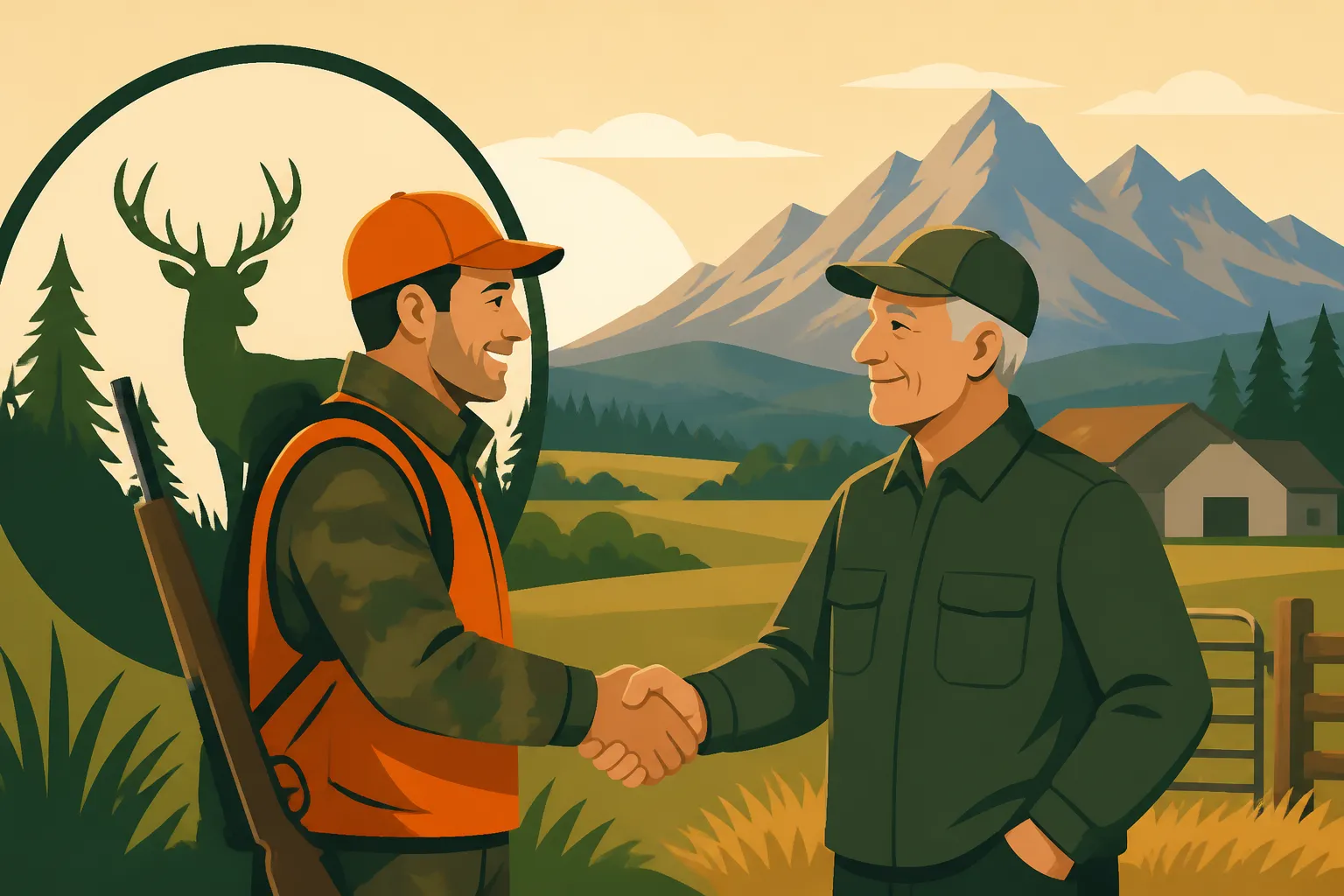
In our increasingly digital world, sometimes the best method is still the most traditional: knocking on the door. This direct, face-to-face approach shows respect, initiative, and allows for immediate, clear communication. When you show up in person, you're presenting yourself as an individual, not just a name on a piece of paper or a disembodied voice on a phone. Landowners can size you up, ask questions, and get a feel for whether you're someone they can trust on their property. This personal interaction often goes a long way in establishing rapport.
However, it also comes with its challenges. You might drive for hours only to find no one home, or catch a landowner at a busy, inconvenient time. It takes patience, a thick skin for potential rejection, and a bit of courage. Always approach with respect, a friendly smile, and a clear, concise explanation of why you're there. Have your Alberta Hunting Licences and What They Cost ready to show, and perhaps even offer a business card or a written summary of your request. Remember, you're asking for a favour, not demanding a right. Approaching during daylight hours, outside of peak farming times (like seeding or harvest), is usually best.
Researching Landowners and Contact Information
Before you even think about knocking, do your homework. Knowing who owns a particular piece of land is invaluable. Gone are the days of having to guess or rely solely on word-of-mouth. Modern technology has made this much easier. Tools like onX Hunt have revolutionized how hunters approach private land. You can pull up an overlay on your phone or computer that shows property boundaries, landowner names, and often, their mailing addresses. GoHunt also offers similar tools and resources for research. This information is usually publicly available through provincial land title offices, though these apps make it much more accessible.
Once you have a name, a quick search might yield a phone number. A phone call can be a good preliminary step, allowing you to introduce yourself and gauge interest before making a potentially long drive. However, be mindful that not all phone numbers are accurate or public. If you call, keep it brief, polite, and be prepared for a "no." The goal is to make initial contact and perhaps arrange a time for a more in-depth conversation in person. Always verify the legal land description (quarter section, township, range, meridian) when discussing a specific piece of property to avoid any confusion.
Crafting Your Request: What to Say and How to Present Yourself
When you do make contact, whether in person or by phone, how you present your request is crucial. Don't beat around the bush; state your purpose clearly and concisely. For example: "Hello, my name is [Your Name], and I'm a hunter interested in deer hunting on your property, specifically [mention a specific area like the aspen bluffs along the creek]." Be specific about what you want to hunt (e.g., Whitetail Hunting in Alberta or Mule Deer Hunting Alberta's Prairie and Badlands) and when you plan to hunt.
Emphasize respect for their property, their livestock, and their operations. Mention that you're a safe hunter, that you'll close gates, won't drive off trails, and will pick up after yourself. Offer to share some of your harvest if they are interested, or perhaps assist with a small chore. Dress presentably – clean clothes, no aggressive camo patterns, and certainly no firearms visible during the initial contact. A polite, respectful, and prepared hunter stands a much better chance of securing access than someone who seems disorganized or demanding. Landowners are often more willing to grant access if they feel comfortable with you as an individual.
Navigating Different Types of Private Land Access
Not all private land is the same, and understanding these distinctions can help you tailor your approach and expectations. Each type comes with its own set of landowner concerns and rules that you'll need to respect.
Cultivated Farmland and Crop Considerations
Hunting on cultivated farmland, especially during or after harvest, offers incredible opportunities, particularly for species like deer, geese, and pheasants. However, these lands are the landowner's livelihood, and respecting their crops is paramount. Before permission is granted, and certainly while you're hunting, always inquire about any unharvested crops, winter wheat, or vulnerable areas. Driving through a standing canola field, for example, is a huge no-no and can destroy your chances of ever hunting that property again. Even a swathed grain field requires careful navigation to avoid damaging the crop.
Ask where you can and cannot drive, where to park, and if there are specific areas where they prefer you not hunt due to proximity to their home or livestock. A common rule is to stay on existing field edges or trails, and never drive through standing or swathed crops. If you're hunting migratory birds, understanding Hunting Alberta's Sandhill Crane Season dates or Field Hunting Geese in Alberta Stubble means understanding how your presence might affect other hunters or the farmer's operations. Always be prepared for the possibility that harvest schedules or weather might temporarily restrict access, and be flexible with your plans.
Grazing Leases and Livestock Concerns
Grazing leases are a unique beast in Alberta. These are often Crown lands leased by ranchers for livestock grazing, meaning they are publicly owned but have private control over surface access due to the livestock operation. Many hunters wrongly assume these are open access, leading to conflicts. While the land is technically Crown, the leaseholder has a significant say in access, especially when livestock are present. Their primary concern is the welfare of their animals and the security of their property.
When seeking access to a grazing lease, you'll need permission from the leaseholder, not necessarily the government. Expect questions about your hunting methods, your awareness of livestock, and your commitment to closing gates. Leaving a gate open, disturbing cattle, or hunting too close to livestock are surefire ways to lose access permanently. Be extra vigilant about your backstops when shooting, and never aim in the direction of livestock. If cattle are in the area you planned to hunt, be prepared to alter your plans or postpone your hunt. It's often helpful to offer to check fences or report any issues you notice while on the property. Respecting the leaseholder's operation is key to Getting Access to an Alberta Grazing Lease.
Acreages, Rural Residences, and Buffer Zones
As urban and rural areas blend, hunting near acreages and rural residences becomes more complex. Even if the immediate property is private, the surrounding landscape might be huntable. However, provincial regulations dictate specific setback distances for discharging firearms near occupied buildings. These rules are in place for safety and to respect the peace of rural residents. Always know these distances and adhere to them strictly.
When seeking permission for land near residences, be especially mindful of noise, privacy, and potential disruptions. A landowner might be happy for you to hunt a back forty, but not want you tracking deer near their dog kennel or children's play area. Discuss these sensitivities upfront. Some landowners may prefer archery hunting over rifle hunting in these areas due to noise and projectile range. If hunting pheasants on Hunting Alberta's Pheasant Release Sites or Hunting Hungarian Partridge on Alberta Farms near a farmyard, always be aware of where houses and farm buildings are. Building trust in these areas often takes more time and consistent demonstration of respect and safety.
Building and Maintaining Positive Relationships
Getting permission is just the first step. The true test of a good landowner relationship is how you maintain it over time. A single season's permission can turn into years of access if you handle it correctly.
Respecting Boundaries and Expectations
Once you've secured permission, consider it a privilege, not a right. Stick strictly to the agreed-upon terms. If the landowner said you could hunt the north quarter for deer, don't wander into the south quarter looking for coyotes without asking first. If they asked you to park in a specific spot, don't pull your truck up to the furthest fence post. This goes for everything: gates, trails, areas where livestock might be, specific hunting times, and even the number of hunters in your party.
Any deviation, no matter how small, can erode trust. If you encounter unexpected conditions, like a gate you thought would be open is now closed, or cattle have moved into your hunting area, always contact the landowner for clarification before proceeding. It's far better to ask and clarify than to assume and risk losing access. Think of it as a clear contract you've entered into; breaching it has consequences for you and for the hunting community at large.
Offering Compensation or Assistance
While not all landowners expect it, offering some form of compensation or assistance can go a long way. This isn't necessarily a monetary payment, which some landowners might even refuse. It could be offering to share some of the meat from your harvest, helping with a chore around the farm (mending a fence, stacking wood, picking rocks), or even bringing a gift like a gift basket, a bottle of local wine, or a gift certificate for a local restaurant. The gesture often means more than the item itself.
Another valuable offering is your eyes and ears. Many landowners appreciate hunters who are observant and report things they notice on the property: a broken fence, a stray piece of livestock, unusual vehicle tracks, or anything that seems out of place. This shows you're not just there to take, but that you genuinely care about their property. This kind of mutual respect and reciprocity is how long-term, positive relationships are built.
Communication and Follow-Up
Good communication is the cornerstone of any strong relationship, and it's no different with landowners. Don't just show up to hunt and disappear. A quick call or text a few days before your planned hunt to confirm your arrival, and another after you leave to thank them and report on your success (or lack thereof), can make a huge difference. If you fill your tag, send a picture and offer to share the meat. If you don't get anything, still thank them for the opportunity and let them know you enjoyed your time on their land.
Consider sending a holiday card or a small thank-you note at the end of the season. These small gestures reinforce your appreciation and keep you top-of-mind for future hunting seasons. Establishing yourself as a reliable, respectful, and communicative hunter means that when hunting season rolls around next year, you're not just another unknown voice asking for permission; you're a trusted individual. For more tips on this, check out Asking an Alberta Landowner for Permission.
Common Pitfalls and How to Avoid Them
Even with the best intentions, things can go sideways. Knowing the common mistakes hunters make can help you steer clear of them and maintain a positive standing.
Assumptions and Misunderstandings
One of the biggest pitfalls is making assumptions. Don't assume that because you got permission last year, you automatically have it this year. Don't assume that permission to hunt deer extends to hunting coyotes or upland birds. Don't assume that if a gate is open, it's okay to drive through, or if it's closed, it should be left open. Every detail needs to be clarified.
Misunderstandings often arise from vague agreements. When you get permission, try to confirm specifics:
- Which species are you allowed to hunt? (White-Tailed Deer, Alberta's Most Hunted Big Game, Mule Deer in Alberta's Open Country, Alberta's Predators and Where They Live, etc.)
- Which specific parts of the property? (e.g., "The quarter section north of the house, but stay out of the pasture with the horses.")
- What are the dates or duration of permission? (e.g., "Just this weekend," or "Until rifle season closes.")
- Are there any specific vehicle restrictions? (Quad and Side-by-Side Rules on Crown Land might also apply to private land with sensitive areas)
- Are there any areas off-limits due to livestock, other hunters, or personal use?
- Whom should you contact if you have a question or an issue?
It can be helpful to jot down these details immediately after the conversation. For complex agreements, some hunters even offer to write a brief, friendly summary for both parties to keep, ensuring everyone is on the same page. This clarity prevents awkward situations and maintains trust.
The "Bad Apple" Effect: Protecting the Hunter's Reputation
Unfortunately, the actions of a few irresponsible hunters can taint the perception of all hunters. A landowner who has had a negative experience with one hunter (e.g., gates left open, litter, driving off-road, shooting too close to buildings, disrespect) may be hesitant or outright refuse permission to any hunter in the future. This "bad apple" effect is a serious problem for hunting access.
Every time you interact with a landowner, you're not just representing yourself; you're representing the entire hunting community. By being exceptionally polite, respectful, and responsible, you help counteract negative stereotypes and build goodwill for everyone. Even if you don't get permission, demonstrating good ethics and sportsmanship leaves a positive impression, which might pay off down the road or influence another landowner to consider giving access to a different hunter. This collective responsibility is why Alberta Hunter Education Requirements emphasize ethics and landowner relations.
Dealing with Denials Gracefully
It hurts to be told no, especially when you've put in the effort to be polite and prepared. But a "no" is not a personal attack. There are countless reasons a landowner might refuse permission: they might already have hunters, they might be uneasy about hunting in general, they might have had bad experiences, they might have livestock, or they simply might not want strangers on their property. These are all valid reasons.
When faced with a denial, respond gracefully. A simple "I understand completely, thank you for your time anyway" is sufficient. Do not argue, badger, or try to convince them. That will only solidify their negative stance and guarantee you'll never get access. Leave on a positive note. Sometimes, a polite "no" today might turn into a "yes" next year if circumstances change, and you left a good impression. Always thank them for their time, whether they grant permission or not.
| Land Type | Typical Access Rule | Key Landowner Concerns | Tips for Hunters |
|---|---|---|---|
| Cultivated Fields | Permission required for entry | Crop damage, safety during harvest, machinery | Inquire about unharvested crops, stick to field edges, ask about parking, offer to help |
| Pasture/Rangeland | Permission required for entry | Livestock welfare, open gates, fence damage | Always close gates, be aware of livestock, use safe shooting lanes, report fence issues, avoid driving in wet conditions |
| Bush/Timber Blocks | Permission required for entry | Fire risk, unauthorized cutting, privacy | Respect private trails, avoid building fires, ask about downed timber, avoid disturbing wildlife too close to residences |
| Grazing Lease (Crown Land) | Permission required from leaseholder | Livestock management, fence integrity, range health | Treat like private land, contact leaseholder, follow their specific rules for gates and vehicle use |
| Acreages/Residences | Permission required for entry | Noise, privacy, safety, domestic animals | Adhere strictly to setback distances, consider archery, communicate specific hunting zones, avoid peak family times |
| Unposted Land (White Area) | Assume private, permission required | General security, liability | Always seek permission, even if unsure; better safe than sorry, it's the law. |
Leveraging Technology for Landowner Relations
While face-to-face interaction is king, modern technology offers powerful tools that can greatly assist in landowner relations and responsible hunting practices.
Digital Mapping Tools for Land Ownership
Applications like onX Hunt and GoHunt have become indispensable for many Alberta hunters. These tools provide detailed satellite imagery overlaid with property boundaries, land ownership information, and even recreational access points for various types of Crown land. Being able to pinpoint exactly whose land you're looking at, right down to the legal land description, is a massive advantage. You can avoid accidental trespass, identify difficult-to-access public parcels, and research potential landowners before you even leave your couch.
For instance, if you're scouting a new Alberta's Wildlife Management Units, you can quickly see which areas are private, which are Crown, and even identify specific grazing leases. This allows you to plan your approach more effectively, target your permission requests, and even find smaller, less pressured pockets of huntable public land that might be overlooked. Using these tools demonstrates a level of preparedness and professionalism that landowners often appreciate, as it shows you're serious about ethical hunting. It can also help you understand specific nuances like Reading Alberta's Crown Land Layers on onX or Using Alberta's Recreational Access Mapping Tool.
Documenting Permissions and Agreements
In our busy lives, verbal agreements can sometimes lead to confusion. While not always necessary, especially for a quick "yes" for a single day, for longer-term or more complex arrangements, having a simple written record can be incredibly beneficial for both the hunter and the landowner. This doesn't need to be a formal legal document; a brief email or a signed note outlining the agreed-upon terms (who, what, when, where, and any specific conditions) can prevent misunderstandings down the line.
An email from the landowner confirming permission, or even a text message, can serve as valuable documentation if there's ever a question about your presence on the property. It's a layer of protection for you as a hunter, demonstrating that you have indeed secured permission, and it provides clarity for the landowner. Keeping a log of who you've contacted, when, and what the outcome was (even if it was a denial) can also be a smart practice for planning future hunts and building a relationship with a landowner over time. This level of organization speaks volumes about your respect for the landowner's property and your commitment to responsible hunting.
Disclaimer
This article is for general informational purposes only and does not constitute professional advice. Laws, prices and regulations vary by location and change over time. Consult a qualified professional for guidance on your specific situation.