Telling a Black Bear From a Grizzly
One of the most nerve-wracking moments in the Alberta bush, especially during bear season, is seeing a dark shape emerge from the timber and wondering: is that a black bear or a grizzly? The stakes are incredibly high, both for your safety and for staying on the right side of the law. This guide is here to walk you through the crucial differences so you can make that critical identification with confidence when you're out hunting in Alberta's wild landscapes.
Why Proper Bear Identification is Non-Negotiable in Alberta
Let's be brutally honest: making a mistake between a black bear and a grizzly in Alberta isn't just a minor error; it can have profound and devastating consequences. It's not just about getting the animal right for your hunting record; it's about adherence to the law, ensuring your personal safety, and upholding the ethical standards of hunting that we all share.
Legal Implications of Misidentification
In Alberta, hunting grizzly bears is strictly prohibited. Why Grizzly Bear Hunting Is Closed is a long-standing regulation designed to protect these iconic, but vulnerable, species. If you accidentally harvest a grizzly bear, even if it was a genuine mistake, you're looking at serious legal repercussions. This isn't a slap on the wrist; it can involve hefty fines, seizure of your equipment, revocation of your hunting privileges, and even jail time. Conservation officers take these offenses very seriously, and ignorance is rarely a valid defense. It’s your responsibility to know what you’re shooting at before you pull the trigger or release an arrow.
Think about the stress and legal battles you'd face if you made that error. Beyond the financial and legal penalties, there's the long-lasting stain on your reputation as a responsible hunter. Many resources, including detailed guides from Alberta Fish and Wildlife or mapping applications like GoHunt, provide information on typical grizzly range, which can help inform your expectations in the field. But ultimately, visual identification is king.
Prioritizing Safety in Bear Country
Beyond the law, your personal safety is paramount. While both black bears and grizzlies are powerful wild animals that deserve respect and caution, grizzlies are generally considered more aggressive and territorial, especially when sows have cubs or when they're surprised. Knowing which species you're encountering can inform your immediate actions and how you should respond.
Imagine you're stalking through dense cover and suddenly hear a huff and see movement. If you quickly identify it as a black bear, your defensive strategy might differ from if you immediately recognize the distinct hump of a grizzly. Understanding the potential threat level allows you to react appropriately, whether it's giving the animal a wide berth, making noise, or deploying bear spray. For instance, knowing when you're in prime grizzly country, perhaps after reviewing WMU data on a platform like GoHunt, means you're already operating with a heightened sense of awareness.
Ethical Responsibility to the Species
As hunters, we are conservationists first and foremost. We have an ethical obligation to know the species we pursue and to ensure we are hunting legally and responsibly. Misidentifying a grizzly for a black bear undermines the conservation efforts that keep our wildlife populations healthy and sustainable. Black Bears in Alberta's Forests and Foothills are an abundant species, and hunting them plays a role in management. Grizzlies, however, are a species of special concern, and their protection is critical.
Every hunter who steps into the field becomes an ambassador for our sport. A mistake with a grizzly can fuel anti-hunting sentiment and put more restrictions on all hunters. Our responsibility extends beyond filling our tags; it's about respecting the animals, the laws, and the privilege of hunting in Alberta's incredible wilderness. It’s about ensuring that future generations have the same opportunities we do to experience these wild places and the magnificent creatures that call them home.
Decoding the Physical Clues: Spotting the Key Differences
Alright, let's get down to brass tacks. When you're standing in the field, heart pounding, trying to figure out which bear is in front of you, there are a few critical physical features that will give you the answer. Forget about color; that's the biggest trap. Focus on structure, shape, and proportions.
The Distinctive Shoulder Hump
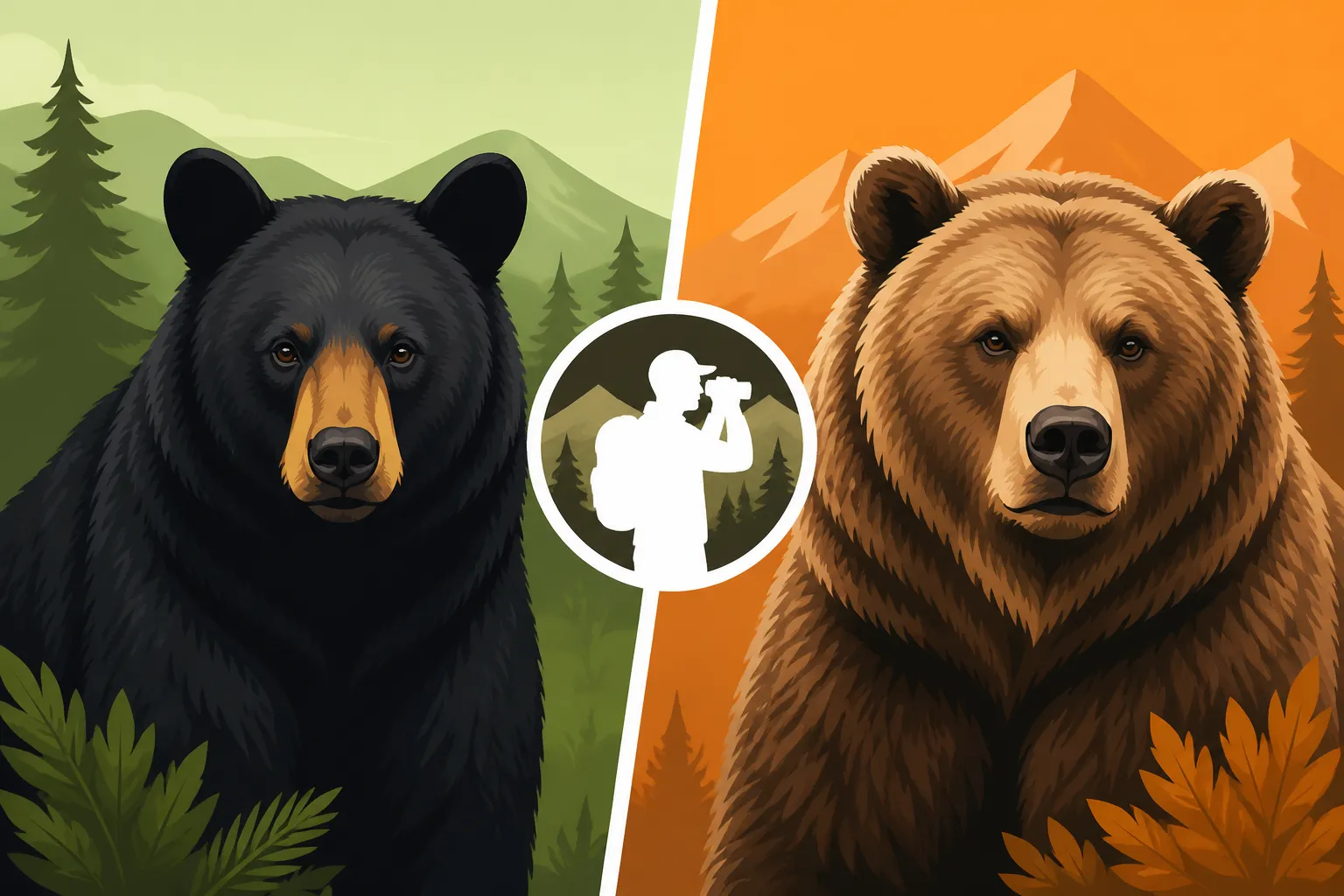
This is arguably the most reliable and often most visible distinguishing characteristic of a grizzly bear. A grizzly (also known as a brown bear) has a pronounced muscular hump between its shoulders. This isn't just some extra fat; it's a mass of muscle and bone that powers their formidable digging claws, making them incredibly efficient at excavating dens or rooting for food. This hump often gives their back a "dished" or sagging appearance compared to a black bear.
Black bears, on the other hand, do not have this shoulder hump. Their back typically forms a relatively straight line from the neck to the rump, even when they are very well-fed and have a thick layer of fat. When viewed from the side, a black bear's highest point is usually its rump, whereas a grizzly's highest point is often that prominent shoulder hump. Take the time to observe this profile, especially if the bear is moving or standing on all fours. It's not always obvious in poor light or dense cover, but if you can see it clearly, it's a dead giveaway.
Facial Profile and Snout Shape
Another strong indicator lies in their face. Grizzly bears generally have a broader, more dished-in facial profile, meaning their face appears to slope inwards from the forehead to the nose. Their snout is often shorter and more rounded. This gives them a more "pug-nosed" or "dish-faced" appearance.
Black bears tend to have a straighter, longer, and more pointed facial profile. Their snout often appears narrower and extends further out, giving their head a more Roman-nose or "dog-like" shape. If you can get a clear view of the head, looking at the bridge of the nose and the general shape of the muzzle can provide crucial identification clues. It’s subtle, but once you train your eye, it becomes much clearer.
Ear Shape and Relative Size
Look at the ears. Grizzly bears typically have shorter, more rounded ears that often appear relatively small in proportion to their large head. They might look like small, fuzzy knobs peeking out from their fur.
Black bears usually have taller, more pointed ears that are set further apart and appear larger in proportion to their head. Think of a black bear's ears as more prominent and erect, like those of a German Shepherd, compared to a grizzly's smaller, rounder, "teddy bear" ears. Again, this characteristic can be more challenging to discern at a distance or in thick vegetation, but when combined with other features, it helps build a solid identification.
Claw Length and Coloration: The Deceptive Traits
While color can be the most misleading trait, and size can be deceiving without context, claws are a reliable, albeit hard-to-see, indicator. Grizzly bear claws are typically very long, gently curved, and light-colored. They're built for digging and can be several inches long on their front paws. If you ever get a clear look at their paws, you might see these impressive digging tools.
Black bear claws are shorter, more sharply curved, and usually darker. They are designed for climbing trees, which black bears do with impressive agility, especially when threatened. While it's rare to get a close enough, safe look at a bear's claws in the wild to make a positive identification, it's another piece of the puzzle if conditions allow.
Size and Color: The Deceptive Traits
Now, let's talk about the two most misleading characteristics: size and color. It's a common misconception that all black bears are black and all grizzlies are brown and huge. This simply isn't true, and relying on these alone can lead to dangerous and illegal mistakes.
Color: Black bears in Alberta are not always black. They can range from jet black to various shades of brown, cinnamon, blonde, and even grey. Colour Phase Black Bears in Alberta are quite common. A light-colored black bear can easily be mistaken for a grizzly if you're only focusing on color. Similarly, while many grizzlies are brown, they can also range from very dark brown, almost black, to blonde or silver-tipped (giving them a "grizzled" appearance, hence the name). Never, ever make your identification based solely on the color of a bear's fur.
Size: While a full-grown male grizzly is usually significantly larger than a full-grown male black bear, size is incredibly difficult to judge accurately in the wild without a known reference point. A young grizzly might be smaller than a large, mature black bear. Conversely, a large black bear could look enormous to someone inexperienced. Furthermore, a bear's perceived size can be distorted by distance, terrain, and how its fur lies. Don't rely on "it looked big" as your only identifier. Focus on the structural features discussed above.
Here's a quick comparison table to help visualize the key differences:
| Feature | Black Bear | Grizzly Bear |
|---|---|---|
| Shoulder Hump | Absent; back appears relatively flat or highest at rump | Prominent muscular hump between shoulders |
| Facial Profile | Straighter, longer, narrower snout; "dog-like" | Dished-in, broader face; shorter, more rounded snout |
| Ear Shape | Taller, more pointed, relatively larger to head | Shorter, more rounded, relatively smaller to head |
| Claws | Shorter, sharply curved, darker; designed for climbing | Longer, gently curved, lighter; designed for digging |
| Color | Variable (black, brown, cinnamon, blonde) | Variable (dark brown, blonde, grizzled, cinnamon) |
| Size | Generally smaller, but highly variable | Generally larger, but highly variable |
Beyond the Bear's Looks: Habitat and Behavioral Indicators
While physical features are your primary identification tools, understanding the typical behavior and preferred habitat of each species can offer supporting clues. These are secondary indicators, however, and should never override clear physical identification.
Aggression and Defensive Behavior
Grizzlies are generally considered more prone to defensive aggression, especially sows with cubs, or when they perceive a threat to their food source or territory. Their initial reaction to a perceived threat might be a bluff charge or a more direct confrontation. They are less likely to flee immediately and are known to stand their ground. Learning What Happens If You See a Grizzly is essential for your safety.
Black bears, while certainly capable of aggression and injury, are typically more timid and often prefer to flee when encountering humans. Their first instinct is usually to climb a tree or run away. If a black bear does exhibit aggressive behavior, it's often a sign of being cornered, protecting cubs, or defending a food source. Again, these are generalizations, and any bear can be unpredictable, but understanding typical behavior can add another layer to your assessment.
Diet and Foraging Habits
Both species are omnivores, meaning they eat a wide variety of foods. However, their primary foraging strategies can differ. Grizzlies are expert diggers, using that powerful shoulder hump and long claws to excavate roots, grubs, and small mammals. You might find more evidence of extensive digging in prime grizzly habitat. They are also powerful predators, more likely to actively hunt larger prey.
Black bears are also opportunistic, feeding on berries, nuts, insects, and carrion. They are adept at climbing trees to find food or escape danger. You might see more signs of them foraging in trees or turning over rocks and logs rather than deep excavations. While both species will utilize available food sources, differences in their physical adaptations mean they might leave different "signatures" in the landscape. When you’re scouting your WMU, perhaps with the help of GoHunt, paying attention to these signs can give you a better idea of which bears are active in the area.
Preferred Habitats in Alberta
Knowing the typical ranges and preferred habitats of black bears and grizzlies in Alberta can significantly narrow down your possibilities. Alberta's Wildlife Management Units vary wildly in terms of terrain and the species they support.
Grizzly Bear Habitat: Grizzlies in Alberta primarily inhabit the western mountainous regions, the foothills, and large expanses of the boreal forest, particularly in the northern and western parts of the province. You'll find them in areas with rugged terrain, dense timber, alpine meadows, and river valleys—places where human presence is lower and food sources are plentiful. If you're hunting elk in the foothills or sheep in the mountains, you should always assume you are in grizzly country.
Black Bear Habitat: Black bears are far more widespread across Alberta. While they also inhabit the mountains and foothills, they are common throughout the boreal forest, the parkland, and even extend into agricultural areas where there's sufficient cover and food. Black Bears in Alberta's Forests and Foothills thrive in a wider range of environments, adapting to areas closer to human habitation, so long as there's decent tree cover. If you're hunting in a WMU that's primarily agricultural with small bluffs of trees, you're almost certainly looking at a black bear if you encounter one. Always check your specific WMU regulations and species information using resources like GoHunt to understand what bears are known to frequent the area.
What to Do When the Bear's Identity Isn't Clear
Sometimes, despite all your knowledge and observation, you just can't be 100% sure. Maybe the light is bad, the bear is partially obscured, or it's simply too far away. This is where caution, ethics, and common sense become your most valuable tools.
Prioritize Safety Above All Else
If you spot a bear and you can't definitively identify it as a black bear, your absolute priority is safety. Do not approach the animal. Do not try to get a better look if it means putting yourself in a potentially dangerous situation. Keep your distance, maintain awareness of your surroundings, and be prepared to use bear spray if necessary. Alberta Blaze Orange Requirements might make you more visible, but it doesn't deter a curious or defensive bear. If you are hunting with a partner, communicate calmly and clearly about what you're seeing and your uncertainty.
Remember, your life, and the life of the bear, are more important than getting a definitive identification at that moment. Sometimes the best decision is to back away slowly, give the bear space, and live to hunt another day.
Utilize Optics, But Don't Press Your Luck
Always carry quality binoculars or a spotting scope when hunting in bear country. These tools are invaluable for observing an animal from a safe distance and picking out those crucial identification features like the shoulder hump, ear shape, and facial profile. Don't just glance; take your time, if safe to do so, to really study the animal through your optics.
However, there's a fine line. Don't spend so long staring through your optics that you become complacent or ignore changes in the bear's behavior or your surroundings. Use your optics to aid identification, not as a replacement for situational awareness. If the bear starts to move towards you or seems agitated, put the optics down and focus on safety. Many hunters consult detailed maps, often found on platforms like GoHunt, to pre-plan their routes and identify potential bear hot zones.
Know Your WMU and Relevant Regulations
Before you even step foot in a Alberta's 219 Wildlife Management Units, you should have a thorough understanding of the regulations specific to that area. Which species are huntable? Are there any special restrictions? Some WMUs might have higher grizzly populations, making extreme caution even more vital. Others might be almost exclusively black bear habitat. This background knowledge helps manage your expectations and increases your readiness for encounters.
The Alberta Hunter Education and Conservation Course teaches you how to research these details, but it's an ongoing process. Regulations can change, and being informed is your responsibility. Always verify the most current regulations for your specific WMU before heading out. This includes knowing Alberta Bear and Cougar Seasons dates thoroughly.
When in Doubt, Don't Shoot
This is the golden rule, and it's absolutely non-negotiable. If there's even a shred of doubt in your mind about whether the bear is a black bear or a grizzly, you do not shoot. It's that simple. Walking away from a potential harvest because you couldn't be certain is not a failure; it's the mark of an ethical, responsible, and intelligent hunter.
The consequences of making the wrong call are far too severe. It's better to regret not taking a shot than to face legal action, endanger yourself, and harm the conservation efforts for a protected species. Always err on the side of caution. In the Alberta wilderness, respect for the animals and the law is paramount.
Disclaimer
This article is for general informational purposes only and does not constitute professional advice. Laws, prices and regulations vary by location and change over time. Consult a qualified professional for guidance on your specific situation.