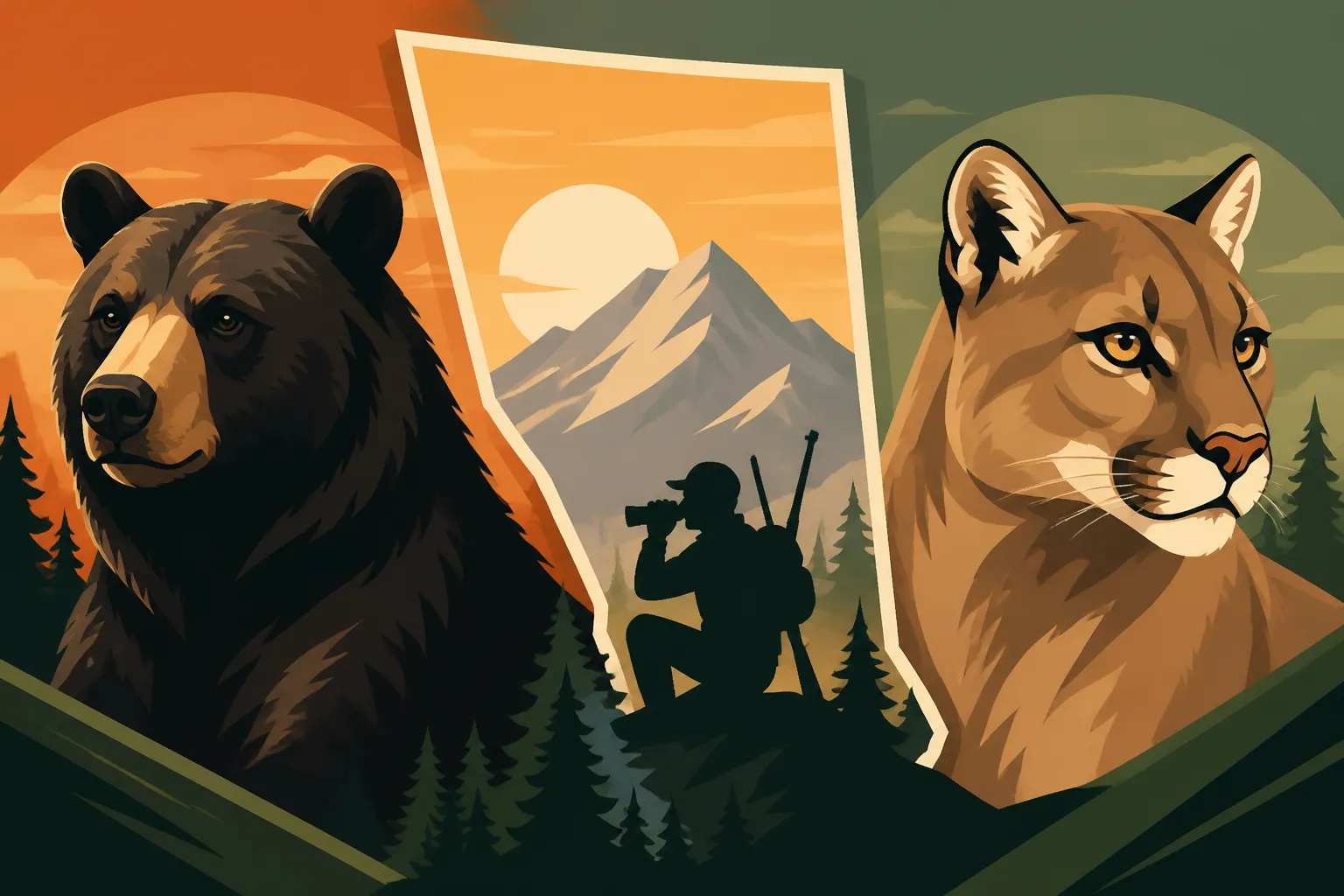
Alberta Bear and Cougar Seasons
Navigating Alberta's diverse hunting seasons can sometimes feel like trying to solve a complicated puzzle, especially when you start looking at species like bears and cougars, which often have unique regulations and management strategies. It's easy to get frustrated trying to piece together season dates, quotas, and licensing requirements that differ wildly from more common big game animals. This comprehensive guide is designed to cut through that confusion, helping you understand the ins and outs of Alberta's bear and cougar hunting seasons so you can plan your next adventure with confidence.
Understanding Alberta's Bear Seasons
Alberta offers fantastic opportunities for black bear hunting, attracting both residents and non-residents to its vast forests and foothills. Unlike some other big game, bears have both spring and fall seasons, each with its own rhythm and challenges. It’s important to remember that these seasons are general, meaning you don't need a special draw, but knowing the nuances can make or break your hunt.
Spring Bear Season Dynamics
The spring bear season is a highly anticipated time for many hunters. Generally, it kicks off in mid-April and runs through to the end of June in most Wildlife Management Units (WMUs). This is when bears emerge from their dens, often looking for easily accessible food sources after a long winter's nap. You'll find them gravitating towards green-up areas, south-facing slopes, and along cutlines and seismic lines where new vegetation is sprouting.
One of the biggest appeals of the spring season is the opportunity to bait, which is a legal and popular method for Black Bear Hunting in Alberta. Setting up a bait site requires consistent effort, patience, and adherence to specific regulations regarding placement and checking intervals. It allows hunters to observe bears, judge their size, and determine if it's a boar or a sow, which is crucial for ethical hunting and avoiding sows with cubs, though sows with cubs are typically not legal to harvest. Hunters often use platforms like GoHunt to research prime WMUs for spring bear activity and review historical success rates before committing to a location.
Beyond baiting, Spring Bear Hunting Alberta's Cutblocks also offers excellent spot-and-stalk opportunities. Newly logged areas provide a flush of fresh growth, attracting bears looking for grasses, clovers, and other early greens. Glassing these areas from a distance, particularly in the mornings and evenings, can be incredibly effective. The challenge here is often access, as some cutblocks are remote, requiring quads or extensive hiking, and unpredictable spring weather can quickly turn logging roads into impassable mud bogs.
Fall Bear Season Overview
While spring often gets the spotlight, Alberta's fall bear season is equally rewarding, running from early September through the end of November, often coinciding with other big game seasons. In the fall, bears are in hyperphagia, a period of excessive eating, trying to pack on as much weight as possible before denning up for winter. This means they are often less cautious and more predictable in their feeding patterns.
During the fall, bears shift their diet from early greens to berries, nuts, and agricultural crops, especially if they are close to farming communities. Hunters often focus on areas with abundant berry patches, like saskatoons or buffalo berries, or scout stubble fields where bears might be scavenging for leftover grain. This makes Hunting Alberta's Fall Bear Season a different game entirely, often involving more active scouting and tracking rather than stationary baiting.
One of the unique aspects of fall bear hunting is the presence of color phase bears. While they are all black bears, their fur can range from cinnamon to chocolate to blonde. This adds an exciting element to the hunt, as spotting a beautiful blonde bear against the autumn foliage is a truly unforgettable experience. However, it's paramount to be absolutely sure of your target and understand how to differentiate a black bear from a grizzly, as grizzly bears are protected in Alberta and Telling a Black Bear From a Grizzly is a critical skill for any bear hunter in the province.
Color Phases and Identification
Alberta is well-known for its high percentage of color phase black bears, particularly in the foothills and mountain regions. While commonly referred to as "black" bears, their coat color can vary widely due to genetic factors. You might encounter bears that are dark brown, light brown, cinnamon, blonde, or even have a reddish hue. This diversity makes for exciting hunting, but also demands extra diligence in identifying your animal.
Accurate identification goes beyond just color. When hunting, especially without bait, you need to be able to quickly assess a bear’s size, sex, and whether it’s alone or accompanied by cubs. Sows with cubs are not legal to harvest in Alberta, and mistaking a cub for a smaller adult bear, or vice-versa, is a mistake no ethical hunter wants to make. Look for physical cues: boars typically have larger heads and broader shoulders, their ears often appear smaller in proportion to their head, and they tend to walk with a more pronounced swagger. Sows, especially those with cubs, will often have a more delicate build and may move with a watchful demeanor.
It’s also important to be aware that cubs can lag behind their mother or run ahead, so always observe a bear for an extended period, if possible, before taking a shot. Bring good binoculars or a spotting scope and take your time. If there's any doubt at all, it's always best to pass. The thrill of the hunt should never outweigh the responsibility we have to conserve these magnificent animals.
Navigating Alberta's Cougar Seasons
Cougar hunting in Alberta is a completely different beast compared to bears. It's often seen as the ultimate test of tracking skill and perseverance. While bear seasons are generally open over wide areas, cougar hunting is tightly controlled by a quota system, adding an extra layer of complexity and urgency.
The Quota System for Cougars
Alberta manages its cougar population through a specific quota system, where a predetermined number of animals can be harvested from each WMU. This system is designed to ensure sustainable cougar populations while allowing for hunting opportunities. What this means for hunters is that the season in a particular WMU can close abruptly once the quota is met. This isn't like deer season where you know you have until a certain date; with cougars, you might wake up one morning to find your WMU has closed.
This uncertainty adds a frantic, exciting element to the hunt. Hunters often develop a ritual of checking The Cougar Quota Phone Line Explained or the AlbertaRELM website daily, sometimes multiple times a day, to see which WMUs are still open. Missing a few days could mean missing your window to hunt if the quota fills faster than anticipated. This requires a high degree of flexibility and readiness, as you might need to drop everything and head out if conditions are right and the quota is still open.
Because of the quota system, many cougar hunters will plan multiple backup WMUs, or even entire regions, that they're willing to travel to on short notice. It pays to do your homework beforehand, identifying WMUs with higher quotas or those that historically remain open longer. Using advanced mapping tools, like those found on GoHunt, can help you quickly identify potential hunting zones and understand the terrain before you go.
Cougar Season Lengths and Variability
Cougar seasons typically open in December and can run through to the end of February or early March, depending on the WMU and, crucially, if the quota is reached. This timeframe is strategic, as it often coincides with consistent snow cover, which is absolutely vital for successful cougar hunting. Without snow, tracking these elusive predators becomes incredibly difficult, almost impossible for most hunters.
The variability in season length, purely dictated by the quota, means that some WMUs might close within weeks of opening, while others might remain open for the entire duration. This unpredictability means you can’t simply mark your calendar for a specific week months in advance and expect it to be available. Instead, you need to monitor the quota closures constantly and be ready to adapt your plans. This is where local knowledge and networking with other cougar hunters can be invaluable. They might share insights on current conditions, recent sightings, or which areas are seeing heavy pressure.
For hunters who travel a long distance, this variability can be a significant challenge and a source of frustration. Imagine driving hundreds of kilometers, only to find out the quota filled the day you left. This is why thorough planning, constant monitoring of the quota, and having a flexible schedule are absolute necessities for Cougar Season Dates and Quota in Alberta.
Hunting Methods and Considerations
Hunting cougars is perhaps one of the most physically demanding forms of hunting in Alberta. The most effective and popular method involves using trained dogs, which are legally permitted for cougar hunting in Alberta. Dogs are instrumental in tracking cougars, particularly after a fresh snowfall, and eventually treeing or baying the animal for the hunter. This requires a dedicated team of dogs and handlers, often working in deep snow and rugged terrain.
For those without dogs, Hunting Cougar in Alberta's Foothills is primarily a tracking endeavor. This involves diligently scouting fresh snow for tracks, often covering vast distances on foot, snowshoe, or even horseback. Once a fresh track is found, the painstaking process of following it begins, which can lead hunters through thick timber, over steep ridges, and into deep ravines. This is a true test of grit, woodsmanship, and physical endurance. It's not uncommon for hunters to spend days or even weeks tracking before getting a shot opportunity.
Regardless of the method, success hinges on understanding cougar behavior. They are ambush predators, incredibly secretive, and masters of their environment. They often follow game trails, use natural travel corridors, and will bed down in thick cover or on ledges overlooking their hunting grounds. Knowledge of their preferred habitat, feeding patterns, and territorial markers is crucial. The combination of demanding physical effort, stringent regulations, and the elusive nature of the animal makes cougar hunting an exceptional challenge, and a truly unique experience.
Key Differences and Overlaps Between Seasons
While both bears and cougars are powerful predators, their hunting seasons, management, and the overall hunting experience in Alberta differ significantly. Understanding these distinctions is vital for any hunter considering pursuing either species.
Geographic Considerations and WMU Specifics
Black bears are widely distributed across Alberta's forested and foothill regions, which means they are present in a vast number of WMUs. This broad distribution offers a lot of flexibility for hunters to find suitable areas, whether they prefer remote wilderness or more accessible regions closer to settled areas. Often, bear hunting opportunities are found from the southern foothills all the way up into the northern boreal forest.
Cougars, on the other hand, are primarily found in the western half of Alberta, concentrating in the more rugged, mountainous, and foothill regions, with a scattering into some parkland areas. Their prime habitat is characterized by dense cover, broken terrain, and a healthy prey base of deer and elk. This means cougar hunting is typically restricted to a smaller set of WMUs, often those that are more challenging to access and navigate. For instance, you're more likely to find strong cougar populations and quotas in the WMUs bordering the Rocky Mountains than you are in the open prairies or eastern boreal zones.
The specific WMUs chosen for hunting will dictate access, terrain, and even the general density of animals you might encounter. Reading an Alberta WMU Map Before You Go is paramount for both species, but especially for cougars where understanding terrain features that hold prey, and thus predators, is key.
Management Strategies for Each Species
The management of black bears in Alberta generally revolves around ensuring sustainable populations through season lengths and bag limits (typically one bear per season, but check regulations for specifics as this can vary by WMU). Because black bears have a relatively high reproductive rate and wide distribution, their populations are robust. Regulations focus on ethical hunting practices, such as preventing the harvest of sows with cubs, and promoting responsible baiting where applicable. The long, general seasons reflect a healthy and widespread population that can sustain consistent hunting pressure.
Cougar management, conversely, is much more conservative due to their lower reproductive rates, more specific habitat requirements, and natural elusive nature. The quota system is the cornerstone of Alberta Bear and Cougar Seasons, allowing for precise control over harvest numbers at a local WMU level. This ensures that only a set number of animals are taken from each area, preventing overharvesting and maintaining healthy breeding populations. The daily quota checks are a direct reflection of this conservative approach, making hunters active participants in the real-time management of the species. This difference in management strategy highlights the distinct conservation priorities for each animal.
Comparing Hunting Pressure and Opportunity
Generally speaking, black bear hunting sees broader participation in Alberta. The availability of general tags, longer seasons, and diverse hunting methods (baiting, spot-and-stalk) make it accessible to a wider range of hunters, from seasoned veterans to those just starting out in big game hunting. This can lead to varying degrees of hunting pressure, with more accessible areas often seeing more hunters, especially on weekends or during peak times. However, the vastness of Alberta's bear habitat still allows for plenty of opportunity to find solitude.
Cougar hunting, due to its demanding nature, specialized methods (dogs), and the restrictive quota system, attracts a much smaller, more dedicated subset of hunters. The physical challenge, the need for specific conditions (snow), and the commitment required to monitor quotas and track animals naturally limit the number of participants. While this means less overall "pressure" in terms of hunter density, the pressure to act quickly when a quota is open and conditions are right can be intense. The opportunity to harvest a cougar is often seen as a significant achievement, a testament to skill and perseverance, whereas a bear hunt is more commonly pursued.
Licensing and Regulations for Bear and Cougar
Before you even think about hitting the bush for bears or cougars, getting your ducks in a row with licenses and understanding the specific rules is non-negotiable. Alberta has clear regulations, and ignorance is never an excuse for non-compliance.
Acquiring the Right Tags
To hunt black bears in Alberta, residents generally need a Alberta Hunting Licences and What They Cost, a valid Alberta's WIN Card and Wildlife Certificate, and a Resident Black Bear Licence. For non-residents, the requirements are more stringent, often necessitating the use of a licensed guide or a hunter host. The bear licence is typically a general licence, meaning it's available over the counter and isn't subject to a draw.
For cougars, the process is similar in that you'll need your WIN card and Wildlife Certificate, but you'll apply for a Resident Cougar Licence. Critically, while it's not a draw, the harvest is managed by the WMU-specific quota system. So, while you can buy the licence, you can only hunt in a WMU where the quota is still open. It's vital to confirm the status of the quota immediately before and during your hunt. Always double-check the current hunting regulations or the AlbertaRELM website for the most up-to-date information, as rules can change annually.
The cost for these licences is generally quite reasonable, especially for residents, but it's important to budget for them along with your other hunting expenses. Non-resident fees are higher, reflecting the privilege of hunting in the province.
Mandatory Reporting and Submission Requirements
Harvesting a big game animal in Alberta comes with responsibilities, and bears and cougars are no exception. For both species, mandatory reporting of your harvest is required. This means contacting Fish and Wildlife within a specific timeframe (often 24 or 48 hours) of harvesting the animal. This reporting is crucial for wildlife management, allowing authorities to track harvest numbers and manage quotas effectively.
In addition to reporting, there might be specific submission requirements. For cougars, the skull and hide often need to be presented to a Fish and Wildlife officer for inspection and sealing within a certain period. This allows biologists to collect data, verify the species, and ensure compliance with regulations. For bears, while not always a mandatory physical submission, you are generally required to report the kill, and providing certain biological samples (like a premolar tooth for aging) might be requested or required in specific WMUs. Always read the current regulations carefully to understand your post-harvest obligations.
Beyond the regulatory requirements, responsible meat care is crucial. Meat Care in Alberta's Cold and Warm Swings can be tricky, especially during early spring or fall bear hunts when temperatures can fluctuate. Ensuring your meat is properly cooled and cared for is part of being an ethical hunter.
Legal Firearms and Archery Gear
Alberta has specific rules regarding the Legal Firearms and Bows for Big Game, and these apply to bear and cougar hunting as well. For firearms, there are minimum calibre requirements. Generally, a centrefire rifle with a muzzle energy of at least 1,700 joules (approximately 1,250 foot-pounds) and a bullet diameter of at least 6mm (0.243 inches) is required. This effectively means calibres like .243 Winchester, .270 Winchester, .30-06 Springfield, and .308 Winchester are common and legal choices. Shotguns loaded with slugs are also legal, but buckshot is not.
For archery hunters, the minimum draw weight for a bow is 40 pounds, and crossbows must have a minimum draw weight of 150 pounds and a minimum bolt length of 14 inches. Arrows and bolts must be fitted with broadheads that have at least two cutting edges and a minimum cutting width of 7/8 inches. It's absolutely critical to ensure your equipment meets these specifications, not just for legality but also for the ethical harvest of such powerful animals. It's always a good idea to confirm these regulations in the most current Alberta hunting guide before your hunt.
Preparation and Safety for Your Hunt
Hunting big game like bears and cougars demands meticulous preparation, not just in understanding the seasons, but also in ensuring you're properly equipped and prioritizing safety. These animals live in rugged, often remote environments, and being prepared can make the difference between a successful hunt and a challenging, or even dangerous, situation.
Essential Gear for Bear and Cougar Hunts
The gear you choose for a bear or cougar hunt will significantly impact your comfort, safety, and success. For spring bear hunts, especially if you're Setting a Bear Bait Site in Alberta or spot-and-stalking cutblocks, durable, waterproof boots are essential, as you'll often be traversing wet and muddy terrain. Layered clothing is key, as spring weather can swing from warm afternoons to chilly mornings. A good pair of binoculars is non-negotiable for glassing large areas, and a sturdy backpack for packing out meat (if successful) and carrying emergency supplies is a must.
For cougar hunting, particularly with dogs or extensive tracking in winter, specialized gear is needed. Snowshoes or cross-country skis might be necessary for travel in deep snow. Warm, insulated clothing, often with a quiet outer layer, is crucial for staying comfortable during long days in cold temperatures. Navigation tools like a GPS unit or a reliable app (many hunters use GoHunt for its detailed mapping capabilities) are critical when covering vast, unmarked territory. A reliable headlamp, fire-starting kit, first-aid kit, and emergency shelter are essential safety items for both types of hunts.
Don't forget the small but mighty items: a sharp knife, game bags for meat, and plenty of water or a way to purify it. And if you're hunting in areas with cell service, a portable charger is always a good idea. In the backcountry, a satellite messenger or inReach device can be a literal lifesaver.
Bear and Cougar Safety in the Field
Encountering a bear or cougar, especially an aggressive one, can be a serious situation. Carrying bear spray is highly recommended, regardless of whether you're targeting bears or cougars. Know how to access it quickly and how to use it effectively. When traveling through dense cover, make noise to avoid surprising an animal. Always be aware of your surroundings, frequently scan your environment, and pay attention to fresh tracks or scat, which can indicate recent predator activity.
If you encounter a bear, remain calm, speak in a low voice, and slowly back away. Never run. If it's a grizzly, make yourself look as large as possible. If it's a black bear and it approaches, be aggressive, yell, and fight back if attacked. For cougar encounters, never turn your back, maintain eye contact, and again, make yourself look as large as possible. Pick up small children or pets. If a cougar attacks, fight back aggressively with anything you have. Alberta Blaze Orange and Safety Rules are also important to remember, especially when other hunters are in the field.
It’s also crucial to practice safe firearm handling. Always know your target and what’s beyond it. Ensure your firearm is unloaded and cased when transporting it, and only load it when actively hunting and in a safe direction. Always treat every firearm as if it’s loaded.
Finding Prime Hunting Areas
Identifying prime hunting areas for bear and cougar takes effort, research, and often, boots-on-the-ground scouting. For bears, focus on WMUs with large tracts of forest, particularly those with a mix of mature timber, recent cutblocks, and natural clearings. Water sources are also important. In spring, look for early green-up spots; in fall, target areas rich in berries or close to agricultural fields. Scouting with satellite imagery on platforms like GoHunt can help identify these features from home, allowing you to narrow down potential spots for Scouting an Alberta WMU Before Season.
For cougars, think about their prey: deer and elk. Find areas where these ungulates concentrate, particularly during winter. River valleys, coulees, steep escarpments, and areas with dense coniferous cover offer ideal ambush points and bedding cover for cougars. Look for travel corridors that link these features. Fresh snow is your best friend for finding tracks, so paying attention to weather forecasts is crucial. Asking a Grazing Leaseholder for Access or investigating Finding Access on Alberta Crown Land can also open up new opportunities, as both species utilize diverse landscapes. Many successful hunters spend significant time in the off-season exploring potential areas, learning the lay of the land, and identifying pinch points or natural funnels that predators might use.
Disclaimer
Please remember that hunting regulations in Alberta can change. Always consult the most current Alberta Hunting Regulations Guide and relevant government websites (like AlbertaRELM) before planning and undertaking any hunting trip. This guide is for informational purposes only and should not be considered a substitute for official regulations. Stay safe and hunt ethically.