Bringing a Rifle Across the Border
Crossing international borders with firearms for a hunting trip can feel like navigating a minefield of regulations, paperwork, and anxiety. Many a hunter has stood at a border crossing, heart pounding, wondering if they’ve missed a crucial detail that could derail their entire adventure. This guide aims to clear the fog, offering a detailed, empathetic walkthrough of everything you need to know about bringing your rifle (or shotgun!) across the border into Alberta, ensuring a smooth start to your unforgettable hunt.
Navigating Canadian Firearm Regulations Before You Travel
Before you even think about packing your rifle case, you need a crystal-clear understanding of Canada's firearm laws. This isn't just about what you can bring; it's about how you classify it, how you're expected to declare it, and the very real consequences of getting it wrong. The Canadian system categorizes firearms into Non-Restricted, Restricted, and Prohibited. For most hunters, you'll be dealing exclusively with Non-Restricted firearms, which typically include most common hunting rifles and shotguns. Handguns and many semi-automatic rifles are often classified as Restricted or Prohibited, making them extremely difficult, if not impossible, to bring across for hunting purposes without very specific, pre-approved authorizations that are rarely granted to non-residents for hunting.
It's absolutely critical to confirm your firearm's classification before you depart. A quick search on the Royal Canadian Mounted Police (RCMP) Canadian Firearms Program website can clarify if your specific model is allowed. Remember, what's legal and common for hunting in your home country might not be the case here in Canada. This isn't the time to guess or assume. An unapproved firearm at the border will lead to its confiscation, potential fines, and even denial of entry, effectively ending your hunting trip before it begins.
Also, be mindful of magazine capacities. In Canada, magazines for semi-automatic centerfire rifles are generally limited to 5 rounds, and for shotguns, 5 rounds for most semi-automatic or pump-action designs, though some exceptions apply for rimfire and certain shotgun types. Ensure your magazines comply with these limits; bringing higher-capacity magazines, even if they're legal at home, can cause issues. Ignorance of the law is not an excuse at the border, and customs officials are highly trained to identify non-compliant items.
The Essential Non-Resident Firearm Declaration Form
This is the bedrock of bringing your firearm into Canada as a non-resident. The Non-Resident Firearm Declaration Form (form CAFC 909 EF) is what officially allows you to temporarily import your hunting firearm. Think of it as your firearm's temporary passport, and it's something you must fill out accurately and completely. You can download and pre-fill this form from the RCMP website before you travel, which is highly recommended. Do not sign it until you are in front of a Canadian Border Services Agency (CBSA) officer. They need to witness your signature.
The form asks for details like your firearm's make, model, serial number, calibre/gauge, and barrel length. Double-check every single character against your firearm itself. Any discrepancies, even minor ones, can cause delays or problems. You'll also need to declare the purpose of your visit, which, for most hunters, will be "Hunting." You'll be asked about your destination in Alberta, so have your outfitter's address or the general area you'll be hunting ready. This declaration costs a fee, usually around $25 CAD, payable at the border. It's valid for up to 60 days, so if your hunt is longer, you'll need to renew it before expiry. Many hunters use resources like GoHunt to map out their hunting areas and have their specific WMU (Wildlife Management Unit) details ready for the form if they are hunting independently.
What happens if you don't declare it? Simply put, that's smuggling, and it carries severe penalties. Always declare your firearms and ammunition, even if you're just passing through and don't intend to use them. The Canadian border is not a place for surprises or "forgetfulness." Be upfront, be prepared, and be patient. This form is a testament to your understanding and compliance with Canadian law, ensuring that your firearm's presence in the country is legitimate and temporary. For those planning an extensive trip, understanding Transporting Firearms Into Alberta for specific intra-provincial rules might also be helpful.
What to Expect at the Canadian Border Crossing
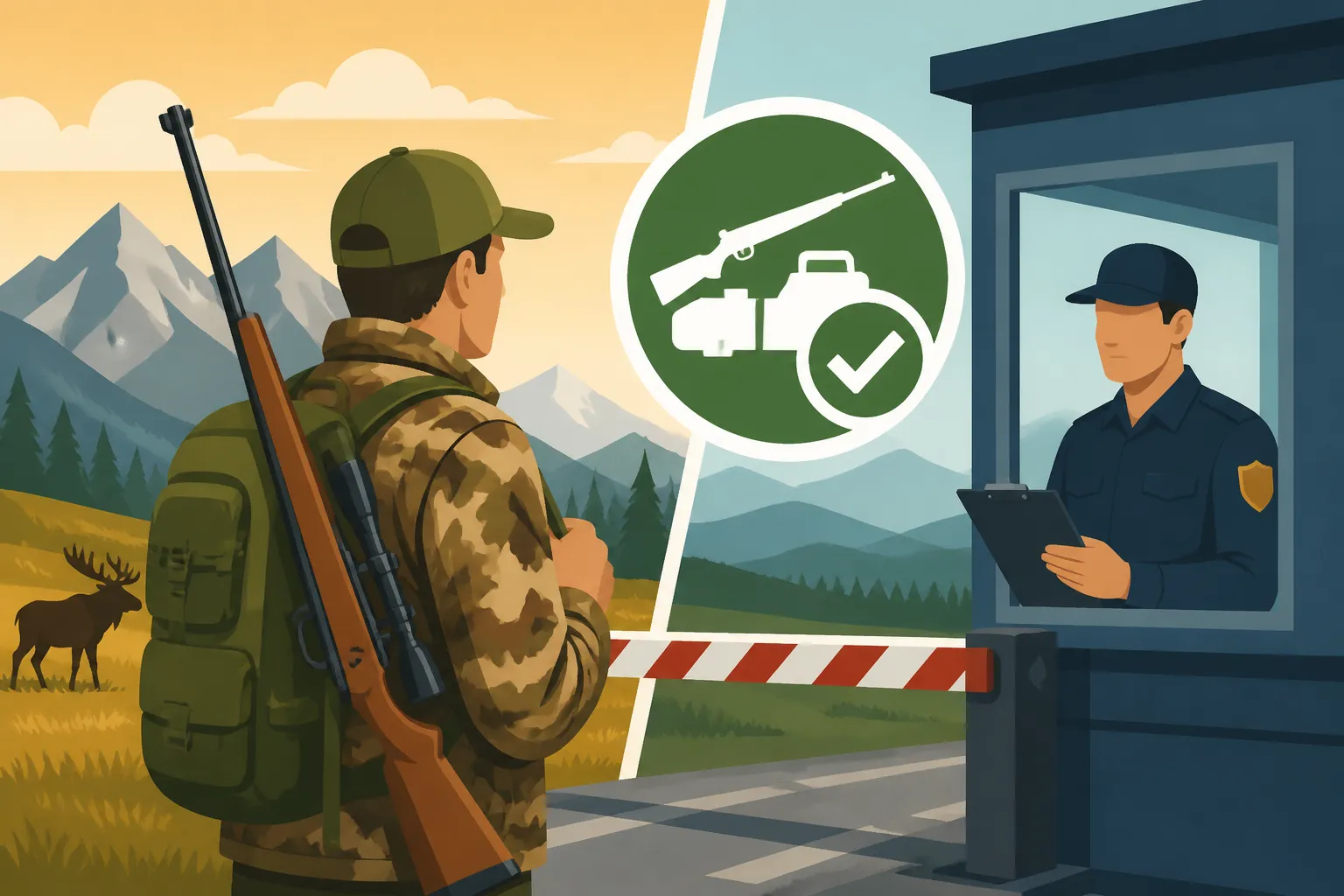
Okay, the forms are filled (but unsigned!), your firearms are properly stored, and you're ready to cross. What's the actual experience like? First and foremost, approach the border with a calm and respectful attitude. When the CBSA officer asks the purpose of your visit, clearly state that you are coming to Alberta to hunt and that you have firearms to declare. This should be one of the very first things you say. Do not wait to be asked directly about firearms.
The officer will direct you to a secondary inspection area. This isn't a punitive measure; it's standard procedure for firearm declarations. They will ask you to produce your Non-Resident Firearm Declaration Form. At this point, you'll sign it in their presence. They will then inspect your firearms to verify the details on the form. Your firearms must be unloaded, and ideally, have a trigger lock or cable lock, and be in a locked case. Ammunition must be stored separately from the firearm, and also in a locked container, or at minimum, a securely closed box. It's often recommended to store ammunition in the trunk or a separate compartment of your vehicle, away from the firearm itself.
The officer may also ask about your hunting licenses. While you can often purchase your Alberta Hunting Licences and What They Cost and your Alberta's WIN Card and Wildlife Certificate online or through vendors once you're in the province, having proof of your hunting intent (like an outfitter booking confirmation, a printed hunting regulation summary, or an online account with GoHunt showing your planned WMUs) can help demonstrate your legitimate purpose. They might also inquire about any previous criminal history, as any serious offenses can result in denial of entry. Be honest and cooperative. The process can take anywhere from 15 minutes to over an hour, depending on traffic, the officer's discretion, and the clarity of your documentation. Patience is truly a virtue here.
Beyond the Basics: Key Considerations for a Smooth Trip
Once you've successfully crossed the border, your responsibilities don't end. There are ongoing considerations for transporting and possessing your firearms within Alberta.
Ammunition Limits and Storage
While there isn't a strict limit on the amount of ammunition you can bring for hunting (beyond what's reasonable for a hunting trip), it's always best to be sensible. Bringing thousands of rounds might raise questions. More importantly, how you store it in your vehicle while traveling through Alberta is crucial. Ammunition must always be kept separate from your firearm. When driving, ensure your rifle is unloaded, secured with a trigger lock, and stored in a locked, non-transparent case or the locked trunk of your vehicle. Ammunition should be stored in a separate, secure container, preferably not easily accessible from the passenger compartment. These regulations apply not just when you're crossing the border but also when you're driving to and from your hunting grounds in Alberta. For a deeper dive into the legalities of carrying your firearm during the hunt, refer to Legal Firearms and Bows for Big Game.
Understanding Legal Calibres and Species
Before you even pick a hunting trip, make sure your rifle and ammunition comply with Alberta's specific regulations for the species you intend to hunt. For instance, there are minimum muzzle energy requirements for big game, and rules regarding bullet construction. It’s always best to check the current Alberta hunting regulations guide for Rules on Rifle Calibres for Big Game to ensure your setup is legal. No one wants to arrive with the wrong gear. This is also where resources like GoHunt can be invaluable for cross-referencing regulations with your gear list.
Landowner Permission and Public Land Access
Once in Alberta, remember that hunting requires careful attention to land access. Whether it's Crown Land, private land, or a grazing lease, understanding Alberta Landowner Permission Law is critical. Even with your firearms legally imported, where you can legally hunt is a whole other layer of planning. The last thing you want is a trespassing charge on top of an otherwise successful hunt.
Important Documents to Keep with You
Always carry your copy of the validated Non-Resident Firearm Declaration Form, your hunting licenses, and any other relevant permits (like a federal migratory game bird permit if you're waterfowl hunting). Keep these documents together and readily accessible, but not in the same case as your firearm. This will streamline any potential interactions with conservation officers or law enforcement in Alberta. Knowing your Alberta Hunter Education Requirements is also important, as having proof of completing a recognized hunter education course (either from your home state/province or an Alberta-approved course) is a prerequisite for purchasing hunting licenses.
Here's a quick summary of key items for a smooth border crossing:
| Item | Description | Action |
|---|---|---|
| Non-Resident Firearm Declaration | Form CAFC 909 EF. Your temporary firearm import permit. | Pre-fill, but DO NOT SIGN. Sign in front of CBSA officer. Pay ~CDN $25. |
| Firearm(s) | Unloaded, secured with trigger lock, in a locked, non-transparent case. Non-Restricted classification only. | Ensure compliance with Canadian classification and storage rules. |
| Ammunition | Separately stored from firearm, in a secure container. Reasonable quantity for hunting. | Keep in a separate locked box/container, away from firearm. |
| Proof of Hunting Intent | Outfitter booking, hunting license purchase confirmation, planned WMU details. | Have readily available (e.g., GoHunt app, printouts). |
| Valid Identification | Passport, driver's license. | Essential for all travelers. |
| Firearm Registration (home) | Any state/federal firearm registration paperwork you may have. | Not mandatory for Canada, but good backup for ownership proof. |
Remember, the goal is to make your hunting experience as enjoyable and stress-free as possible. A little extra preparation on the front end will save you a lot of headache and potentially your entire trip. If you're coming from the U.S., you'll also need to consider the process for Bringing a Rifle Across the Border back into the United States, as their rules for declaration and re-entry differ slightly. Staying organized and informed is key.
Heading Home: The Return Journey
When your hunt is over and you're ready to head back, the process is generally simpler. Your validated Non-Resident Firearm Declaration form acts as your proof of legal possession when exiting Canada. You don't need to cancel it; it simply expires. The key is ensuring your firearms are still stored safely and legally according to Canadian rules until you cross back into your home country. Be prepared to declare your firearms to U.S. Customs and Border Protection upon re-entry. If you filled out a CBP Form 4457 (Certificate of Registration for Personal Effects Taken Abroad) before leaving the U.S., this will streamline your re-entry process by proving you owned the firearms before leaving the country.
Hunting in Alberta is an incredible experience, offering diverse landscapes and abundant game. From the whitetails of the parkland to the elk in the foothills, or even Moose Hunting Alberta's Boreal Forest, having your firearm legally and smoothly enter the country is the first crucial step to a successful adventure. Don't let the paperwork intimidate you; armed with the right knowledge and a bit of patience, you'll be well on your way to making lasting memories.
Disclaimer
The information provided in this guide is for general informational purposes only and does not constitute legal advice. Firearm regulations and border crossing procedures can change. Always consult the official websites of the Canadian Border Services Agency (CBSA) and the Royal Canadian Mounted Police (RCMP) Canadian Firearms Program, as well as the current Alberta hunting regulations, prior to planning your trip. It is your responsibility to ensure full compliance with all applicable laws and regulations.