Legal Bow Draw Weight in Alberta
It can be incredibly frustrating to gear up for an Alberta hunting season, only to feel unsure about the specific regulations governing your equipment. You've invested time and money in your bow, honed your skills, and now you're wondering if your setup actually meets the legal requirements, especially when it comes to draw weight. This guide is here to clear up that confusion, diving deep into Alberta's bowhunting rules, ensuring you understand not just the minimum draw weight, but all the related considerations for an ethical and successful archery hunt.
Understanding Alberta's Bowhunting Regulations
Alberta has specific regulations in place to ensure that hunting is conducted humanely and effectively, and that applies just as much to bowhunting as it does to rifle hunting. These rules aren't just arbitrary lines drawn in the sand; they're designed to maximize the chances of a clean, ethical kill and minimize suffering. For archers, this means understanding the capabilities of your equipment and ensuring it's up to the task for the specific game you're pursuing.
Minimum Draw Weight Requirements
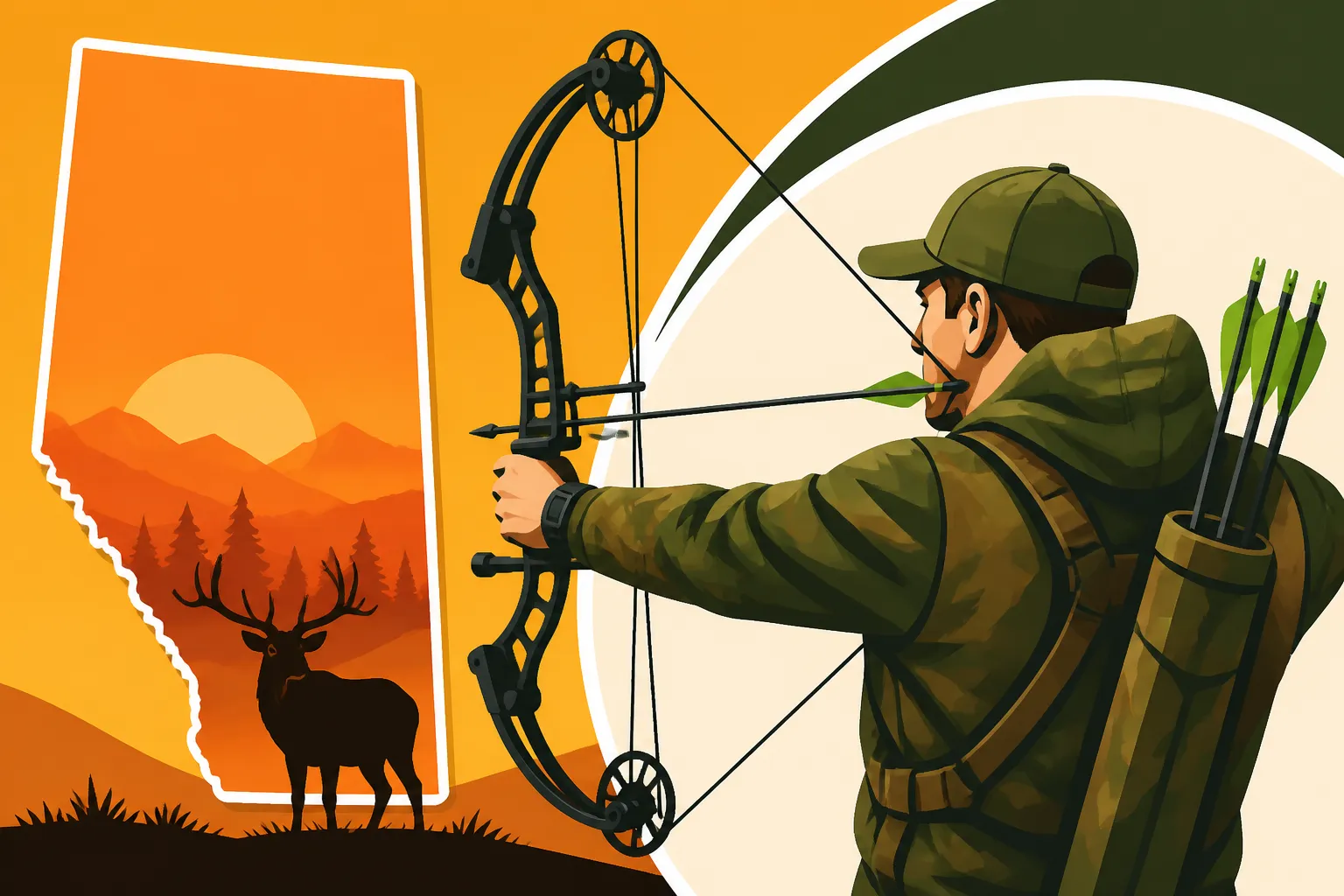
When it comes to big game hunting in Alberta, the regulations are quite clear about the minimum draw weight for bows. According to the current Alberta Hunting Regulations, a bow used for big game must have a minimum draw weight of 40 pounds. This applies to all bow types: compound bows, recurve bows, and longbows. The reason for this specific number is rooted in kinetic energy. A 40-pound draw weight is generally considered the baseline needed to generate sufficient energy to propel an arrow with enough force to achieve adequate penetration on larger game animals, leading to a quick and humane harvest. Anything less and you risk superficial wounds, which is absolutely what we want to avoid as ethical hunters. It's not just about getting the arrow to fly; it's about making sure it can pass through vitals effectively. Many experienced archers often opt for a higher draw weight if they can comfortably shoot it accurately, finding that extra punch provides peace of mind, especially when faced with an unexpected angle or a tougher hide.
Draw Length and Arrow Weight Considerations
While the 40-pound minimum draw weight is a crucial starting point, it's not the only factor that determines an arrow's kinetic energy and penetration potential. Your draw length plays a significant role. A hunter with a shorter draw length pulling 40 pounds will generate less kinetic energy than a hunter with a longer draw length pulling the same 40 pounds, because the arrow is accelerated over a shorter distance. This is why a custom-fitted bow is so important. Similarly, arrow weight is paramount. A heavier arrow, even with the same draw weight and speed, will carry more momentum and kinetic energy downrange than a lighter arrow. Think of it like a bowling ball versus a tennis ball; the bowling ball, despite being slower, has far more stopping power.
For big game, most experienced Alberta bowhunters aim for a total arrow weight that provides solid penetration. While there isn't a legal minimum for arrow weight, there's certainly an ethical one. Many will recommend a minimum of 6-7 grains per pound of draw weight as a good starting point for a balanced hunting arrow. For a 60-pound bow, that would mean an arrow weighing around 360-420 grains. Pairing a sufficient draw weight with a heavy enough arrow ensures you're sending a projectile that can truly do its job. Resources like GoHunt can be useful for researching different arrow setups and understanding the nuances of FOC (Front of Center) and total arrow weight for various game species found in Alberta, from whitetails to moose.
Ethical Considerations Beyond the Legal Minimum
The legal minimum draw weight is exactly that – a minimum. Ethical hunting often demands going beyond the bare legal requirements to ensure the most humane outcome possible. For instance, while 40 pounds might be legal for big game, many hunters targeting larger animals like moose or elk will comfortably shoot 60-70 pounds or more, if they can maintain accuracy. The goal is to achieve a pass-through shot, meaning the arrow exits the animal after hitting the vitals. A pass-through creates two wound channels, maximizing blood loss and leading to a quicker recovery.
Furthermore, practice is absolutely critical. It doesn't matter if your bow pulls 80 pounds if you can't hit a pie plate at 30 yards consistently. An ethical hunter will always prioritize shot placement and accuracy over raw power. Spend ample time on the range, shooting from various positions and distances, to truly understand your bow's capabilities and your own limitations. Know your maximum effective range, and stick to it, especially when hunting in the variable conditions often found during Alberta's Archery Season Opening Day. There's no shame in passing on a shot that's beyond your comfort zone; in fact, it's the mark of a truly ethical hunter.
Types of Archery Equipment and Their Rules
Alberta's regulations cover various types of archery equipment, but the core principle of sufficient energy for a humane kill remains constant. Understanding how your specific equipment fits into these rules is crucial before heading out into the field.
Compound Bows and Recurve/Longbows
For the vast majority of bowhunters in Alberta, the choice comes down to a compound bow or a traditional recurve or longbow. The good news is that the 40-pound minimum draw weight applies universally to all these bow types for big game. However, how that draw weight is achieved and maintained differs. Compound bows use a system of cams and cables to store energy, allowing for a "let-off" at full draw, which reduces the holding weight and makes it easier to aim steadily. Most modern compound bows are highly adjustable, making it easy to set them to the legal minimum, or higher, and then fine-tune for optimal performance. You can usually adjust the draw weight within a range of 10-20 pounds on most models.
Traditional recurve and longbows, on the other hand, require the hunter to hold the full draw weight throughout the aiming process. This demands a different level of strength and technique. While a traditional bow pulling 40 pounds might feel lighter to pull than a compound bow set at 60 pounds initially, holding that full 40 pounds steady for an extended period requires significant muscle control. Both types of bows are incredibly effective hunting tools when used correctly and within their legal and ethical parameters. If you're new to traditional archery, consider a lower draw weight for practice to build strength, slowly working your way up to and beyond the 40-pound minimum.
Crossbow Regulations
Crossbows are often a point of confusion for many hunters, especially those coming from other jurisdictions. In Alberta, the rules regarding crossbows are quite specific. A crossbow is a legal weapon for hunting big game during general big game seasons, as well as during specific archery-only seasons, provided the hunter holds a valid Disability Hunting Permit. For hunters without this permit, crossbows are not permitted during archery-only seasons but can be used during general rifle seasons. This distinction is critical to avoid any legal issues. If you qualify for a Disability Hunting Permit, your crossbow must also meet a minimum draw weight, which for big game is 150 pounds, and it must be capable of propelling a bolt (arrow) at least 200 feet per second.
The rationale behind these specific rules is to maintain the spirit of archery seasons while accommodating hunters with physical limitations. For all other hunters, the traditional bow seasons are preserved for compound, recurve, and longbow users. Always double-check the latest Alberta regulations regarding When a Crossbow Is Legal to Use to ensure you're compliant, as rules can sometimes be updated. Also, remember that broadhead rules, discussed next, apply equally to crossbow bolts.
Arrow and Broadhead Specifications
Beyond the bow itself, Alberta regulations also dictate the specifications for arrows and broadheads used for big game. An arrow used for big game must be at least 22 inches long from the nock to the end of the shaft (not including the broadhead). The broadhead itself is also subject to rules:
- It must have at least two cutting edges.
- It must have a minimum cutting diameter of 7/8 inch. This means the widest point of the broadhead must be at least this dimension.
- It cannot be designed to inject poison, tranquilizer, or any other chemical into an animal. This is a crucial ethical and legal point.
These rules are designed to ensure the broadhead creates a sufficiently large wound channel to promote rapid blood loss, leading to a quick and humane kill. Expandable or mechanical broadheads are legal, provided they meet the minimum 7/8 inch cutting diameter when deployed. Many hunters will test their mechanical broadheads beforehand to ensure proper deployment and cutting diameter. For those hunting specific game animals, understanding the nuances of different broadhead designs can significantly improve your success rate and ethical responsibility.
Ensuring Your Bow is Hunt-Ready and Compliant
Meeting the legal minimums is one thing, but being truly "hunt-ready" means going a step further to ensure your equipment is in top condition and you are proficient in its use.
Getting Your Bow Tuned and Checked
Before you even think about stepping into the Alberta wilderness, take your bow to a reputable archery pro shop for a thorough inspection and tune-up. Even if you're an experienced archer, a professional can spot issues you might miss. They can confirm your draw weight is within legal limits, ensure your cams are synchronized, check for any fraying on your strings or cables, and verify that your arrow rest, sights, and D-loop are all perfectly set. A well-tuned bow shoots more accurately and consistently, which directly translates to more ethical hunting opportunities.
This check-up is particularly important if you've recently purchased a new bow, changed your draw length, or if your bow has been sitting idle for a while. They can also help you ensure your arrows are spined correctly for your draw weight and length, which is vital for accuracy and proper flight. Don't underestimate the impact of a minor issue on your shot placement, especially when dealing with the vital zone of an animal. An expert at a local pro shop in Calgary or Edmonton can often provide invaluable advice and adjustments.
Practice, Practice, Practice
I can't stress this enough: proficiency with your equipment is far more important than merely meeting the legal minimum draw weight. A 40-pound bow in the hands of a skilled, accurate archer is infinitely more ethical than an 80-pound bow wielded by someone who rarely practices. Consistent practice builds muscle memory, refines your form, and helps you understand your effective range. Practice from different distances, in varying weather conditions, and from elevated positions if you plan on Hanging a Stand on an Alberta Bush Edge. Simulate hunting scenarios as much as possible.
Remember, target practice is one thing, but hunting pressure adds another layer of complexity. Being able to calmly execute a precise shot when an animal is in front of you comes from countless hours of repetitive practice. Ethical hunting is about making sure you can put that arrow exactly where it needs to go, every single time. Consider using tools like GoHunt to scout potential hunting locations and practice shooting in similar terrains or angles you might encounter in the wild.
Staying Informed About Regulation Changes
Hunting regulations are not static; they can change from year to year based on wildlife population trends, management goals, and public safety considerations. It is your responsibility as a hunter to stay informed about the most current rules. Always consult the official Alberta Hunting Regulations every season before you go afield. You can find these online through the Alberta government's website, or pick up a physical copy wherever hunting licenses are sold. Pay close attention to any changes related to archery equipment, season dates, or specific WMU rules.
This also includes general hunting laws, like the rules on Alberta Blaze Orange Requirements or even very specific rules that might apply to areas you plan to hunt, like Rules on Baiting Big Game. Ignorance of the law is not an excuse, and violations can lead to heavy fines, loss of hunting privileges, and even confiscation of equipment. Make it a habit to review the regulations annually, and if you have any doubts, contact Alberta Fish and Wildlife directly for clarification. It's better to ask a question beforehand than to face consequences later.
Disclaimer
The information provided in this guide is for general informational purposes only and is not a substitute for the official Alberta hunting regulations. Always consult the most current Alberta Hunting Regulations issued by the provincial government before engaging in any hunting activities. Regulations can change, and it is the hunter's sole responsibility to be aware of and comply with all applicable laws and regulations.