Boreal WMU Access in Wet Years
Hunting in Alberta's Boreal Forest can be an incredibly rewarding experience, offering opportunities for moose, black bear, and even whitetails in certain zones. However, if you've ever planned a trip into these northern WMUs during a particularly wet fall, you know the frustration: what looks like a solid track on a map can quickly become an impassable bog, turning your hunting adventure into a logistical nightmare. This guide will walk you through the specific challenges wet conditions present in the Boreal, how to prepare, and what strategies you can employ to still have a successful and safe hunt when the rains just won't quit.
The Challenges of a Wet Boreal Hunting Season
When the skies open up and stay that way, Alberta's Boreal Forest transforms. It’s not just a little muddy; it can become a truly formidable landscape, especially for those unfamiliar with its unique hydrology. The sheer volume of water can make access, navigation, and even simply moving through the bush feel like an uphill battle, literally and figuratively.
Understanding Boreal Terrain and Drainage
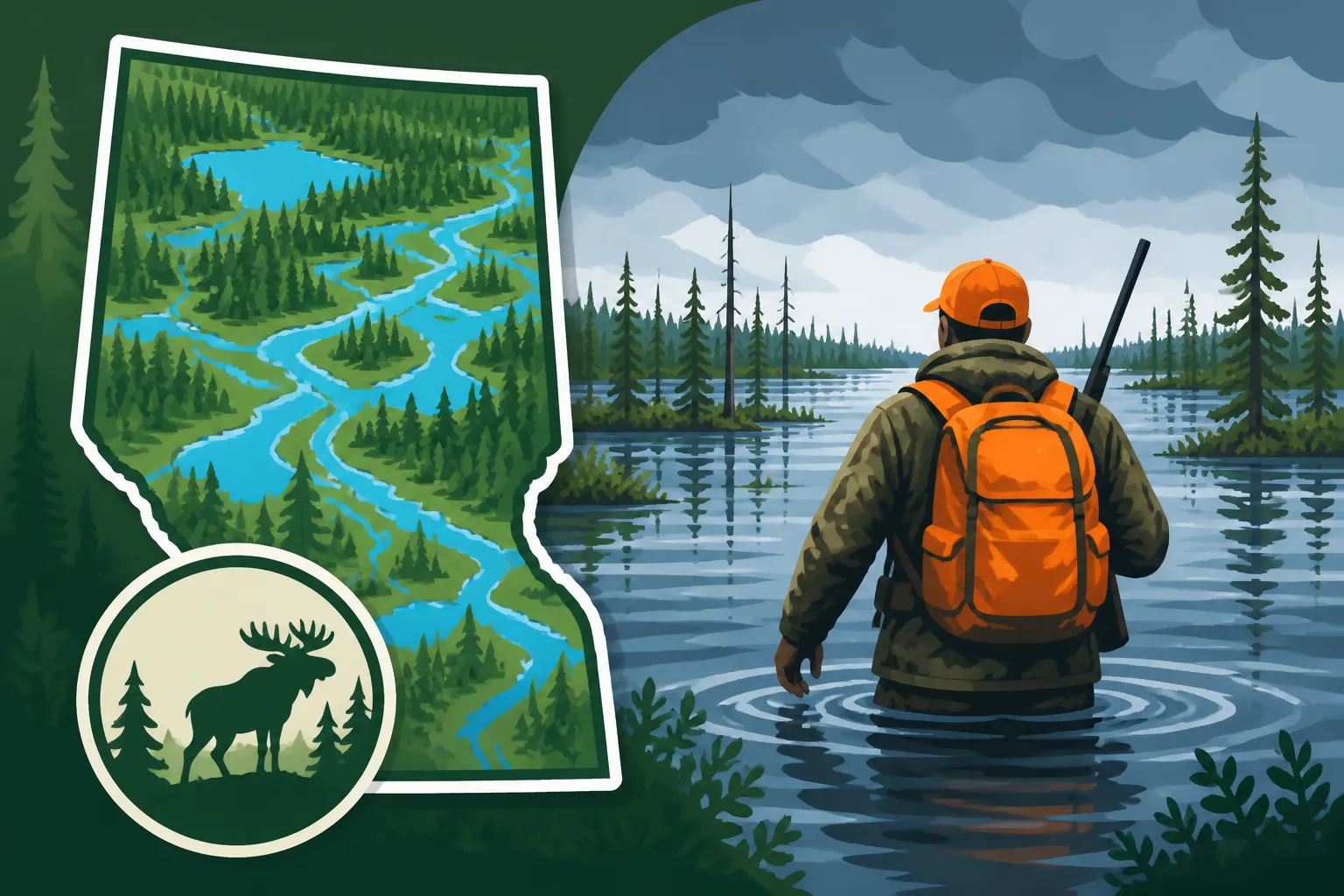
The Boreal Forest, particularly in Alberta, is characterized by its vast expanses of low-lying terrain, dotted with countless small lakes, bogs, and muskeg. Unlike the well-drained foothills or mountain country, water doesn't always run off quickly here. Instead, it tends to collect and saturate the ground, often staying for extended periods. Muskeg, which is essentially a thick, spongy layer of peat moss and decaying vegetation over saturated ground, becomes even more treacherous when heavy rains persist. What might be passable on foot or with an ATV in a dry year can become a waist-deep, sucking quagmire after a few days of rain.
Imagine walking across what appears to be firm ground, only for your boot to sink suddenly, pulling your foot deep into cold, dark muck. This isn't just an inconvenience; it's a genuine safety concern, especially when you're miles from your vehicle. These wetlands act like giant sponges, soaking up moisture and releasing it slowly, meaning that even a few days after the rain stops, the ground can remain saturated and incredibly difficult to traverse. Understanding this unique drainage, or lack thereof, is the first step in appreciating why wet years present such a distinct set of challenges for hunters in these WMUs.
Impact on Access Roads and Trails
The primary access routes into Alberta's Boreal WMUs are often a mix of gravel roads, forestry trunks, oil and gas cutlines, and old seismic lines. These are not always maintained to highway standards, and for good reason—they're built to facilitate resource extraction, not necessarily year-round public travel. In a wet year, these routes bear the brunt of the moisture. Gravel roads become greasy and slick, losing their traction, and deeper ruts can form rapidly, even from light vehicle traffic. What might have been a minor puddle in a dry spell can quickly become a small pond, disguising hidden hazards like rocks or deep washouts.
Oil and gas cutlines and seismic lines, which are often your best bet for penetrating deeper into the Boreal, are particularly vulnerable. These narrow, linear clearings are typically built with minimal grading and can act as natural channels for water. After heavy rain, they transform into extended mud bogs, sometimes for miles on end. Driving a truck down one of these can be a risky gamble, often ending with you stuck, buried up to the axles, far from any help. Even quads and ATVs, while more capable, can find themselves bogged down in the truly deep stuff. This drastically limits how far you can get into prime hunting areas, forcing you to rethink your entire access strategy. When considering Hunting Moose Along Cutlines and Seismic Lines, for instance, wet conditions completely change the playbook.
Navigating Boreal WMUs in Adverse Conditions
Successfully hunting in a wet Boreal WMU isn't just about having the right mindset; it's about meticulous preparation, the right gear, and smart use of modern technology. You need to stack the deck in your favour, because the bush during a wet spell can be unforgiving and demanding. Don't underestimate the physical and mental toll that slogging through mud and water can take on you and your hunting partners.
Essential Gear and Vehicle Considerations
If you're planning to venture into the Boreal during a wet year, your vehicle becomes your lifeline, and it needs to be up to the task. Forget the two-wheel-drive pickup with street tires; you'll need a reliable 4×4 truck with aggressive mud-terrain tires that are in good condition. Tire chains for particularly treacherous sections can be a lifesaver, providing grip where rubber alone just can't hack it. Beyond the vehicle itself, a robust winch, securely mounted, is non-negotiable. Ensure you have all the necessary recovery gear: tree saver straps, snatch blocks, clevis shackles, and a high-lift jack. Learning how to properly use this equipment before you're stuck in a remote location is paramount. It’s not just about having it; it’s about knowing how to safely extract yourself or your buddies.
For going deeper, quads or ATVs are often the preferred method of travel. They offer a smaller footprint and superior maneuverability in muddy conditions. Equipping them with a good winch, aggressive tires, and even tracks in extreme conditions can dramatically improve your access. Always carry extra fuel, a patch kit for tires, and basic tools. Remember to familiarize yourself with the Quad and Side-by-Side Rules on Crown Land to ensure you're compliant with regulations, especially concerning designated trails and sensitive areas. Getting stuck with a game animal on the ground is a whole different level of problem, so preventative measures are key.
Utilizing Mapping and Scouting Tools
In challenging conditions, good navigation isn't just a convenience; it's a necessity for safety and success. This is where modern mapping applications truly shine. Tools like onX Hunt are invaluable for pre-scouting and real-time navigation. Before you even leave home, use satellite imagery to identify higher ground, analyze historical water flow patterns, and mark potential dry routes or old logging roads that might still be passable. Look for contours that indicate subtle rises in elevation, which could mean firmer ground. The detailed land ownership layers in onX Hunt are also critical for determining legal access points on Crown Land versus private property, helping you plan your approach without trespassing. Reading Alberta's Crown Land Layers on onX is a skill every Boreal hunter should master.
Once you're in the field, these apps provide real-time GPS tracking, allowing you to mark your path, identify potential dead-ends, and find your way back to your vehicle even in thick fog or after dark. Pairing your primary mapping app with a dedicated GPS unit as a backup is a smart move, ensuring you have navigation capabilities even if your phone dies. While not directly for in-the-field navigation, platforms like GoHunt can provide useful WMU-specific data, including draw odds and historical harvest reports, which can help in your initial planning stages, even if the real-time ground conditions require more dynamic adjustments. You can also use satellite imagery to identify burn areas or recent clearcuts, which, while potentially holding game, might also present their own access challenges with fresh stumps and uneven terrain. This detailed digital scouting, coupled with careful ground assessment, will save you immense time and frustration when battling the elements. Scouting With Satellite Imagery in Alberta is particularly crucial for these dynamic Boreal environments.
Strategies for Successful Hunting in Wet Boreal WMUs
Hunting in a wet Boreal WMU requires more than just tough gear; it demands a strategic shift in how you approach the hunt itself. The animals' behavior changes, and your tactics must adapt accordingly. It's about working with the conditions, not against them, and prioritizing safety above all else.
Adjusting Hunting Tactics
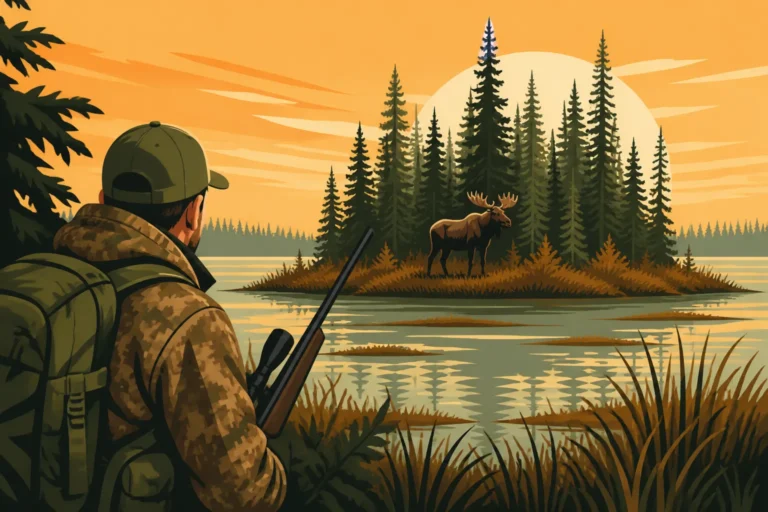
When the Boreal is soaked, game animals don't just disappear; they adapt. Whitetails, mule deer, moose, and bear will often seek out higher, drier ground. This might mean small islands of timber within a large muskeg, or the subtle ridges that run through otherwise flat terrain. Animals will gravitate towards these areas for bedding and travel, making them prime spots to focus your efforts. Look for sign along the edges of these slightly elevated zones. They'll also often stick to the densest cover, providing shelter from the elements, so focusing on thick stands of spruce or pine can be productive.
Travel patterns will also change. Instead of traversing wide-open areas or boggy bottomlands, animals will stick to established trails on firmer ground, or create new ones along the higher contours. Your best bet might be to patiently still-hunt these trails, moving slowly and quietly, or to set up on a pinch point where drier land forces game into a predictable travel corridor. Calling can still be effective, especially for moose, as the damp air can carry sound further, but you might need to adjust your approach for reaching these isolated pockets of dry ground. For example, focusing on a Hunting a Beaver Meadow in the Boreal becomes about carefully approaching the slightly higher ground around the water, rather than expecting to walk through the wet centre. Similarly, targeting a Hunting a Muskeg Island of Timber means pinpointing how game gets to that island.
Safety and Preparedness in the Backcountry
Safety in a wet Boreal environment cannot be overstated. The conditions magnify every potential risk. Getting stuck is one thing; getting lost, injured, or facing an unexpected overnight stay in freezing, wet conditions is another entirely. Always have a comprehensive emergency kit in your vehicle and a smaller, essential kit on your person. This should include fire-starting materials, a first-aid kit, extra layers of warm, waterproof clothing (wool or synthetics, never cotton), high-energy food, and plenty of water. A fully charged satellite messenger or personal locator beacon (PLB) is crucial, as cell service in the Boreal is often non-existent. These devices can be the difference between a minor inconvenience and a life-threatening situation.
Before heading out, tell someone your exact hunting plan, including your intended route, where you'll be parking, and when you expect to return. Stick to that plan as closely as possible, and check in when you can. Be realistic about the conditions and your own capabilities. There's no shame in turning back if the mud becomes too deep, the rain too relentless, or your gut tells you it's too risky. Pushing beyond safe limits often leads to unfortunate outcomes. Understanding What to Do If You Get Stuck in the Bush isn't just about recovery gear; it's about having the mental fortitude and supplies to wait for help, or to safely self-extricate. Remember, a successful hunt isn't just about filling a tag; it's about coming home safely, ready for the next adventure. This mindset is especially critical when dealing with challenging Hunting Alberta Winter Weather Safely, where wet conditions can quickly turn to ice and snow.
Navigating Alberta's Boreal WMUs in wet years is definitely a challenge, but with the right preparation and adaptable strategies, it's far from impossible. By understanding the unique terrain, equipping yourself with robust vehicles and recovery gear, leveraging modern mapping tools like onX Hunt, and adjusting your hunting tactics to the conditions, you can still have a productive and safe experience. Always prioritize safety, be prepared for the unexpected, and respect the power of the Boreal when it's at its wettest.
Disclaimer
This article is for general informational purposes only and does not constitute professional advice. Laws, prices and regulations vary by location and change over time. Consult a qualified professional for guidance on your specific situation.