Hunting a Muskeg Island of Timber
There’s a unique challenge and immense satisfaction in hunting Alberta’s vast northern landscapes, and few places test your mettle quite like a muskeg. For many, the idea of slogging through spongy, wet ground dotted with stunted trees isn't appealing. But within these seemingly impenetrable expanses often lie hidden gems: islands of timber, drier and denser, that act as natural magnets for big game. If you've ever felt frustrated trying to locate elusive animals in open muskeg, or simply don't know how to approach these isolated pockets of cover, this guide will walk you through everything you need to know to hunt a muskeg island effectively.
Understanding the Muskeg Island Habitat
Muskegs are a dominant feature of Alberta's boreal forest, vast wetlands characterized by peat accumulation, stunted vegetation, and a whole lot of water. On the surface, they might look barren and uninviting, but look closer, and you'll find islands of timber offering prime habitat that draws in wildlife.
What Makes These Islands Unique for Wildlife?
Imagine a sea of boggy, often cold, wet ground where every step is a squelch and the trees are barely taller than yourself. This is the typical muskeg environment. While some hardy species like moose will utilize parts of it for browse, prolonged habitation can be tough due to the lack of dry bedding, dense escape cover, and varied food sources.
Now, picture a distinct rise within that bog – even just a few feet can make a world of difference. On these slightly elevated areas, the soil drains better, allowing for more mature, taller timber to grow. You’ll often find stands of black spruce, pine, and sometimes even a mix of aspen on the drier edges. This dense, older growth creates a micro-environment that stands in stark contrast to the surrounding muskeg.
These timber islands provide critical resources. They offer thermal cover from harsh winds and snow, essential bedding areas where animals can stay dry, and security from predators due to the dense canopy and understory. Furthermore, these islands often support a wider variety of vegetation, including lichens, mosses, and various shrubs that provide additional forage. For animals navigating the vast, open muskeg, these islands become vital waypoints, sanctuaries, and often, prime feeding grounds. They're essentially oases in a wetland desert, making them incredibly attractive for everything from a bull moose to a ruffed grouse.
Key Species That Utilize Muskeg Islands
Muskeg islands don't just look different; they attract specific game animals for very practical reasons. Understanding which species are most likely to inhabit these areas, and why, is crucial for successful hunting.
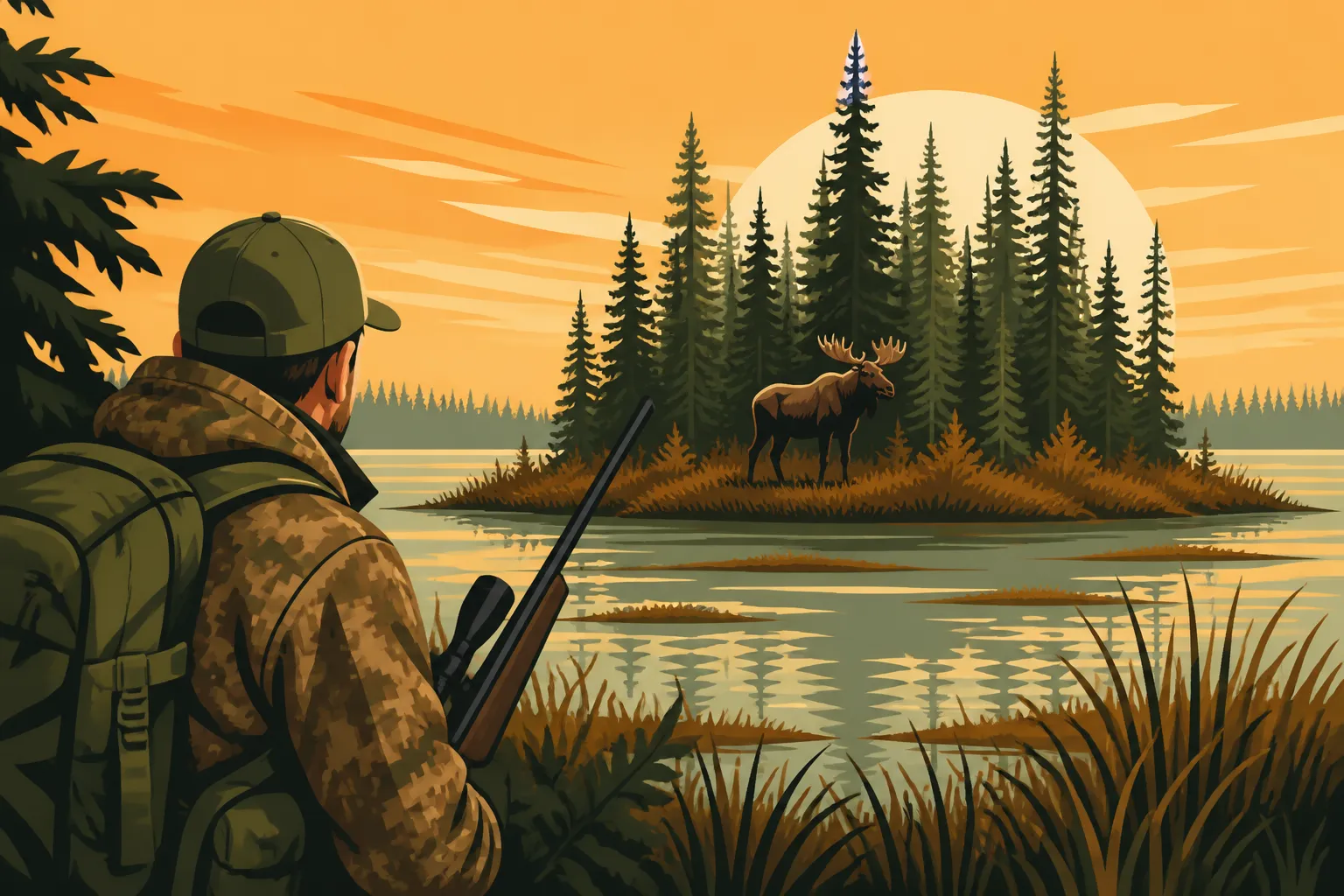
The undisputed king of the muskeg island is often the moose. Alberta's boreal forest is prime moose country, and these big animals thrive on the abundant browse found on the edges of wetlands. A timber island offers everything a moose needs: dense cover for bedding and security, a drier place to escape the bog, and often proximity to excellent food sources like willows and aquatic vegetation in the surrounding muskeg. Bulls, especially, will seek out these secluded spots during the rut, using the timber for cover while calling or raking brush. You can learn more about Moose Across Alberta's Boreal and Foothills to get a better understanding of their habits in this region.
Black bears are another major contender for muskeg island residency. These islands offer excellent denning sites – thick cover, fallen logs, and sometimes small caves or hollows in the ground. They also provide security cover for bears foraging for berries, roots, and grubs in the surrounding areas. Bears will often use these islands as travel corridors, moving between different feeding areas or escaping human disturbance. You might find signs of them rubbing trees, leaving scat, or even digging for roots.
While less common than in the parkland or foothills, whitetail deer can also utilize muskeg islands, particularly in the transitional zones where boreal forest meets agricultural land or in specific WMUs with a mix of habitat types. For whitetails, these islands are pure security cover, providing refuge from hunting pressure and harsh weather. They might not be the primary residents, but they will certainly use them as escape routes or temporary bedding areas, especially if there's sufficient browse.
Finally, you can expect to find wolves following their prey. If moose or deer are using an island, wolves will be checking it out. And don't forget the upland birds! Ruffed grouse, with their preference for dense undergrowth and aspen stands, often thrive in the varied vegetation of a timber island. Spruce grouse, too, will be right at home among the conifers. These small game animals provide another hunting opportunity and further indicate a healthy ecosystem within the island.
Scouting Strategies for Muskeg Islands
Hunting muskeg islands effectively isn't just about showing up. It demands meticulous scouting, both from afar and on the ground, to unravel the secrets these isolated havens hold. These aren't your typical easy-access hunting spots, so your scouting approach needs to be tailored.
Utilizing Satellite Imagery and Topo Maps
Before you ever lace up your boots, modern technology can give you a massive head start. Satellite imagery, especially with tools like onX Hunt or GoHunt, is your best friend for identifying potential muskeg islands.
When you're poring over those maps, what are you looking for?
- Distinct Tree Lines: Islands will typically stand out as darker, denser patches of timber against the lighter, sparser vegetation of the open muskeg. Look for sharp, defined edges rather than gradual transitions. These sharp lines indicate a change in elevation or soil type.
- Elevation Changes: Even subtle elevation changes (just a few feet) can mean the difference between standing water and dry ground suitable for mature trees. Topographical maps are excellent for this. Look for contour lines that group together, indicating a rise. Sometimes, these rises aren't perfectly circular but more elongated, forming ridges within the muskeg.
- Drainage Patterns: Observe how water flows through the muskeg. Are there small creeks or drainages that connect to or skirt the islands? These can act as natural travel corridors for game.
- Access Points: This is crucial. Zoom in and look for any old cutlines, seismic lines, logging roads, or even faint ATV trails that might lead to or near the island. These are often the only practical ways to get close without an epic bushwhack. Remember to check what you find against current recreational access regulations, especially if using a quad or side-by-side on Crown Land.
- Proximity to Other Habitat: Is the island near a larger block of timber, a river system, or agricultural fields? Its location in relation to other prime habitats can tell you a lot about what kind of game might use it and for what purpose (e.g., a bedding sanctuary near a feeding area).
By spending time with your digital maps, you can identify promising islands, mark potential access routes, and prioritize which ones to investigate further on the ground. This pre-scouting saves you invaluable time and effort, especially in country where every step can be a struggle. For a deeper dive into this, check out Scouting With Satellite Imagery in Alberta.
Boots-on-the-Ground Reconnaissance
Once you've identified a few promising islands from your maps, it's time to put boots on the ground. This is where you confirm your digital findings and truly understand how game animals use the area. However, muskeg is unforgiving, so your approach needs to be strategic.
- Approach Stealthily: Don't just march straight in. If you're scouting before the season, try to minimize your disturbance. Approach from downwind, move slowly, and pay attention to every detail. The goal is to observe, not to spook every animal out of the area.
- Look for Definitive Sign: This is what separates a "might be good" spot from a "definitely holds game" spot.
- Tracks: Look for well-used game trails leading into and out of the island, particularly at pinch points or along drier edges. Pay attention to freshness and size.
- Rubs and Scrapes: Especially important for deer and moose, these indicate where bucks and bulls have been active. Fresh rubs mean an animal is in the area or was recently.
- Beds: Look for depressions in the leaves or snow, often at the base of large trees or in thick undergrowth, where animals have been resting.
- Droppings (Scat): The quantity and freshness of droppings can tell you a lot about the volume and recent presence of game.
- Browse: Check for chewed-on branches or plants, indicating feeding activity. Moose, for example, will heavily browse on willows, aspen, and balsam fir.
- Identify Primary Travel Routes: Animals will almost always take the path of least resistance. In a muskeg island, this means finding the driest, firmest ground. Look for trails that connect the island to the surrounding bush, to water sources, or to other smaller islands. These trails are your prime stand locations.
- Wind and Scent Management: Walk around the perimeter of the island, if possible, to get a feel for how the wind behaves. The wind in open muskeg can be very different from the wind swirling within the timber. Understanding these micro-currents is critical for setting up a successful ambush.
- Water Sources: Are there any small ponds, seepages, or creek beds within or very close to the island? These can be magnets for game, especially in drier periods.
By combining your map research with thorough ground scouting, you build a comprehensive picture of how game uses that specific muskeg island, giving you a huge advantage when hunting season arrives. It's often tough going, but the payoff can be a truly remote and undisturbed hunting experience.
Effective Hunting Tactics for Muskeg Islands
Once you've done your homework and understand the lay of the land, it's time to think about how you'll actually hunt these unique timber islands. The tactics you employ will depend on the species you're after, your hunting style, and whether you're alone or with a partner.
Stand Placement and Still-Hunting Approaches
For many hunters, a stationary approach is the most effective way to intercept game in these dense, isolated pockets. This means choosing the right spot and staying put, or moving with extreme stealth.
- Strategic Stand Placement: The key here is to identify the most likely travel corridors. Game will use the driest, firmest ground, so look for trails leading into and out of the island, especially those connecting to larger blocks of timber or food sources. A stand positioned to overlook one of these main arteries, with the wind in your favour, can be deadly. Consider what game you are targeting. For moose, a stand near dense cover where they bed, or along a well-used trail to a feeding area, is ideal. For deer, look for similar routes but also consider areas with good browse within the island itself.
- Elevated Stands vs. Ground Blinds: In the dense timber of a muskeg island, an elevated stand (like a tree stand) can give you a crucial advantage in terms of visibility and scent control. It helps you see over the undergrowth and keeps your scent away from ground-level game. However, if good trees are scarce or you prefer to hunt from the ground, a natural ground blind made of existing brush and downed logs can be very effective, provided you blend in perfectly and control your scent meticulously. Remember to scout for suitable trees for stands during the off-season.
- Still-Hunting with Finesse: Still-hunting involves moving incredibly slowly, stopping frequently to observe and listen. This method is particularly effective in the dense, quiet environment of a muskeg island, especially on a slightly windy day when the rustling leaves or swaying branches can mask your movements. The goal is to move only when you absolutely have to, scanning every shadow and listening for the slightest sound. Look for subtle movements, a flick of an ear, or the glint of an antler. This isn't a quick walk-through; it's a chess game played at a snail's pace, where patience is your most valuable asset. The challenge of visibility in such dense cover means you often need to be within very close range to spot an animal before it spots you.
Calling and Driving Strategies
Sometimes, waiting just isn't enough, or the cover is so thick that you need to be more proactive. This is where calling and, in some cases, small drives come into play.
- Moose Calling: Muskeg islands are prime spots for calling moose. During the rut, a bull moose is often seeking solitude and security, making a timber island an ideal place for him to hang out. Soft cow calls or bull grunts can be incredibly effective at drawing him out of the thick stuff. You might even try raking a tree to mimic a bull rubbing his antlers. If a bull is bedded or lurking in the island, these calls can pique his curiosity and bring him in for a look. Patience is key; a bull might take a long time to commit. For more on this, check out Calling a Bull Moose in the Rut.
- Bear Baiting (Where Legal): If you're targeting black bears and baiting is legal in your WMU, a muskeg island can be an excellent location for a bait site. The isolation provides security for bears, and the dense timber allows for natural concealment of your stand. Placing a bait site on the edge of the island, where it's accessible from the surrounding muskeg but still offers dense cover for the bear, can be very productive. Always check regulations for Setting a Bear Bait Site in Alberta and ensure your site is well-away from any human trails or dwellings.
- Small Drives with a Partner: If you're hunting with one or two partners, a well-planned, small drive can be effective in pushing game out of a muskeg island. One or two hunters act as "drivers," moving slowly and deliberately through the island, while others "post" on known escape routes or trails. Communication is absolutely critical here – using radios, knowing your boundaries, and having a clear understanding of shooting lanes are paramount for safety. This strategy works best in smaller, more defined islands where you can anticipate escape routes. However, even with a drive, animals may prefer to circle back through the drivers if the posting hunters are too obvious or if there's sufficient cover to allow them to slip away undetected. Never attempt a drive without a clear safety plan and constant awareness of each other's positions.
Navigating the Muskeg Terrain and Safety
Hunting a muskeg island isn't just about finding the game; it's about safely navigating a challenging and potentially dangerous environment. The terrain can be disorienting, and conditions can change rapidly. Being prepared isn't just a good idea, it's essential.
Equipment and Footwear Essentials
Your gear choices for a muskeg hunt are critical. Forget your comfortable hikers – you'll need serious protection and reliable navigation.
- Waterproof Footwear is Non-Negotiable: This cannot be stressed enough. Knee-high rubber boots are often the minimum, but chest waders or hip waders might be necessary depending on the wetness of the muskeg you need to cross. Even within a timber island, there can be soggy patches. Your feet will get wet if you don't prepare, and wet feet in cold weather are a recipe for hypothermia and misery.
- Reliable Navigational Tools: A handheld GPS unit is invaluable, as is a good quality map and compass. Don't rely solely on your phone, as battery life can be fleeting and cell service is often non-existent in these remote areas. Apps like onX Hunt are excellent for pre-scouting and marking waypoints, but a dedicated GPS offers superior battery life and resilience in the field. Always know how to use a map and compass as a backup. Even a small rise can obscure your view and disorient you in an otherwise flat landscape.
- Survival Gear: Pack a small survival kit: fire starter, emergency shelter (like a space blanket or lightweight tarp), extra food, and water purification tablets. A basic first-aid kit, especially with blister care and wound dressings, is also crucial.
- Layered Clothing and Rain Gear: The weather in Alberta can be unpredictable. Dress in layers that you can easily add or remove to regulate your body temperature. Waterproof and windproof outer layers are essential, even if rain isn't in the forecast, to protect against dampness and wind chill.
- Communication Devices: A satellite messenger or satellite phone is a smart investment for remote muskeg hunts. Cell service is unreliable at best. These devices allow you to send emergency signals or check in with loved ones, providing peace of mind and a critical safety net.
Staying Safe and Avoiding Getting Lost
Muskegs are inherently disorienting. The monotonous landscape, dense tree cover, and lack of distinct landmarks can quickly lead you astray.
- Mark Your Path: From the moment you leave your vehicle or main access point, actively mark your path. Drop waypoints on your GPS every few hundred yards, or if you're using a compass, frequently take bearings back to your starting point. This creates a virtual breadcrumb trail that can guide you back.
- Be Aware of Changing Weather: Fog can roll in quickly in these damp environments, reducing visibility to mere feet. Snowfall can cover tracks and landmarks. Always check the forecast, but be prepared for sudden changes. If visibility drops, it's often best to stop, take a bearing, and wait it out, or slowly follow your GPS track back out. Hunting Alberta Winter Weather Safely emphasizes the importance of preparedness.
- Test the Ground Ahead: Muskeg can have hidden soft spots, sinkholes, or deep water pockets. Use a sturdy hiking pole or a long stick to test the ground ahead of you before stepping, especially when crossing areas you're unfamiliar with. A small deviation from a main trail can put you into waist-deep muck.
- Conserve Energy and Stay Hydrated: Travel through muskeg is physically demanding. What looks like a short distance on a map can take hours to traverse. Pace yourself, take breaks, and ensure you're carrying enough water and high-energy snacks. Dehydration and fatigue can impair judgment, increasing the risk of getting lost or making mistakes.
- Inform Someone of Your Plans: Always let someone know where you're going, your planned route, and when you expect to return. Give them specific details about your vehicle location and the WMU you're hunting. This "check-in" system is a vital safety measure.
- Know How to React if Lost: If you realize you're lost, stop immediately. Don't panic. Consult your map and GPS. If you can't determine your position, stay put and signal for help (three blasts on a whistle, three flashes with a light). Conserve your energy and make yourself visible. For more critical advice on challenging situations, see What to Do If You Get Stuck in the Bush.
Hunting muskeg islands offers a truly unique and rewarding experience for those willing to put in the effort. By understanding the habitat, employing smart scouting techniques, and prioritizing safety, you can unlock some of Alberta's most untouched and productive hunting grounds.
| Aspect of Hunting | Challenges of Muskeg Islands | Rewards of Muskeg Islands |
|---|---|---|
| Access | Difficult, wet, slow travel; limited roads; potential for getting stuck. | Less hunting pressure; undisturbed game. |
| Visibility | Dense timber, thick undergrowth; disorienting open muskeg. | Excellent cover for stalking; game feels secure. |
| Navigation | Monotonous terrain; easy to get lost; unreliable cell service. | Remote feel; sense of adventure; self-reliance. |
| Game Presence | Specific species only; may be difficult to locate without sign. | Concentrated game in distinct, predictable areas; prime habitat for certain species (e.g., moose). |
| Physicality | Very demanding; constant slogging, navigating obstacles. | High satisfaction from earning your harvest; good physical workout. |
| Gear Needs | Specialized waterproof gear, robust navigation tools. | Reliance on good preparation and smart choices. |
Disclaimer
This article is for general informational purposes only and does not constitute professional advice. Laws, prices and regulations vary by location and change over time. Consult a qualified professional for guidance on your specific situation.