Hunting a Foothills Willow Flat
Hunting a willow flat in Alberta's foothills can feel like stepping into a tangled maze, a place where dense cover swallows sounds and sightlines disappear. Many hunters shy away from these thick, often soggy, areas, intimidated by the challenging terrain and the sheer effort it takes to navigate them. But those who learn to read these unique ecosystems understand that these seemingly impenetrable willow thickets are often absolute magnets for big game, offering prime bedding, browse, and sanctuary. This guide will walk you through understanding, scouting, and effectively hunting these often-overlooked hotspots in Alberta's diverse landscapes.
Why Foothills Willow Flats are Big Game Magnets
Willow flats, often found hugging creek bottoms, river oxbows, and low-lying areas in the foothills, are not just random patches of brush. They are vital ecosystems that provide essential resources for a variety of big game animals. Understanding why animals choose these areas is the first step to hunting them successfully.
Ideal Cover and Security
In the vast, sometimes open, foothills landscape, thick willow flats offer unparalleled security for deer, moose, and elk. The dense, interwoven branches create a natural fortress where animals can bed down without being easily seen or disturbed. This dense cover is especially crucial during hunting season when pressure from humans can push animals into the thickest available refuge.
Imagine a mature whitetail buck that has felt the pressure of numerous hunters during the general rifle season. He's not going to be lingering in open aspen groves or along easily accessible cutlines. He's going to dive into the deepest, nastiest willow flat he can find, knowing the thick vegetation offers concealment from sight and sound. Similarly, a cow elk with a calf, or a wary bull moose, will choose these dense pockets to evade detection, especially when they need to rest and feel safe. The sheer difficulty of moving through these areas often means they receive less hunting pressure than more accessible timber stands.
Abundant Browse and Forage
Beyond cover, willow species themselves are a primary food source for many big game animals, especially in the leaner months. Willow buds and shoots provide critical browse, packed with nutrients that help animals maintain condition through the fall and into winter. This makes willow flats not just a place for security, but also a dining hall.
Moose, in particular, are renowned for their love of willow. They will spend hours browsing through these areas, stripping leaves and twigs with their prehensile lips. But it's not just moose; deer and elk also utilize willows as part of their varied diet. In late fall, when other forage begins to dry up or is covered by snow, the persistent nature of willow means it remains an accessible and palatable food source. A willow flat along a creek bottom might also boast other valuable forage species like dogwood, saskatoon, or even some hidden patches of high-energy grasses, further cementing its appeal to grazing and browsing animals.
Water Sources and Travel Corridors
Willow flats are almost always associated with water – be it a meandering creek, a spring-fed seep, or a low-lying area that retains moisture. This constant access to water is another huge draw for big game. Animals need to drink daily, and having water integrated into their bedding and feeding areas minimizes their exposure.
Beyond just water, these linear patches of cover often act as natural travel corridors, connecting larger blocks of timber or feeding areas. Animals will use the cover of the willows to move undetected between a bedding site and a field, or from one part of their range to another. A willow flat along a river, for example, might serve as a protected highway for a bull elk moving between a distant mountain range and a lower elevation grain field. Knowing these are prime travel routes can help you intercept animals moving during dawn and dusk. This is why mapping tools like onX Hunt or GoHunt are invaluable for identifying these linear features and how they connect different habitats on the landscape. You can often see the distinct green lines of willow growth following watercourses, creating clear pathways through otherwise open or sparse country.
Effective Scouting Strategies for Willow Flats
Hunting willow flats successfully often starts long before opening day. Good scouting, both remotely and boots-on-the-ground, is paramount to understanding how animals use these dense areas. Without it, you’re just crashing through the brush hoping for a lucky encounter.
Remote Scouting and Digital Mapping
Before you even step foot in the field, modern digital mapping tools can save you countless hours of wandering aimlessly. Services like onX Hunt or GoHunt allow you to examine satellite imagery of your chosen Wildlife Management Unit (WMU) from the comfort of your home. Look for those tell-tale serpentine lines of dense, brighter green vegetation that indicate willow growth along creek beds, drainages, and low-lying areas in the foothills. Identify how these willow flats connect to larger timber stands, clearcuts, or agricultural fields. These connections are crucial, as animals rarely live solely within a willow flat; they move in and out of them.
When digitally scouting, also pay attention to elevation changes, the proximity of water sources, and potential access points. Are there old logging roads or seismic lines that skirt the edges of these flats? Could an isolated willow patch be acting as a day bedding area for deer moving off a distant field? Mark potential entry and exit points, as well as any distinctive features within the flat itself, like openings, small clumps of larger trees, or areas where the cover might be even thicker. Identifying these features remotely helps you create a mental map and strategy before you commit to the arduous task of ground scouting. Referencing Scouting With Satellite Imagery in Alberta can greatly enhance your remote scouting efficiency.
Boots-on-the-Ground Reconnaissance
There's no substitute for getting your boots on the ground, especially in willow flats. The satellite image can tell you where the willows are, but it won't tell you where the deer are bedding, where the elk are rubbing, or which trails are currently active. Start by walking the perimeter of the willow flat, looking for main trails entering and exiting the thicket. Pay close attention to pinch points where the willow narrows, or where it meets a different type of cover.
Once you’ve identified main entry points, make short forays into the flatter itself, moving slowly and methodically. Look for fresh tracks, droppings, rubs (especially in early season), and most importantly, bedding areas. Deer and elk often create distinct beds, while moose might simply lie down in a thick spot. Note the freshest sign. What direction are the tracks heading? Are there distinct paths worn through the willows? These trails are gold. They tell you how animals are moving within the cover. Also, keep an eye out for signs of preferred browse. If you see heavily browsed willow tips, you know that area is a food source. Wind direction is also critical in these dense areas, and ground scouting helps you understand how the terrain might influence air currents.
Understanding Seasonal Animal Movement
Animals don't use willow flats in a static way. Their usage changes with the seasons and pressure. In early archery season, animals might be more dispersed, and willow flats could offer cool, shaded bedding. As the rifle season ramps up, these areas become critical escape cover. During the rut, whitetail bucks might cruise the edges of willow flats, scent-checking for does, while moose bulls might actively call from within them.
In late season, especially after a significant snowfall, willow flats near major food sources (like standing crops or winter browse) can become crucial wintering areas. The dense overhead cover of the willows can actually hold a fair amount of snow, offering a slight thermal advantage and protection from brutal winter winds. Understanding these seasonal shifts helps you prioritize which willow flats to scout and when. For example, a flat that seems quiet in September might be buzzing with activity in November or December. Consider what animals are likely doing based on the time of year, weather, and hunting pressure. You might even find yourself Hunting Deep Cold Late in the Season in these areas.
Hunting Tactics Tailored to Willow Flat Terrain
Successfully hunting a willow flat requires a shift in mindset and tactics from hunting more open timber or fields. It’s often about slow, deliberate movement, keen observation, and sometimes, a bit of old-fashioned hard work.
Still-Hunting the Edges and Interior
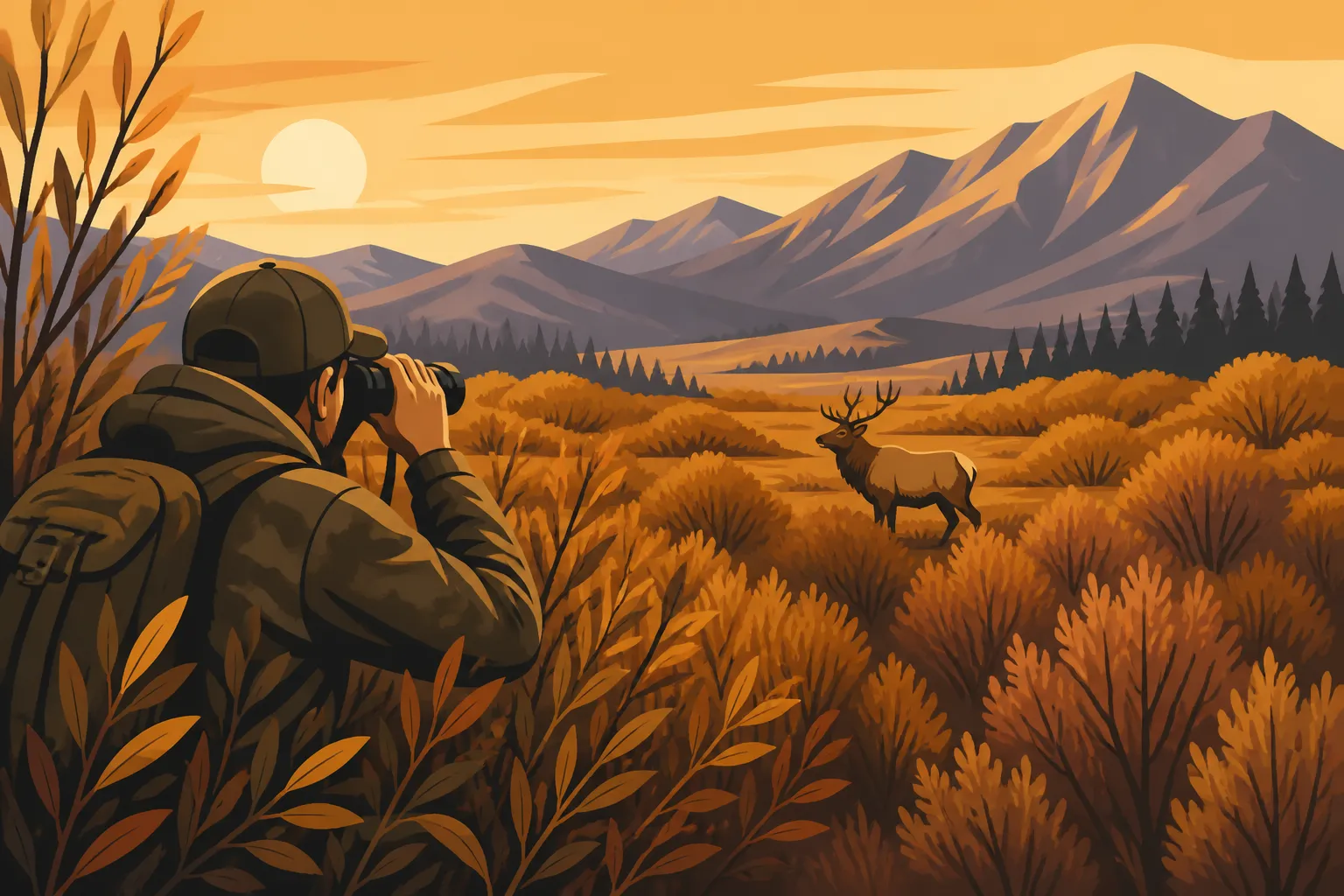
Still-hunting is perhaps the most effective tactic for dense willow flats. This means moving incredibly slowly, taking one or two steps, then stopping to listen and scan. Your eyes should be constantly searching for horizontal lines (an animal's back) in a vertical world of brush. Focus on patches of contrasting colour, the flick of an ear, or the glint of an antler. Use your binoculars even in close cover; they can help resolve details in the dense foliage.
When still-hunting, always pay attention to the wind. In thick cover, wind can swirl unpredictably, but generally, you want to hunt into the wind or with a slight crosswind. Move as quietly as possible, picking up your feet rather than shuffling, and using game trails whenever you find them. These trails are often clearer, and allow for quieter movement. The interior of a willow flat can be incredibly disorienting, so use your GPS or mapping app like onX Hunt to keep track of your position and direction. It’s easy to get turned around, especially when you're focused on spotting game. This slow, methodical approach allows you to detect animals before they detect you, giving you precious seconds to react. Sometimes the advantage of a willow flat is the sheer noise an animal makes when moving through it, giving away its position.
Strategic Stand Placement
While still-hunting is excellent for covering ground, sometimes the best approach is to let the animals come to you. If your scouting has revealed active trails, pinch points, or bedding areas within or along the edges of a willow flat, consider setting up a ground blind or a treestand (if suitable trees are available). A ground blind, especially a pop-up, can be surprisingly effective in blending into the dense cover, offering concealment and scent control.
The key to successful stand placement is to anticipate animal movement. Where are they entering the flat? Where are they likely to cross? Look for "funnels" created by natural breaks in the willows, or where the flat constricts between a creek and a higher bank. Setting up on the downwind side of a well-used trail, where you have a clear shooting lane, is ideal. Remember, visibility will be limited, so your shot opportunities might be fleeting and close range. Practise shooting in tight quarters before the season. On days with higher winds, animals might feel more secure moving through the dense cover of a willow flat, masking their sounds, making a stand a good choice.
Driving and Pushing Tactics
For larger willow flats, or if you're hunting with a group, a drive or push can be a highly effective tactic, especially for deer or elk. This involves having one or more "pushers" slowly and deliberately move through the thick cover, while "standers" are positioned on the opposite side, waiting for animals to be pushed out.
Communication is absolutely vital for a safe and effective drive. Everyone in the party must know exactly where everyone else is positioned, and stick to their assigned roles and boundaries. Pushers should move slowly, stopping frequently, and making some noise (but not too much, or animals will just hunker down). They should also focus on moving into the wind if possible, to keep their scent from alerting animals too far ahead. Standers should position themselves in areas where animals are likely to exit the flat, such as trails, open edges, or bottlenecks. They need to be patient, concealed, and ready for a quick shot opportunity. Safety is paramount: always know your shooting lanes and what lies beyond your target. Remember to always check local regulations regarding group hunting and communication methods, as rules for Rules on Hunting From a Vehicle might not apply, but general safety considerations are always in play.
| Tactic | Best For | Advantages | Disadvantages |
|---|---|---|---|
| Still-Hunting | Individual hunter, wary game, precise scouting | Quiet, adaptable, maximizes encounter chances | Very slow, physically demanding, easy to get lost |
| Stand Hunting | Active trails, pinch points, specific times | Less movement, scent control, high vigilance | Limited range, reliant on animal movement, site-specific |
| Driving/Pushing | Group hunting, large flats, dense cover | Can move entrenched animals, covers more ground | Requires coordination, safety risks, animals can slip away |
Essential Gear and Safety for Foothills Willow Hunts
Hunting in willow flats presents unique challenges, and being properly equipped and mentally prepared can make all the difference between a frustrating bushwhack and a successful, safe hunt.
Appropriate Clothing and Footwear
Forget your quiet, brushed fleece that excels in open timber; willow flats will eat it alive. You need durable, rip-resistant outer layers that can withstand constant snagging and rubbing. Consider tough canvas, reinforced nylon, or even a hard-shell rain gear that can deflect branches. The focus here is on protection from the elements and the brush, not absolute silence (which is nearly impossible to maintain in such thick cover anyway). Layering is key, as you'll likely work up a sweat pushing through the dense growth, even in cold weather. Wicking base layers are crucial.
Footwear is arguably the most important gear choice. Willow flats are often wet, boggy, or have standing water. Waterproof boots are non-negotiable. Look for boots with excellent ankle support to prevent twists and turns on uneven, hidden ground. A stiff sole will also help push through small roots and provide stability. Many experienced willow flat hunters opt for knee-high rubber boots or even chest waders in particularly wet areas, especially during spring or late fall hunts when water levels are higher. Comfort and dryness here can’t be overstated. Having an extra pair of dry socks in your pack is always a smart move. When considering What to Wear on a Late Season Hunt, remember that insulation and waterproofing for your feet are paramount in a wet willow flat.
Navigation and Communication Tools
Getting lost in a dense willow flat is surprisingly easy. The sameness of the vegetation, lack of landmarks, and limited visibility can quickly disorient even experienced woodsmen. A reliable GPS unit or a smartphone with a downloaded mapping app (like onX Hunt or GoHunt) is absolutely essential. Make sure you have downloaded offline maps of your hunting area, as cell service is often non-existent in the foothills. Mark your starting point, and periodically mark your route so you can backtrack if needed. Using the track function on your GPS/app is a great way to ensure you can always find your way back to your vehicle or camp.
Beyond navigation, consider how you’ll communicate, especially if hunting with a partner or group. Two-way radios are invaluable for drives or pushes, as they allow real-time updates on position and animal movement. For solo hunters, or for emergencies, a satellite messenger or personal locator beacon (PLB) is highly recommended. These devices can send messages or an SOS signal even when out of cell range, providing a critical lifeline in an emergency. Preparing for Emergency Plans in Alberta's Backcountry is something you should never overlook.
Bear Safety and First Aid
The Alberta foothills are bear country, particularly black bears, and encounters can happen year-round, especially during spring and fall hunts. When pushing through dense cover, you could inadvertently stumble upon a bear, so always be prepared. Carrying bear spray, easily accessible on your chest or hip, is a must. Know how to use it, and practice drawing it quickly. Making noise as you move through thick cover can also help alert animals to your presence, giving them time to move away before a surprise encounter. Being aware of Wildlife Safety in Alberta Bear Country is a crucial part of hunting in these areas.
A well-stocked first aid kit is also essential. Minor cuts and scrapes from brush are common, but sprains or more serious injuries can occur from slips and falls on uneven terrain. Your kit should include bandages, antiseptic wipes, pain relievers, blister treatment, and any personal medications. Consider a small saw or loppers for clearing shooting lanes or making a path to retrieve downed game. A sharp knife, a headlamp, and fire-starting materials are also basic necessities that should always be in your pack.
Disclaimer
This article is for general informational purposes only and does not constitute professional advice. Laws, prices and regulations vary by location and change over time. Consult a qualified professional for guidance on your specific situation.