Flying to Alberta With a Rifle
Flying to Alberta for a hunting trip with your rifle can feel like navigating a minefield of regulations, especially if you're coming from out of province or across the border. The sheer thought of paperwork, security checks, and potential delays is enough to make anyone nervous. You've invested time and money in your hunt, and the last thing you want is a hiccup with your gear. This guide will walk you through the essential steps, requirements, and best practices to ensure your rifle makes it safely and legally to your Alberta hunting destination.
Understanding Canadian Firearm Import Regulations
Bringing a firearm into a new country, even one as friendly to hunters as Canada, requires careful attention to detail. It's not just about showing up at the airport; it's about proactively understanding and adhering to the specific rules designed to ensure everyone's safety and uphold the law. Don't let the paperwork intimidate you; think of it as your golden ticket to a fantastic hunt.
The Non-Resident Firearm Declaration Form
This is arguably the most critical piece of paper for any non-resident hunter bringing a rifle into Canada. It’s officially known as RCMP 5589, and you need to complete it in triplicate. Yes, three copies! The beauty of this form is that once it's confirmed and signed by a Canada Border Services Agency (CBSA) officer at your port of entry, it acts as a temporary firearm license for up to 60 days. This means you don't need to apply for a Canadian Possession and Acquisition Licence (PAL), which is a much longer process for residents. You can find this form online and even print it off before you travel, which I highly recommend. Fill it out completely, but do not sign it until you are in front of a CBSA officer, as they need to witness your signature. Having it pre-filled saves a significant amount of time at the border, both for you and for the officers, making the process much smoother. It covers details about you, your firearm, and the purpose of your visit. It’s essentially your declaration that you’re bringing a specific firearm into the country for a legitimate reason, like hunting, and that you understand the conditions of its use while here. This form also typically has a fee associated with it, which you'll pay at the border. Remember, one mistake on this form can cause delays, so take your time and be accurate. For more detailed information, check out The Non-Resident Firearm Declaration Form.
Proper Firearm Storage for Air Travel
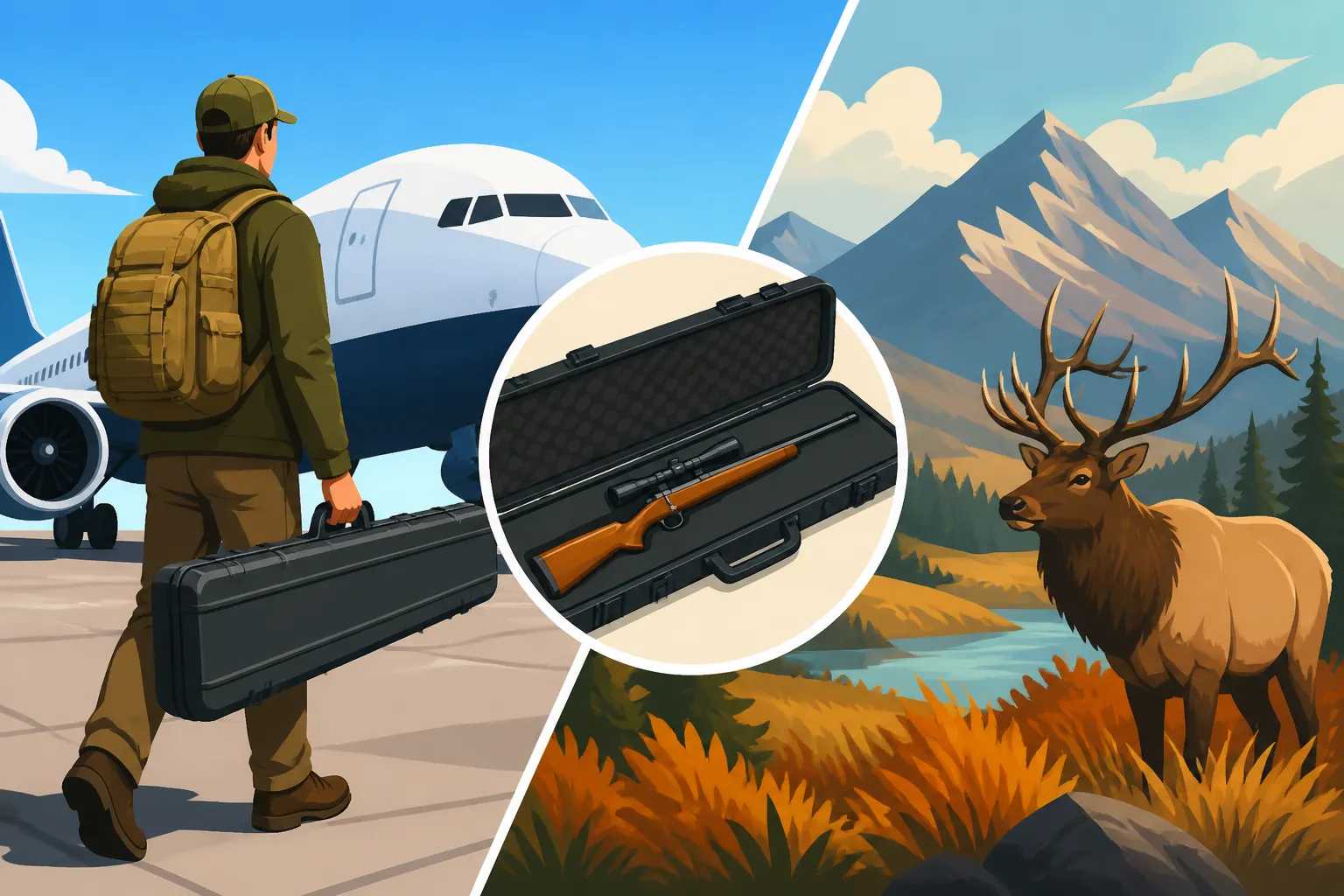
Once you've got your declaration sorted, the physical transport of your rifle is paramount. Canadian regulations, as well as airline policies, are very strict about how firearms must be stored during air travel. Your rifle must be unloaded, and it must be stored in a hard-sided, locked container that is not easily broken into. Think Pelican cases or similar robust, purpose-built firearm cases. A soft rifle case, while great for protecting against scratches in your truck, is absolutely not acceptable for air travel. The locks must be secure; often, travellers use TSA-approved locks, but Canada's rules also allow for non-TSA locks which can provide an even higher level of security. The key is that the firearm itself is not readily accessible. Many hunters choose to use multiple locks for extra peace of mind. Some airlines might even have specific requirements, like advising against combination locks and preferring key locks. Don't forget, if you have any optics or accessories attached to your rifle, ensure they are also well-protected within the case to prevent damage during transit. The goal is to make it impossible for anyone to access the firearm without the key or breaking the case, reducing any potential security risks.
Ammunition Rules for Flights
It's not just the rifle you need to worry about; ammunition has its own set of rules, and they are distinct from the firearm itself. Firstly, ammunition must be declared when you check in your luggage. Secondly, it absolutely cannot be packed with your firearm in the same case. Ammunition must be in its original manufacturer's packaging or in a securely designed container (like an MTM ammo box) that prevents the cartridges from shifting, rattling, or becoming dislodged. You can't just toss loose rounds into a bag. Most airlines and Canadian regulations specify a maximum weight limit for ammunition you can carry, usually around 5 kg (11 lbs) per passenger, though it's always wise to confirm this directly with your airline. This weight limit typically applies to cartridges for small arms, and usually excludes black powder or smokeless powder. Pack your ammunition in a separate piece of checked luggage, again, securely locked. The goal is safety: to prevent accidental discharge, damage, or unauthorized access. Failing to declare ammunition, or packing it improperly, can lead to serious delays and even legal issues, so make sure this detail is handled correctly. Ammunition Rules at the Canadian Border offers more specifics on this.
Navigating Airport Security and Airlines
Once your paperwork is squared away and your gear is packed according to regulations, the next hurdle is the actual airport experience. This can be intimidating, but knowing the process and remaining calm can make it surprisingly smooth. Remember, airport staff and border agents are there to ensure safety and compliance, not to make your life difficult.
Checking Your Rifle at the Airport
When you arrive at the airport, your first stop should be your airline's check-in counter. Do not try to sneak your firearm through security or into a regular baggage drop. You must declare your firearm to the airline agent. They will likely have you fill out a specific airline declaration tag, indicating that a firearm is contained within the locked case. The process typically involves showing your locked firearm case, having the agent verify it's unloaded (they might ask you to unlock it for a visual inspection, which you should be prepared for), and then securing it. Sometimes, you'll be required to take the case to an oversized baggage counter or a special security screening area yourself. This ensures that security personnel are aware of what they are handling and can follow appropriate protocols. Be prepared for some extra time at check-in, as this isn't an everyday occurrence for every airline agent. Being polite, patient, and prepared with all your documentation will help tremendously.
Airline Specific Policies
While Canada has overarching federal regulations for firearms, individual airlines can, and often do, have their own specific policies that might be even stricter. This is where your pre-trip research truly pays off. Before you even book your flight, it's crucial to check the firearm policy of every airline you plan to fly with, including any connecting flights. Some airlines might have different requirements regarding case types, lock types, ammunition limits, or even restrictions on certain types of firearms. For instance, some may only allow firearms in checked baggage, while others might have specific procedures for carrying them as cargo. Don't assume that because one airline permits something, another will. A quick call to their customer service line or a thorough review of their website's "special baggage" or "firearms" section will save you a world of grief. It's not uncommon for hunters to choose airlines specifically because their firearm policies are more straightforward or accommodating. You wouldn't want to get to the airport only to find your specific airline won't transport your hunting rifle.
Retrieving Your Firearm Upon Arrival
After a long flight, the last thing you want is a scavenger hunt for your rifle case. Fortunately, most airports have a designated process for firearm retrieval that differs from regular baggage claim. Instead of appearing on the main carousel, your firearm case will typically be taken to a special baggage area, the airline's office, or even directly to the CBSA office at the airport. You'll likely need to present your baggage tag and identification to claim it. Sometimes, the airline agent at your departure airport will inform you of the exact procedure at your destination. If not, don't hesitate to ask upon arrival at the airline's baggage service desk. It's a security measure, ensuring that the firearm is only released to the declared owner. Be patient, as this process can take a little longer than simply grabbing a suitcase off the carousel. Make sure you have your The Non-Resident Firearm Declaration Form handy, as you might need to show it again to prove ownership and legal entry.
Essential Documentation and Preparation
The key to a stress-free journey with your hunting rifle isn't just knowing the rules; it's about being meticulously prepared. Think of it as scouting before a hunt: the more you know and prepare, the higher your chances of success.
Required Identification and Permits
Beyond the Non-Resident Firearm Declaration, you'll need several other forms of identification and permits. Of course, a valid passport is essential for crossing the border. If you're coming from the United States, you'll also need to be aware of any specific requirements for bringing your firearm back into the US, such as registering it with US Customs and Border Protection (CBP) before you leave. This avoids any issues on your return journey. Within Canada, your confirmed firearm declaration acts as your temporary license. You'll also need your valid Alberta hunting licence and tags. Keep all these documents together, ideally in a separate folder that is easily accessible but secure. Having digital copies on your phone is a good backup, but always carry physical copies. This documentation proves who you are, what you’re doing, and that you have all the necessary legal permissions to hunt in Alberta. Being able to quickly present these documents to any official who asks will streamline your travel.
| Document Type | Purpose | Key Action |
|---|---|---|
| Valid Passport | International travel identification | Keep readily accessible. |
| Non-Resident Firearm Declaration | Temporary Canadian firearm license | Fill in triplicate, do not sign until witnessed. |
| Valid Hunting Licence & Tags | Legal permission to hunt in Alberta | Purchase in advance, have physical copies. |
| Airline Firearm Declaration Tag | Airline-specific firearm notification | Obtain at check-in. |
| US CBP Form 4457 (for US residents) | Proof of US origin for firearms (upon return) | Register firearms before leaving the US. |
Preparing for Border Crossing Questions
Border Services Officers are trained to ask specific questions, and how you answer can significantly impact your experience. Be honest, direct, and concise. Don't volunteer extra information unless asked, but don't be evasive. Typical questions will revolve around the purpose of your visit ("I am here for a hunting trip in Alberta"), the length of your stay, what you're bringing into the country (explicitly declare your firearm and ammunition), and where you'll be staying. They might ask to see your hunting license or your invitation from an outfitter. The best advice I can give is to be polite, confident, and have all your documents immediately available. Remember, the CBSA officer has the final say on your entry. A calm and cooperative demeanor, coupled with thorough preparation, will make the process as smooth as possible. Platforms like BookYourHunt often provide pre-trip information that can include tips for border crossing, especially when dealing with specific outfitters who regularly host non-resident clients. This kind of preparation extends beyond just the firearm; it's about demonstrating you're a responsible visitor.
What to Do If Things Go Wrong
Even with the best preparation, unexpected issues can arise. Your flight might be delayed, your luggage could be temporarily misplaced, or you might encounter a customs officer who is particularly thorough. If your firearm case doesn't show up immediately, do not panic. Head directly to the airline's baggage services desk and explain the situation calmly. They have procedures for locating delayed or lost special baggage. If you run into issues at the border with your firearm declaration, remain respectful and ask for clarification. If necessary, you can ask to speak with a supervisor. Always have contact information for your outfitter or your hunter host in Alberta handy, as they may be able to assist with information or contacts if a significant problem arises. It’s also wise to inform your outfitter of your travel plans, including flight numbers and estimated arrival times, so they can track your journey and be aware if there are any delays. Having a contingency plan, even if it's just knowing who to call, provides an important layer of comfort when planning your trip. For broader travel planning, sites like GoHunt often include advice sections for hunters dealing with logistics, which can be a real lifesaver.
Disclaimer
This article is for general informational purposes only and does not constitute professional advice. Laws, prices and regulations vary by location and change over time. Consult a qualified professional for guidance on your specific situation.