Driving Into Alberta With Firearms
Planning a hunting trip to Alberta, especially if you’re driving across the border with your firearms, can feel like navigating a minefield of regulations. Many hunters get overwhelmed by the paperwork, the fear of making a mistake, or simply not knowing what to expect when they pull up to the customs booth. This comprehensive guide is here to demystify the process, offering clear, step-by-step advice to ensure your journey into Alberta with your hunting firearms is as smooth and stress-free as possible, letting you focus on the excitement of the hunt ahead.
The Absolute Essential: Canadian Non-Resident Firearms Declaration
Let's be honest, the Canadian border can seem intimidating, especially when you're bringing a firearm. The most crucial piece of paper you'll need is the Canadian Non-Resident Firearms Declaration, often referred to as the Form RCMP 5589. This isn't just a suggestion; it's a legal requirement that will make or break your entry with your hunting rifle. Without it, you’re setting yourself up for a long, frustrating conversation with border officials and potentially having your firearms seized. It’s the single most important document to get right.
Why This Form is Non-Negotiable
Imagine driving for hours, perhaps even days, with the excitement of an Alberta whitetail or moose hunt building, only to be turned back or have your gear confiscated at the border. That's a nightmare scenario that can easily happen if you don't treat the Non-Resident Firearms Declaration with the seriousness it deserves. Canada has specific and strict laws regarding firearms, and as a non-resident, you are expected to declare every single firearm you bring into the country. This form acts as a temporary registration certificate, valid for up to 60 days, and it streamlines the process significantly. It proves you've considered the rules and are ready to comply, which immediately puts border agents at ease. It’s also crucial for understanding Rules for Non-Residents Hunting Alberta.
It’s about more than just avoiding trouble; it’s about respect for another country’s laws. Canadian officials need to know exactly what firearms are entering their country, who possesses them, and for what legitimate purpose. Hunting is a legitimate purpose, but the declaration process is designed to ensure public safety and prevent illegal firearms from entering the country. Treat it with the respect it deserves, and your experience will be far better.
How to Fill It Out Correctly
This is where many folks get a little shaky, but it’s actually quite straightforward if you take your time. You should fill out this form in triplicate. While you can technically fill it out at the border, it is highly recommended that you complete it beforehand. Print it out, fill in all the necessary personal information, and most importantly, accurately list every firearm you are bringing. This includes the make, model, serial number, and caliber. Double-check these details against your firearms themselves. Accuracy is paramount.
Here's the kicker: DO NOT SIGN IT until you are in front of a Canada Border Services Agency (CBSA) officer. This is a critical step because the officer needs to witness your signature. When you arrive at the border, inform the first border services officer you encounter that you are declaring firearms. They will direct you to a secondary inspection area where they will inspect your firearms to ensure they match the declaration, then witness your signature. Be prepared to pay a small processing fee at this point. Many hunters find resources like GoHunt or BookYourHunt helpful for pre-trip planning, and they often include tips on border crossing. For a deeper dive into the specific document itself, you can consult The Non-Resident Firearm Declaration Form.
What to Expect at the Border
When you arrive at the border, the first thing you'll do is approach the primary inspection booth. This is where you declare your firearms. Simply state, "I am declaring firearms," or "I have firearms to declare for a hunting trip." The officer will then direct you to a secondary inspection area. Don't be alarmed; this is standard procedure. At secondary, you'll be asked to step out of your vehicle (usually). Your vehicle may be searched, and your firearms will be inspected. This isn't them trying to catch you out; it's simply verifying that what you declared on the form matches what you have.
During this process, be patient, polite, and answer all questions truthfully. Have all your documentation ready: your passport, your hunting license (or proof of application), and of course, your unsigned firearms declaration form. The officer will verify the details on the form against your firearms, witness your signature, collect the fee, and stamp your copies. You’ll keep one copy in your possession with your hunting license, one will be retained by CBSA, and one will be attached to your firearms case. This signed and stamped declaration is your proof of legal possession in Canada.
Understanding Permitted Firearms and Ammunition
Just because you can legally own a firearm in your home country doesn't automatically mean it's legal in Canada for hunting. Canadian law classifies firearms differently, and it's essential to understand these categories to avoid any unpleasant surprises. Ignorance of the law is not an excuse, and a mistake here could result in severe penalties.
Legal Classes of Firearms for Hunting
In Canada, firearms are generally classified as non-restricted, restricted, or prohibited. For most non-resident hunters, you will primarily be concerned with non-restricted firearms. These typically include most common hunting rifles and shotguns. These are the firearms you'll use for hunting big game like deer, moose, or elk, as well as upland birds and waterfowl. Revolvers and handguns are generally considered restricted or prohibited, and it is exceedingly rare for a non-resident to be allowed to bring them into Canada, especially for hunting purposes. If you attempt to bring a restricted or prohibited firearm without the proper, highly specialized permits, you will face serious legal consequences.
Think of your typical bolt-action deer rifle or a pump-action shotgun for waterfowl. These fall into the non-restricted category. There are specific barrel length requirements and overall length requirements, but most standard hunting firearms meet these criteria. Always verify your specific firearm against Canadian regulations before traveling. This is where knowing Legal Firearms and Bows for Big Game becomes critical.
Ammunition Limits and Storage
Alright, you've got your rifle sorted, but what about the ammo? There are also rules around ammunition, and you can't just throw a thousand rounds in the back of your truck. While there's no hard limit on the amount of ammunition you can bring for your declared non-restricted firearms, it must be for your personal use during your hunting trip. Bringing an excessive amount, say enough for several years of hunting, might raise eyebrows. A reasonable amount for a typical hunting trip is generally accepted.
More importantly, ammunition must be stored safely and separately from your firearms. This means no loaded magazines in the rifle, and ideally, your ammunition should be in a separate, secure container, distinct from where your firearms are stored. This separation is key to demonstrating safe and responsible transport. For detailed information on this, check out Ammunition Rules at the Canadian Border. Your hunting adventure starts long before you pull the trigger, and adhering to these storage rules is part of being a responsible hunter.
Restricted vs. Non-Restricted Firearms
This distinction is perhaps the most critical for non-residents.
Non-Restricted Firearms: These are your bread-and-butter hunting rifles and shotguns. They typically have longer barrels and are generally not designed for easy concealment. They require a standard Non-Resident Firearms Declaration.
Restricted Firearms: This category includes most handguns (pistols and revolvers) and certain semi-automatic rifles. Bringing these into Canada as a non-resident is extremely difficult and usually requires an Authorization to Transport (ATT) and an Authorization to Possess (ATP), which are rarely granted for general hunting purposes. Trying to bring one without these specific, pre-approved documents will result in seizure and potentially criminal charges.
Prohibited Firearms: This category includes automatic firearms, sawed-off shotguns/rifles, and certain military-style semi-automatic firearms. These are absolutely forbidden for non-residents to import, period. Do not even think about attempting to bring a prohibited firearm into Canada. The consequences are severe. Stick to your non-restricted hunting firearms, and you'll be fine.
Practical Tips for a Smooth Border Crossing
Getting everything right on paper is a huge step, but the actual border crossing experience can still be stressful if you're not prepared for the practicalities. A little planning goes a long way in ensuring a calm and efficient process. Think of it like scouting a new hunting area – the more you know, the better your chances of success.
Securing Your Firearms for Travel
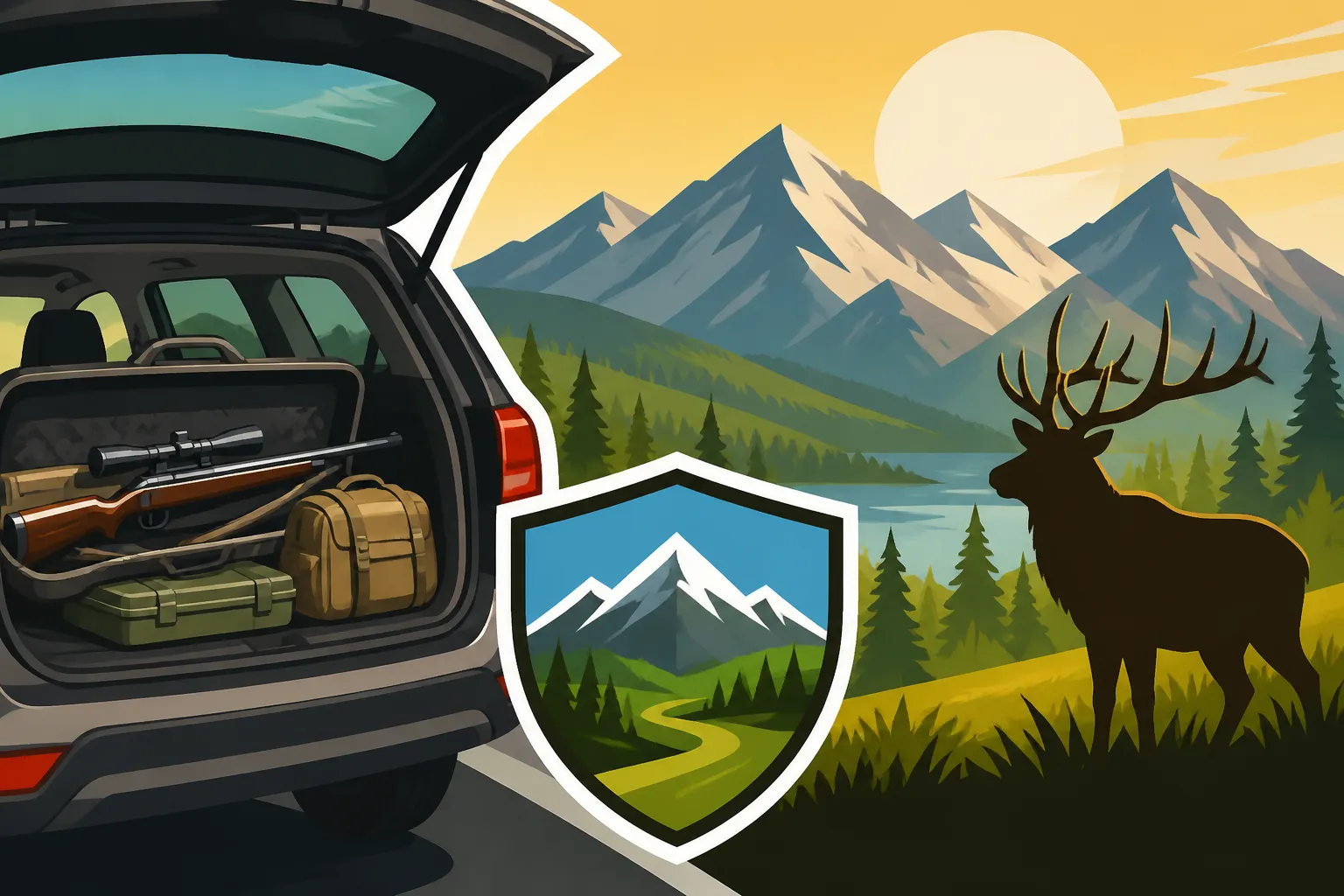
Proper storage of your firearms is not just a good idea; it's a legal requirement in Canada for transport. All non-restricted firearms must be unloaded and transported in a locked case or container, or rendered inoperable with a locking device (like a trigger lock). The key is to make them inaccessible and obviously secure. Keep the ammunition separate, as discussed before. Do not store your firearms in a place that is easily accessible from the passenger compartment of your vehicle if possible. A locked gun case in the trunk or a secured cargo area is ideal.
This also applies when you're driving through Canada on your way to a hunting destination within Alberta. Even if you're just stopping for gas or food, your firearms must remain secured and unloaded. This practice demonstrates responsibility and compliance, which border officers appreciate. Some hunters choose to completely disassemble their firearms, but a locked case and separate ammunition are generally sufficient for non-restricted hunting arms.
Required Documentation Beyond the Form
While the Non-Resident Firearms Declaration is key, it's not the only thing you'll need. Think of it as your hunting pack – you need more than just a rifle.
- Passport: Essential for international travel. Ensure it's valid for the duration of your trip.
- Proof of Hunting Licence/Permit: Have a copy of your Alberta hunting licence, special draw tag confirmation, or proof of application. This shows the legitimate reason for bringing your firearms. You'll likely need to get an Alberta Non-Resident Deer Licence Cost if you're targeting deer. Even if you're hunting with a guide, you'll still need your own license.
- WIN Card: Alberta requires all hunters to have a Wildlife Identification Number (WIN) Card. This is your personal hunting ID in the province. If you haven't got one, you'll need to know Getting an Alberta WIN Card well in advance.
- Proof of Hunter Education: While not always explicitly asked for at the border, having proof of your hunter education course from your home jurisdiction is a good idea. This aligns with Alberta Hunter Education Requirements.
- Letter of Invitation (if applicable): If you're hunting with a specific outfitter or on private land with permission, a letter from the landowner or outfitter detailing your hunt can be helpful, though not strictly required by CBSA for firearm entry.
Having all these documents organized and easily accessible will make the entire process smoother. Consider a binder or a dedicated folder for all your important papers.
Dealing with Border Agents and Potential Issues
Border agents are professionals, and they are simply doing their job to protect national security. Approach them with respect and honesty.
- Be Truthful: Never attempt to conceal a firearm or lie about what you are bringing. This is the fastest way to get into serious trouble.
- Be Patient: Sometimes there's a wait, or the inspection takes a little longer. Remain calm and cooperative.
- Answer Directly: Answer questions clearly and concisely. Avoid offering too much unnecessary information. "I am going hunting for [species] in [area]" is usually enough.
- Don't Argue: If there's a misunderstanding or disagreement, state your case politely but do not argue or become confrontational. Escalating the situation will only make it worse.
- Know Your Rights (and their authority): You are entering their country, and they have broad authority at the border. Cooperate with their requests, as long as they are lawful.
One common issue is not having the firearm declaration form correctly completed or unsigned. Another is not having appropriate cases or locks for the firearms. If you've followed the advice here, you should be well-prepared to avoid these. Remember to carry essentials for your hunt, which often includes warm clothing if you're hunting late in the season; think about What to Bring to a Hunting Camp as part of your overall preparation.
Common Pitfalls and How to Avoid Them
Even with the best intentions, it's easy to stumble if you're not aware of the nuances of Canadian law. Many hunters make similar mistakes, which can turn an exciting trip into a legal headache. Knowing these common issues can help you sidestep them entirely.
Misunderstandings About Canadian Law
The biggest misunderstanding often revolves around what constitutes a "restricted" or "prohibited" firearm in Canada compared to your home country. For example, some semi-automatic rifles that are common for hunting in the United States might be classified as restricted or even prohibited in Canada due to specific barrel lengths, magazine capacities, or cosmetic features. High-capacity magazines (those holding more than 5 rounds for centerfire semi-automatic rifles or shotguns, or more than 10 rounds for handguns) are also generally prohibited. Even if your firearm is "non-restricted," bringing prohibited magazines for it is a serious offence. Always verify the specific classification of your firearms before you leave. Don't assume.
Another common pitfall is thinking that a "general" hunting licence allows you to hunt any animal with any weapon. While true for residents in some general seasons, non-residents often have more restrictions, especially when it comes to specific species or hunting certain Wildlife Management Units (WMUs). Always consult the Alberta hunting regulations to confirm what you can hunt and where, and what weapon is permitted.
Prohibited Items You Might Not Expect
Beyond the obvious prohibited firearms, there are other items that can cause issues:
- Pepper Spray/Mace (for self-defence): While legal in some places as a self-defence tool, many forms of pepper spray or bear spray are considered prohibited weapons in Canada if their primary purpose is for use against humans. True bear spray, clearly labelled as such and intended for bears, is generally permissible, but personal defence sprays are often not. Do your research.
- Switchblades/Automatic Knives: These are generally prohibited. Ensure any knives you carry are legal.
- Certain types of Crossbows: While modern hunting crossbows are generally legal for hunting in Canada, some specific types or those with certain features may fall under restricted or prohibited categories. Again, verify this if you plan to bring one. When a Crossbow Is Legal to Use can provide more detail.
- Satellite Phones/GPS devices with encrypted features: While less common, certain devices with highly encrypted capabilities, especially those used by military or intelligence agencies, could raise flags, though this is rare for recreational hunters. Regular satellite messengers for backcountry safety are usually fine and encouraged for Emergency Plans in Alberta's Backcountry.
It's better to be overly cautious than to have an item seized or face a fine. When in doubt, leave it at home or research thoroughly.
Consequences of Non-Compliance
The penalties for failing to declare firearms or bringing prohibited items can be severe. This isn't just a slap on the wrist.
- Seizure of Firearms: Your firearms will be confiscated, often permanently.
- Fines: Significant monetary penalties can be levied.
- Criminal Charges: In serious cases, such as bringing a prohibited firearm or making a false declaration, you could face criminal charges, a criminal record in Canada, and even jail time.
- Refusal of Entry: You will likely be denied entry into Canada and sent back to your home country. This could also affect future travel to Canada.
No one wants to start their hunting trip with these kinds of problems. A little preparation and honesty go a long way. Make sure you understand all the requirements for Transporting Game Meat and Proof of Sex after your successful hunt, too, as this also has strict rules. By being thorough and adhering to these guidelines, you'll be well on your way to a memorable and legal hunting adventure in Alberta.
Disclaimer
This article is for general informational purposes only and does not constitute professional advice. Laws, prices and regulations vary by location and change over time. Consult a qualified professional for guidance on your specific situation.