Why Parkland WMUs Draw Heavy Pressure
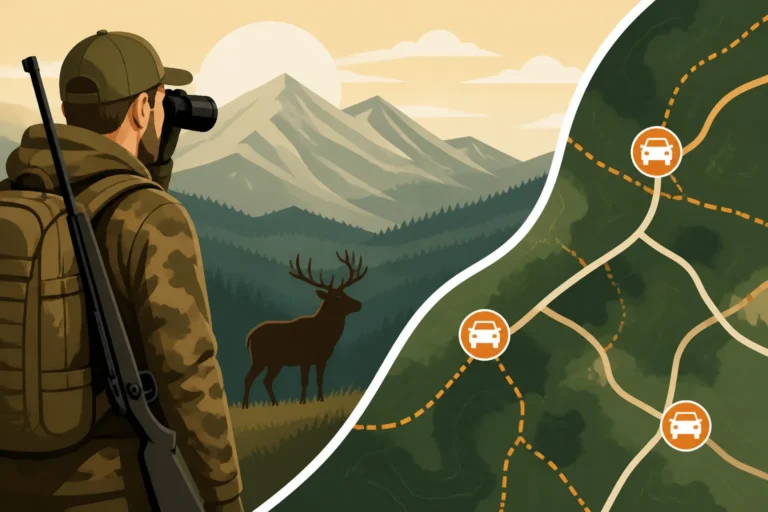
It's a common frustration, isn't it? You've spent hours poring over maps, dreaming of that perfect Alberta deer hunt, only to arrive at your chosen Parkland Wildlife Management Unit (WMU) and find a dozen other trucks already parked where you planned to walk in. You're not alone. The Parkland regions of Alberta, while abundant in game, are known for their heavy hunter pressure, and understanding why can be the first step to a more successful (and less crowded) hunting experience. This guide will dive deep into the specific reasons these WMUs see so many boots on the ground and, more importantly, equip you with strategies to navigate this reality and still find success.
The Allure of the Parkland: Why Hunters Flock Here
There’s a good reason why Parkland WMUs are so popular, and it's not just a matter of convenience. These areas offer a unique blend of habitat and accessibility that naturally draws a crowd, leading to the high hunter pressure many of us experience.
Proximity to Population Centers
Let's be honest, for many of us, hunting isn't a full-time job; it's a cherished escape we squeeze into weekends, holidays, or a few precious days off. The Parkland WMUs are often just a relatively short drive from Alberta's major cities like Edmonton, Calgary, and Red Deer. This proximity means hunters can easily head out for a day hunt or a quick weekend trip without burning valuable time and fuel on extensive travel. You don't need a multi-day expedition or a massive outlay for gas and lodging to get into decent hunting country.
This convenience is a double-edged sword, though. While it makes hunting accessible to a broader demographic, it also concentrates a large number of hunters into a relatively smaller geographic footprint. Think about it: if a good hunting spot is only an hour or two from a major city, countless people have the same idea. This creates a funnel effect, drawing in the masses who might not have the time or resources to venture into more remote, less-pressured regions like the far Boreal Forest or deep Foothills. The ease of access often trumps the desire for solitude for many, especially when a quick hunt is the goal.
Diverse Habitat and Game Species
The Parkland region is a beautiful mosaic of aspen bluffs, willow thickets, agricultural fields, and numerous small sloughs and creeks. This transitional zone between the open prairie and the dense boreal forest is incredibly rich in biodiversity, creating ideal habitat for a variety of game. White-tailed deer absolutely thrive here, finding ample food, water, and cover. It’s a whitetail hunter's paradise, offering everything from bedding cover in heavy bush to prime feeding grounds in grain fields.
Beyond whitetails, you'll also find healthy populations of mule deer in certain areas, particularly where the Parkland starts to break into more open or rugged terrain. And let's not forget the smaller game and birds: Hungarian partridge hold tight in the shelterbelts, sharp-tailed grouse dance in the native grasslands, and ducks and geese stage on the numerous ponds and fields during migration. This diversity means that a hunter heading to a Parkland WMU often has multiple opportunities, perhaps even a chance at a combo hunt, further increasing its appeal. It’s not just deer country; it’s prime mixed-bag territory, making it an attractive destination for a wider range of hunting interests.
Ease of Access and Terrain
Unlike the rugged mountains or the dense, roadless areas of the boreal forest, much of the Parkland region offers relatively easy access. There’s a well-developed network of grid roads, secondary highways, and even numerous two-track trails, making it simple to get deep into potential hunting grounds with a truck or ATV. The terrain itself is generally rolling and broken, rather than steep or heavily timbered, which means hunters can cover ground more easily, whether on foot or using a quad on designated trails. Hunting Alberta's Aspen Parkland Bluffs often involves a mix of walking and driving, making it less physically demanding than a true backcountry hunt.
This accessibility means fewer physical barriers to entry, which again contributes to higher hunter numbers. You don’t need specialized equipment like horses or extensive backpacking gear to hunt many Parkland WMUs. The ability to pull off a main road, park your vehicle, and start still-hunting through a bluffy quarter section or set up near a field edge is a huge draw. This contrasts sharply with areas where extensive hiking, boating, or even flying in might be necessary, effectively self-regulating hunter numbers in those more challenging environments. It's a pragmatic choice for many, especially those who prefer comfort and convenience over the rigors of wilderness hunting.
Understanding the Pressure: What it Means for Your Hunt
While the popularity of Parkland WMUs is understandable, the resulting hunter pressure brings with it a unique set of challenges that every hunter needs to anticipate and adapt to. Ignoring these realities can quickly lead to frustration and empty freezers.
Increased Competition for Game
The most obvious consequence of heavy hunter pressure is, of course, increased competition for game animals. When there are more hunters in a given area, deer, elk, and other species become significantly warier, more nocturnal, and much harder to pattern. Imagine multiple groups of hunters walking through the same bluffs and field edges day after day during the season. The game animals quickly learn to avoid these areas during daylight hours, pushing them into thicker cover or forcing them to move primarily under the cover of darkness. This means that a buck that might be visible during shooting hours in an unpressured area could be completely ghost-like in a busy Parkland WMU.
This competition isn't just about direct encounters, either. It's also about the subtle signs of human presence that animals pick up on: scent trails, vehicle noise, and even the general buzz of activity. Deer are incredibly perceptive, and a constant influx of human disturbance teaches them quickly. Hunters often lament seeing fewer and fewer deer as the season progresses in popular areas, and this is a direct result of the animals adapting to the pressure. Your strategies need to account for animals that are already on high alert from the moment the season opens. Reading Whitetail Sign in Alberta Aspen Bluffs becomes even more critical when deer are being pushed hard.
Habitat Fragmentation and Hunter Behavior
Many Parkland WMUs are characterized by a patchwork of private agricultural land interspersed with smaller blocks of public land, grazing leases, or aspen bluffs. This habitat fragmentation means that game animals often utilize multiple property types, and their movement patterns are heavily influenced by where they feel safe. Public land, while offering access, often becomes a temporary sanctuary that deer only use at night, or a travel corridor between private parcels. The high hunter presence on these public blocks means that deer are constantly being pushed from one cover patch to another.
Furthermore, hunter behavior itself can significantly impact game movement. Some hunters might post up on a field edge and wait, while others might actively still-hunt or drive bush. The cumulative effect of these varied approaches means deer are constantly on the move, making it difficult to predict their exact locations. This constant "push" can make for challenging hunting, as deer are often moving erratically or seeking the densest, most remote cover they can find within the patchwork. It forces hunters to not only scout thoroughly but also to think about how other hunters might be influencing the game in their chosen area.
Safety Considerations and Ethics
With more people in the bush, safety becomes an even more paramount concern. Hunters need to be hyper-aware of their surroundings, not just for game, but for other hunters. This includes clearly identifying your target and knowing what's beyond it, always using proper blaze orange attire during general seasons, and being mindful of sound carry in varying terrain. Accidental encounters or mistaken identity can occur when multiple groups are working the same block of cover. Understanding Alberta Blaze Orange Requirements is not just a legal obligation, it's a critical safety measure.
Beyond physical safety, ethical considerations also come into play. It's vital to respect other hunters' space, avoid cutting off approaches to areas you know are being worked, and always ensure you have valid permission if you're venturing onto private land. The temptation to trespass or disregard courtesies can be higher when competition is fierce, but maintaining a strong ethical compass is crucial for preserving the integrity of hunting for everyone. The heavy pressure doesn't just impact the animals; it tests the patience and principles of the hunters themselves.
Strategies for Navigating Busy Parkland WMUs
Successfully hunting in high-pressure Parkland WMUs isn't about avoiding other hunters entirely – that’s often impossible. Instead, it’s about employing smart strategies that allow you to capitalize on opportunities others might miss and to work effectively within the reality of shared hunting grounds.
Thorough Scouting and E-Scouting
In pressured areas, your preparation before the season is absolutely critical. Gone are the days when you could just show up and expect to find deer roaming openly. You need to know the land intimately. This means extensive boots-on-the-ground scouting, looking for subtle travel corridors, bedding areas that offer security, and less-obvious food sources that might draw deer away from heavily frequented fields. Focus on finding pockets of cover that are difficult to access or overlooked by casual hunters. Look for old fence lines, hidden slough crossings, or unkempt bush patches that are off the beaten path.
This is where modern e-scouting tools become your best friend. Apps like onX Hunt are invaluable for identifying property boundaries, locating small pieces of Crown land surrounded by private holdings, and understanding topographical features that might create natural funnels or security cover. Similarly, GoHunt offers detailed mapping layers that can help you pinpoint potential bedding areas, water sources, and pinch points. By spending time digitally scouting satellite imagery and terrain maps, you can identify areas that look promising, saving you countless hours of unproductive walking once the season starts. Don't just look for "deer country" – look for "deer country where other hunters won't go." Scouting With Satellite Imagery in Alberta can reveal these hidden gems.
Timing Your Hunts for Success
One of the simplest yet most effective ways to mitigate hunter pressure is to adjust your hunting schedule. The vast majority of hunters are weekend warriors, meaning Saturday mornings and Sunday afternoons are often the busiest times. If your schedule allows, prioritize hunting weekdays. You'll often find significantly fewer trucks at public access points, and the deer might be more willing to move during daylight hours without the constant human disturbance.
Consider hunting during less conventional times within the season itself. While the early archery season and the November rut see peak activity, sometimes hunting the late season, especially during periods of challenging weather, can yield incredible results. When the temperatures drop and snow flies, many hunters pack it in, leaving the hardy few to brave the elements. Deer still need to eat and move, and with fewer people out, they might become more visible. Hunting Alberta Winter Weather Safely provides valuable tips for these challenging conditions, and these hunts often offer a unique solitude, even in otherwise busy WMUs.
Seeking Out Overlooked Pockets and Private Land
Even in the most heavily pressured WMUs, there are often overlooked pockets of cover that receive less attention. These might be small, awkwardly shaped pieces of public land that don't lend themselves to easy access, or thicker patches of bush that most hunters dismiss as too dense. These are the places where deer will retreat to escape pressure. Learn to read a WMU map not just for large blocks of public land, but for those tiny, unassuming parcels that other hunters drive right past. Reading an Alberta WMU Map Before You Go will help you identify these spots.
Additionally, don't underestimate the power of securing private land access. While it can take effort and good landowner relations, getting permission to hunt a quarter section or a bluffy shelterbelt on private property can be a game-changer. Deer in these areas often experience significantly less pressure than those on adjacent public land, and you might find more relaxed, predictable animal behavior. Asking an Alberta Landowner for Permission and building those relationships can open up exclusive opportunities that simply aren't available to the general public. Remember, even a small, seemingly insignificant patch of private cover can hold a mature buck escaping the commotion.
| Characteristic | Typical Parkland WMU Feature | Challenge for Hunters | Strategy to Overcome |
|---|---|---|---|
| Proximity to Cities | Short drive from major urban centers | High volume of hunters, especially on weekends | Hunt weekdays, utilize late season/foul weather periods |
| Habitat Type | Mix of aspen bluffs, fields, sloughs | Deer become nocturnal and utilize dense cover more | Deep scouting, identify overlooked pockets, focus on pinch points |
| Access | Good network of roads, relatively flat terrain | Easy for many hunters to access, leading to widespread pressure | Use e-scouting (onX, GoHunt) to find harder-to-reach spots |
| Game Species | Abundant whitetail, some mule deer, various birds | Wary animals, highly sensitive to human presence | Hunt smarter, not harder; adapt to deer movement patterns |
| Land Ownership | Patchwork of public and private land | Public land often heavily pressured, private land less so | Secure private land access; focus on public land "sanctuaries" |
Successfully hunting in Alberta's Parkland WMUs, despite the heavy pressure, is entirely possible with the right mindset and strategic approach. It requires more than just showing up; it demands thorough scouting, thoughtful timing, and a willingness to seek out opportunities where others aren't looking. While the crowds can be a challenge, the reward of harvesting an animal in these rich, diverse landscapes is well worth the extra effort.
Disclaimer
This article is for general informational purposes only and does not constitute professional advice. Laws, prices and regulations vary by location and change over time. Consult a qualified professional for guidance on your specific situation.