Alberta WMUs a First-Timer Should Try
Stepping into the world of hunting in Alberta can feel like staring at a massive, complex map with a hundred different paths, each leading to an unknown outcome. For many first-time hunters, or even those new to Alberta, the sheer number of Wildlife Management Units (WMUs) and their varying rules, terrain, and game populations can be completely overwhelming. This guide aims to cut through that confusion, helping new hunters identify WMUs that offer a more approachable, less daunting experience for their initial forays into Alberta's rich hunting landscape.
Why Choosing the Right WMU Matters for New Hunters
When you're just starting out, or new to hunting in Alberta, picking a WMU might seem like a minor detail, but it can genuinely make or break your experience. It's not just about where the animals are; it's about accessibility, the type of hunting pressure, the terrain you'll be navigating, and the specific rules that apply. Getting this wrong can lead to frustration, wasted time, and even a feeling of being completely out of your depth, which is the last thing you want when you're trying to build confidence and enjoy the sport.
Overwhelm and Analysis Paralysis
Imagine sitting down with Alberta's Hunting Regulations, a coffee, and a feeling of excitement, only to find yourself buried under hundreds of pages of WMU-specific regulations, season dates, and species limits. It's enough to make anyone's head spin! There are over 200 WMUs, each with its own nuances, from antler point restrictions to specific draw opportunities. For a newcomer, trying to sift through all this data to find a suitable starting point can lead to what's known as "analysis paralysis." You become so bogged down in the details that you can't make a decision, or worse, you pick a WMU based on a single piece of information, only to find it's completely unsuitable for your skill level or equipment. We've all been there, and it’s a tough spot. Choosing a WMU that's known for easier access or a more straightforward hunt can greatly reduce this initial stress, allowing you to focus on the basics of hunting itself.
When I first started, I spent countless hours poring over maps and regulations, feeling like I needed a degree in cartography and law just to pick a spot. I remember a friend once suggested a WMU way up north, touting its "untouched wilderness." Sounded great, right? What he failed to mention was the lack of roads, the dense bush that required serious bushwhacking, and the overwhelming amount of grizzly sign. It was an experience, for sure, but definitely not one I'd recommend for a first-timer just trying to get a feel for things. Starting simpler allows you to build foundational skills without the added pressure of extreme conditions or complex logistics.
Balancing Success Odds with Experience
Let's be real: everyone wants to be successful, especially on their first hunt. While there's no guarantee in hunting, selecting a WMU with higher general populations of common species and more accessible terrain can significantly improve your chances of encountering game. Conversely, diving into a challenging mountain WMU for bighorn sheep on your first outing, without the necessary physical conditioning, specialized gear, or extensive experience, is likely to lead to disappointment. It’s about setting yourself up for a positive learning experience, even if that first success isn't a trophy of a lifetime. The goal for your first few seasons should be to learn how to scout, read sign, track, stalk, and ethically harvest an animal, regardless of its size.
Think of it like learning to drive. You wouldn't start by attempting a rally race, would you? You'd learn in a quiet parking lot, then on residential streets, gradually building up to highways and more complex driving situations. Hunting is no different. A WMU with a good density of white-tailed deer, for instance, in mixed agricultural and bush country, provides ample opportunity to learn and practice without the added pressure of extremely sparse animal populations or unforgiving terrain. Finding game and being able to make an ethical shot is the first hurdle, and it’s a big one. You want to feel confident, not constantly outmatched.
Understanding Alberta's WMU System for Beginners
Before we dive into specific recommendations, it’s crucial to grasp a few fundamental aspects of how Alberta's WMU system works. This isn't just bureaucratic jargon; it directly impacts where you can hunt, what you can hunt, and how you need to prepare. Ignoring these basics is like trying to build a house without a foundation – it's bound to fall apart. Getting a grip on these distinctions will save you headaches and ensure you're hunting legally and effectively.
The Basics: White Area vs. Green Area
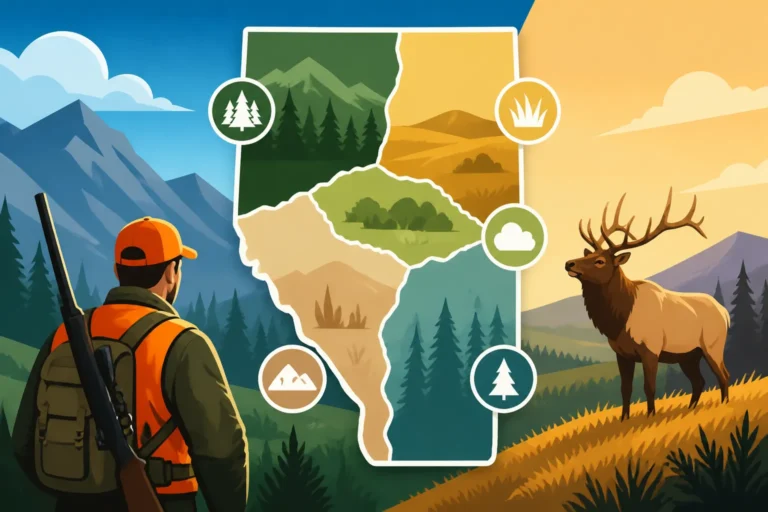
Alberta's land is broadly categorized into two main zones for administrative purposes: the White Area and the Green Area. Understanding the difference is vital for hunters.
-
White Area: This is primarily settled, privately owned agricultural land, often interspersed with small parcels of Crown land, river valleys, and aspen parkland bluffs. It's where most of Alberta's population lives and where much of the farming happens. Hunting in the White Area often means dealing with a patchwork of private land, which requires obtaining permission from landowners. This can be a huge hurdle for new hunters, as knocking on doors and getting permission takes time, social skills, and often a bit of luck. However, these areas often hold very high densities of game, particularly white-tailed deer, and also good numbers of mule deer, elk (in certain regions), and upland birds like Hungarian partridge and pheasants. Access is the primary challenge here, but the potential rewards are significant once you secure it. Learning how to navigate Alberta's Recreational Access Regulation is key in these regions.
-
Green Area: This encompasses Alberta's vast public forest and mountain lands. Think of it as true wilderness or semi-wilderness, generally less settled and characterized by extensive forests, foothills, and mountainous terrain. Hunting in the Green Area often means more public access on Crown land, but it also means denser bush, tougher terrain, and animals that are generally less accustomed to human presence. While you might not need to knock on as many doors, navigating these areas requires different skills, like proficient bush navigation, robust physical fitness, and preparedness for remote conditions. Game species like moose, elk, black bears, and even bighorn sheep (in the highest elevations) are found here, often in lower densities but sometimes in areas with less hunting pressure if you're willing to go deep. For those using mapping tools, Reading Alberta's Crown Land Layers on onX is incredibly helpful here.
For a first-timer, starting in areas where the access challenges are clear and manageable, or where there's a good mix of both, can be beneficial. Some WMUs sit right on the boundary, offering a taste of both worlds.
General vs. Draw-Only Opportunities
This is another critical distinction that impacts your hunting plan.
-
General Licences: Many species in Alberta, particularly white-tailed deer (for antlered animals) and certain game birds, can be hunted with a "General Licence." This means that once you have your Alberta's WIN Card and Wildlife Certificate and purchase the appropriate Alberta Hunting Licences and What They Cost, you can buy these licences over the counter and hunt them during the open season in designated WMUs. These are your bread-and-butter hunts for a beginner. They offer flexibility, don't require pre-planning around a draw deadline, and allow you to get out into the field without the uncertainty of whether you'll even get a tag. For a first-timer, focusing on general season opportunities for common species like white-tailed deer is highly recommended, as it removes a layer of complexity and allows you to practice your hunting skills. Learning about Alberta General Licences Without a Draw is a great starting point.
-
Special Licence Draws: For certain species like moose, elk, and mule deer (especially antlerless or large antlered categories in specific WMUs), and for resident class 2 (non-trophy) sheep (draw 29) and a handful of WMU-special class 1 sheep draws (410, 437, 444/446, 408, 438), you need to apply for a "Special Licence" through Alberta's draw system. This involves submitting an application well in advance (typically in spring), hoping your priority points or random chance grant you a tag. Draw hunts often occur in WMUs with highly sought-after populations or in sensitive areas where populations need careful management. While these can offer incredible trophy opportunities, they are generally not suitable for a first-timer's initial experience. The long waiting periods, the uncertainty of getting drawn, and the often more challenging nature of these hunts can be discouraging. Focus on general seasons first, build experience, and then consider venturing into the draw system when you're more comfortable.
Access Types: Private, Crown, and Grazing Leases
Understanding where you can legally hunt is paramount. Alberta has a mix of land ownership and access rules that can be confusing.
-
Private Land: As mentioned, this is predominantly in the White Area. You must obtain permission from the landowner before hunting. This isn't just a courtesy; it's the law. Getting Private Land Permission in Alberta is a skill in itself, requiring respect, good communication, and often a willingness to help out the landowner in some way. For a first-timer, this can be challenging to secure consistently. However, private lands often hold undisturbed game due to limited access.
-
Crown Land (Public Land): This is land owned by the provincial government, generally open to public recreation, including hunting, under specific regulations. Most of the Green Area is Crown land, but there are parcels in the White Area as well. Within Crown land, you'll encounter Public Land Use Zones (PLUZs), which have their own specific rules regarding vehicle access, camping, and other activities. While generally more accessible for hunting without explicit permission, Crown land can be remote, rugged, and experience higher hunting pressure in easily accessible areas. Using mapping apps like onX Hunt or GoHunt that clearly delineate Crown land is indispensable here. They allow you to confidently identify public land boundaries and navigate within them.
-
Grazing Leases/Reserves: These are Crown lands leased to private individuals for livestock grazing. While they are technically Crown land, special rules apply. You generally must contact the leaseholder to inform them of your intent to hunt and to discuss access, especially during grazing season. This is a common point of confusion for new hunters, who might mistakenly believe all Crown land is fair game without contact. These areas can be excellent for hunting, as the mix of pasture and natural cover often attracts game. Always check the regulations for specific WMUs regarding grazing leases.
Recommended WMU Types for First-Timers
Alright, let's get to the good stuff! Based on the complexities we've discussed, I've found that certain types of WMUs offer a more forgiving and educational experience for those just starting their Alberta hunting journey. These areas often balance game density, accessible terrain, and straightforward regulations.
Accessible Parkland WMUs (Whitetail Focus)
If you're looking to cut your teeth on a general big game season, the WMUs within Alberta's aspen parkland belt are often an excellent choice, particularly for white-tailed deer. These areas, like many within Hunting Alberta's Aspen Parkland Bluffs, are characterized by a mosaic of agricultural fields, brushy aspen bluffs, small woodlots, and often numerous sloughs and wetlands.
-
Why they're great for beginners:
- High Whitetail Density: The mixed habitat provides abundant food (from crops) and cover, leading to very healthy populations of white-tailed deer. This increases your chances of seeing game and getting opportunities.
- Manageable Terrain: Generally speaking, the terrain is rolling but not mountainous or overly rugged. It's often walkable, with clearings and field edges that allow for easier glassing and stalking. You're less likely to get lost or exhausted compared to dense boreal forest or steep foothills.
- Mix of Access: While private land is prevalent, there are often accessible pockets of Crown land, river corridors, and sometimes even smaller grazing leases. This provides options for where to focus your permission-seeking efforts or where to find public access points. Many WMUs in the central part of the province, around areas like Edmonton or Red Deer, fit this bill.
- General Seasons: White-tailed deer in these WMUs are typically open for general antlered tags, meaning no draw is required, simplifying your licensing process.
-
Real-life Scenario: Imagine you're hunting WMU 250, a classic parkland unit. You might spend a morning slowly walking the edge of an aspen bluff adjacent to a cut pea field, keeping an eye out for deer moving between cover and feed. Later, with permission from a landowner, you might set up a portable treestand or ground blind along a treeline overlooking a stubble field at dusk. The walking isn't extreme, and the deer sign is often abundant. You'll learn to read trails, identify scrapes and rubs, and understand deer movement patterns in varied habitat without having to navigate dense, unbroken forest. Plus, these areas often have good road networks, making access with a truck relatively easy. Just remember to always wear your Alberta Blaze Orange Requirements during the general rifle season.
Prairie Fringe WMUs (Mule Deer & Upland Opportunities)
Moving south and east, where the parkland transitions into the open prairie, you'll find WMUs that offer different, but equally approachable, experiences. These "prairie fringe" WMUs often feature coulees, river breaks, and rougher pastureland mixed with agricultural fields. They can be fantastic for mule deer and excellent for upland birds.
-
Why they're great for beginners:
- Spot-and-Stalk Opportunities: The more open nature of the terrain in areas like Hunting a Prairie Coulee Bottom lends itself well to spot-and-stalk hunting for mule deer. This is a foundational hunting skill that teaches patience, optics use, and understanding wind direction. You can often glass large areas, locate game, and then plan your approach.
- Good Mule Deer Numbers: Many of these WMUs hold healthy populations of mule deer, which often prefer the broken terrain of coulees and river valleys over flat fields.
- Upland Bird Potential: Don't overlook the incredible opportunities for upland birds like Hungarian partridge and sharp-tailed grouse in these areas. You can often combine a big game hunt with a bird hunt, diversifying your experience and increasing your chances of success.
- Easier Navigation: While there are hills and breaks, the overall lack of dense timber makes navigation less challenging than in heavily forested areas. You can often see for miles, which helps orient yourself.
-
Real-life Scenario: Picture yourself in a WMU like 150 or 151, near the Red Deer River. You might spend the morning slowly driving grid roads or walking along the rim of a large coulee, glassing the draws and benches below with your binoculars. With the help of an app like onX Hunt or GoHunt, you identify a patch of Crown land or a grazing lease where you've secured permission. You might spot a small group of mule deer bedded on a south-facing slope. Your challenge then becomes figuring out a stalk route, using the terrain to stay out of sight and keeping the wind in your favor. It's a fantastic way to learn stalking skills in country that offers both cover and open views. While waiting for deer movement, you might walk a few shelterbelts or grass strips, flushing a covey of Huns – a real bonus!
Foothills Edge WMUs (Diverse Big Game, Managed Access)
For those looking for a slightly more rugged experience, but still within reach of easier access, WMUs on the eastern edge of the Alberta Foothills can be a good stepping stone. These areas, such as those bordering Hunting a Foothills Bench Above a Creek, offer a transition zone between the populated White Area and the rugged mountains, providing a mix of big game species.
-
Why they're great for beginners:
- Diverse Game: Here, you'll find white-tailed deer, mule deer, and often good numbers of elk and black bears. This diversity means more opportunities to encounter different species and learn their habits.
- Manageable Foothills Terrain: While hillier than the parkland, the terrain is generally less extreme than the high mountains. You'll encounter rolling hills, timbered slopes, and open cutblocks. It's challenging enough to build physical fitness and navigation skills without being overwhelming.
- Public Land Access: Many of these WMUs have significant portions of Crown land, often within Public Land Use Zones (PLUZs), which means more public access without needing extensive private land permission. However, rules about vehicle use and random camping can be more stringent, so always check the specific PLUZ regulations.
- Scenic and Rewarding: Hunting in the foothills is incredibly scenic, offering beautiful views and a true sense of being in wild country. Success here often feels incredibly rewarding.
-
Real-life Scenario: Let's say you're hunting WMU 404, which skirts the eastern slopes. You might start your day walking an old logging road or seismic line, quietly slipping through the timber at first light. You're looking for fresh deer or elk tracks in the mud, or browsing sign on willow and aspen. You might spend midday glassing a clearcut or a natural meadow for animals feeding. The hills will give you a workout, but the rewards of seeing a small herd of elk in a valley bottom, or a black bear rooting around in a berry patch, are immense. You'll learn to navigate broken timber, understand thermals in hilly country, and recognize different big game tracks. Keep in mind that weather can change rapidly in the foothills, so be prepared for anything, especially if you're venturing out in Hunting Alberta Winter Weather Safely.
Planning Your First Alberta WMU Hunt
Once you've zeroed in on a few potential WMUs, the real work (and fun!) of planning begins. A well-prepared hunter is a successful hunter, and this holds especially true for your first few outings. Don't underestimate the power of good research and practical preparation. It's not just about getting a licence; it's about understanding the entire process, from scouting to meat care.
Researching Your Chosen WMU
Before you ever set foot in your chosen WMU, dedicate significant time to research. This is where modern tools really shine.
- Regulation Deep Dive: Get familiar with the specific regulations for your chosen WMU and target species. Pay close attention to season dates, bag limits, antler point restrictions (if any), and any special rules regarding access (e.g., specific PLUZ rules, restrictions on certain roads, or requirements for contacting grazing leaseholders). The Alberta Hunting Regulations are your bible here.
- Mapping Apps are Your Best Friend: Utilize digital mapping applications like onX Hunt or GoHunt. These platforms allow you to:
- Identify Land Ownership: Crucially, they show you public (Crown) land boundaries, private land, and often grazing leases. This helps you identify areas where you can legally hunt or where you need to seek permission.
- Topography and Access: Study the topography, find potential access roads, trails, and natural features like drainages, ridges, and pinch points. Look for water sources, old cutlines, or areas of thick cover that might hold game.
- Satellite Imagery: Use satellite imagery to scout from home. You can identify potential food sources, bedding areas, and travel corridors even before you leave your couch. For example, you might see an isolated aspen bluff surrounded by fields – a perfect hideout for whitetails.
- Talk to Locals: If possible, reach out to local hunters, wildlife officers, or even residents of the area. They can offer invaluable insights into game movements, hunting pressure, and specific access challenges. Join online hunting forums specific to Alberta or local social media groups; often, hunters are willing to share general advice.
A friend of mine, new to mule deer hunting, spent weeks on GoHunt studying a WMU in the prairie breaks. He identified a large coulee that funnelled into a small, publicly accessible section. He noticed old cattle trails and natural benches on the satellite imagery that looked like ideal travel routes. When he finally got there, his digital map guided him directly to these spots, and he was able to apply his newly learned Stalking Mule Deer in Badlands Breaks tactics with confidence, eventually harvesting a great buck. This level of preparation is what separates a frustrating trip from a rewarding one.
Essential Gear and Preparation
Your gear needs to be appropriate for the WMU and the conditions you expect. Don't skimp on essentials.
- Weapon and Ammunition: Ensure your rifle, shotgun, or bow is sighted in and that you are proficient with it. Practice shooting from various positions you might encounter in the field.
- Optics: Binoculars are non-negotiable for spotting game and identifying features. A rangefinder is also highly recommended.
- Navigation Tools: Beyond your phone app (which needs to be downloaded for offline use!), always carry a physical map and compass, and know how to use them as a backup. A GPS device can also be a lifesaver.
- Clothing and Footwear: Dress in layers for Alberta's unpredictable weather. Choose durable, quiet clothing suitable for the terrain. Good quality, broken-in hunting boots are crucial. Consider the cold, especially if hunting late in the season; proper insulation is key for Hunting Whitetails at Thirty Below.
- Survival Kit: Always carry a small survival kit with fire starters, a first-aid kit, a headlamp, extra batteries, a knife, and emergency food/water.
- Game Care: Don't forget field dressing tools, game bags, and knowledge of how to properly care for your meat. Knowing Meat Care in Alberta's Cold and Warm Swings is vital to prevent spoilage.
When I started hunting, I made the mistake of wearing regular hiking boots in early November. It didn't take long for my feet to become numb and soaked. That single mistake ended my hunt early and taught me a valuable lesson about investing in proper waterproof, insulated hunting boots for Alberta's varied and often harsh conditions. Don't make the same mistake – comfort and safety contribute directly to your ability to hunt effectively.
Learning From Every Outing
Your first hunts, regardless of success, are primarily learning opportunities. Embrace them.
- Observe and Adapt: Pay attention to everything: game trails, bedding areas, food sources, how animals react to your presence, wind patterns, and the subtle shifts in terrain. If you spook an animal, analyze why. Did you move too fast? Was the wind wrong? Did your scent carry?
- Keep a Journal: After each hunt, jot down notes. What WMU were you in? What was the weather like? What did you see? Where did you see it? What worked, and what didn't? This information will build into an invaluable personal database for future hunts.
- Seek Feedback (if hunting with others): If you're lucky enough to hunt with a more experienced mentor, actively ask questions and seek their feedback on your approach, scouting, and stalking techniques. Even if alone, self-critique is important.
- Ethical Considerations: Always prioritize ethical hunting practices. This includes knowing your target, making a clean shot, and quickly recovering your animal. It's about respecting the animal and the privilege of hunting.
My first successful deer hunt in Alberta was a small whitetail buck in a parkland WMU. It wasn't a monster, but it was my deer, harvested after hours of patient still-hunting along a bush edge. The biggest lesson wasn't the shot itself, but the journey to get there: the quiet steps, the constant scanning, the frustration of empty hours, and the sudden, heart-pounding moment of truth. That experience, even though it ended in success, taught me more about patience and persistence than any textbook could. Every hunt, whether you punch a tag or not, is a chance to deepen your understanding of the land, the animals, and yourself.
Disclaimer
This article is for general informational purposes only and does not constitute professional advice. Laws, prices and regulations vary by location and change over time. Consult a qualified professional for guidance on your specific situation.