Hunting a Lake Shoreline for Moose
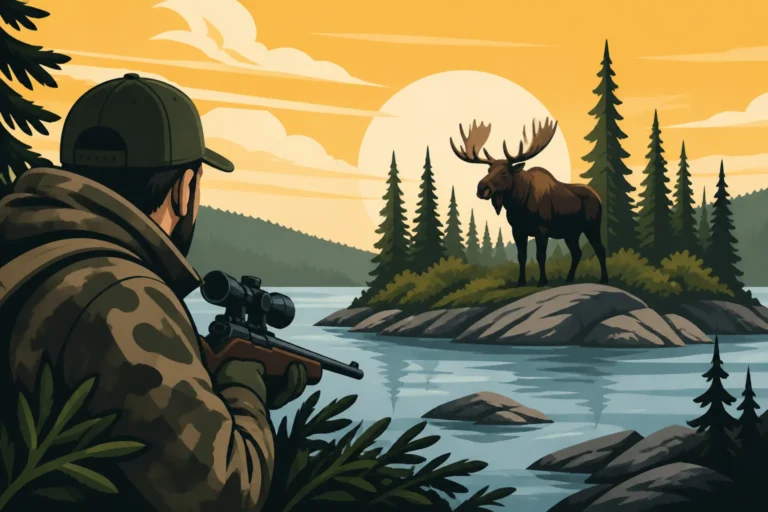
For many Alberta moose hunters, the thought of chasing a big bull through the thick, unforgiving boreal forest can feel like an impossible task. The deep timber, the muskeg, the dense undergrowth – it's enough to make even the most seasoned hunter question their resolve. But what if I told you that some of the most productive moose hunting in our province happens not deep in the bush, but right along the edges of our countless lakes? It's a completely different approach, one that leverages the moose's natural reliance on water and shoreline habitat. This guide will walk you through everything you need to know to successfully hunt a lake shoreline for moose in Alberta, turning those frustrating bush hunts into strategic, productive outings.
Understanding Lake Shoreline Moose Behavior in Alberta
Moose are creatures of habit, and their habits are often dictated by their needs for food, water, and cover. Our vast network of lakes, especially in the Boreal Forest and Parkland regions, offers an irresistible buffet and sanctuary for these majestic animals. Understanding why they are there is the first step to figuring out how to hunt them successfully.
Why Moose Gravitate to Lake Edges
It might seem counterintuitive to some, but moose absolutely love hanging out around water. It's not just for a quick drink, though that's certainly part of it. Lakes and their immediate shorelines provide a rich smorgasbord of aquatic vegetation – pondweed, water lilies, horsetails, and various grasses – that are a vital part of a moose's diet. These plants are often easier to access and digest than some of the tougher browse found deeper in the forest, and they provide essential minerals. Think of a moose wading belly-deep, submerging its head to rip up a mouthful of succulent greens; it's a common sight in these environments.
Beyond food, lake edges offer crucial thermal regulation. During Alberta's warm late summer and early fall days, standing in cool water helps moose dissipate body heat and escape from biting insects like mosquitoes and flies, which can make their lives miserable. That refreshing dip isn't just a luxury; it's a necessity for their comfort and health. The dense cover often found right along the shoreline, or on small islands, also provides a sense of security from predators, allowing them to feed and rest with less stress.
Seasonal Movements and Patterns Around Lakes
Moose use lake shorelines differently depending on the season and even the time of day. In spring, as new growth emerges, they're drawn to the fresh browse both in and around the water. Throughout the summer, the aquatic vegetation is at its peak, and the cooling effect of the water is highly desirable. This is when you'll see them wading or swimming more frequently.
As we move into the early archery seasons and then the rifle openers in September and October, their focus shifts somewhat. While they still rely on shoreline forage, the rut often brings bulls closer to established cow territories, which can frequently be centered around prime lake habitat. During the peak of the rut, a bull will often patrol shorelines, looking for cows. Later in the fall and into early winter, as temperatures drop and aquatic plants die off, moose will transition to more woody browse, but they still utilize the sheltered bays and denser timber pockets along the lake for cover and protection from the elements. Understanding What Moose Eat Through the Year can really help pinpoint feeding areas.
Reading Shoreline Sign: More Than Just Tracks
When you're hunting along a lake, your eyes and ears need to be tuned into different cues than they would be in dry upland timber. Tracks in the mud or soft ground near the water are obvious, but pay attention to their freshness and direction. Are they heading into the water, or coming out? Are there distinct travel corridors visible through the brush?
Browsed vegetation is another key indicator. Look for broken twigs, stripped leaves, or distinct bite marks on willows, aspen, and especially aquatic plants. Moose browse is typically higher up than deer browse, often ragged and torn due to their lack of upper incisors. Rub lines on small trees or saplings, especially during the rut, indicate a bull in the area. These rubs are often found at the edge of denser cover where a bull has vented his frustrations or marked his territory. Also, keep an eye out for flattened patches of grass or reeds where a moose might have bedded down, often in thickets close to the water's edge for quick escape or thermal relief. Sometimes, you'll even find mud wallows, particularly during the warmer months, where moose have rolled to coat themselves in mud, deterring insects.
Scouting Lake Shorelines for Moose
You can't just show up on opening day and expect a bull to be waiting for you. Effective scouting, both from your armchair and on the ground, is absolutely critical when hunting lake shorelines. It helps you identify high-probability areas and understand how moose use specific features.
Pre-Season Reconnaissance with Mapping Tools
Before you ever step foot in the bush, modern mapping tools can be your best friend. Services like onX Hunt or GoHunt offer invaluable satellite imagery and land ownership overlays that allow you to virtually scout vast areas. When looking at a lake on these platforms, you're not just looking for open water. You're looking for nuances:
- Pinch Points: Areas where the lake narrows or where dense cover funnels movement along the shoreline.
- Sheltered Bays: These offer calm water for feeding on aquatic vegetation and protection from wind.
- Islands: Moose will swim to islands for refuge, feeding, and bedding. Look for trails leading to and from shore.
- Points and Peninsulas: These often serve as natural travel routes or vantage points for moose, giving them an elevated position to scan for danger.
- Dense Cover Adjacent to Water: Moose need heavy timber, willow thickets, or stands of aspen for bedding and security. Look for areas where this cover meets the water.
- Creek or River Inlets/Outlets: These are natural travel corridors and often have fresh water and varied vegetation.
Using the topographical features on these apps can also highlight subtle elevation changes. Sometimes, a slightly higher ridge running parallel to the lake provides a perfect travel route for moose, allowing them to move through denser cover while staying close to the water. Pay attention to how the land slopes; gentle slopes down to the water are easier for moose to access than steep, rocky banks. You can learn a lot about a WMU before you even pack your bags by reading Scouting With Satellite Imagery in Alberta.
On-the-Ground Scouting Techniques
Once you've identified some promising spots on your map, it's time to hit the ground. Physical scouting is invaluable for confirming what you see from above and discovering details that satellite imagery can't show.
- Checking Access Points: Where can you safely and legally get to the shoreline? Are there old logging roads, seismic lines, or ATV trails? Remember to check Finding Access on Alberta Crown Land.
- Walking Trails: Old game trails, trapper lines, or even faint human-used paths along the shoreline can be excellent for discovering moose activity.
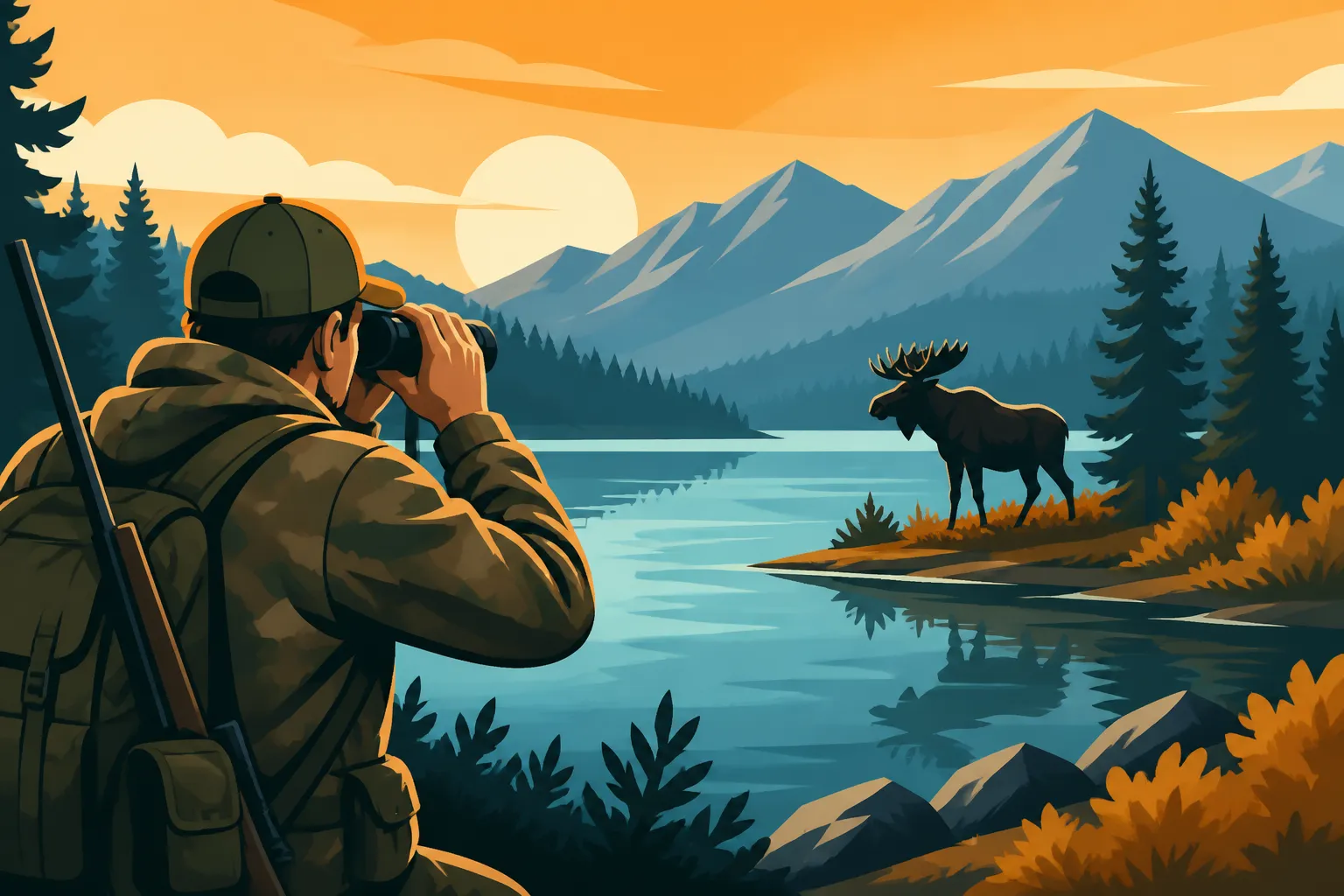
- Using Binoculars from High Points: If you can find a bluff or a ridge overlooking a section of the lake, sit and glass for extended periods, especially at dawn and dusk. A good pair of binoculars or a spotting scope will help you pick apart distant shorelines, looking for any movement or tell-tale moose shapes.
- Canoe or Boat Scouting: If possible and permitted, silently paddling or motoring along the shoreline is an incredibly effective way to scout. You can cover more ground, spot fresh sign, and observe moose directly without disturbing them as much as walking.
Remember to be stealthy even when scouting. The goal is to learn their habits without alerting them to your presence.
Identifying Productive Features Along the Shoreline
Not all shorelines are created equal. You want to focus your efforts on areas that concentrate moose activity.
- Small Creeks Entering Lakes: These are natural funnels. Moose will often follow these creeks down to the main lake for water, minerals, or to access specific vegetation. The confluence of a creek and a lake creates a micro-habitat rich in diverse plant life.
- Muskeg Edges: Where muskeg or boggy areas meet the lake, you'll often find transition zones that are perfect for moose. The soft ground and unique vegetation of the muskeg are attractive, and the water provides an escape. Hunting a Boreal Muskeg Edge covers more on this unique habitat.
- Old Beaver Dams: Beaver activity creates flooded areas and promotes specific plant growth that moose adore. Look for old beaver lodges or dams near the water's edge.
- Blowdowns and Dense Thickets: These areas provide excellent bedding cover. Moose feel secure in dense tangles of fallen trees or thick willows right by the water, especially if they can quickly slip into the lake if threatened.
- Distinct Points: Any feature that breaks up a long, straight shoreline can be a travel magnet. Moose will often walk around points or use them as vantage points.
By focusing on these specific features, you'll greatly increase your chances of encountering moose.
Hunting Strategies for Lake Shorelines
Once you've done your scouting and have a good understanding of moose behavior around your chosen lake, it's time to develop your hunting strategy. This isn't a one-size-fits-all approach; successful lake shoreline hunting often combines several tactics.
Still-Hunting and Stalking Along the Edge
This is perhaps the most classic approach to hunting moose along a shoreline. It involves moving incredibly slowly and deliberately, pausing frequently to scan and listen.
- Use the Wind: Always hunt into the wind or with a crosswind. Moose have an incredible sense of smell, and a single whiff of human scent will send them packing.
- Use Cover to Your Advantage: Stay in the shadows, use dense brush or large trees to break up your outline. Move from cover to cover.
- Scan, Scan, Scan: Don't just look for a whole moose. Look for parts: the flick of an ear, the shine of an antler, a patch of dark hide against the foliage. Use your binoculars to pick apart every shadow and thicket. Moose can blend in surprisingly well.
- Patience is Key: Moose aren't constantly on the move. They often feed for a while, then lie down to chew their cud. You might walk past a bedded moose if you're moving too fast. Spend 10-15 minutes in one spot, glassing thoroughly, before taking a few more steps.
- Footwear: Soft, quiet boots are crucial. Mud, wet leaves, and fallen branches can make silent movement challenging, so pick your steps carefully.
This method requires immense patience, but it allows you to cover ground and find moose actively using the shoreline habitat.
Calling Techniques Near Water
Calling can be incredibly effective when hunting moose, and the acoustics near water can often work in your favour. Sounds travel much further and clearer across open water or calm air over a lake.
- Cow Calls: A long, drawn-out cow call can attract bulls, especially during the rut. If you're near a lake, project your call towards areas where you've seen sign or identified potential bedding areas.
- Bull Grunts: Short, guttural grunts can challenge another bull or indicate a bull is looking for a cow. Use these sparingly and strategically.
- Raking Brush: Mimicking a bull rubbing his antlers on brush is a powerful call. Find a sapling and rake it vigorously with a stick or a small piece of antler. The sound of Raking Brush to Bring in a Bull can be irresistible to a dominant bull.
- Calling Sequence: Start with soft cow calls, listen intently for a response. If no response, wait a good 15-20 minutes, then try again, perhaps adding some subtle grunts or a light raking. If still no response, you can try a more aggressive sequence, but always be prepared for a bull to come in quickly and silently.
- Wind Direction: Always call when the wind is in your favor. If a bull circles downwind to scent-check, and he catches your scent, your hunt is over. Position yourself so any approaching moose must come within shooting range before getting downwind. Calling a Bull Moose in the Rut offers more specific advice.
Using a Canoe or Boat for Access and Hunting
For many lake shoreline hunts, a canoe, kayak, or small boat can be an absolute game-changer.
- Access: It allows you to access remote sections of shoreline that are otherwise impossible to reach through dense bush or muskeg. You can quickly navigate around points and into secluded bays.
- Stealth: Paddling a canoe or using a quiet electric motor is far more silent than walking through crackling leaves and branches. You can often drift silently within sight of feeding moose.
- Vantage Point: From the water, you often get a better view of the shoreline vegetation and can spot moose that might be obscured from land.
- Safety and Legality: Always wear a personal flotation device (PFD). Ensure your boat is properly equipped with all required safety gear. Be aware of regulations regarding hunting from a boat; typically, you cannot shoot from a moving vessel, and some jurisdictions have rules about shooting from any vessel, even if anchored. Know your local provincial regulations inside and out.
- Retrieval: While challenging, using a boat can make retrieving a moose shot near the water's edge significantly easier than dragging it through the bush. You might be able to quarter it on shore and load quarters directly into the boat.
| Advantage of Boat Hunting | Disadvantage of Boat Hunting |
|---|---|
| Access remote areas | Requires boat & safety gear |
| Silent approach | Can be difficult in rough water |
| Good vantage point | Limited shooting angles |
| Easier game retrieval | Risk of capsizing/cold water exposure |
| Covers more ground | Regulations vary by location |
Stand Hunting Over Active Shoreline Areas
If your scouting reveals consistent moose activity in a particular bay, point, or creek mouth, a treestand or ground blind might be an excellent option.
- Location, Location, Location: Choose a spot that offers good visibility of the active area, but also provides a natural backdrop for your stand. Look for clear shooting lanes.
- Scent Control: Always pay meticulous attention to scent control. Moose rely heavily on their nose. Shower with scent-free soap, use scent-eliminating sprays, and store your hunting clothes in airtight containers.
- Wind Direction is Paramount: Set your stand up so the prevailing wind carries your scent away from where you expect moose to appear. Have alternative stand locations for different wind directions.
- Entry and Exit: Plan a quiet and discreet path to and from your stand that minimizes disturbance. Avoid walking through areas you expect moose to use.
- Patience and Persistence: Stand hunting is often a waiting game. Bring warm clothes, snacks, and be prepared to sit for extended periods, especially during prime feeding times (dawn and dusk). If you're hunting in the Alberta rut, these strategic spots are often where a bull will eventually cruise. You might find some good spots by considering Hunting Moose Along Cutlines and Seismic Lines as these often intersect with water bodies.
Gear and Safety Considerations for Lake Shoreline Hunts
Hunting around water adds a layer of complexity and potential hazards. Being prepared with the right gear and having a solid safety plan is non-negotiable.
Essential Gear for Water-Based Hunting
Your gear list will look a little different when you're anticipating wet conditions and potentially dealing with game near water.
- Proper Clothing and Footwear: Waterproof, breathable outerwear is crucial. Layers are key for Alberta's fluctuating fall temperatures. For footwear, knee-high rubber boots or chest waders are often necessary for navigating shallow water and muddy shorelines. Dry socks are a luxury you’ll be grateful for.
- Personal Flotation Devices (PFDs): If you're using a boat or canoe, PFDs are mandatory. Wear them, don't just store them. Cold water immersion is a serious risk.
- Optics: High-quality binoculars (10×42 or 12×50) are essential for spotting moose in dense shoreline cover or at a distance across the water. A rangefinder is also critical for ethical shots.
- Navigation Tools: A reliable GPS or a mapping app like onX Hunt on your phone (with downloaded maps) is a must, especially in dense bush where it's easy to get disoriented. A compass and paper map are excellent backups.
- Game Retrieval Tools: A strong rope, block and tackle, or a small winch can be invaluable for moving a downed moose, especially if it's in or near the water. A good game cart or sled might be useful if the terrain permits. Quartering a large animal like a moose by yourself in the bush is a massive task, so familiarize yourself with Quartering a Moose Alone in the Bush.
- First Aid Kit: Always carry a well-stocked first aid kit, and know how to use it.
- Survival Kit: Whistle, fire starter, emergency blanket, extra food, water filtration, and a headlamp.
- Communication Device: A satellite messenger (like a Garmin inReach or Zoleo) is highly recommended, as cell service is often non-existent in remote lake country.
Navigating Challenging Terrain
Shorelines, particularly in the Boreal, are not always easy walking. You'll encounter:
- Mud and Bogs: Sections of shoreline can be extremely boggy, making travel slow and tiresome. Test the ground before committing your weight.
- Dense Brush and Blowdowns: Thick willow tangles, alder thickets, and areas of heavy blowdown (fallen trees) can create natural barriers. Be prepared to push through, or find ways around, but always move slowly and deliberately to avoid making noise.
- Unpredictable Water Depths: While wading, what looks like shallow water can quickly become chest-deep. Use a stick or trekking pole to probe ahead, especially if visibility is poor.
- Hidden Obstacles: Submerged logs, rocks, or old beaver runs can trip you up or cause damage to a boat.
Always pay attention to your footing and be mindful of potential hazards. The slow and steady approach is almost always the safest.
Water Safety and Retrieval
This is where hunting near water presents its biggest challenges and risks.
- Don't Rush a Shot: If a moose is in the water, consider if you can safely retrieve it before taking the shot. A moose can swim a long way, and a dead moose in deep water is incredibly difficult, if not impossible, to retrieve whole.
- Plan Your Approach: If you do shoot a moose near the water, immediately assess its location. Can you get to it? Is it moving further into the water?
- Quartering and Extraction: The most practical approach for a large animal like a moose, especially if alone, is to field-dress and quarter it where it lies. This significantly reduces the weight you need to move. If it's in shallow water, you might be able to roll it onto a bank. If it's in deeper water, you may need a boat and some serious muscle to get it to shore, even to quarter it. Remember that Getting a Moose Out With a Quad is usually the preferred method on land, but quads can't always get to a shoreline.
- Hypothermia Risk: Even in early fall, Alberta lake water can be dangerously cold. If you or your gear go into the water, you need a plan for getting warm and dry quickly. Have dry clothes in a waterproof bag, and know how to build a fire.
Weather and Environmental Factors
Alberta's weather is notoriously unpredictable, and hunting near water magnifies its impact.
- Wind: Wind can make paddling a canoe treacherous, stir up waves on larger lakes, and make still-hunting difficult by carrying your scent in unpredictable ways. Always check the forecast and have a contingency plan for high winds.
- Rain and Snow: Wet conditions make everything slick and cold. Good rain gear is essential. Hypothermia is a real threat if you get wet and the temperature drops.
- Early Freeze-up and Ice: In late fall, shallow bays and smaller lakes can freeze over quickly. Ice can be deceptively thin and incredibly dangerous. Always verify ice thickness before venturing onto it.
- Cold Water Immersion: Falling into cold water can lead to hypothermia rapidly. Dress in layers that include wool or synthetic materials (avoid cotton), and carry a survival kit that accounts for this possibility. Hunting Alberta Winter Weather Safely requires extra precautions.
By understanding these risks and preparing accordingly, you can have a safe and successful moose hunt along Alberta's beautiful, productive lake shorelines.
Disclaimer
This article is for general informational purposes only and does not constitute professional advice. Laws, prices and regulations vary by location and change over time. Consult a qualified professional for guidance on your specific situation.