Hunting a Provincial Grazing Reserve
For many of us who hunt in Alberta, finding accessible land can feel like navigating a maze blindfolded. You hear whispers about great spots, but when you check the maps, it's often private land with no access or Crown land that's a logistical nightmare to reach. Provincial Grazing Reserves, however, offer a unique and often overlooked opportunity for public hunting, provided you understand the specific rules and etiquette that come with them. This guide will walk you through everything you need to know to successfully hunt these distinct pieces of public land.
Understanding Alberta's Provincial Grazing Reserves
Alberta's Provincial Grazing Reserves are a unique type of public land specifically managed for livestock grazing, primarily cattle. But here's the kicker: they're also open to various recreational activities, including hunting, which makes them a fantastic resource for residents seeking public access. These aren't just random patches of Crown land; they're managed by the province, often with long-standing relationships with local grazing leaseholders. This dual-purpose management is what makes them both accessible and, at times, a bit nuanced to hunt.
The Purpose and Landscape of Grazing Reserves
At their core, Provincial Grazing Reserves exist to provide managed grazing opportunities for local ranchers. This means the land is actively used for agricultural purposes, often hosting large herds of cattle for significant portions of the year. The landscape within these reserves is typically diverse, ranging from open native prairie and cultivated forage fields to aspen bluffs, coulees, and slough systems. This variety in habitat is precisely what makes them so attractive to wildlife, and subsequently, to hunters. You'll find areas of dense cover where whitetails love to hide, open expanses perfect for spotting mule deer, and wetlands that attract waterfowl. Alberta's Prairie WMUs are often dotted with these reserves, making them prime hunting grounds in regions otherwise dominated by private agriculture.
It's important to remember that this is working land. When you step onto a grazing reserve, you're not just entering a wilderness area; you're entering a rancher's workplace. This means there's often infrastructure like fences, corrals, water troughs, and sometimes even caretakers' residences. Being mindful of this operational aspect is key to being a respectful and responsible hunter on these lands. The ongoing management for grazing also shapes the environment in ways that can benefit hunting, such as maintaining open areas and water sources that attract game.
How Grazing Reserves Differ from Other Public Lands
Unlike typical Crown land, which can often be remote and unmanaged for specific purposes, grazing reserves have a more structured approach. They fall under the Public Lands Act, but with additional layers of management due to the grazing operations. This means there are often specific regulations regarding vehicle access, camping, and even the times of year certain activities are permitted. For instance, while much of Alberta's Green Area is expansive and wild, grazing reserves might have more defined access points and internal trails.
Another significant difference is the direct involvement of grazing leaseholders or managers. While the land is public, these individuals have a vested interest in the well-being of the livestock and the land itself. This means that while you don't necessarily need direct permission from them to hunt (as you would on private land), communicating your intentions or at least being aware of their operations is a sign of good stewardship. Alberta's Recreational Access Regulation provides some general guidance, but local nuances are always present. Understanding these distinctions is crucial, as treating a grazing reserve like a remote wilderness block could lead to unintended conflicts or rule violations.
Navigating Access and Rules for Hunting Grazing Reserves
Accessing and hunting Provincial Grazing Reserves requires a bit more homework than just checking a general WMU map. While they are indeed public land, they come with their own set of rules, largely due to the active livestock operations and the need to manage diverse user groups. Failing to understand these specifics can quickly turn a promising hunt into a frustrating experience, or worse, lead to issues with local managers or enforcement.
Securing Permission and Understanding Seasonal Restrictions
While Provincial Grazing Reserves are public land, it's a common misconception that you don't need any interaction with the leaseholder or manager. While formal permission for hunting itself isn't always legally required in the same way it is for private land, contacting the leaseholder or the Alberta Agriculture and Forestry office responsible for the reserve is highly recommended. These individuals can provide invaluable, up-to-date information on current livestock locations, recent land use changes (like haying operations), or any temporary closures for calving or pasture rotations. A simple phone call can prevent you from inadvertently disturbing cattle, driving into a freshly hayed field, or setting up a stand right next to a grazing rotation.
Many reserves have seasonal restrictions for vehicle access, especially during wet periods to prevent road damage, or during calving season to minimize stress on livestock. Some may also have specific walk-in only areas. Always check the official Alberta government land-use regulations and any posted signage at the reserve entrances. Websites like onX Hunt can be incredibly helpful here, as they often display public land boundaries and may even have user-submitted information or land manager contact details. Taking the time for this due diligence shows respect for the land and the people who manage it, fostering a positive relationship between hunters and the agricultural community.
Vehicle Access and Ethical Considerations
One of the biggest areas where hunters can run into trouble on grazing reserves is with vehicle use. While there might be established roads or trails, not all of them are open to public vehicle traffic, especially off-highway vehicles (OHVs) like quads or side-by-sides. Many reserves have explicit rules restricting vehicles to main access roads only, or even requiring foot access in certain areas. These rules are in place for good reason: to prevent erosion, protect vegetation, and avoid disturbing livestock. Rules on Hunting From a Vehicle are strict across Alberta, and grazing reserves are no exception, often having additional restrictions on top of general regulations.
Beyond the letter of the law, there are ethical considerations. Even if a trail is technically open, driving it during extremely muddy conditions can cause significant damage, leading to future closures for everyone. Consider parking your vehicle and walking in, especially if conditions are questionable. Always yield to livestock and any ranching equipment, giving them wide berth. Close all gates you open, even if they appear to be open already – this is crucial for containing cattle. Leaving no trace, packing out all garbage, and being generally unobtrusive are paramount. Remember, your actions reflect on all hunters, and responsible behaviour helps ensure these valuable public lands remain open for future generations.
Hunting Strategies for Provincial Grazing Reserves
Hunting Provincial Grazing Reserves often requires a blend of tactics suitable for both open prairie and mixed bush environments. The presence of livestock adds another layer to consider, as game animals often react differently in areas shared with cattle. Successful hunting here means understanding the terrain, adapting your approach, and being especially mindful of the unique dynamics of these working landscapes.
Scouting and Locating Game
Effective scouting is paramount on grazing reserves. Before you ever step foot with a rifle or bow, spend time studying maps. Use tools like GoHunt or onX Hunt to identify potential cover, water sources, and natural travel corridors. Look for areas where different habitat types meet—like where a coulee system drains into open grassland, or where an aspen bluff transitions into a cultivated field. These "edge" areas are magnets for deer and often provide excellent ambush points. Scouting With Satellite Imagery in Alberta can reveal a lot about the topography and vegetation without physically being there.
When you do get boots on the ground, look for fresh sign: tracks, rubs, scrapes, and bedding areas. Pay particular attention to the deeper coulees, willow bottoms, and thicker timber pockets that offer escape cover and thermal protection. While cattle use much of the land, game animals will often find specific areas that offer them sanctuary from human and livestock pressure. It's not uncommon to find deer bedded tight in a small island of bush or a secluded bend in a creek, even if cattle are grazing nearby. Look for water sources that are less frequented by cattle, as deer will often prefer these.
Adapting to the Presence of Livestock
Hunting alongside cattle is a reality on most grazing reserves, and it influences how you should approach your hunt. Deer, especially whitetails and mule deer, are generally accustomed to cattle. They often treat cattle as part of the landscape and might not spook in the same way they would from a human. However, a hunter moving through a herd of cattle will often cause the cattle to move, which in turn can alert game. Your best bet is to avoid direct confrontation with cattle. Try to skirt around herds, using terrain features or patches of cover to keep your movement discreet.
Consider hunting times when cattle might be less active or in different pastures. Early morning and late evening hunts often find deer moving to and from bedding areas, potentially before or after heavy cattle activity. Be prepared to differentiate between game trails and cattle trails – deer tracks are distinct and often follow more subtle routes. If you're rattling for whitetails or trying to call in a moose, be aware that nearby cattle can sometimes disrupt your efforts or even be drawn into your calling, creating a bit of a chaotic scene. Patience and flexibility are key when sharing the landscape with livestock.
Essential Tools and Ethical Considerations for Grazing Reserves
Successful and responsible hunting on Provincial Grazing Reserves isn't just about knowing where to go; it's also about being properly equipped and upholding the highest ethical standards. These lands are a privilege to use, and maintaining good relationships with managers and other users is vital for their continued availability.
Mapping Tools and Navigation
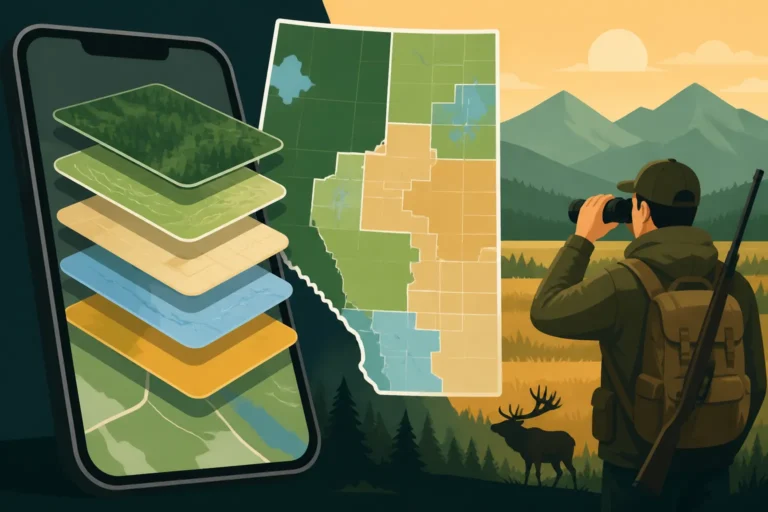
Gone are the days when a simple paper map was enough. While a good physical map, like those you can find by reading an Alberta WMU Map Before You Go, is still essential for backup, digital mapping apps like onX Hunt or GoHunt are invaluable on grazing reserves. These apps provide detailed satellite imagery, property boundaries (including Crown land and grazing reserve designations), and often show topography and water sources. They allow you to pinpoint your exact location, track your movements, and identify potential escape routes or dense cover. This is especially useful when trying to understand the nuances of a new reserve, or when navigating through complex coulee systems.
Beyond just boundaries, these apps can help you mark game sign, plan your approach, and ensure you're not inadvertently trespassing onto adjacent private land. Many grazing reserves have intricate boundaries that weave around private parcels, and a reliable GPS-enabled map can save you a lot of headache. Always carry a portable power bank for your devices, as cell service can be spotty in some remote areas, and relying solely on your phone's battery is risky. Knowing how to use these tools effectively is a cornerstone of modern, responsible hunting.
| Feature | Benefits on Grazing Reserves | Considerations |
|---|---|---|
| Public Access | Offers hunting opportunities on large tracts of public land. | Requires checking specific reserve rules; may have seasonal closures. |
| Diverse Habitat | Attracts a wide range of game species (deer, moose, elk, birds). | Terrain can be challenging; requires adapting hunting methods. |
| Livestock Presence | Game is often accustomed to cattle; can be a form of "cover." | Avoid disturbing cattle; distinguish game trails from livestock paths. |
| Managed Land | Often has basic road infrastructure; water sources are maintained. | Vehicle restrictions; potential for temporary closures due to agricultural activity. |
| Local Knowledge | Leaseholders can provide crucial, up-to-date information. | Requires proactive communication and respect for their operations. |
Hunter Conduct and Respect for the Land and People
Hunting on a Provincial Grazing Reserve demands a heightened sense of responsibility. You are a guest on land that is actively used for agriculture, and your actions directly impact not only the wildlife but also the livelihoods of ranchers and the public perception of hunters. Always pack out everything you pack in, and if you see any trash, consider packing it out too. Leave gates as you found them, or if you opened them, be sure to close them securely. This seems simple, but it's often overlooked.
Respect other users of the land, whether they are hikers, birdwatchers, or ATV riders (if permitted). Be courteous and give them space. If you encounter livestock, move slowly and quietly to avoid spooking them. If you make a kill, ensure you adhere to all Meat Care in Alberta's Cold and Warm Swings regulations, and process your animal efficiently and cleanly. Being mindful of where you field dress an animal, away from high-traffic areas or water sources, is also part of being a good steward. Ultimately, positive interactions and respectful behaviour are what keep these invaluable public hunting grounds open for all of us.
Disclaimer
This article is for general informational purposes only and does not constitute professional advice. Laws, prices and regulations vary by location and change over time. Consult a qualified professional for guidance on your specific situation.