Hunting the Kananaskis Fringe
For many of us who dream of hunting Alberta's majestic mountains, the sheer scale and complex regulations of the Kananaskis Country can feel overwhelming, if not entirely prohibitive. It's a vast, stunning area, but knowing where you can actually put boot on the ground with a rifle or bow, and what you're allowed to hunt, is a puzzle. This guide aims to demystify the "Kananaskis Fringe"—that incredible transitional zone where the mountains meet the foothills, offering genuine hunting opportunities without the full weight of deep wilderness logistics.
What Exactly is the Kananaskis Fringe for Hunters?
When we talk about the Kananaskis Fringe, we're not talking about hunting inside the Kananaskis Provincial Parks or other protected zones where hunting is prohibited. That's a critical distinction. Instead, we're focusing on the areas immediately adjacent to Kananaskis Country that share similar rugged terrain, beautiful scenery, and diverse wildlife, but are designated as Wildlife Management Units (WMUs) where hunting is allowed. These are often the western edges of more accessible foothill WMUs, bordering the non-hunting zones, where the landscape transitions from rolling hills to steep mountains.
Defining the Transitional Zone
This transitional zone is where the hard, imposing mountains begin to soften into the dramatic, timbered foothills. It's a land of deep river valleys, aspen and pine forests, rocky outcrops, and high benches. For hunters, it represents a unique challenge and opportunity. You get the incredible scenery and often robust big game populations associated with mountain country, but usually with slightly better access than the true alpine wilderness. Think of it as the "gateway" to mountain hunting for many Alberta residents, or a fantastic spot for those looking for a diverse hunting experience that combines elements of both bush and mountain. It’s where animals push out of the protected zones during hunting season, or where resident populations thrive, utilizing both the safety of rough terrain and the forage of lower elevations.
It's a delicate balance, though. You'll encounter more recreational users in some areas than deep wilderness, and you'll absolutely need to be precise with your mapping and understanding of boundaries. The frustration of glassing a monster bull only to realize he’s standing just inside a no-hunting zone is real, and it’s why understanding these fringe areas is so crucial.
Key Wildlife Management Units (WMUs) in the Fringe
The Kananaskis Fringe primarily encompasses WMUs that hug the eastern boundary of the formal Kananaskis Country designation. These WMUs include sections of the 400-series (Foothills) and sometimes even the very eastern edge of the 300-series (Mountain) WMUs where hunting is permitted. Specific examples often include WMUs like 404, 406, 408, 410, and occasionally parts of 306 or 308, though these can be very challenging to access. The exact boundaries and regulations change, so it's always imperative to check the current Alberta Hunting Regulations, but these numbers give you a starting point.
These WMUs are characterized by a mix of Crown land, sometimes forestry leases, and occasionally private land that you would need permission to access. They offer diverse habitats, from river bottom areas that hold moose and whitetails, to high, timbered ridges preferred by elk and mule deer. Success here hinges on understanding the specific WMU you're targeting, its access points, and the particular draw or general season rules that apply. It's not a uniform hunting experience across the entire fringe; each WMU will have its own quirks and challenges. For example, some may have significant ATV trail networks, while others require serious hiking or horseback access. Reading an Alberta WMU Map Before You Go can be a game-changer here.
Game Species and Their Habitat in the Fringe
The Kananaskis Fringe is a fantastic area precisely because it supports such a wide array of big game. The mix of open meadows, dense timber, river systems, and rugged terrain creates prime habitat for multiple species, often in close proximity. This diversity is what draws many hunters to these transitional areas.
Elk and Mule Deer Opportunities
Elk are arguably the most iconic big game animal found in abundance along the Kananaskis Fringe. The rich forage in the valleys and clearings, coupled with the security of the adjacent mountains, means elk often thrive here. You'll find them moving between higher elevations for security and lower areas for feeding, especially during the rut. Hunters often focus on glassing clearcuts, old burn areas, and natural meadows at dawn and dusk. The challenges often involve calling them out of heavy timber or into shooting lanes, as these animals are generally quite pressured. Bugling Elk in Alberta's Foothills is a prime tactic here during the archery and early rifle seasons.
Mule deer also frequent the Kananaskis Fringe, often preferring the broken country, coulees, and timbered ridges. While not always as numerous as in the true prairie badlands, the mule deer here can grow to impressive sizes, utilizing the rugged terrain for cover and escape. Spot-and-stalk is a common method, focusing on south-facing slopes in the morning or glassing high points. The steep, often rocky terrain means you'll need to be in good physical condition to pursue these animals effectively. Look for them along the edges of clearings, especially where the timber transitions into more open, rocky ground.
Bear, Moose, and Other Game in the Area
Black bears are common throughout the timbered areas of the Kananaskis Fringe. Spring bear hunting can be excellent as bears emerge from their dens and seek out green-up along south-facing slopes, pipeline rights-of-way, or fresh clearcuts. In the fall, they are often found foraging for berries in avalanche chutes or feeding on residual crops if close enough to agricultural edges. While not as common as in the deeper boreal forest, moose can be found along river systems, in wet, willow-filled bottoms, and around beaver ponds within these fringe WMUs. Their presence is often tied to specific water-rich habitats, so scouting these areas beforehand is key. Hunting Moose Around Alberta Beaver Ponds can be a very productive strategy.
Beyond the big game, the Kananaskis Fringe also offers opportunities for wolves and coyotes, particularly in winter when snow cover makes tracking and calling more effective. Upland birds, such as ruffed grouse and spruce grouse, can be found along old logging roads and in dense timber patches, offering a chance for some small game success while you're out looking for bigger quarry. This truly is a multi-species environment, making it a great destination for a diverse hunting trip.
Navigating Access and Regulations in the Kananaskis Fringe
One of the biggest hurdles for any hunter new to, or even experienced in, the Kananaskis Fringe is figuring out where you can legally hunt and how to access those areas. This isn't wide-open prairie where a quarter section is a quarter section. Here, the lines between public land, private land, restricted zones, and various types of Crown land can be dizzyingly complex. This is where advanced mapping tools really shine, and where a good dose of local knowledge comes into play.
Public Land Use Zones (PLUZs) and Crown Land
Much of the Kananaskis Fringe falls within designated Public Land Use Zones (PLUZs), which are specific areas of Crown land managed for various recreational uses, including hunting. The Livingstone-Porcupine Hills PLUZ and the Ghost Public Land Use Zone are prime examples of areas adjacent to or encompassing parts of the Kananaskis Fringe where hunting is permitted. These PLUZs often have specific rules regarding vehicle access (ATVs, dirt bikes), camping, and even fire restrictions, all of which you must be aware of. Not all PLUZs allow hunting, so confirming the regulations for your specific WMU and PLUZ combination is critical.
Beyond PLUZs, there's other general Crown land, often managed by Alberta Environment and Parks or Forestry and Parks. Access to these areas can vary widely; some might have established forestry roads that provide reasonable access, while others are landlocked by private property or require arduous backcountry travel. It's not uncommon to find small parcels of Crown land surrounded by private holdings. Using tools like onX Hunt becomes invaluable here, as its detailed land ownership layers can clearly show you public and private boundaries, and often identify recreational access points. This kind of e-scouting from home is a vital first step, allowing you to identify potential access points and plan your routes, avoiding frustrating and potentially illegal incursions onto private property. Using Alberta's Recreational Access Mapping Tool can also provide key insights.
| WMU (Example) | Primary Game Species | Typical Terrain | Main Access Type | Key Considerations |
|---|---|---|---|---|
| 404 | Elk, Mule Deer, Bear | Foothills, Timber, Ridges | Forestry roads, hiking | High pressure, proximity to K-Country |
| 406 | Elk, Whitetail, Moose | River bottoms, Timber, Rolling hills | Roads, hiking, ATV trails | Mix of public/private, varied habitat |
| 408 | Mule Deer, Elk, Bear | Rugged foothills, Rocky outcrops | Forestry roads, hiking, some backcountry | Steeper terrain, potential for solitude |
Understanding the Backcountry Access and Restrictions
The Kananaskis Fringe often requires a commitment to backcountry hunting. This isn't always about multi-day expeditions deep into the mountains, but it usually means being prepared for longer hikes, potentially challenging terrain, and being self-sufficient. Many of the most productive hunting spots are beyond what you can reach with a truck or ATV, requiring you to lace up your boots and put in the miles. Areas like the Bighorn Backcountry, further north but similar in character, exemplify this need for self-reliance.
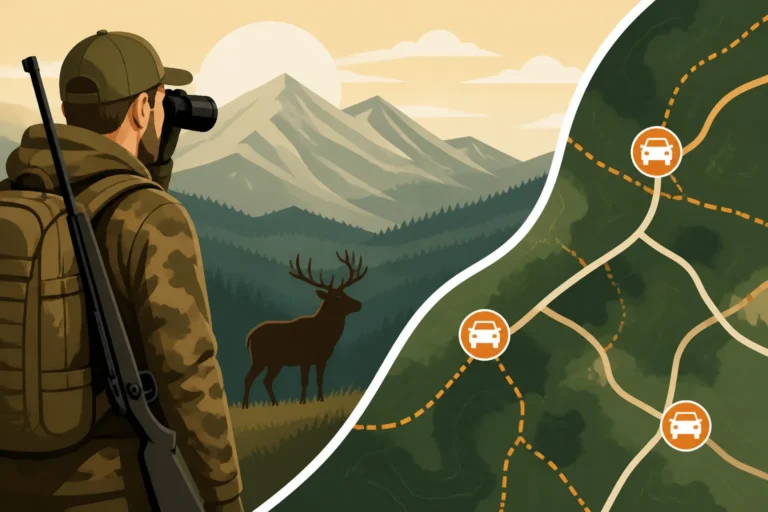
Access points can be limited to designated parking areas or trailheads. Some forestry roads might be gated during certain times of the year, or permanently closed to vehicle traffic beyond a certain point. It's common to find active logging operations in these areas too, which can create temporary access issues or change the landscape dramatically, but also open up new hunting opportunities as animals react to the disturbance and new forage growth. Understanding these dynamic access rules and respecting private land boundaries is paramount. Always, and I mean always, have a current map (digital or paper) with you that clearly shows land ownership and WMU boundaries. GoHunt can also be a valuable resource for pre-season scouting, offering insights into draw odds and hunter success rates in these complex WMUs, helping you choose where to focus your efforts for specific species. Quad and Side-by-Side Rules on Crown Land are especially important to review before heading out.
Effective Hunting Strategies for This Unique Terrain
Hunting the Kananaskis Fringe is not like hunting the prairie or the boreal forest. It demands a different set of skills, a different mindset, and a willingness to adapt to ever-changing conditions. This is rugged country, and success often comes to those who are patient, persistent, and physically prepared.
Scouting and E-Scouting the Kananaskis Fringe
Your hunt for the Kananaskis Fringe starts long before you ever set foot in the field. E-scouting is absolutely essential here. Utilize satellite imagery on mapping apps like onX Hunt to identify potential game funnels, bedding areas, clearcuts, natural springs, and areas of dense cover. Look for distinct terrain features: benches above creek bottoms, saddles between ridges, and fingers of timber that extend into more open country. These are often natural travel corridors for game. Pay close attention to south-facing slopes which green up earlier in spring and often hold less snow in winter, making them attractive to animals.
Once you have a few promising spots identified, a physical scouting trip or two can be invaluable. Even if you can't go in season, getting eyes on the ground helps you understand the scale, the density of the timber, and the actual difficulty of the terrain. Look for fresh sign—tracks, rubs, scat, and active trails. Pay attention to water sources and natural mineral licks. Knowing what kind of forage is available can also tell you what animals might be in the area. For instance, areas with abundant berry bushes will attract bears in the fall. During your scouting, make note of potential access issues: gates, steep inclines, marshy areas, or dense blowdowns that could impede your hunt. Scouting With Satellite Imagery in Alberta saves countless hours.
Tactics for Foothills and Mountain Edges
When you're finally out hunting in the Kananaskis Fringe, remember that game animals here are often pressured and highly attuned to their surroundings. They use the varied terrain to their advantage, often bedding in thick cover on north-facing slopes during the day and moving to feed in more open areas at dawn and dusk. This means early mornings and late evenings are often your most productive hunting times.
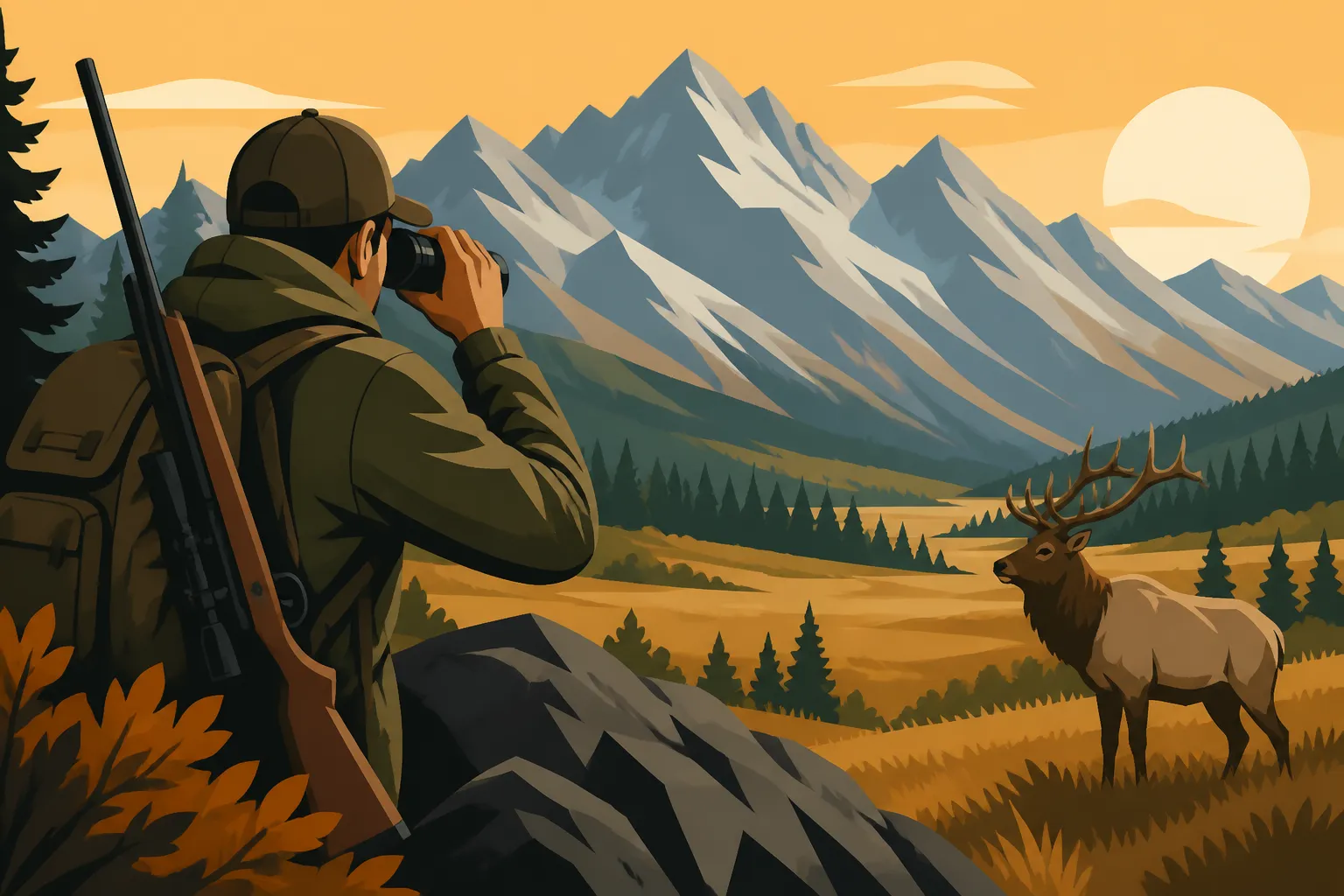
Glassing and Spot-and-Stalk: This is a cornerstone tactic, especially for elk and mule deer. Find a good vantage point that allows you to see into clearcuts, open timber, or across valleys. Use high-quality binoculars or a spotting scope to pick apart the landscape. Be patient; animals often appear suddenly or emerge from cover after long periods. Once an animal is spotted, planning your stalk is crucial. Wind direction, available cover, and understanding the animal's likely escape routes are all critical. The terrain can be your friend or your enemy; use draws, ridges, and timber to conceal your approach.
Still-Hunting and Calling: In denser timbered areas, still-hunting slowly and deliberately, paying attention to wind and ground noise, can be very effective. Move only a few steps, then stop and listen, scanning the woods. Utilize calls, especially for elk during the rut or for moose in the river bottoms. Calling a Bull Moose in the Rut can be an exhilarating experience in this type of country. For deer, subtle grunts or rattling can sometimes draw a curious buck in.
Physical Fitness and Gear: The Kananaskis Fringe will test your endurance. Be prepared for steep climbs, uneven ground, and potentially significant elevation changes. Good quality hiking boots, layered clothing for variable weather, and a solid pack are not optional; they're essential. Always carry enough water, navigation tools (GPS, compass, maps), and emergency supplies. Bear spray is also a non-negotiable item, as you are in active bear country. The ability to pack out meat from rugged terrain is a consideration for ethical hunting; ensure you have the means or the manpower to do so if you're successful. Backpacking Into Alberta Sheep Country principles often apply to the fringe, even if you're not chasing sheep.
Disclaimer
This article is for general informational purposes only and does not constitute professional advice. Laws, prices and regulations vary by location and change over time. Consult a qualified professional for guidance on your specific situation.