Hunting the Athabasca River Corridor
Hunting the vast expanse of the Athabasca River Corridor in Alberta presents a unique set of challenges and incredible rewards for any hunter. It’s not just a river; it's a dynamic ecosystem, a wild highway that can feel both intimidatingly remote and surprisingly accessible, often leaving hunters wondering where to start or how to effectively navigate its diverse terrain. This guide will walk you through understanding this powerful river system, identifying prime hunting opportunities, and employing effective strategies to make your hunt along the Athabasca a successful and memorable one.
Understanding the Athabasca River Corridor's Unique Landscape
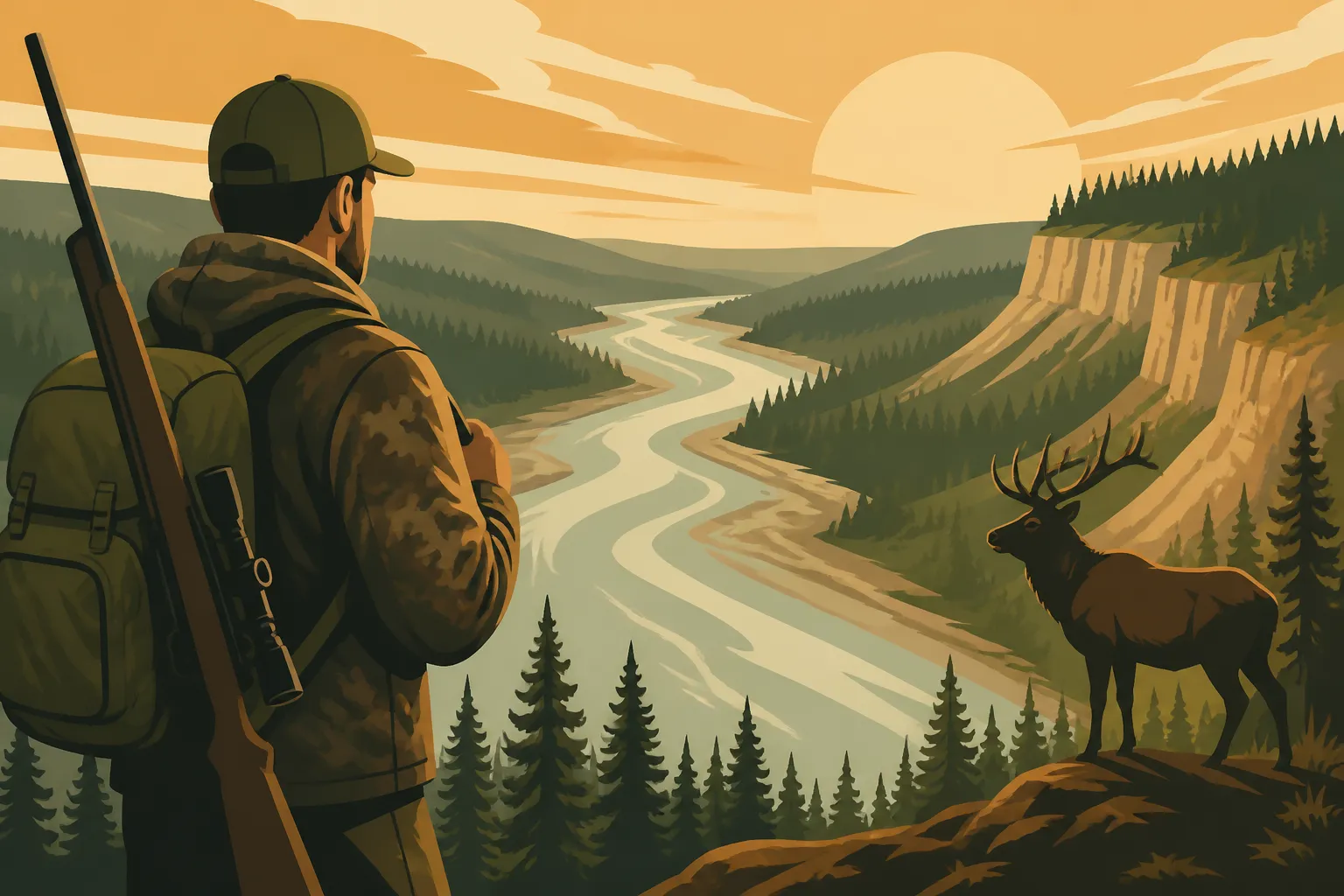
The Athabasca River isn't just a line on a map; it's a living, breathing artery that carves its way through a significant portion of Alberta's diverse landscapes. From the foothills of the Rockies to the vast boreal forest, this corridor offers a blend of habitat types that are simply unmatched in many other hunting zones. Understanding this unique topography and its influence on wildlife movement is the first step to unlocking its hunting potential.
The River's Influence on Wildlife
Think of the Athabasca River as nature's superhighway. It’s a constant source of fresh water, a natural travel route, and a massive linear oasis that supports an incredible array of flora and fauna. The immediate riparian zones along its banks are often lush with willows, alders, and various grasses, providing critical browse and cover. These areas transition into mixedwood forests, marshy oxbows, and sometimes even smaller tributary creeks and beaver ponds that feed into the main river. This complex mosaic of habitats draws wildlife from surrounding areas, concentrating them along the river and its adjacent breaks.
For animals like moose, the dense willow stands and readily available water are a haven, especially during the heat of summer and the intensity of the rut. Deer, both whitetails and mule deer, utilize the river breaks for bedding, escape cover, and feeding on the diverse vegetation. Bears are frequent visitors, drawn by berries, ungulate calves in spring, and fishing opportunities. Even migratory birds find sanctuary and abundant food sources in the river’s backwaters and marshier sections. Knowing that this linear feature funnels animals means you can often predict travel patterns and focus your scouting efforts.
Geographic Scope and Access Points
The Athabasca River winds its way through numerous Wildlife Management Units (WMUs), each with its own specific regulations and access nuances. Beginning high in Jasper National Park (which is closed to hunting), it flows northeast through varied terrain. As it leaves the mountains and enters the foothills and then the vast boreal forest, the character of the river, and thus the hunting, changes dramatically. Lower stretches, particularly north of Athabasca townsite and beyond, become wider, slower, and often much more remote.
Access can be a mixed bag along the corridor. In some areas, particularly closer to towns like Hinton, Edson, Whitecourt, and Athabasca, provincial highways and secondary roads may run parallel to or cross the river, offering relatively easy access points. Here, you might find boat launches or informal pull-offs where you can get a canoe or small boat into the water. However, vast stretches of the Athabasca River, especially once you head further north into the Green Area, are truly remote. Access often requires a jet boat, an ATV (where permitted on designated trails), or simply a good old-fashioned pair of hiking boots and a willingness to put in the miles. Mapping tools like onX Hunt or GoHunt become indispensable here for identifying public land, old seismic lines, and potential launch points. Understanding where Crown land exists versus private land is also crucial, especially in the more settled areas.
Key Species and Prime Habitat within the Corridor
The Athabasca River Corridor truly shines when it comes to the diversity of game animals it supports. Depending on the section of the river you choose to focus on, you can target everything from impressive bull moose and mature black bears to cunning whitetails and various waterfowl. Identifying the specific habitats preferred by each species is key to a successful hunt.
Moose and Bear Habitat
For moose, the Athabasca River is a dream come true. The dense riparian zones, especially where the river meanders and creates numerous sloughs, oxbows, and back channels, are prime habitat. These areas are choked with willows, alders, and other aquatic vegetation that moose absolutely thrive on. Look for sections of the river where tributary creeks flow in, as these often create even thicker pockets of browse and provide additional travel corridors for moose. Hunting Moose Around Alberta Beaver Ponds is a fantastic strategy that applies well here, as the river's influence often creates numerous such ponds along its course. Moose will often bed down in the thickest cover along the riverbanks, only venturing out to feed in more open marshy areas or to cross the river itself.
Black bears are also intimately connected to the Athabasca River Corridor. In spring, they emerge from their dens and are drawn to the green-up along the riverbanks, where early shoots and succulent plants provide much-needed nutrition. As summer progresses, they'll forage on berries that ripen in the mixedwood forests adjacent to the river. In the fall, bears can be found gorging on remaining berries or even scavenging on fish. Areas with dense undergrowth, old growth timber pockets, and readily available water sources are where bears will establish their territories. If you're considering a baiting operation, setting up a bait site near the river in areas with good cover, as outlined in Setting a Bear Bait Site in Alberta, can be highly effective. The river acts as a natural navigation point for bears as they move between feeding and bedding areas.
Deer and Waterfowl Opportunities
The Athabasca River Corridor offers excellent opportunities for both white-tailed and mule deer, though their preferred habitats differ slightly. Whitetails are masters of thick cover, and the dense willows, aspen bluffs, and mixedwood forests lining the river provide ample security. They'll often utilize the river breaks and smaller draws that feed into the main river as travel corridors, moving between bedding areas and feeding grounds. You might find them browsing on palatable shrubs and forbs along old logging roads or seismic lines that intersect the river country. Hunting a River Valley Bottom in Alberta is particularly relevant for whitetails, as they often stick close to the water's edge, using the natural topography for concealment.
Mule deer, while less prevalent in the densest boreal sections, can still be found in the more open, broken country where the river cuts through foothill terrain or areas with more sparse timber. They prefer higher ground with good visibility, often utilizing the steep banks and coulees that lead down to the river for bedding and escape. Glassing these broken areas from a distance can be a very effective strategy for mule deer, especially early in the morning or late in the evening.
For waterfowl enthusiasts, the Athabasca River itself, along with its numerous oxbows, back channels, and associated wetlands, provides significant opportunities. Ducks of various species, including mallards, pintails, and wigeon, will frequent the calmer sections of the river, especially where aquatic vegetation is abundant. Geese will often use sandbars and open stretches of the river for roosting. The smaller potholes and sloughs just off the main river are often overlooked gems for jump-shooting or setting up small decoy spreads, a technique detailed in Pothole Hunting Ducks on Small Water. Scouting by boat or even driving adjacent roads and stopping to glass key sections of the river can reveal significant concentrations of birds.
Strategies for Hunting the Athabasca River Corridor
Hunting the Athabasca River Corridor isn't like hunting a cutblock or a prairie field. Its linear nature, varying terrain, and often limited access demand specific strategies and a flexible approach. Whether you choose to hunt from the water or on foot, a well-thought-out plan will be your best asset.
Boat-Based Hunting and Access
Utilizing a boat is arguably one of the most effective ways to hunt the Athabasca River Corridor, especially in its more remote sections. A jet boat can cover significant distances quickly, allowing you to access areas that would be nearly impossible to reach on foot. For those seeking a quieter approach, a canoe or a small jon boat can be paddled into back channels and sloughs, offering a stealthy way to get into prime waterfowl or moose habitat.
When planning a boat-based hunt, safety is paramount. The Athabasca can be a powerful river, with shifting sandbars, submerged obstacles, and strong currents. Always wear a PFD, carry appropriate safety gear, and let someone know your float plan. Use mapping applications like onX Hunt to mark potential hazards, identify specific bends or islands that look promising, and track your progress. You can scout from the water, glassing the banks for game or sign, but remember that many areas directly adjacent to the river will be private land in some WMUs, so always confirm land ownership before stepping ashore. Setting up a temporary spike camp on public land can allow you to hunt deeper into remote sections, giving you more time to explore and wait out game.
On-Foot and Still-Hunting Tactics
Even with boat access, much of the actual hunting along the Athabasca River will involve getting your boots on the ground. Still-hunting the river breaks, old logging roads, and seismic lines is a highly effective strategy, particularly for deer and moose. Animals often use these linear features to travel, and the river itself acts as a natural funnel. Walk slowly, pause frequently to glass and listen, and pay close attention to wind direction, as the swirling winds in river valleys can make scent control particularly challenging.
Focus your efforts on pinch points where the river bends sharply, where a tributary creek enters, or where dense cover narrows into a more open area. These are natural ambush spots. Look for fresh tracks, rub lines, and scat to confirm recent animal activity. Hunting a Cutline for Moose at First Light is a tactic that can be applied with great success near the Athabasca, as moose will often feed in the relatively open cutlines before retreating to the thick cover along the river as daylight breaks. Similarly, focusing on the dense willow and alder thickets around Hunting a Beaver Meadow in the Boreal that are often found adjacent to the river can lead you to productive moose and bear encounters. Remember to wear appropriate footwear for potentially wet and uneven terrain, and be prepared for dense bushwhacking in some areas.
Navigating Regulations and Access Challenges
Hunting the Athabasca River Corridor means dealing with Alberta's hunting regulations and the ever-present challenge of land access. These aren't just minor details; they are critical components of a legal and successful hunt. Neglecting them can quickly turn a dream hunt into a frustrating experience.
Understanding WMU-Specific Rules
The Athabasca River spans many WMUs, and it's absolutely crucial to know which one you are in and what the specific rules are for that area. General regulations might apply across the province, but individual WMUs often have unique season dates, bag limits, and specific licensing requirements for different species. For instance, a general whitetail tag might be valid in one WMU along the river, while a nearby WMU might require a draw for the same species.
Before you even load your rifle, you need to pore over the current Alberta Hunting Regulations, paying close attention to the WMU maps and the corresponding tables for season dates and species. Tools like onX Hunt or GoHunt can help you visualize WMU boundaries in the field, but always cross-reference with the official government regulations. Reading an Alberta WMU Map Before You Go is essential preparation. Understand the difference between antlered and antlerless seasons, and be aware of any specific rules regarding weapon types (e.g., archery-only zones or seasons). Check the Alberta Big Game Season Dates carefully, as these can change year to year and vary by WMU along the river.
Public vs. Private Land and Access
One of the biggest hurdles when hunting the Athabasca River Corridor, especially in the more populated "White Area" sections, is distinguishing between public (Crown) land and private property. While the riverbed itself and certain riparian strips might technically be Crown land, accessing them often requires crossing private property. This is where the Alberta Landowner Permission Law comes into play, which states you must have permission to hunt on private land.
Fortunately, Alberta has excellent resources to help. The province's Recreational Access Mapping Tool (RAMP) is invaluable for identifying Crown land, grazing leases, and even some privately owned parcels. Using Alberta's Recreational Access Mapping Tool can save you countless hours and prevent potential trespass issues. For areas that are private, don't be afraid to knock on doors and Asking an Alberta Landowner for Permission. Many landowners are receptive to ethical hunters, especially those willing to introduce themselves respectfully.
Even on Crown land, access can be tricky. Old logging roads, seismic lines, and even pipeline corridors might appear to offer easy entry, but some of these could be leased or have restricted access for industrial purposes. Always be aware of vehicle restrictions, particularly for ATVs and side-by-sides, as Quad and Side-by-Side Rules on Crown Land vary by Public Land Use Zone (PLUZ) and general Crown land. Respect all signage, whether it indicates private property or a restricted access area. Responsible hunting hinges on knowing and respecting these boundaries, ensuring future access for everyone.
| Access Method | Pros | Cons | Best For | Considerations |
|---|---|---|---|---|
| Jet Boat | Fast, covers long distances, carries gear. | Expensive, noisy, requires specific river skills, limited to navigable sections. | Deep wilderness access, covering multiple WMUs, scouting. | Fuel, safety gear, navigation skills, understanding river hazards. |
| Canoe/Kayak | Quiet, stealthy, access shallow backwaters. | Slow, limited gear capacity, physically demanding, vulnerable to currents. | Still-hunting small channels, waterfowl, short overnight trips. | PFDs, portaging ability, shelter, minimal gear. |
| On Foot | Stealthy, deep penetration into dense cover, no vehicle restrictions (where legal). | Slow, physically demanding, limited range, difficult to pack out large game. | Still-hunting river breaks, scouting close to vehicle access. | Layered clothing, sturdy boots, good navigation (GPS/compass). |
| ATV/Side-by-Side | Covers ground quickly, carries gear, good for retrieving game. | Restricted to designated trails on Crown land, noisy, expensive. | Accessing old cutlines or trails away from the river, game retrieval. | Check PLUZ rules, carry recovery gear, avoid sensitive areas. |
This corridor is a true Alberta gem for those willing to put in the effort. Its wild, untamed nature promises adventure and the chance at some incredible game animals, but only to those who approach it with respect, knowledge, and preparedness.
Disclaimer
This article is for general informational purposes only and does not constitute professional advice. Laws, prices and regulations vary by location and change over time. Consult a qualified professional for guidance on your specific situation.