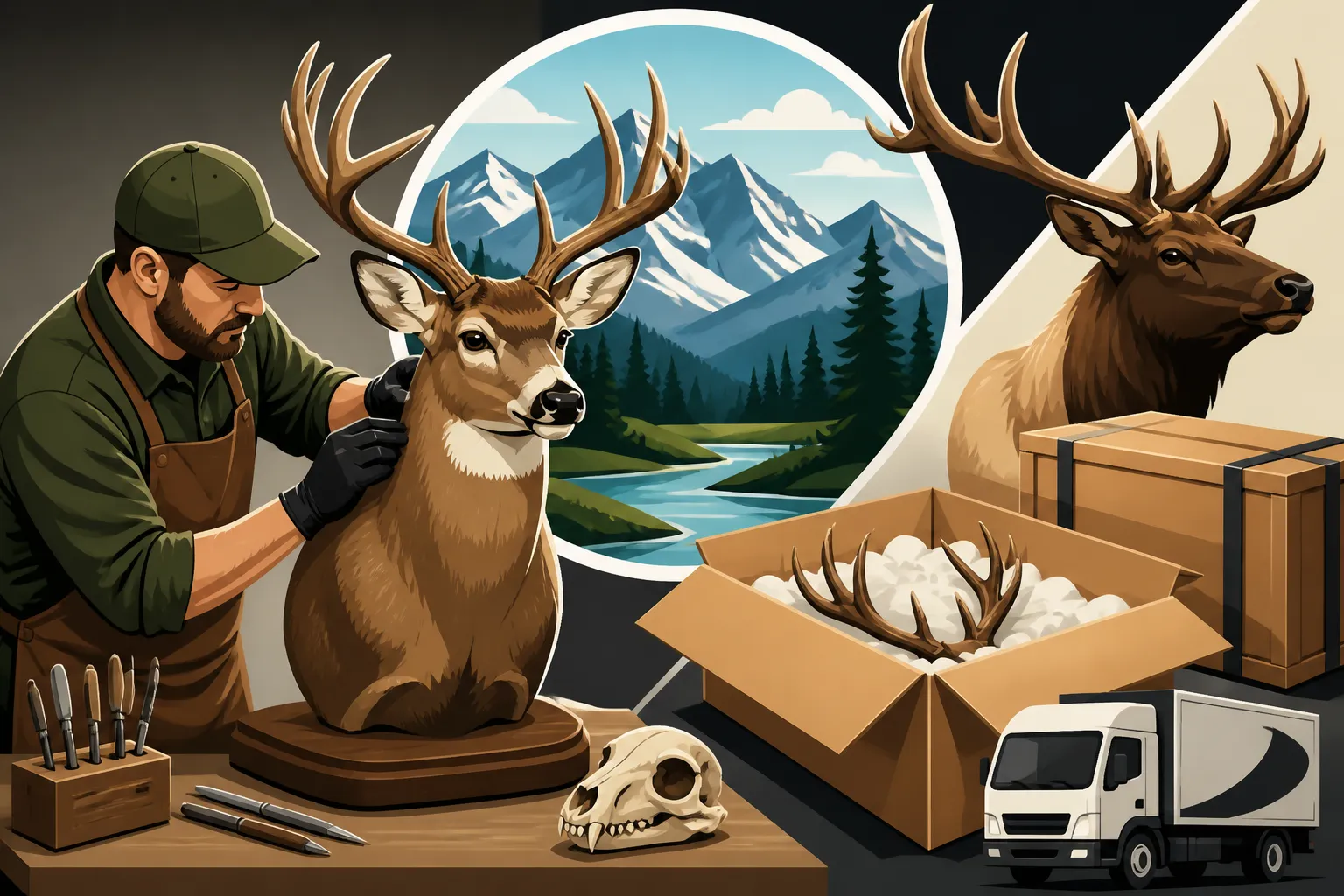
Alberta Taxidermists and Shipping Trophies
You’ve just tagged a magnificent animal in Alberta, whether it’s a giant whitetail, a heavy-horned moose, or a majestic mule deer. The adrenaline is still pumping, and your heart is full of pride. But then a new challenge often sets in: how on earth do you get this incredible trophy home and preserve it properly? This guide is here to walk you through the often-overwhelming process of field care, choosing a taxidermist, navigating shipping logistics, and understanding the regulations involved in getting your hard-earned trophy from the Alberta bush to your trophy room.
Understanding the Journey: From Field to Finish
Bringing home an Alberta trophy is more than just pulling the trigger; it's a careful, multi-step process that begins the moment your animal hits the ground. Many hunters underestimate the critical role initial field care plays in the final quality of their mounted trophy. A botched field prep can ruin a cape or set of antlers, making all your hard work for naught. It's a frustrating thought, but one that drives the importance of getting it right from the outset.
The Initial Field Care Steps
Immediately after harvest, cooling the animal is paramount, especially if you're hunting in warmer early-season conditions. While meat care is often the top priority, proper hide cooling for taxidermy is equally important. Getting the hide off the animal quickly and cooling it down prevents bacterial growth, which is the enemy of a good cape. This means not leaving the hide rolled up in the heat for extended periods. Even if the meat is destined for the butcher, treating the cape like gold from the start will pay dividends. For larger animals, this often means splitting the hide down the back to allow for maximum air circulation, even if you plan for a full shoulder mount. You can learn more about managing your harvest in varying conditions by reading Meat Care in Alberta's Cold and Warm Swings.
Beyond cooling, cleanliness is key. Avoid dragging the animal directly on its back or side if you intend to cape it for a mount, as this can rough up or tear the hair. If dragging is unavoidable, try to position the animal on its belly, or better yet, use a tarp or sled. Blood, dirt, and plant material can all stain or damage the hair follicles, making the taxidermist's job much harder and potentially compromising the final product. A quick wipe-down of the cape with clean snow or water can make a huge difference, particularly around the face and neck. Remember, prevention is always easier than trying to fix damage later on.
Deciding on Your Trophy Mount
Before you even start cutting, it's wise to have a general idea of what kind of mount you envision for your trophy. Are you dreaming of a full shoulder mount, a wall pedestal, or perhaps just a European skull mount? This decision dictates how you'll cape the animal in the field. For instance, a full shoulder mount requires a much longer cape, extending well behind the animal's front legs, whereas a European mount means you only need the skull. Making this decision beforehand prevents accidental cuts that might limit your options later.
Consider the space you have available for display, as a full shoulder mount can take up significant wall space. If you're hunting with an outfitter you found through resources like BookYourHunt or GoHunt, discuss your mounting intentions with them before the hunt. They often have experienced guides who can assist with proper caping in the field, ensuring you get the cut lines right for your chosen mount. A clear plan ensures you aren't stuck with a cape that's too short for your desired display, which is a common and truly frustrating mistake for many first-time trophy hunters.
The Importance of a Good Taxidermy Skinning Job
The quality of the field skinning job is perhaps the most crucial step after the shot itself. Even the most skilled taxidermist can't perform miracles on a poorly caped hide. The lines need to be precise, ensuring ample hide material is left for the taxidermist to work with. For a shoulder mount, the cut should start well behind the front legs and circle the body, ensuring you have plenty of brisket and shoulder hide. Then, a straight cut is made up the back of the neck to the base of the skull. This initial work sets the stage for everything that follows.
Careless cuts around the eyes, ears, nose, and lips are notoriously difficult to repair. It’s far better to leave extra material than to cut too much away. Many hunters feel a rush to get the cape off, especially if it's warm, but taking your time and being meticulous here will save you headaches and potential costs down the line. If you're unsure, ask your outfitter or an experienced hunting partner to guide you through the process, especially if it's a species you haven't caped before. You can also find detailed guides online, but hands-on instruction is always best when possible.
Choosing the Right Alberta Taxidermist
Once your animal is caped and cooling, the next big decision is who will transform it into a lasting memory. Alberta has many talented taxidermists, but like any skilled trade, quality and specialization vary. This isn't a decision to rush; your trophy deserves the best possible treatment. Many hunters regret choosing a taxidermist based solely on proximity or lowest price, only to be disappointed with the final product years later.
Researching Local Experts
Start your research long before your hunt, if possible. Ask for recommendations from fellow hunters, guides, or your outfitter. Reputable outfitters, especially those you might find listed on platforms like BookYourHunt, often have preferred taxidermists they work with, and their recommendations are usually gold. They know who consistently delivers high-quality work and handles capes properly. Look for taxidermists who specialize in big game, particularly the species you've hunted, as subtle anatomical differences require specific expertise.
Don't just rely on word-of-mouth; do your own digging. Many taxidermists have websites or social media pages showcasing their work. Pay close attention to the detail in their finished mounts: the realism in the eyes, the subtle muscle definition, the natural flow of the hair, and the quality of the stitching. This is an investment in a memory, and you want it to be as lifelike and enduring as possible. Don't hesitate to contact several different taxidermists to compare their work and discuss their processes.
What to Look for in a Taxidermist
Beyond obvious artistic skill, there are practical considerations. A good taxidermist should be knowledgeable about proper hide preservation techniques, including salting and tanning, to ensure the longevity of your trophy. Inquire about their tanning methods; do they do it in-house or send it to a reputable tannery? This is crucial for preventing hair slippage and ensuring the hide remains supple for decades. Ask about their experience with importing and exporting, especially if you're a non-resident hunter planning to ship your trophy internationally.
Another often overlooked aspect is the taxidermist's communication style and professionalism. You want someone who is responsive to your questions, transparent about their process, and clear about pricing and timelines. It's incredibly frustrating to be left in the dark about the status of your prized trophy. A good taxidermist will provide you with a detailed quote, an estimated completion date, and update you on any potential delays. Always get a written agreement or receipt that outlines the services, costs, and expected delivery.
Communication and Expectations
Clear communication with your chosen taxidermist is paramount to a successful outcome. Discuss your vision for the mount in detail. Provide photos of your animal in the field if you have them, as these can help the taxidermist capture its unique characteristics and pose. Be specific about the pose you want—alert, relaxed, turning left or right—and the type of base or habitat features, if any, you'd like included. Don't be shy about asking questions or expressing concerns. It's your trophy, and you deserve to have it mounted exactly as you envision.
Understand that taxidermy is an art form, and like any art, it takes time. Realistic expectations regarding turnaround times are essential; rushing the process can lead to a less-than-perfect result. A high-quality shoulder mount can easily take a year, or even longer, depending on the taxidermist's workload and the complexity of the piece. This is a significant investment, both financially and emotionally, so patience is key. You can prepare for the logistics of getting your trophy home by checking out articles like Taking Meat and Antlers Home Across the Border.
Preparing Your Trophy for Taxidermy and Shipping
Once the animal is down, and you’ve decided on your mount, the real work of preservation begins. Proper field preparation is absolutely critical. Mistakes made here are often irreversible and can significantly diminish the quality of your finished trophy, leading to deep disappointment after all the effort put into your hunt.
Caping for Different Mounts
Caping refers to the careful process of skinning the animal to prepare the hide for taxidermy. As mentioned, the type of mount you want (shoulder, pedestal, full body) dictates the extent of the cape. For a standard shoulder mount, you generally want to cut the hide well behind the front legs, ensuring enough material for the brisket and shoulder. Then, make a clean cut up the back of the neck to the base of the skull. For a wall pedestal, you'll need even more hide further down the back.
The most challenging part of caping is often around the face. The ears need to be split, and the hide carefully cut around the eyes, nose, and mouth without damaging the eyelids, nostrils, or lips. This requires a very sharp knife and a steady hand. If you're unsure, or if time and conditions allow, it's often best to make the main body cuts and then leave the intricate facial work for an experienced guide or even your taxidermist, if you can get the head and neck to them quickly. Remember, a common frustration for taxidermists is receiving a cape with critical cuts around these delicate areas.
Salting and Air Drying Your Hide
Once the cape is off, it needs to be fleshed and salted as soon as possible, especially if you're not getting it to a taxidermist immediately. Fleshing involves removing all fat, muscle, and connective tissue from the hide. Any remaining tissue will cause the hide to spoil, leading to hair slippage. This is hard work, often done with a dull knife or a specialized fleshing tool, and it requires careful attention to avoid cutting through the hide.
After fleshing, the hide must be thoroughly salted with non-iodized salt. Use a generous amount, ensuring all surfaces are covered, especially the edges and around the face. The salt draws out moisture, effectively curing the hide. Allow it to sit for at least 24 hours, then scrape off the old, wet salt and apply a fresh layer. Repeat this process until the hide is dry and stiff. After salting, the hide can be rolled up (hair-side out) and placed in a burlap sack for shipping. This dry-salting method is the most reliable way to preserve a cape for shipping, especially if you're traveling a long distance or it will be weeks before it reaches the taxidermist. Without proper salting, the risk of spoilage, particularly hair slippage, becomes incredibly high.
Antler and Skull Plate Preparation
If you're opting for a shoulder mount, the skull plate remains attached to the antlers, and the cape will be cut around it. For European mounts, you'll need the entire skull. Cleaning a skull for a European mount involves boiling (or simmering) the skull to loosen all tissue, then carefully scraping and picking it clean. Be very careful not to over-boil, as this can damage the delicate nasal bones and potentially compromise the integrity of the bone structure. Maceration (leaving the skull in water to decompose naturally) or dermestid beetle cleaning are also popular, albeit slower, methods that avoid the risks of boiling. You can find more specific advice on Getting a European Mount Done.
Once cleaned, the skull can be bleached for a classic white finish. For antlers only, if you're not doing a skull or shoulder mount, simply cut the skull plate from the top of the skull, leaving enough bone to keep the antlers firmly attached. Make sure the cut is level so the antlers sit nicely on a plaque. For any trophy, proper tagging with your licence information is critical for transport and compliance with regulations. This applies to antlers, capes, and meat, as detailed in Transporting Game Meat and Proof of Sex.
Navigating Shipping and Border Regulations
Shipping your trophy, especially across international borders, can be a bureaucratic maze. The key is to be prepared with the correct documentation and understand the rules both for export from Alberta and import into your home country. Many hunters face frustration and delays due to missing paperwork or ignorance of specific regulations.
Shipping Within Canada
If you're an Alberta resident or hunting from another Canadian province, shipping your trophy within Canada is generally straightforward. Your primary concern will be ensuring proper tagging and documentation to prove lawful harvest. The regulations require you to possess your hunting licence and tag information, which must be attached to the trophy. Most reputable shipping companies are familiar with transporting game meat and trophies.
For capes, ensuring they are properly dry-salted and packaged in a breathable container (like a burlap sack or sturdy cardboard box) is crucial. For antlers, ensure they are securely fastened and protected from damage during transit. While less complex than international shipping, always confirm the specific requirements with your chosen shipping carrier and review the provincial regulations for transporting wildlife products. This ensures a smooth process from the field to your taxidermist or home.
Exporting Trophies to the United States
Exporting a trophy from Alberta to the United States involves several layers of documentation and inspections. The most critical documents include your Alberta hunting licence, the game tag, and a declaration of lawful possession. You will also need a CITES (Convention on International Trade in Endangered Species of Wild Fauna and Flora) export permit for certain species, although most common big game species like whitetail, mule deer, moose, and elk do not require CITES unless you have specific parts like bear gallbladders or certain bird feathers which fall under CITES. Always check the latest regulations well in advance. For specific advice regarding travel with parts, consider Taking Meat and Antlers Home Across the Border.
Upon arrival at a U.S. port of entry, your trophy will be inspected by U.S. Customs and Border Protection (CBP) and potentially by the U.S. Fish and Wildlife Service (USFWS). You'll typically need to declare your trophy using a specific USFWS form (Form 3-177, Declaration for Importation or Exportation of Fish or Wildlife). There are designated ports of entry for wildlife products, so you can't just cross at any border crossing with your trophy. Missing any of these steps can lead to significant delays, confiscation, or even penalties. It's often highly recommended to use a customs broker specializing in wildlife imports, or to work with your taxidermist who often has experience coordinating these shipments.
Required Documentation and Permits
Regardless of your destination, a comprehensive set of documents is your best friend. This usually includes:
- Alberta Hunting Licence and Tags: Original tags must remain attached to the relevant parts of the trophy (antlers, hide).
- Permit to Export from Canada: For international shipments, you will need an export permit from Alberta Fish and Wildlife. This confirms that the animal was legally harvested in Alberta.
- Customs Declaration: A detailed declaration of the contents and value of the shipment for both Canadian export and foreign import.
- Proof of Legal Possession: This might include a copy of your hunting licence, outfitter invoice (if guided), and any other supporting documentation to demonstrate the legality of the harvest.
- Health Certificates/Veterinary Inspections: For certain raw animal products or specific countries, a veterinary inspection and health certificate may be required to ensure no diseases are being transported. This is less common for dry-salted hides but important to verify.
Always verify the exact requirements with the relevant government agencies both in Alberta and your home country before your hunt. Regulations can change, and what was valid last year might not be this year. Hunters often find themselves in a bind because they didn't check the most current information.
Expected Timelines and Costs
Bringing a trophy home and having it mounted is a significant investment of time and money, and it’s crucial to have realistic expectations. The process is not quick, nor is it cheap, but the lasting memories and beautiful display are, for many, well worth it.
Understanding Taxidermy Turnaround Times
One of the most common frustrations among hunters is the lengthy wait time for taxidermy. Quality taxidermy is a meticulous art form, and it simply cannot be rushed. From the moment your trophy arrives at the taxidermist's shop, it goes through several stages: fleshing, tanning, drying, sculpting, mounting, and finishing. Each stage requires expertise and time. Typically, a shoulder mount for a big game animal can take anywhere from 12 to 24 months, sometimes even longer, depending on the taxidermist's backlog, the complexity of the mount, and the time it takes for tanning.
While waiting can be difficult, remember that a good taxidermist is usually busy, which is often a sign of their reputation and quality. Rushing the process could lead to issues like hair slippage, cracks in the mount, or an overall less lifelike appearance. Be patient, communicate regularly (but not excessively) with your taxidermist, and appreciate that they are crafting a piece of art that will be with you for decades. When you're Booking an Alberta Hunt Off-Season, it might be a good time to research taxidermists and discuss their typical wait times.
The Financial Investment in Your Trophy
The cost of taxidermy varies widely based on the species, the type of mount (shoulder, pedestal, full body), the complexity of the pose, and the reputation of the taxidermist. For a standard big game shoulder mount, you should expect a significant investment. This cost often includes the fleshing, tanning, and the actual mounting process, but might not include crating for shipment or specialized bases.
Beyond the taxidermy itself, you'll incur costs for shipping the raw trophy to the taxidermist (if they're not local) and then shipping the finished mount to your home. There are also potential costs for customs brokerage, CITES permits, and any other required inspections or permits. When considering What an Alberta Guided Hunt Costs, remember to factor in these post-hunt expenses as well. It’s always best to get a detailed, written quote from your taxidermist that outlines all potential costs upfront, so there are no surprises down the road.
Shipping Logistics and Associated Fees
Shipping the raw cape and antlers from Alberta to your home country or directly to a taxidermist can involve several fees. This includes the cost of the shipping carrier (freight charges), export permits from Alberta, and potentially import fees or customs brokerage fees at your destination. The size and weight of the package will heavily influence freight costs. Large antlers or heavy, wet-salted hides can add up quickly.
When the finished mount is ready, shipping will again be a significant expense. Finished mounts are delicate and often require custom crating to protect them during transit. This crating itself can be a few hundred dollars. Freight charges for a crated shoulder mount, especially internationally, can easily run into four figures. It's advisable to get quotes from several shipping companies that specialize in delicate or oversized freight. If you're working with an outfitter, they might have preferred shipping agents who can streamline the process. Understanding What Shipping Antlers Home Costs or the process for Shipping Meat Home From Alberta can give you a baseline for these logistical challenges.
Alternative Trophy Options and Preservation
While a full shoulder mount is the classic choice for many big game hunters, it's certainly not the only option. There are many ways to preserve the memory of your hunt that might better suit your budget, space, or aesthetic preferences.
European Mounts and Skull Cleaning
A European mount is a popular and often more affordable alternative to a traditional shoulder mount. It involves cleaning the skull down to the bone and preserving it, usually bleached white, with the antlers attached. This minimalist approach highlights the natural beauty of the skull and antlers without the hide. It's a fantastic option for those with limited space, a tighter budget, or simply a preference for a more understated display. You can either do it yourself (which is a rewarding but messy process involving boiling or maceration) or send it to a taxidermist or specialized skull cleaner.
Many taxidermists offer European mount services, or you can find businesses that specialize solely in skull cleaning and bleaching. While simpler than a full mount, quality still matters. A well-prepared European mount will have all tissue completely removed, be evenly bleached, and have no lingering odors. This option is also significantly easier and less costly to ship, as it doesn't involve the complexities of a hide. It's a great way to commemorate your hunt if you're not planning for a traditional mount.
Antler Mounts and Pedestals
Sometimes, the antlers themselves are the main trophy, and you might choose to only mount them. An antler mount typically involves cutting the skull plate just below the antler bases and attaching it to a finished wood plaque covered in felt or leather. This is a classic and very economical way to display your trophy, especially for species where the antlers are particularly impressive. You can even do this yourself with basic tools and a purchased kit.
For a more elaborate display, antlers can be incorporated into freestanding pedestals. These can range from simple wood blocks to intricate bases that replicate the natural habitat of the animal. Pedestal mounts offer a dynamic way to showcase antlers, often allowing for viewing from multiple angles. While more expensive than a basic plaque, they still tend to be less costly and take up less wall space than a full shoulder mount. Many hunters choose this for shed antlers as well, creating beautiful displays from found treasures.
Tanning Hides for Rugs or Garments
Beyond taxidermy, the hide itself can be preserved and used in various ways. Tanning turns the raw hide into soft, pliable leather, suitable for a wide range of uses. A common choice for bear or wolf hides is to have them tanned and mounted as a rug, often with the head mounted as a full skull or half-mount. These make stunning floor coverings or wall hangings and are a beautiful way to appreciate the animal's hide.
Alternatively, smaller game hides or even parts of larger hides can be tanned for use in making garments, bags, or other leather goods. This is a wonderful way to utilize the entire animal and create a truly unique, personal item that embodies the spirit of your hunt. Make sure to specify to your taxidermist or tanner if you intend for the hide to be used for a rug or garment, as the tanning process might differ slightly. While not a traditional "mount," tanning offers a durable and practical way to preserve a significant part of your trophy. When considering Rules on Selling Antlers or Hides, remember that tanned hides generally have different regulations than raw ones.
Disclaimer
This article is for general informational purposes only and does not constitute professional advice. Laws, prices and regulations vary by location and change over time. Consult a qualified professional for guidance on your specific situation.