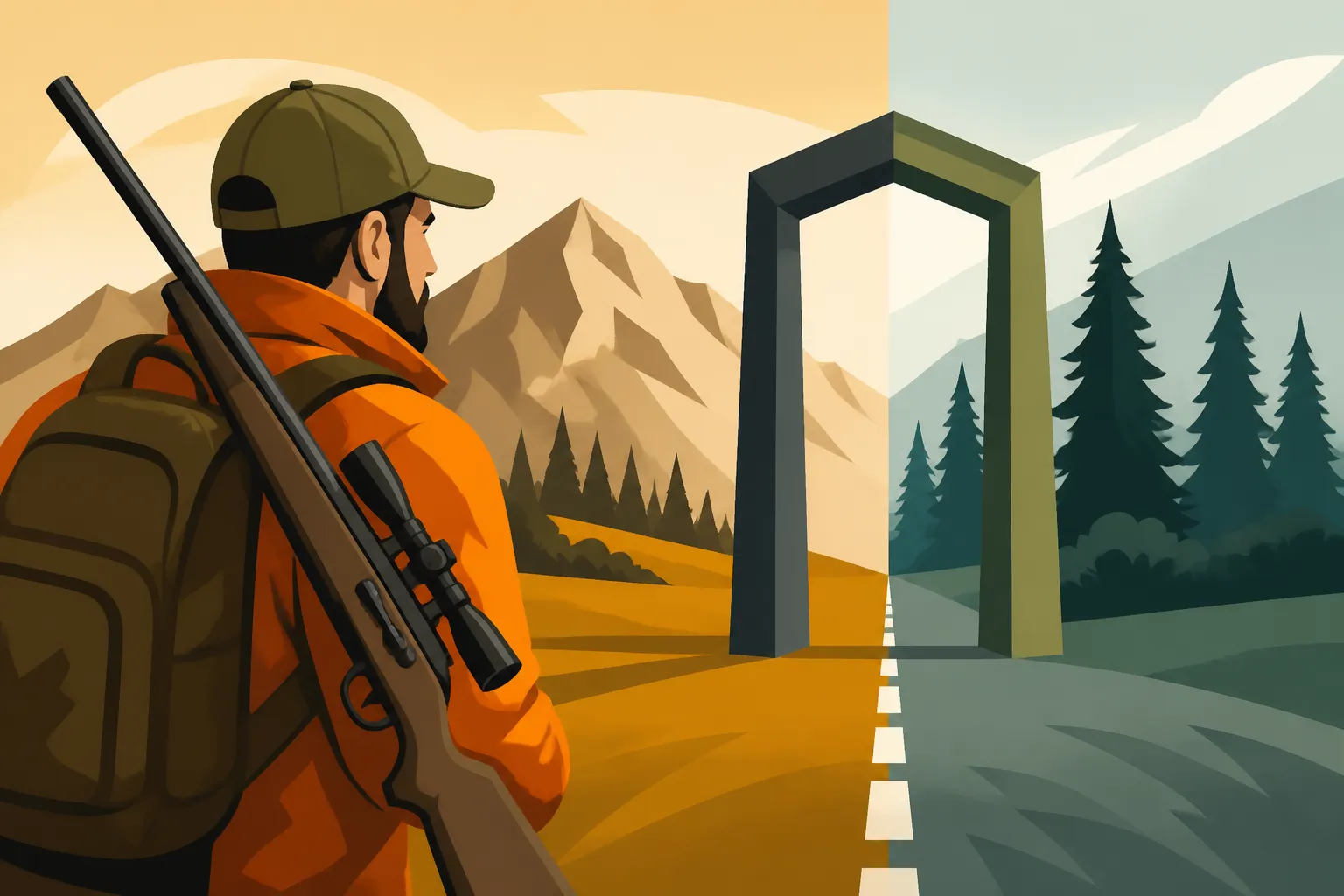
Crossing the Border With a Rifle
If you're dreaming of an Alberta hunting adventure, the thought of packing your trusty rifle and crossing an international border can feel like navigating a minefield. It's easy to get overwhelmed by the rules, the paperwork, and the sheer anxiety of dealing with border officials. Believe me, you're not alone in feeling this way. But don't let that deter you from experiencing the incredible hunting opportunities here in Alberta. With a bit of foresight and careful preparation, bringing your rifle across the border is a straightforward process, and this guide is here to walk you through every step, helping you avoid common headaches and get straight to the hunt.
The Absolute Essentials: Your Firearm Declaration Form
The very first, non-negotiable step to bringing your rifle into Alberta, or anywhere in Canada for that matter, is completing the Non-Resident Firearm Declaration Form (form RCMP 5589/CAFC 909). This isn't just a suggestion; it's a legal requirement. Many hunters get caught off guard, assuming their U.S. firearm registration is all they need, but Canada has its own specific process. Failing to declare your firearms or having incomplete paperwork can lead to significant delays, fines, or even the seizure of your firearms, turning your dream hunt into a real nightmare.
Understanding the Non-Resident Firearm Declaration Form (CAFC 909)
This form acts as a temporary registration for your non-restricted firearms while you are in Canada. It's crucial because it officially recognizes your ownership and intent to transport the firearm for legitimate purposes, like hunting. The form itself asks for pretty standard information: your personal details, details about each firearm (make, model, serial number, calibre/gauge), and the reason for your importation.
What you must do is fill this form out in triplicate before you even get to the border. Do not sign it! You need to sign it in front of a Canadian Border Services Agency (CBSA) officer. Print multiple copies, just in case. You'll also need to pay a small processing fee, which is collected at the border. While I can't give you the exact amount, it's generally a nominal fee, so be prepared with Canadian currency or a credit card. This form is valid for up to 60 days, which covers most typical hunting trips. If you're coming for an extended stay, you might need to renew it or consider a longer-term solution. When you exit Canada, you'll surrender your copy of the declaration, effectively "unregistering" your firearm from temporary Canadian records. For more on the paperwork involved in bringing your hunting gear into the country, check out The Non-Resident Firearm Declaration Form.
Supporting Documentation: More Than Just the Form
Beyond the declaration form, having a collection of supporting documents can smooth your passage considerably. Think of it as building a strong case for why you're bringing a firearm into the country.
- Proof of Ownership: This could be a purchase receipt, a registration card from your home state, or even an insurance policy that lists your firearms. Anything that clearly shows you are the legal owner of the firearm you're bringing.
- Hunting Licences and Permits: While you might not have your specific Alberta tags in hand before you cross, proof of having purchased or being eligible for an Alberta Wildlife Identification Number (WIN) card is extremely helpful. Showing an old Alberta hunting license or even a current hunting license from your home state demonstrates your legitimate purpose. It says, "I'm a hunter, not just someone randomly bringing a gun across."
- Invitation Letters or Outfitter Confirmation: If you're hunting with an outfitter, a letter of invitation or a booking confirmation from them is gold. It confirms your itinerary and the purpose of your trip. Many reputable outfitters, like those you might find through platforms such as BookYourHunt, are well-versed in the border crossing requirements and can provide these types of documents. They understand the nuances and can often guide you through the process, making it less intimidating. This kind of backup material makes it abundantly clear to border officials that your intent is legitimate.
Understanding Canadian Firearm Classifications
One of the biggest areas of confusion for non-residents is understanding Canada's firearm classification system. It's different from what you might be used to, and ignorance of the law is, unfortunately, no excuse at the border. Getting this wrong can lead to serious consequences, including having your firearm confiscated and being denied entry.
Non-Restricted, Restricted, and Prohibited Firearms
For hunters coming to Alberta, the focus is almost exclusively on non-restricted firearms. These are your typical hunting rifles and shotguns. Generally, if it's a long gun (rifle or shotgun) with a barrel length of 18.5 inches or more, and isn't designed to be easily concealed or rapidly fired, it's likely non-restricted. However, certain semi-automatic rifles, even with long barrels, can be classified as restricted or prohibited in Canada due to their specific make, model, or military appearance. This is where it gets tricky, and why doing your homework before you leave is paramount.
- Non-Restricted: Most common hunting rifles (bolt-action, lever-action, pump-action) and shotguns fall into this category. These are the firearms you'll be declaring and bringing for your hunt.
- Restricted: This category includes most handguns and certain semi-automatic rifles (e.g., AR-15 variants, even if legal in your home state). These are generally not permitted for non-residents for hunting purposes and require specific permits that are almost impossible for a visiting hunter to obtain. Do NOT attempt to bring restricted firearms without very specific, pre-approved documentation, which is rarely granted for hunting trips.
- Prohibited: This includes fully automatic firearms, sawed-off shotguns/rifles, and certain other specific models of firearms that are completely banned. Bringing a prohibited firearm across the border, even by accident, can lead to criminal charges.
The key takeaway here is: if you have any doubt about your firearm's classification, verify it with the Canadian Border Services Agency or the Canadian Firearms Program before you travel. Don't rely on online forums alone; get information directly from official Canadian sources. Understanding Legal Firearms and Bows for Big Game will give you a better grasp of what's allowed.
Ammunition Rules and Limits
Once you've sorted out your rifle, don't forget the ammunition. You are permitted to bring a reasonable quantity of ammunition for your declared non-restricted firearms. "Reasonable" typically means enough for your hunt, but not commercial quantities. There isn't a hard-and-fast numerical limit like some countries might have, but common sense applies. Bringing 100-200 rounds for a deer hunt is usually fine; showing up with 10,000 rounds might raise some eyebrows.
Storage of Ammunition: Your ammunition must be stored separately from your firearms. It should be in a secure container, away from the firearm itself, and not readily accessible. Think about how you pack for safe transport at home – the same principles apply, perhaps even more strictly, at the border. Also, be aware of any specific prohibitions on certain types of ammunition. For instance, armour-piercing or incendiary rounds are generally prohibited. Stick to standard hunting ammunition.
The Border Crossing Experience: What to Expect
You've done your homework, filled out your forms, and double-checked your firearm's classification. Now comes the moment of truth: the actual border crossing. This part can still be nerve-wracking, but knowing what to expect can significantly reduce your stress.
Declaring Your Firearms: Be Honest and Clear
When you approach the CBSA booth, the officer will ask you a series of questions. When they ask if you have any firearms, weapons, or prohibited goods, your answer must be an unequivocal "Yes, I have hunting rifles to declare." Do not hedge, do not hesitate, and absolutely do not try to conceal them. Attempting to smuggle firearms into Canada, even inadvertently, is a serious offence that can lead to severe penalties, including seizure of your vehicle and firearms, significant fines, and potentially being barred from entering Canada in the future.
After you declare, you'll likely be directed to a secondary inspection area. This is routine, so don't be alarmed. Here, another officer will review your Non-Resident Firearm Declaration Form, inspect your firearms (they will usually ask you to remove them from your vehicle for inspection, but do not touch them until instructed to do so), and collect the processing fee. They might also ask you about your hunting plans, where you're going, and how long you intend to stay. Be polite, direct, and answer all questions truthfully. Your attitude can go a long way in making the process smooth.
Safe Transportation and Storage Within Your Vehicle
This is a critical point that many non-residents overlook until they're at the border. Canadian law has specific requirements for how firearms must be transported, even within your own vehicle.
Your firearms MUST be:
- Unloaded: There should be no ammunition in the chamber or magazine.
- Rendered Inoperable: This usually means using a secure locking device (trigger lock, cable lock, or a locked case) that prevents the firearm from being fired.
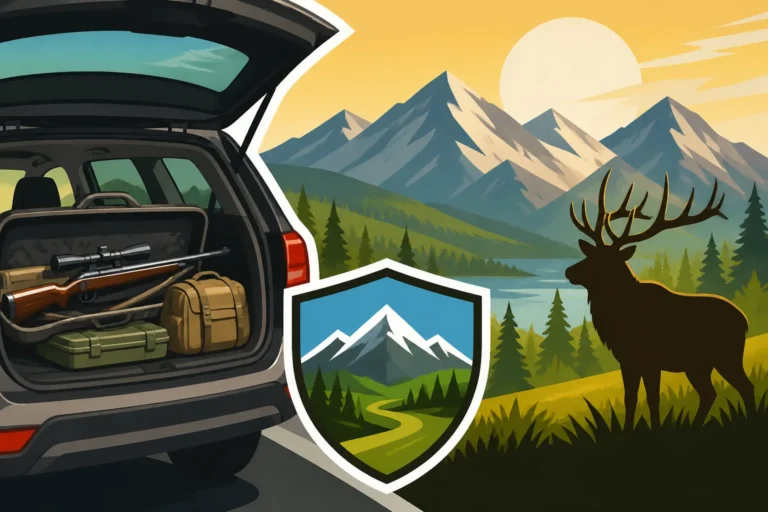
- Securely Stored: This means they must be in a case, scabbard, or wrapped in a similar non-transparent cover. They should also not be readily accessible to anyone in the vehicle. The trunk of a car or a locked toolbox in the back of a truck is usually sufficient. If you have a pickup truck with an open bed, a securely locked, opaque hard case is essential.
Think of it this way: the firearm should not be able to be quickly grabbed and fired. The goal is to ensure public safety during transport. Failing to adhere to these storage requirements can result in fines and potential charges, even if you've correctly declared the firearm. This applies not just at the border, but for your entire journey within Alberta. If you're wondering about specifics once you're on your way, you can look up Transporting Firearms Into Alberta.
Common Pitfalls and How to Avoid Them
Even with the best intentions, it's easy to stumble over some common hurdles when bringing a rifle into Alberta. Learning from others' mistakes is always the smart play.
Incomplete Paperwork and Missing Signatures
This is, hands down, the most frequent reason for delays and frustration at the border. You've printed the form, but maybe you forgot to fill out a section or, worse, signed it prematurely. Remember, the form needs to be filled out completely but only signed in front of a CBSA officer. Double-check every box, every serial number, and every detail. Make sure the serial numbers on your actual firearms match what's on the form precisely. A single digit off can cause a major holdup.
Another common mistake is only bringing one copy of the form. Border Services often wants multiple copies, and having extras saves time if one gets misplaced or damaged. It sounds minor, but imagine the frustration of having to fill out a new form from scratch while standing at the border after a long drive.
Misunderstanding Firearm Classifications
We covered this already, but it bears repeating because it's such a critical point. Many firearms that are legal and common in the United States are restricted or prohibited in Canada. Examples include certain variants of the AR-15, even if they have long barrels, or specific types of handguns. Don't assume that just because it's legal where you live, it's legal in Canada. Always, always verify the classification of your specific make and model with official Canadian sources before you depart. A quick phone call to the Canadian Firearms Program can save you a world of trouble.
If you bring a restricted or prohibited firearm, even unknowingly, it will be seized, and you could face significant legal repercussions. It's a risk simply not worth taking.
Not Declaring or Improper Storage
This is the fastest way to turn your hunting trip into a legal nightmare. Never, under any circumstances, try to sneak a firearm across the border or fail to declare it. The penalties are severe. Similarly, failing to follow the secure storage rules for transport, both at the border and while driving in Alberta, can lead to fines and legal action.
Always err on the side of caution. Have your firearm unloaded, secured with a trigger lock, and in a locked, opaque case, stored in the least accessible part of your vehicle (like the trunk). When stopped at the border, leave it there until instructed by the officer. Your openness and adherence to the rules will make the process much smoother.
Planning Your Alberta Hunt with Firearms in Mind
Beyond the immediate border crossing, integrating firearm rules into your overall hunt planning can simplify things immensely. A well-planned trip considers these details from the outset.
Consulting Outfitters and Hunter Hosts
If you're planning a guided hunt in Alberta, your outfitter is an invaluable resource for navigating firearm regulations. Reputable outfitters deal with non-resident hunters constantly and are very familiar with the requirements. They can often provide specific advice, clarification on what firearms are typically brought in by their clients, and even letters of invitation that smooth the border process. When you're looking for an outfitter, perhaps through a service like GoHunt, make sure to ask about their experience with non-resident hunters and their firearm-related advice.
Similarly, if you're coming to hunt with an Alberta resident as a hunter host, they should be well-versed in Canadian firearm laws and can guide you through the process. They often know the local nuances and can offer practical tips. Having a knowledgeable local contact makes a huge difference. For more details on these arrangements, refer to Hunting Alberta With a Hunter Host.
Resources for Up-to-Date Information
Laws and regulations can change, so it's always best to get the most current information. The official source for Canadian firearm regulations is the Canadian Firearms Program (CFP) and the Canadian Border Services Agency (CBSA). Their websites provide the most accurate and up-to-date information, including downloadable forms and contact numbers. Don't rely solely on old forum posts or anecdotal advice.
When you're researching your hunt, consider the broader context of Alberta's hunting landscape. Understanding Rules for Non-Residents Hunting Alberta will give you a complete picture of what to expect, not just at the border, but throughout your entire hunting experience. Platforms like BookYourHunt and GoHunt, while primarily for booking, often have articles or resources that touch upon these practicalities for their international clients.
What to Do If Something Goes Wrong
Despite all your best efforts, sometimes things go sideways. A misunderstanding, a misplaced document, or an overly zealous border agent can throw a wrench in your plans.
- Remain Calm and Polite: Getting agitated or argumentative will only make things worse. Cooperate fully, answer questions respectfully, and explain your situation clearly.
- Ask for Clarification: If you don't understand why something is being denied or questioned, politely ask for a clearer explanation.
- Know Your Rights (and Limits): You have the right to understand why you might be denied entry or why your firearms are being questioned. However, remember that border officers have broad discretion.
- Consequences of Denial or Seizure: If your firearm is deemed inadmissible, it will be seized. In some cases, you might be given the option to store it at the border crossing (for a fee) until you can arrange for it to be returned to your home country, or you might have to abandon it. In more serious cases, like undeclared firearms, you could face charges and confiscation without recourse. The best strategy is always meticulous preparation to avoid these scenarios entirely.
Here's a quick checklist to help you organize your firearm documentation for border crossing:
| Item | Status (Before Arrival) | Notes |
|---|---|---|
| RCMP 5589 / CAFC 909 Form | Filled out in triplicate | DO NOT SIGN. Sign in front of CBSA officer. Have all firearm details accurate. |
| Proof of Firearm Ownership | Readily available | Purchase receipt, registration, insurance. |
| Valid Passport | Current and accessible | Essential for international travel. |
| Alberta WIN Card (or proof of eligibility) | Purchased or documented | Demonstrates legitimate hunting intent. |
| Previous Hunting Licences | Readily available | From Alberta or home state, shows history as a hunter. |
| Outfitter Letter/Booking Conf. | Hard copy | Confirms hunting itinerary and purpose, especially for guided hunts. |
| Canadian Currency/Credit Card | Available for fees | For the Non-Resident Firearm Declaration fee. |
| Canadian Firearms Program Contact | Written down (just in case) | For emergency verification of firearm classification if an issue arises. |
| Secure Firearm Locks/Cases | Installed/Used | Firearms unloaded, locked, and in opaque cases for transport. |
Crossing the border with a rifle doesn't have to be a daunting experience. It's all about being informed, organized, and honest. Take the time to prepare thoroughly, understand the Canadian regulations, and you'll be well on your way to enjoying the fantastic hunting opportunities that Alberta has to offer. Safe travels, and good luck out there!
Disclaimer
This article is for general informational purposes only and does not constitute professional advice. Laws, prices and regulations vary by location and change over time. Consult a qualified professional for guidance on your specific situation.