Hunting the Edge of a Peat Bog
Hunting the edge of a peat bog in Alberta can feel like stepping into another world – a world of spongy ground, dense cover, and often, exasperatingly difficult navigation. Many hunters eye these dark, tangled places with a mix of dread and fascination, knowing that while they are tough to hunt, they also hold some of the biggest, most elusive game. It's easy to get turned around, sink to your knees in muck, or find your scent hanging heavy in the humid air. This guide is here to walk you through the unique challenges and incredible rewards of targeting game along the fringes of Alberta's peat bogs, offering practical advice to make your next hunt both safer and more successful.
Understanding Peat Bogs and Why Game Use Their Edges
Before you even think about stepping foot near one, it’s crucial to understand what a peat bog truly is and why animals, despite the challenges, are so drawn to their edges. It’s not just a wet patch of ground; it's a unique ecosystem with its own rules.
The Ecosystem of a Peat Bog
Imagine a landscape where water reigns supreme, where ancient plant matter, primarily sphagnum moss, slowly decays into a thick, acidic, waterlogged mat. That's a peat bog in a nutshell. They are incredibly common across Alberta's boreal forest and even in some parkland areas, often recognized by their stunted black spruce and tamarack trees, interspersed with open stretches of moss and pools of dark water.
From a hunter's perspective, this environment presents significant challenges. The ground is notoriously soft and uneven, making silent travel almost impossible. You're constantly pushing through thick brush, stepping over hidden roots, and praying you don't posthole into a muddy depression. Scent control becomes a monumental task, as the damp air and dense vegetation hold human odors far longer than in drier terrain. Plus, visibility is often severely restricted, turning even a short tracking job into an ordeal. It's not a place for the faint of heart, or those unprepared for a proper workout.
Why Wildlife Gravitate Towards Bog Edges
Despite these difficulties, the very characteristics that make bogs challenging for us are what make their edges so appealing to wildlife. Think of the edge as a prime piece of real estate – a transition zone, or "ecotone," where two distinct habitats meet. This meeting point often creates a rich blend of resources that attracts a diverse array of animals.
For big game, bog edges offer an incredible combination of food, water, and security cover. The dense, often impenetrable growth of the bog itself provides an unparalleled sanctuary from predators and human disturbance. Animals can retreat into the thickest parts to bed down, knowing they're largely safe. Along the immediate fringe, where the bog transitions to more upland forest, you'll find a smorgasbord of food sources. Willows and sedges, rich in nutrients, thrive in the moist conditions, making them a favorite for moose. Berries like cranberries and blueberries often grow in abundance, drawing in black bears. The presence of water is, of course, a constant draw, and the unique plant life provides essential minerals and forage. These edges also act as natural travel corridors, funnelling animals between bedding areas within the bog and feeding grounds in adjacent forests or clearings. It's a complex dance of survival, and understanding it is your first step to success.
Effective Hunting Strategies for Alberta's Bog Edges
Hunting peat bog edges isn't about brute force; it's about patience, meticulous planning, and adapting your tactics to the unique environment. You can't just wander in and expect to bump into an animal.
Pre-Season Scouting and Mapping
One of the biggest frustrations hunters face in bog country is getting lost or simply not knowing where to start. This is where pre-season scouting, especially with modern mapping tools, becomes your secret weapon. Before you ever lace up your boots, spend considerable time poring over satellite imagery. Apps like GoHunt are invaluable for this, providing detailed topographic and satellite views that reveal the hidden intricacies of the landscape. Look for patterns: where does the bog meet higher ground? Are there fingers of timber extending into the bog, or islands of drier ground within it? These are prime locations for game to stage, feed, or bed.
Identify natural travel corridors – perhaps a subtle ridge line that stays drier, or a section where the bog narrows and forces animals to a particular crossing point. Look for pinch points created by water bodies, denser sections of timber, or even old seismic lines that skirt the bog. Pay close attention to any areas showing different vegetation patterns, which might indicate changes in elevation or water levels. These variations, often invisible on the ground until you're already in it, can be game-changers. Remember, effective Scouting With Satellite Imagery in Alberta will save you countless hours of unproductive walking and significantly increase your odds.
On-the-Ground Tactics and Approach
Once you've done your homework, the real work begins on the ground. Still-hunting is often the most effective method along bog edges. Move slowly, taking one or two steps, then stopping to scan and listen intently. The spongy ground might make quiet movement difficult, so use it to your advantage: the sound of your footsteps is somewhat muffled, allowing you to get away with a bit more movement than in leaf litter. However, the dense cover means you need to be constantly looking for subtle signs – a flicking ear, a patch of dark hide, or movement in the shadows.
Wind direction is paramount in bog environments, perhaps even more so than in open country. The dense, often stagnant air can hold scent, and if it swirls, your presence will be broadcast far and wide. Always approach with the wind in your favor, and be prepared to change your approach if the wind shifts. Calling strategies can also be highly effective, especially for moose. The dense cover of a bog edge often means animals are close but out of sight. A well-placed cow call or grunt can draw in a curious bull, especially during the rut. If you're looking for strategies to attract these giants, consider honing your skills in Calling a Bull Moose in the Rut. The acoustics of dense timber and bog edges can make calling sound incredibly realistic to a distant animal, drawing them closer into shooting lanes. Patience is your ultimate virtue here; rush it, and you'll likely spook whatever game is trying to make its way through the thick stuff.
Targeting Specific Species
While various animals might utilize bog edges, a few species are particularly synonymous with this unique habitat in Alberta.
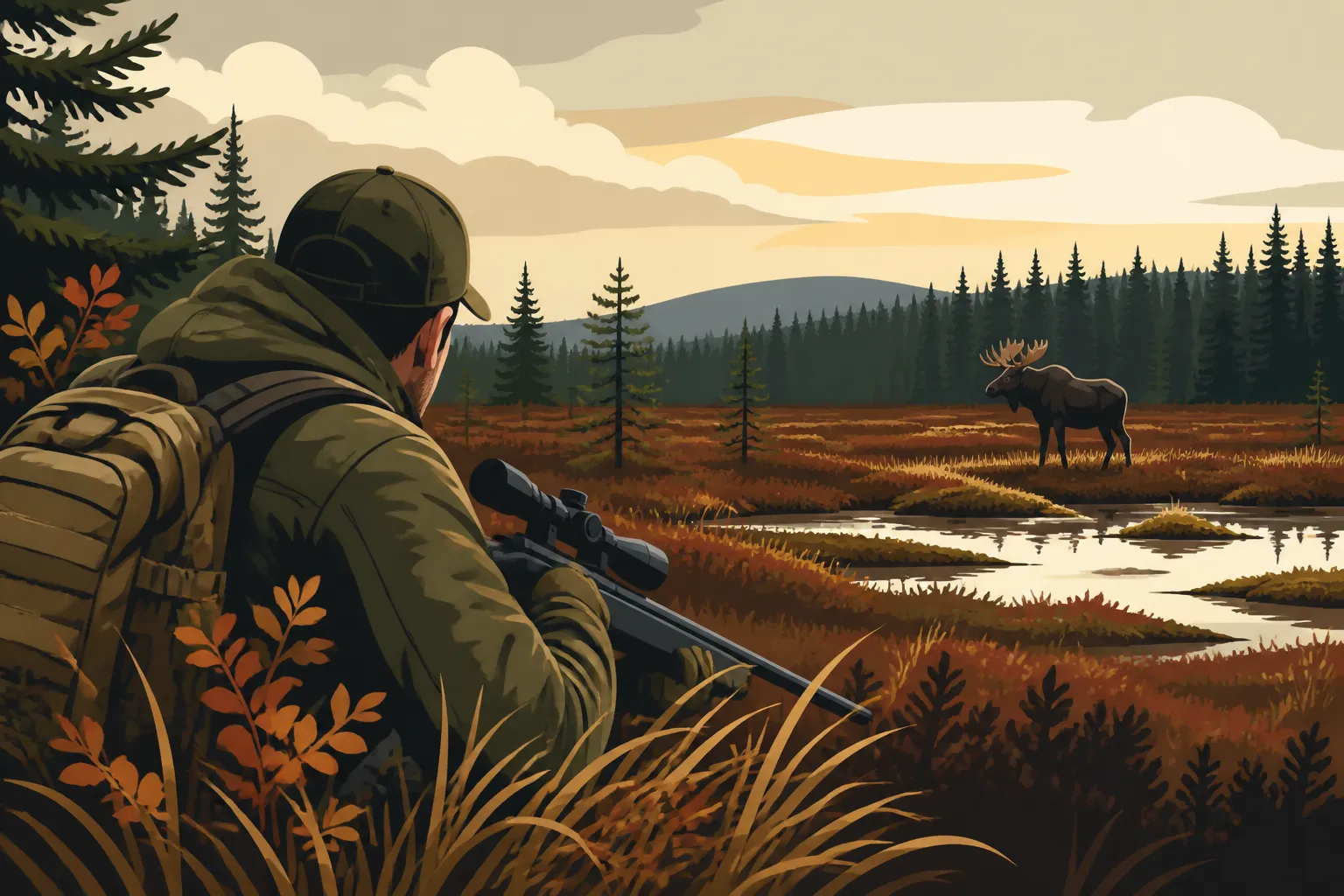
- Moose: These majestic animals are the undisputed kings of the bog. They thrive in wet environments, and the bog edges provide an abundance of their preferred forage, such as willows, sedges, and aquatic vegetation. During the rut, bulls will often cruise these edges looking for cows, and cows will seek the dense cover for calving. If you're serious about Moose Hunting Alberta's Boreal Forest, learning to read bog sign and understand moose movement patterns along these fringes is non-negotiable. Look for fresh tracks, broken brush from browsing, and rubs on smaller trees.
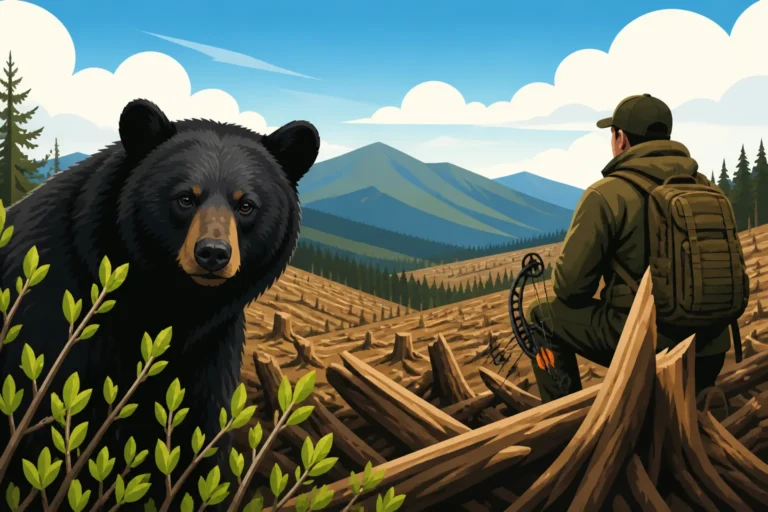
- Black Bear: Alberta's black bears are incredibly adaptable, and bog edges offer them excellent resources. They feed on berries that flourish in these damp areas, scavenge for carrion, and use the dense cover as a secure bedding and travel route. Spring bear hunting can be particularly productive near bog edges that are adjacent to recent Spring Bear Hunting Alberta's Cutblocks, as the new growth attracts a variety of food sources for bears emerging from hibernation. Keep an eye out for scat, turned-over logs, and claw marks on trees.
- Whitetail and Mule Deer: While not as prevalent deep within the bog as moose, both whitetail and mule deer will utilize the edges, especially where the bog transitions into more mature aspen or mixed forest stands. These areas provide browse and cover, and deer will often use the denser cover of the bog as a security retreat before venturing out into more open areas to feed at dawn or dusk. They are more likely to skirt the very outer fringes rather than plunging deep into the wettest parts.
Essential Gear and Safety Considerations for Bog Hunting
The unique environment of a peat bog demands specialized gear and a heightened awareness of safety. Neglecting either can quickly turn an exciting hunt into a dangerous situation.
Gear for Wet and Rugged Terrain
Your gear list for bog hunting will look a little different than for a typical dryland hunt. First and foremost, invest in truly waterproof boots – not just water-resistant. Knee-high rubber boots or sturdy leather boots treated with waterproofing, paired with high-quality gaiters, are essential. You'll be crossing wet, mucky ground, and sinking in is a matter of when, not if. Layering your clothing is also crucial. Even on a cool day, the exertion of navigating a bog can make you sweat, but stopping to glass or field dress can quickly lead to a chill. Moisture-wicking base layers, insulating mid-layers, and a waterproof/windproof outer shell are your best friends.
Navigation is absolutely critical. While a traditional compass and map are good backups, a robust GPS unit or a reliable hunting app like GoHunt with offline mapping capabilities is a must. Cell service is often non-existent in these remote areas. Having your exact location, planned routes, and potential bail-out points marked on your Reading an Alberta WMU Map Before You Go will literally be a lifesaver. Consider a durable backpack that can withstand moisture and abrasive brush, and pack it with essentials: water, high-energy snacks, a first-aid kit, a headlamp, fire-starting materials, and a knife. If you’re considering bringing an ATV, ensure you understand the Quad and Side-by-Side Rules on Crown Land to avoid any legal issues or damage to the sensitive environment.
Navigating the Challenges and Staying Safe
The challenges of bog hunting aren't just about discomfort; they pose genuine safety risks. Getting stuck in deep mud or water is a common concern. Always test the ground ahead of you, and if you're alone, be extra cautious about venturing into truly unknown territory. Hypothermia is another significant threat. Being wet and cold, especially if you take a tumble into a water-filled depression, can rapidly deplete your core body temperature. Always carry emergency dry clothes in a waterproof bag and know how to build a survival fire.
Wildlife encounters, particularly with bears, are also a real possibility. Bogs offer excellent bear habitat, so carrying bear spray and knowing how to use it is a non-negotiable. Travel with a partner if possible, and make noise periodically, especially in thick cover. Finally, always tell someone exactly where you're going and when you expect to return. In areas with no cell service, a satellite communication device (like a Garmin inReach or Zoleo) can be an invaluable tool for emergencies, allowing you to send messages or trigger an SOS if things go south.
| Gear Item | Purpose | Why It's Crucial for Bog Hunting |
|---|---|---|
| Waterproof Boots | Keep feet dry, provide traction | Prevent hypothermia, maintain mobility in muck |
| Gaiters | Prevent debris/water from entering boots | Keep lower legs dry and protected from brush |
| Layered Clothing | Regulate body temperature | Manage exertion sweat, prevent chilling |
| Waterproof Outerwear | Protects from rain, snow, and wet brush | Essential for staying dry and warm |
| GPS/Offline Maps (GoHunt) | Navigation, tracking progress, marking waypoints | Prevents getting lost in featureless terrain |
| Satellite Messenger | Emergency communication when no cell service | Critical for safety in remote areas |
| Bear Spray | Self-defense against aggressive wildlife | Bears are common inhabitants of bog country |
| First-Aid Kit | Treat injuries, cuts, sprains | Self-sufficiency in a remote, rugged environment |
| Fire Starter | Emergency heat, drying clothes, signaling | Essential survival tool, especially if wet/cold |
| High-Energy Snacks | Sustain energy during strenuous movement | Prevent fatigue and maintain focus |
| Water Bottle/Filter | Hydration | Avoid dehydration from exertion and remote access |
Post-Harvest Challenges and Meat Care
You've done the hard part: successfully located and harvested your animal on the edge of a peat bog. Congratulations! Now comes the really hard part: getting that animal out and ensuring your hard-earned meat is properly cared for. This is where many bog hunts turn into epic tales of struggle.
The Reality of Recovery
Retrieving a large animal, particularly a moose, from the edge of a bog can be an absolute nightmare. The ground that was merely spongy on the way in will feel like quicksand when you’re trying to haul hundreds of pounds of meat over it. If you were lucky enough to harvest near a somewhat solid trail or a forestry road, consider yourself blessed. More often, you're looking at a long, arduous pack-out through dense brush, over downed logs, and across knee-deep mud.
This is why planning for recovery should be part of your initial scouting. Identify potential extraction points, drier routes, and consider the tools you might need. A good game cart might be useless if the terrain is too soft or brushy. Often, it comes down to quartering the animal and making multiple trips on your back. If you brought a quad, ensure you have a winch and chains, as Getting a Moose Out With a Quad from a bog requires careful navigation and often a lot of muscle. The key is to be realistic about the effort involved and to have a team if possible. Trying to drag a whole deer, let alone a moose, through a bog alone is a recipe for exhaustion and frustration.
Preserving Your Harvest
Once the animal is down, immediate and thorough field dressing is paramount, especially given the typically damp and cool conditions of a bog. Get the guts out quickly to allow the carcass to cool. Skinning the animal as soon as possible, or at least opening up the body cavity completely, will aid in heat dissipation. Hang the quarters if you can, even if just from a sturdy branch, to allow air circulation. You need to protect the meat from flies and dirt, which can be challenging in a messy bog environment. Game bags are your best friend here.
Transporting the meat out of the bog means it will likely get some dirt or debris on it. Don't worry too much about pristine cleanliness in the field, but focus on keeping it cool and dry once it's out. If temperatures are mild, consider packing ice around the meat in coolers once you reach your vehicle. For detailed advice on this, especially with Alberta's unpredictable weather, check out Meat Care in Alberta's Cold and Warm Swings. Your goal is to get that meat processed and into a cooler or freezer as quickly as possible to prevent spoilage and ensure a delicious yield from your challenging, yet rewarding, bog-edge hunt.
Disclaimer
Hunting is a challenging and potentially dangerous activity. This guide provides general information and recommendations. Always consult the official Alberta hunting regulations, adhere to all local laws, and prioritize safety. The author and publisher are not responsible for any incidents that may occur. Responsible hunting practices and respect for wildlife are paramount.