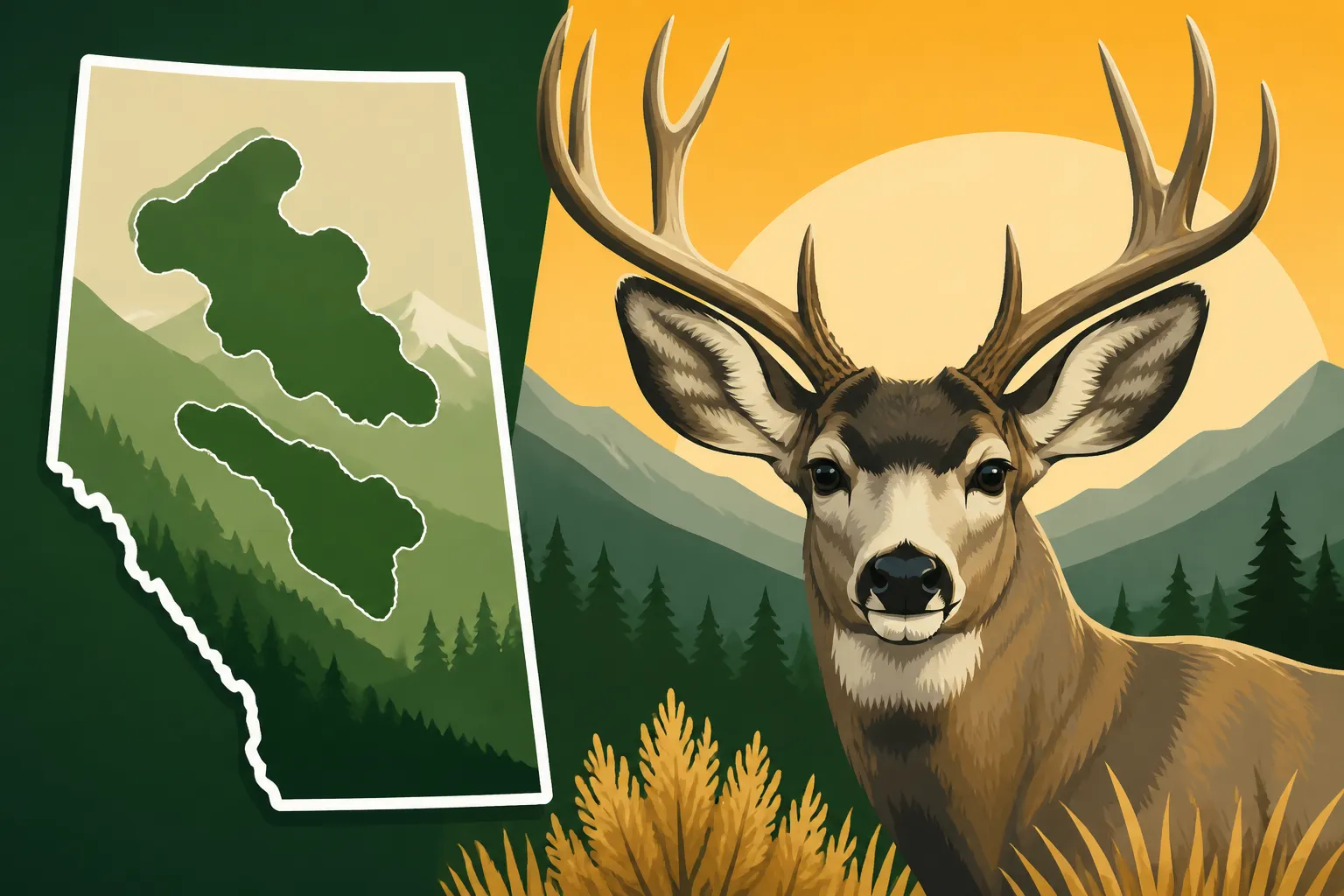
Where Alberta’s Mule Deer Live
Finding a mature mule deer buck in Alberta can feel like searching for a needle in a haystack, especially if you're new to the province or trying to understand their specific preferences. It's a common frustration to scout vast landscapes only to feel like you're missing the key puzzle pieces. This guide is designed to peel back the layers on where Alberta's mule deer live, thrive, and how their habits can guide your hunting efforts.
Understanding Mule Deer Habitat Needs
Mule deer are incredibly adaptable creatures, but they aren't just anywhere in Alberta. They have specific requirements that dictate where they’ll spend their time, which directly impacts a hunter's success. It’s not enough to simply drive down a road and expect to see them; you need to understand the fundamental building blocks of their preferred homes.
Water and Forage Requirements
Like all wildlife, mule deer need consistent access to both water and quality forage to survive and, importantly, to grow those impressive antlers we all chase. In Alberta's often dry prairie and badlands, water sources can be limited, making coulee bottoms, spring-fed seepages, and dugouts critical focal points. Mule deer are browsers, meaning they prefer to eat a wide variety of shrubs, forbs, and young tree growth rather than just grasses. Look for areas with a mix of willow, aspen saplings, saskatoon berry bushes, and various native grasses and forbs. This varied diet provides the necessary nutrients for body condition and antler development. Understanding these preferences can help you narrow down vast tracts of land, focusing on the pockets where sustenance is readily available, especially during the lean months of winter or the dry heat of summer.
Security Cover and Escape Terrain
Mule deer are not creatures of the open plain in the same way pronghorn are. They crave security cover – broken terrain, dense shrubbery, and timbered draws that offer concealment from predators, including us hunters. This is why you so often find them in the deep, winding coulees of the prairie or the dense aspen bluffs of the parkland. These areas offer immediate escape routes, places to bed down undetected, and thermal cover from harsh weather. When scouting, pay close attention to the transitions: where open fields meet dense bush, where a coulee breaks into a river valley, or where a timbered ridge drops into a creek bottom. These transition zones are often prime mule deer real estate, providing easy access to food while remaining close to safety. They also tend to use north-facing slopes for bedding in warmer weather, seeking shade, and south-facing slopes in colder weather to catch the sun.
Impact of Human Activity and Development
While mule deer are resilient, they are sensitive to human disturbance. Areas with heavy recreational traffic, frequent oil and gas activity, or dense agricultural development might still hold deer, but usually in more remote or harder-to-access pockets. They learn quickly to associate roads, trails, and human presence with danger. This often pushes mature bucks into deeper, more secluded areas. However, this isn't always a negative for hunters. Sometimes, agricultural fields can offer a crucial food source, drawing deer out of cover at dawn and dusk. Understanding the balance between available resources and human pressure is key. Hunters who are willing to put in the extra miles away from roads or seek out permission on private lands with less traffic often find bigger, older bucks. Remember that accessing certain lands may require prior permission, so always check if you need to ask a landowner for permission or if you're on public land.
The Classic Prairie and Badlands Mule Deer
When most people think of Alberta mule deer, their minds immediately go to the vast, open, and rugged landscapes of the province's southern and eastern prairies. This is truly the iconic home for many of Alberta's biggest bucks, but it's a unique environment that requires a specific approach to hunting and understanding their habits.
Coulees, Breaks, and River Valleys
The prairie itself might seem barren at first glance, but it's dissected by an intricate network of coulees, river breaks, and deep river valleys that are literally teeming with mule deer. These geological features are the lifeblood of prairie mule deer, offering everything they need: dense cover, water, and forage. From the deep gashes of the Red Deer River Badlands to the countless unnamed coulees that crisscross the landscape, these areas provide incredible concealment. A hunter could drive for miles across seemingly flat prairie and be completely unaware of the hundreds of deer hidden just out of sight in a deep draw. Focusing your scouting efforts on "Hunting a Prairie Coulee Bottom" or along the larger river systems like the Oldman or Bow River breaks will significantly increase your odds. Remember, mule deer often use the same escape routes, so finding a well-worn trail in a coulee bottom is like hitting gold. They'll often bed on the shaded slopes during the day, moving out to feed on the coulee edges or adjacent fields in low light.
Cypress Hills and Milk River Ridge
Two particular regions stand out for their exceptional mule deer populations and unique prairie habitat: the Cypress Hills Interprovincial Park (though hunting is only allowed in specific areas adjacent to the park and on surrounding Crown and private land, not within the park itself) and the Milk River Ridge. The Cypress Hills, an anomaly of forest rising out of the prairie, provides a distinct habitat that concentrates deer, offering shelter and diverse forage not found elsewhere in the immediate vicinity. The Milk River Ridge, on the other hand, is a series of rolling uplands and deeply cut coulees that offer prime "Hunting a Milk River Ridge Coulee" opportunities. These areas are known for producing some of the province's largest mule deer bucks due to the combination of excellent genetics, consistent food sources, and challenging terrain that allows older animals to evade hunters. These regions require diligent scouting, often involving long hours behind glass, as the deer can literally disappear into the landscape.
Challenges of Hunting Open Prairie
Hunting mule deer in these open prairie and badlands environments presents a unique set of challenges that can be both frustrating and incredibly rewarding. The sheer vastness of the landscape means you often need to cover a lot of ground, often on foot or by using strategic glassing points. "Glassing an Alberta Coulee for Mule Deer" from a distance is paramount, as getting too close too fast will often spook deer into the next coulee over. The wind can be a constant factor, carrying your scent or making it difficult to hear deer movement. Furthermore, the undulating terrain makes judging distance and stalking incredibly tricky. Hunters need to be masters of using terrain to their advantage, planning stalks that keep them out of sight until the last possible moment. While there is public land, much of the prime mule deer country is private, making getting permission from landowners a crucial step for hunters. Patience and persistence are not just virtues here; they are necessities.
Mule Deer in Alberta's Parkland Regions
Moving north and west from the deep prairie, Alberta transitions into the "parkland" — a mosaic of aspen bluffs, grasslands, and agricultural fields. This mixed landscape offers a different kind of mule deer habitat, one that often surprises hunters who only picture them in arid coulees. While the sheer numbers might not always rival the prairie, these regions can hold some truly impressive animals.
Aspen Bluffs and Farm Edges
The parkland is characterized by scattered stands of aspen poplars, commonly known as "aspen bluffs," interspersed with open fields. These bluffs provide crucial thermal and security cover for mule deer, especially when combined with the abundant forage found in adjacent agricultural lands. Deer will often bed deep within these aspen thickets during the day, emerging at dawn and dusk to feed on crops like canola, barley, or peas. "Hunting an Aspen Bluff on Farm Ground" can be incredibly effective, especially if you can identify active trails leading from the bluff edges into the fields. The key here is understanding the daily patterns: where they enter and exit the fields, and which parts of the bluff they prefer for bedding. These areas can be surprisingly productive, but also challenging due to smaller pockets of cover and the close proximity to human activity.
Sloughs and Willow Bottoms
Within the parkland, small wetlands known as sloughs, surrounded by dense willow bottoms, also serve as prime mule deer habitat. These wet, often marshy areas provide incredibly dense cover that's almost impenetrable to humans, offering a perfect hideaway for wary bucks. Mule deer will use these willow bottoms for bedding, especially during the rut when they seek dense cover to stage or hide from other bucks. A "Hunting a Slough Edge for Whitetails" strategy often works for mule deer too, as they share similar preferences for these secluded, dense pockets. The challenge with these areas is the difficulty of access and visibility, requiring hunters to often move slowly and quietly, or to position themselves to observe the deer as they move in and out of the cover. Often, these sloughs are connected by smaller draws or fencelines, creating a network of cover for deer to travel through undetected.
Adapting to Agricultural Landscapes
Mule deer in the parkland have become remarkably adept at coexisting with and utilizing agricultural landscapes. They've learned to thrive on the nutritious bounty of farm crops, often relying on them heavily through much of the year. This adaptation means that while they still need security cover, their movements are heavily influenced by the availability of food in fields. Hunting around "Hunting a Swathed Grain Field at Dusk" or on the edges of standing crops can be incredibly productive, but requires careful scouting to identify patterns. The frustration here often comes from deer moving onto private land where permission is difficult to obtain, or from them simply disappearing into vast fields of standing corn or canola. Understanding how deer adapt to different crop rotations and harvest schedules is a massive advantage in these areas. Tools like GoHunt or other mapping apps can help identify property boundaries and potential access points, though direct contact with landowners remains crucial.
Foothills and Mountain Fringe Mule Deer
While the prairie often steals the spotlight, Alberta's foothills and the fringe of its majestic Rocky Mountains offer another, often overlooked, habitat for mule deer. This is a dramatically different landscape, characterized by rolling timbered hills, deep valleys, and a mix of coniferous and deciduous forests. The mule deer here are typically well-adapted to steeper, more rugged terrain, often sharing their range with elk and bighorn sheep.
Benchlands and Mixed Forests
In the foothills, mule deer often frequent the benchlands – relatively flat or gently sloping terraces that run along the sides of larger valleys. These benches often feature a mix of mature coniferous forests (like lodgepole pine and spruce) and patches of aspen or willow. This diverse vegetation provides a rich tapestry of forage and cover. Deer will use the dense timber for bedding and security, particularly during harsh weather, and then move out onto the more open bench areas to browse or graze. The transition zones, where the forest meets a more open slope or a creek bottom, are often hot spots. Hunting these areas requires stamina and a willingness to hike, as vehicle access can be limited. Understanding how deer utilize elevation and aspect (which way a slope faces) can make a huge difference here. They'll often seek south-facing slopes in winter for warmth, and north-facing slopes in summer for coolness.
Transitional Zones and Edges
The true magic of foothills mule deer hunting often lies in the transitional zones and edges. These are the areas where different habitat types meet: where a clearcut borders mature timber, where a river valley meets a steep hillside, or where the forest gives way to an alpine meadow. Mule deer thrive on the "edge effect," where they can access a variety of food sources and cover types with minimal effort. This is particularly true along old logging roads, seismic lines, or pipeline rights-of-way, which create linear clearings within the dense forest. While vehicle access on these can be restricted, they often act as natural travel corridors and feeding areas. Exploring "Hunting an Old Logging Road in the Foothills" can reveal surprising pockets of deer. The key is to look for fresh sign – tracks, rubs, and droppings – along these edges, indicating recent activity.
Higher Elevation Winter Ranges
As winter descends and snow deepens in the higher elevations of the foothills and mountains, mule deer will often migrate to specific, lower-elevation winter ranges. These ranges are typically characterized by south-facing slopes, often with sparse tree cover and abundant browse that remains accessible even with moderate snowfall. They seek out areas that catch the most sun, helping to melt snow and expose vital forage. These winter ranges are incredibly important for the survival of the herd and are often managed carefully to minimize disturbance. While hunting in these specific deep winter range zones may be restricted or have very limited seasons, understanding these migration patterns can inform your early and late season hunting strategies. For instance, knowing where they will go can help you intercept them during their migration. Conversely, it's crucial to be aware of areas that are specifically designated as winter ranges and avoid disturbing deer in these critical survival zones.
Seasonal Movements and Adaptations
Mule deer, like many big game species, don't stay in one spot year-round. Their movements are dictated by a delicate balance of food availability, security, and the imperative to breed. Understanding these seasonal shifts is paramount to consistent hunting success in Alberta.
Summer Feeding Patterns
During the long days of summer, mule deer are focused almost entirely on building body mass and growing antlers. This is a period of abundance, where they'll seek out the most nutritious and palatable forage available. In the prairies, this often means lush growth in coulee bottoms, river breaks, and the edges of irrigated crops. In the parkland, they'll heavily utilize the rich agricultural fields, spending dawn and dusk feasting on grains and forbs, then retreating to dense aspen bluffs or willow thickets for bedding. In the foothills, they'll spread out, often utilizing higher elevations with fresh green growth in clearcuts or along natural openings. Bucks tend to be in bachelor groups during this time, often predictable in their movements between feeding and bedding areas. Scouting during the summer, even if you can't hunt, is invaluable for identifying these patterns. Look for heavy trails, fresh droppings, and browsed vegetation. This is also a good time to get a general idea of "What a Mature Alberta Mule Deer Weighs" and other characteristics.
Rutting Activity and Habitat Use
The mule deer rut, typically peaking in mid-to-late November in Alberta, is a period of intense activity and a significant shift in behavior and habitat use. Bucks, previously reclusive, become far more visible and less cautious as they actively seek out does. This is when you'll see them covering significant ground, often moving through more open areas than they would normally. Their primary focus during the rut is breeding, and they'll follow does wherever they go. Does, in turn, will often frequent areas with reliable food sources and good cover. This means that even areas you might consider marginal earlier in the season could become hot spots during the rut. Hunters often focus on "Hunting the Rut in Early November" tactics during this period. Bucks will check traditional doe bedding areas, travel corridors along coulee rims, and the fringes of timbered bluffs. Knowing the peak rut window can dramatically increase your chances of encountering a mature buck that might otherwise be hidden.
Winter Survival Strategies
As the brutal Alberta winter sets in, mule deer shift into survival mode. Their priorities become conserving energy, finding what little accessible forage remains, and seeking shelter from the elements. This often involves migrating from higher summer ranges to lower, more protected wintering grounds. In the prairie, they'll often concentrate in the deepest, most sheltered river valleys and coulees, particularly those with good southern exposure that melts snow and exposes browse. You'll often see "How Mule Deer Use Coulees in Winter" as a critical survival strategy. In the parkland, they might gather in dense, thermal cover provided by large aspen or conifer stands, moving only when necessary to feed on standing crops or accessible browse. During particularly harsh winters with deep snow, their movements become extremely restricted, and they will stick to established trails or areas where snow is shallower. Finding these critical wintering areas, while often not huntable due to season closures or specific wildlife management zones, is vital for understanding their overall population health and annual movements.
Utilizing Scouting Tools and Resources
In the modern age, successful mule deer hunting in Alberta isn't just about boots on the ground, it's also about smart, strategic scouting using the wealth of tools available. These resources can save you countless hours of aimless wandering and significantly increase your chances of finding those elusive prairie giants or elusive foothills bucks.
Interpreting Topographical Maps and Satellite Imagery
Before you even step foot in the field, a thorough review of topographical maps and satellite imagery is absolutely essential. These tools allow you to identify key habitat features that mule deer prefer, such as coulees, river breaks, dense timber blocks, and transition zones. Look for areas with a mix of cover and potential food sources, paying attention to elevation changes, pinch points, and potential travel corridors. Satellite imagery, in particular, offers an incredible bird's-eye view, helping you distinguish between different types of vegetation, identify hidden sloughs, or even spot old logging roads or seismic lines that might not appear on traditional maps. Understanding "Scouting With Satellite Imagery in Alberta" allows you to virtually "walk" the landscape, identify likely bedding and feeding areas, and plan your approach routes well in advance. Pay attention to how the terrain funnels deer, where they might cross open areas, and where they would find immediate security.
Leveraging Online Platforms and Data
The digital age has brought an unprecedented level of information to hunters' fingertips. Platforms like GoHunt and other mapping applications provide detailed property boundaries, landowner contact information (where available), and crucial public land designations. These are invaluable for navigating Alberta's complex land access rules, whether you're looking for "Finding Alberta Public Land Boundaries" or need to identify a specific grazing leaseholder. Many of these apps also include layers showing wildfire burn areas (which can create excellent new growth for deer), forestry cutblocks, and even historical harvest data in some cases. When researching potential WMUs, these platforms can help you understand the lay of the land, identify potential access challenges, and even find areas that others might overlook. Always cross-reference multiple sources where possible, and remember that landowner information on apps isn't always current, so personal contact is always best for gaining permission on private land.
Boots-on-the-Ground Scouting Techniques
While digital tools are powerful, nothing replaces actual "boots-on-the-ground" scouting. This is where you confirm your map hunches, discover fresh sign, and truly learn the nuances of a specific area. Walk the coulee bottoms, check the edges of aspen bluffs, and explore those transitional zones you identified on satellite imagery. Look for tracks, droppings, rub lines, and deer beds. Pay attention to game trails: are they well-worn? Do they lead to water, food, or cover? Fresh sign is key, especially closer to the season. Use binoculars to glass distant hillsides and clearings, and be patient. Sometimes, simply sitting and observing for an hour can reveal more about deer patterns than walking all day. The best hunters often spend more time scouting than actually hunting, because informed preparation is the most critical component of success.
Alberta Mule Deer Habitat Overview
This table provides a generalized overview of where mule deer can be found across Alberta's diverse landscapes, along with key features and hunting considerations.
| Habitat Region | Key Landscape Features | Primary Deer Activity | Hunting Considerations |
|---|---|---|---|
| Prairie/Badlands | Deep coulees, river breaks, arid grasslands, sparse trees | Bedding in breaks, feeding on edges/crops, water sources | Spot-and-stalk, long-range glassing, private land access |
| Parkland | Aspen bluffs, cultivated fields, sloughs, willow bottoms | Bedding in bluffs/willows, feeding on crops/forbs | Ambush hunting, patterning field entry/exit, smaller pockets |
| Foothills/Mountain Fringe | Mixed forest, benchlands, steep valleys, clearcuts, natural openings | Browsing diverse vegetation, using elevation for cover | Rugged terrain, hiking, identifying transition zones |
Disclaimer
This information is intended for educational purposes only and should not replace official Alberta hunting regulations. Always consult the current Alberta hunting regulations and relevant municipal bylaws before planning any hunting trip. Ensure you understand and abide by all rules regarding licenses, seasons, WMUs, land access, and ethical hunting practices. Conditions can change, so staying informed is your responsibility.