Where Alberta Mountain Goats Live
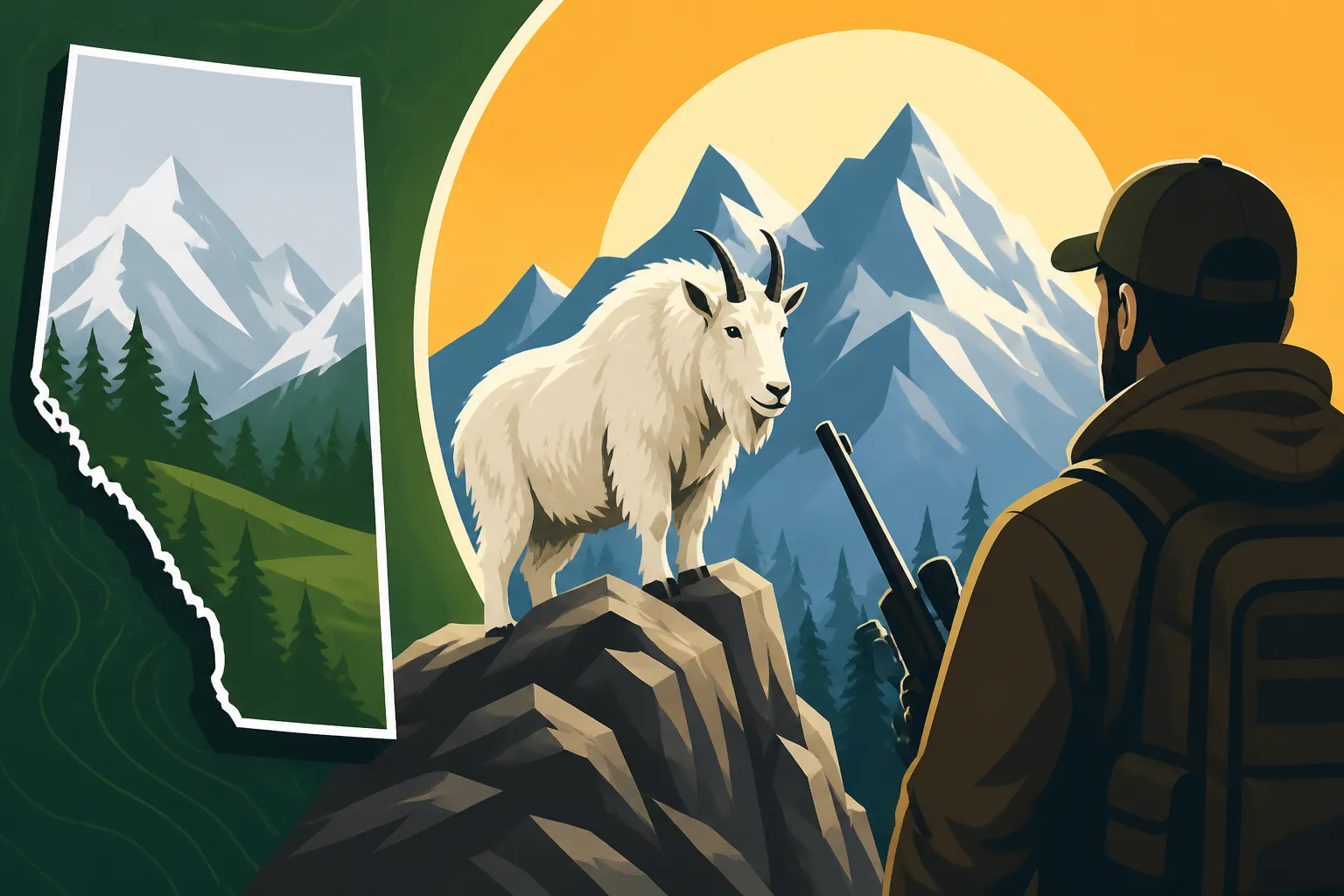
Ever stared at those majestic, ghostly white figures clinging to impossible cliffs in the Alberta Rockies and wondered how you could ever hope to find them? Mountain goats are truly creatures of the high country, incredibly adapted to some of the most rugged and unforgiving terrain our province has to offer. But knowing where they actually live, beyond just "the mountains," is the first, crucial step to understanding these incredible animals, whether you're a hunter, a photographer, or simply an admirer of wildlife. This comprehensive guide will take a deep dive into the specific habitats and geographical ranges of Alberta's mountain goats, helping you pinpoint their preferred haunts and grasp the challenges of their unique existence.
The Vertical World: Understanding Mountain Goat Habitat Needs
Mountain goats aren't just in the mountains; they are the mountains. Their very existence is intertwined with steep, broken, and often treeless terrain. Unlike other mountain ungulates that might venture into valleys or lower timbered slopes, mountain goats are truly at home in the alpine and subalpine zones, preferring elevations where few other large mammals dare to tread. This isn't just a preference; it's a survival strategy, offering them safety from predators and access to specialized forage.
Elevation and Aspect: Key to Goat Country
When we talk about where mountain goats live, we're really talking about a very specific type of elevation and slope. These aren't creatures of rolling hills or even densely forested mountain sides. They thrive above the timberline, or at least in the very sparse, stunted timber just below it. We're often looking at elevations starting from around 6,000 feet and extending right up to the highest peaks, often well over 9,000 feet.
The aspect, or direction a slope faces, also plays a critical role. South-facing slopes, for instance, tend to shed snow earlier and receive more sunlight, which can mean earlier green-up for forage. However, goats also utilize north-facing slopes, especially in summer, for cooler temperatures and different vegetation. It's not about a single perfect slope, but a mosaic of slopes offering different benefits throughout the seasons. They need the freedom to move between these microclimates and food sources without descending too far into less protective terrain. This constant movement is part of their survival, ensuring they always have fresh browse and escape routes.
Rugged Terrain and Escape Cover
The defining characteristic of prime mountain goat habitat is its extreme ruggedness. Think sheer rock faces, precipitous cliffs, narrow ledges, rock slides, and scree slopes. This isn't just about impressive views; it's about escape cover. A mountain goat's primary defense against predators – whether it's wolves, cougars, or even bears – isn't speed on flat ground, but unparalleled agility and footing on vertical terrain. They can scale seemingly impossible rock faces with incredible ease, leaving most predators literally stuck looking up.
When you're glassing for goats, don't just look for open meadows; look at the rock formations, the broken cliffs, the areas where solid rock meets loose scree. These are their highways and their safe havens. They'll often bed on narrow ledges with clear views, ready to quickly move up or across if danger approaches. This reliance on vertical escape cover means you'll almost never find them far from cliffs, even if they are feeding in an alpine bowl or meadow. Every journey into an open area is a calculated risk, and they always have a quick route back to the safety of the rock. Understanding this natural instinct is key to Hunting Mountain Goat in Steep Rock or Hunting Mountain Goat in Broken Cliffs.
Alberta's Prime Mountain Goat Territories
While Alberta has a vast mountain range, not all of it is equally suitable for mountain goats. Their populations are concentrated in specific areas, primarily within the Rocky Mountains and their immediate foothills, where the elevation and ruggedness meet their exacting demands. These areas are typically within the "Green Area" of Alberta, referring to the vast public land designated for forestry and recreation.
The Canadian Rockies: Core Goat Country
The heart of Alberta's mountain goat population lies within the Canadian Rockies, particularly in the southwestern part of the province. This includes iconic regions such as the Kananaskis Country, the Livingstone Range, and extending north into the Willmore Wilderness Park and the Bighorn Backcountry. These areas offer the classic, towering peaks, deep valleys, and extensive alpine terrain that goats depend on.
- Kananaskis Country: Easily accessible from Calgary, Kananaskis offers some of the more visible mountain goat populations, particularly along certain highways and trails. Look towards peaks in the Opal Range and Elk Range. While some areas are protected, adjacent WMUs (Wildlife Management Units) still offer hunting opportunities through the draw system.
- Livingstone Range: Further south, the Livingstone Range provides rugged, often windswept peaks and extensive subalpine habitat. This area, alongside parts of the Porcupine Hills, holds strong populations. Access here can be a mix of forestry roads and more remote trails.
- Willmore Wilderness Park & Bighorn Backcountry: These vast, roadless wilderness areas are arguably the most pristine mountain goat habitats in Alberta. Access is often by horseback or extensive backpacking. These remote regions sustain robust populations and offer truly wild hunting experiences. These are the kinds of places where you'll be deeply immersed in nature, making it essential to understand Backpacking Into Alberta Sheep Country and how to effectively Packing Out of Alberta's Mountain WMUs.
Specific WMUs to Consider
Alberta's WMU system helps us delineate where specific game species can be found and hunted. For mountain goats, you'll be looking at WMUs that fall squarely within the Rocky Mountain range. Applying for a draw in these WMUs is essential, as general tags are not available for goats.
Here's a table outlining some general regions and the type of terrain you might expect:
| Mountain Range/Region | Typical Elevation (feet) | Key Habitat Features | Common WMU Groups (General Area) |
|---|---|---|---|
| Southern Rockies | 6,000 – 10,000+ | Steep limestone cliffs, alpine meadows | 400-series (e.g., 400, 402, 404) |
| Kananaskis Country | 6,500 – 10,500+ | Rugged peaks, rockslides, subalpine timber | 400-series (e.g., 406, 408, 410) |
| Livingstone Range | 6,000 – 9,000+ | Exposed rock, high ridges, open slopes | 400-series (e.g., 400, 404) |
| Bighorn Backcountry | 6,000 – 11,000+ | Vast alpine bowls, glaciers, severe cliffs | 400-series (e.g., 436, 438) |
| Willmore Wilderness | 5,500 – 10,000+ | Remote, high alpine, extensive wilderness | 400-series (e.g., 438, 440) |
Remember, WMU boundaries don't perfectly align with geographical features, but generally, the WMUs numbered in the 400s are your prime mountain goat areas. It's crucial to check the specific regulations for the WMU you're interested in, as rules and draw odds can vary significantly. A good mapping tool or a platform like GoHunt can be invaluable for pinpointing specific WMU boundaries and terrain features when researching. Understanding the nuances of these regions is also essential for successfully applying for Mountain WMU Draw Requirements.
Factors Influencing Mountain Goat Distribution and Movement
Mountain goats, while resilient, are not immune to environmental changes or human pressures. Their distribution and movements are influenced by a complex interplay of factors, from seasonal weather patterns to the presence of predators and the availability of suitable forage.
Seasonal Movements and Winter Survival
While goats largely remain in their high-altitude domains, they do exhibit seasonal movements, albeit generally less dramatic than other ungulates like elk or deer. In summer, they disperse into higher alpine meadows and basins, often feeding on lush vegetation that grows quickly after the snow melts. This is when you might see them relatively high up, often in family groups with kids. This is the prime time for Glassing Alpine Basins for Bighorn Sheep (and goats, as they share similar terrain).
As winter approaches and the snow deepens, goats will typically descend slightly, seeking out wind-swept ridges and south-facing slopes where snow accumulation is less severe, allowing them to access forage. They are remarkably adapted to cold, with thick, shaggy coats, but deep snow can still limit their mobility and access to food. They might use existing game trails or even steep, icy paths. In severe winters, populations can be impacted, but their ability to navigate treacherous terrain often gives them an edge over less agile species.
Predator Avoidance and Calving Areas
Predators play a significant role in dictating where mountain goats can safely live. As mentioned, their primary defense is their ability to climb. This means they will gravitate towards areas with abundant escape terrain, even when feeding. A goat won't linger long in a flatter, more open alpine bowl if a cougar or wolf pack is known to frequent the area, unless a cliff face is just a few bounds away.
Calving areas are particularly sensitive. Nannies will seek out extremely isolated and rugged ledges, often with overhangs or caves, to give birth to their kids. These nurseries are chosen for maximum protection from predators and the elements. These sites are often incredibly difficult for humans to access, ensuring the safety of the vulnerable newborns. Protecting these specific high-elevation pockets is critical for the health and continuation of the herd.
Human Activity and Access
Roads, trails, and human recreational activity, while providing access for hunters and wildlife viewers, can also influence goat distribution. Goats are generally shy and will avoid areas with heavy human presence. This is why some of the most robust populations are found in more remote, difficult-to-access wilderness areas. While some goats become habituated to human presence along popular hiking trails, prolonged disturbance can push them into even more inaccessible terrain, impacting their feeding patterns or energy expenditure.
When scouting or planning a hunt, consider areas further from established trails or roads. While it means more effort, it often leads to less pressured animals and a more natural encounter. A robust mapping tool, possibly integrated with a system like GoHunt, can help identify remote drainages and basins that see less foot traffic. This also ties into understanding that some areas, like the Willmore Wilderness, require significant effort and commitment to access, often involving pack horses and extended trips, making them truly Hunting Alberta's Mountain WMUs and Their Access for the adventurous.
Understanding Mountain Goat Population Dynamics
Knowing where mountain goats live isn't just about geography; it's also about understanding their population trends and the factors that contribute to their overall numbers. Alberta's mountain goat populations, while generally stable in their core range, face unique challenges that differentiate them from other big game species.
Population Estimates and Trends
Alberta's mountain goat populations are, by their very nature, more difficult to accurately count than, say, a whitetail herd in agricultural land. Their steep, remote habitat makes aerial surveys challenging and ground surveys nearly impossible in many areas. However, wildlife biologists use various methods, including localized counts and habitat assessments, to provide estimates. Generally, Alberta's mountain goat numbers are considered healthy within their specific range, though they are not as numerous or widespread as deer or elk.
These populations are often patchily distributed, meaning you might find a strong, localized group in one drainage and then travel miles before encountering another. They tend to be stable in good habitat, but their slow reproductive rate means they are also slow to recover from significant losses, whether from severe winters, disease, or over-hunting. This is why careful management through draw systems is so vital. This careful management also considers Mountain Goat Numbers and Where They Live across the province, ensuring sustainable hunting opportunities.
Conservation and Management Challenges
Mountain goats are a unique and treasured part of Alberta's wildlife heritage, and their conservation is a high priority. The primary management tool for hunting is the special draw system, which carefully allocates a limited number of tags to ensure that harvest levels are sustainable and do not negatively impact the population. This system often requires many priority points to draw, reflecting the limited tags and high demand.
Habitat preservation is also paramount. Protecting their critical high-alpine and subalpine habitats from encroachment or significant disturbance is key. Climate change, with its potential impacts on snowpack, glacier retreat, and vegetation shifts, is another long-term concern for these specialized animals. Understanding these challenges helps us appreciate the privilege of hunting or observing these incredible creatures in their wild domains. The effort required to get a tag through the How the Mountain Goat Draw Works reflects this conservation-minded approach.
Disclaimer
This article is for general informational purposes only and does not constitute professional advice. Laws, prices and regulations vary by location and change over time. Consult a qualified professional for guidance on your specific situation.