Mountain Goat Numbers and Where They Live
For many hunters, the majestic mountain goat represents the ultimate high-country challenge, yet understanding their elusive populations and preferred habitats in Alberta can feel like piecing together a complex puzzle. These incredible animals thrive in some of the most unforgiving landscapes, making detailed observation and management a unique undertaking. This guide will take a deep dive into where Alberta's mountain goats live, their population dynamics, and the critical factors that influence their survival, helping you understand these iconic alpine dwellers.
Understanding Alberta's Mountain Goat Population
Alberta's mountain goats are truly symbols of the wild, untamed Rockies. Unlike many other big game species, they aren't widespread across the province; their existence is intimately tied to the rugged, high-alpine environments they call home. When we talk about "mountain goat numbers," it's never a simple count in an open field. These animals inhabit areas that are incredibly difficult to access and survey, requiring specialized methods to get even an approximate understanding of their population health.
Estimating Population Size and Trends
Getting an accurate count of mountain goats is notoriously difficult. Their habitat, high in the craggy peaks and often snow-bound for much of the year, makes ground surveys impractical and dangerous. Wildlife biologists primarily rely on aerial surveys, often conducted by helicopter, to count goats. These surveys are typically flown in specific, known goat habitats during optimal times when goats are more visible, usually late summer or early fall before heavy snows set in. Even then, they are usually conducted in specific Wildlife Management Units (WMUs) rather than across the entire range simultaneously, so getting a province-wide, real-time snapshot is a huge logistical challenge.
What these surveys reveal is that Alberta's mountain goat populations, while relatively stable in some core areas, can fluctuate due to a variety of environmental factors. Trends are closely monitored over decades rather than year-to-year, looking for significant declines or increases. Habitat fragmentation, human encroachment, and severe winter events can all play a role in these shifts. For instance, a particularly harsh winter with deep, persistent snow at high elevations can lead to increased mortality, especially among younger goats and older animals. Conversely, a string of mild winters can see a bump in kid survival rates, contributing to a slight population increase. Resource managers use these trends to inform decisions about hunting quotas and conservation strategies, always aiming for sustainable populations.
Factors Influencing Goat Numbers
Mountain goat numbers are fundamentally limited by their specialized habitat. They require steep, rugged terrain for escape from predators and access to various forage types. Key factors that influence their numbers include habitat quality, predation, disease, and weather events. Good habitat means not just steep cliffs but also alpine meadows for summer grazing, mineral licks, and critical wintering areas that offer some relief from extreme cold and deep snow.
Predation, primarily from cougars, wolves, and occasionally grizzlies, is a natural limiting factor. While goats are incredibly agile in their preferred terrain, they can be vulnerable when forced to lower elevations or less steep ground. Diseases, though less commonly documented in wild mountain goat populations compared to deer or elk, can also pose a threat, particularly if contact with domestic livestock or other wild ungulates increases. Climate change is also becoming a more significant factor; altered snowpack dynamics, changes in vegetation, and increased frequency of extreme weather events can directly impact their survival rates. These complex interactions mean that goat populations are constantly balancing on a knife-edge, making their continued presence a testament to their incredible resilience.
The Unique Adaptations of Mountain Goats
Mountain goats are perfectly engineered for their extreme environment, showcasing an incredible suite of adaptations that allow them to thrive where few other large mammals can. Their most striking feature, of course, is their pristine white coat. This dense, shaggy fur provides exceptional insulation against the fierce winds and freezing temperatures common at high altitudes. It’s also incredibly effective camouflage against snowy backdrops, making them surprisingly difficult to spot against snowfields or frosted rock faces.
Beyond their fur, their hooves are perhaps their most crucial adaptation for navigating treacherous terrain. Mountain goats have cloven hooves with soft, rubbery pads that provide incredible grip on slick rock and ice. The hard, sharp outer edges of their hooves can dig into tiny crevices, giving them purchase on vertical surfaces. This unique design allows them to scale cliffs that would be impassable for most other animals, providing them refuge from predators and access to otherwise unreachable forage. Their powerful leg muscles, keen eyesight, and incredible balance further enhance their ability to survive and thrive in some of the most inhospitable yet breathtaking landscapes Alberta has to offer. This combination of physical traits truly sets them apart as masters of the alpine.
Where to Find Mountain Goats in Alberta
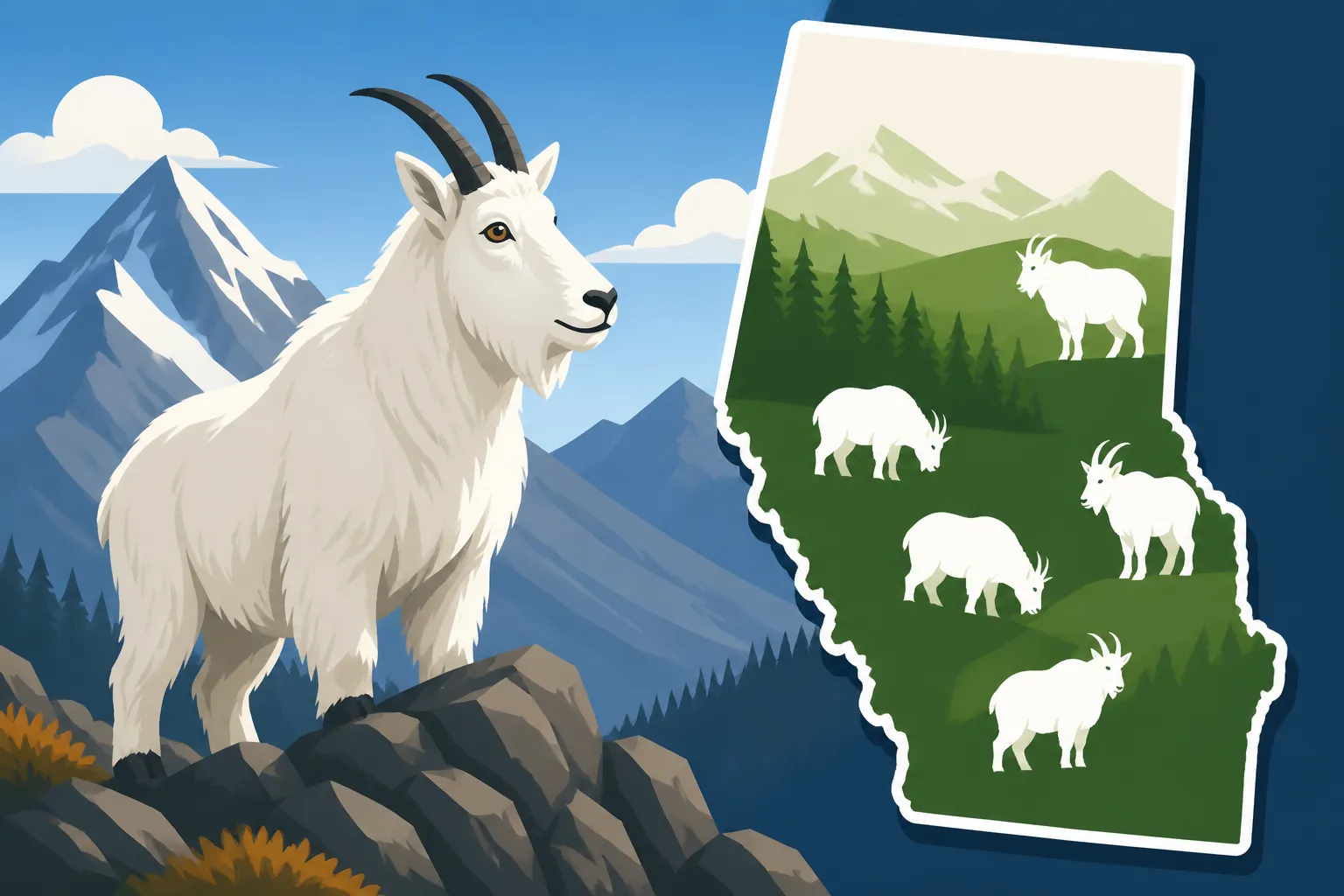
If you're looking to spot or hunt mountain goats in Alberta, you need to understand one fundamental truth: they live in the mountains. Specifically, the truly rugged, high-elevation parts of the Canadian Rockies that form Alberta's western boundary. You won't find them wandering the prairies or the boreal forest; their world is one of cliffs, alpine meadows, and perpetual snowfields. It's a challenging environment, but one they are uniquely suited to.
Key Mountain Ranges and Habitats
Alberta's mountain goats are predominantly found in the Rocky Mountains, specifically the more rugged and inaccessible ranges that offer the steep, rocky escape terrain they depend on. Areas like the eastern slopes of the Rockies, including the Willmore Wilderness Park, Jasper National Park (though hunting is prohibited here), and adjacent provincial lands, are prime habitats. Further south, the Canadian Rockies extending through the Kananaskis Country and into the Crowsnest Pass region also hold significant populations. These regions provide the essential elements of their habitat: sheer cliffs and broken rock for security, open alpine and subalpine meadows for foraging, and pockets of sparse timber for occasional shelter.
They typically favor elevations above the treeline, moving up into the true alpine during summer to graze on succulent grasses and forbs. This also positions them where they can benefit from cooler temperatures, escaping the insects and heat of lower elevations. When the weather turns severe in fall and winter, they might descend slightly, but rarely far from the safety of steep cliffs. Often, they can be found on south-facing slopes, which tend to melt out faster and offer earlier access to forage, even in winter. These south-facing exposures also often feature windswept ridges that keep snow from accumulating too deeply, allowing them to paw through for vegetation. Understanding these nuances of their preferred terrain is crucial for anyone hoping to encounter these magnificent animals.
Specific WMUs Known for Goats
While you won't find mountain goats across all of Alberta's Wildlife Management Units, several WMUs along the western edge of the province are well-known for their resident populations. These are generally the WMUs that encompass the highest and most rugged parts of the Rocky Mountains. For instance, WMUs such as 436 (Castle Wildland Provincial Park area), 400 (Sheep River/Kananaskis), 402 (Ghost River Wilderness Area), and portions of the 300-series WMUs further north that abut the mountain parks, are where you'll find draw-only opportunities for mountain goats. The specific locations within these WMUs will almost always be in the highest, most unforgiving terrain.
Hunters often refer to these areas as "goat country" because the landscape itself dictates where these animals can exist. Using tools like GoHunt or detailed topographical maps and satellite imagery (like those often used when Scouting with Satellite Imagery in Alberta) can help pinpoint potential goat habitat. Look for large expanses of rock and scree fields, interspersed with alpine meadows and small, high-elevation drainages. These are not areas for the faint of heart or those unprepared for serious physical exertion and navigation challenges. Always consult the current Alberta hunting regulations for specific WMU boundaries and season dates, as these can change.
Seasonal Movements and Elevation Preferences
Mountain goats exhibit predictable, albeit subtle, seasonal movements, primarily driven by forage availability and security from predators. In late spring and early summer, as the snow begins to recede from the alpine, goats move higher to take advantage of the fresh, nutrient-rich vegetation emerging in alpine meadows. This is often the time when nannies give birth to their kids in secluded, precipitous areas, offering the highest level of protection.
As summer progresses, they remain at high elevations, grazing and building up fat reserves. You might find them traversing incredibly steep ledges or resting on rock outcroppings, often in small groups. When fall arrives, and temperatures drop, they may descend slightly to browse on subalpine shrubs or to access mineral licks. Winter sees them move to specific wintering ranges, which are still typically at high elevations but might be on windswept ridges or south-facing slopes where snow accumulation is less severe, or where geothermal activity keeps some areas clear. The most crucial aspect of their winter survival is proximity to vertical escape terrain, which they will rarely abandon, even in the harshest conditions. Understanding these movements is key to finding them, whether you are observing or contemplating Hunting Mountain Goat in Steep Rock.
Conservation Efforts and Management
The management of mountain goats in Alberta is a delicate balancing act, focusing on maintaining healthy populations while allowing for limited, sustainable hunting opportunities. Given their specialized habitat and relatively smaller populations compared to other big game, conservation efforts are paramount to ensure these iconic animals continue to thrive in the province's high country.
Monitoring and Research Programs
Alberta Fish and Wildlife, in conjunction with other conservation organizations like the Alberta Conservation Association, conducts ongoing monitoring and research programs specific to mountain goats. These programs involve the aforementioned aerial surveys to estimate population size and trends, as well as more intensive studies using radio telemetry. Attaching GPS collars to a sample of goats allows researchers to track their movements, habitat use, and survival rates over time. This data is invaluable for understanding their seasonal range, identifying critical wintering areas, and assessing the impacts of human disturbance or climate shifts.
Beyond population counts, research also delves into goat health, genetic diversity, and the effects of various environmental pressures. For example, understanding how Alberta's Winter Kill and Game Numbers affect mountain goats specifically helps managers anticipate and react to population downturns. These detailed studies provide the scientific foundation upon which all management decisions are built, ensuring that conservation strategies are data-driven and effective for the long-term health of the species.
Harvest Management and Draw Systems
Hunting mountain goats in Alberta is managed through a highly controlled Special Licence draw system, designed to limit harvest pressure and ensure sustainability. Unlike general tags for species like whitetails, mountain goat licences are extremely limited and allocated through a lottery system where applicants accumulate priority points. This system ensures that only a small number of tags are issued each year for specific WMUs, often only one or two per unit, if any. The intent is not to maximize harvest, but to allow for a trophy opportunity while exerting minimal impact on the overall population.
The draw system means that drawing a mountain goat tag is a significant achievement, often requiring many years of accumulated priority points. This scarcity reflects the inherent value and vulnerability of the species. Hunters who are successful in the draw are also subject to strict regulations, including specific seasons and mandatory reporting. This careful management approach, detailed further in resources like How the Mountain Goat Draw Works, is essential for balancing hunting opportunities with the imperative of conservation.
Habitat Protection and Restoration
Protecting the unique and often fragile alpine habitat of mountain goats is a cornerstone of conservation efforts. Much of Alberta's prime mountain goat range falls within protected areas like provincial parks, wildland provincial parks, and national parks (where hunting is prohibited). Even outside these formal protections, land use planning in the eastern slopes of the Rockies often prioritizes wildlife habitat. Efforts include minimizing industrial footprint, managing recreational access to reduce disturbance, and preserving connectivity between habitat patches.
In some cases, restoration efforts might be undertaken, such as reclaiming old roads or industrial sites to return them to a more natural state. However, due to the inherent resilience and natural state of most goat habitat, direct "restoration" is less common than it is for species impacted by widespread agricultural conversion. The primary focus is preventing degradation and ensuring that their critical high-elevation refugia remain undisturbed. This holistic approach ensures that not only the goats themselves are protected, but also the pristine environments they call home.
Challenges Facing Alberta's Mountain Goat Herds
While mountain goats are incredibly resilient, they are not immune to the pressures of a changing world. Their specialized habitat makes them particularly sensitive to disruptions, and understanding these challenges is key to ensuring their long-term survival in Alberta.
Predation and Disease Threats
Predation is a natural and healthy part of the ecosystem, with cougars, wolves, and sometimes golden eagles preying on mountain goats. However, shifts in predator populations or changes that make goats more vulnerable can impact their numbers. If, for example, a severe winter forces goats to lower, less steep terrain for extended periods, they become more susceptible to predation. This natural cycle is usually balanced, but human impacts can sometimes tip the scales.
Disease outbreaks are another concern, although less frequent than for other ungulates. The risk increases with potential contact with domestic livestock or other wild species carrying pathogens. While currently not a widespread issue for mountain goats in Alberta, monitoring for diseases like Contagious Ecthyma (Orf) or Pneumonia, which have impacted goat populations elsewhere, remains an important aspect of wildlife management. These diseases can spread rapidly and be devastating to small, isolated herds, underscoring the importance of careful disease surveillance and prevention.
Climate Change Impacts
Climate change presents a complex and evolving set of challenges for Alberta's mountain goats. Warmer temperatures can lead to changes in alpine vegetation, potentially altering their food sources or expanding the range of competitors like bighorn sheep. More critically, changes in snowpack dynamics are a major concern. Reduced snow cover in winter might seem beneficial, but it can also expose goats to predators for longer periods or reduce critical meltwater sources in summer. Conversely, an increase in extreme weather events, such as heavier, wetter snowfalls or ice storms, can make foraging extremely difficult, leading to starvation, especially for kids and older animals.
The delicate balance of their high-alpine environment is susceptible to even minor climatic shifts. Increased frequency of freeze-thaw cycles can create icy conditions on escape terrain, making it hazardous for travel and increasing the risk of falls. Furthermore, the alpine ecosystem is slow to recover from disturbances, meaning that habitat changes due to climate shifts could have long-lasting, detrimental effects on mountain goat populations. Recognizing the gravity of these potential impacts, conservationists and wildlife managers are working to understand and mitigate these threats.
Human Disturbance and Access
As more people seek recreation in Alberta's stunning mountain regions, human disturbance becomes an increasing challenge for sensitive species like mountain goats. Activities such as backcountry hiking, scrambling, heli-skiing, and even drone use can disrupt goats, particularly during critical periods like kidding season or in winter when their energy reserves are low. Repeated disturbance can force goats to abandon prime habitats, increasing their energy expenditure and stress levels, which can negatively impact reproduction and survival.
Access management is a critical tool in addressing this issue. In certain sensitive areas, seasonal closures or designated recreational zones might be implemented to provide undisturbed refugia for wildlife. The challenge lies in balancing public access to wilderness with the protection of vulnerable species. For those interested in Alberta's Mountain WMUs and Their Access, understanding these restrictions and practicing responsible backcountry etiquette is not just good manners, but essential for conservation. Preventing further human-caused fragmentation of their already limited habitat is paramount to maintaining viable mountain goat populations for future generations.
Hunting Mountain Goats in Alberta
Hunting mountain goats in Alberta is not an easy endeavor; it is a true backcountry pursuit that tests a hunter's physical and mental limits. It’s also an opportunity that is highly regulated, reflecting the precious nature of the species. If you're fortunate enough to draw one of these coveted tags, you're embarking on an experience unlike any other.
The Draw System for Mountain Goats
As mentioned earlier, mountain goat licences in Alberta are part of the Special Licence draw system. This means you can't simply buy a tag over the counter. Instead, you apply for the draw within a specific application period, typically in late spring, hoping to be one of the very few successful applicants. Because tags are so limited, often only one or two per WMU in a given year, the odds of drawing are exceedingly low. This is where Alberta's Draw Priority Point System comes into play. Each year you apply and are unsuccessful, you earn a priority point, which increases your odds in subsequent years.
Most successful mountain goat hunters have accumulated many years, sometimes a decade or more, of priority points. This makes drawing a tag a long-term commitment. Once you draw, your priority points reset to zero. The goal of this system is to distribute the limited opportunities fairly over time, preventing any one individual from drawing too frequently and ensuring the harvest remains well within sustainable limits. It's a system that truly makes a mountain goat tag a once-in-a-lifetime opportunity for many.
Hunting Ethics and Regulations
When it comes to Hunting Mountain Goat in Broken Cliffs, ethical considerations and strict adherence to regulations are paramount. Because of the limited tags and the unique nature of the hunt, hunters have a profound responsibility to ensure a clean kill and complete recovery of the animal. Wounded animals that escape into impassable terrain are not only a waste but also a stain on the ethical hunting community. This often means passing on marginal shots, even after a grueling stalk.
Regulations specify legal hunting methods, often restricted to archery or specific rifle calibres, and adherence to shooting hours and blaze orange requirements. Hunters must possess an Alberta Resident Hunting Licence, a Wildlife Certificate, and the specific mountain goat Special Licence. After a harvest, mandatory reporting is required, and hunters must adhere to strict rules regarding tag attachment and proof of sex. All these rules are in place to ensure a respectful and sustainable hunt. Understanding the full scope of Alberta Hunter Education Requirements will prepare you for these unique challenges.
Physical Demands of a Goat Hunt
A mountain goat hunt is arguably one of the most physically demanding hunts available in Alberta. The terrain itself is the greatest challenge. Goats live in vertical country – scree slopes, cliff faces, and high-alpine basins – that require exceptional stamina, strength, and mountain navigation skills. Hunters often face significant elevation gains, boulder fields, and treacherous footing. It's not uncommon to spend an entire day climbing, only to glass an area and find no goats, or to spot them in an impossibly difficult location.
Preparation for a mountain goat hunt must include rigorous physical training, focusing on cardiovascular endurance, leg strength, and carrying heavy loads at altitude. You'll likely be backpacking into remote areas, so being comfortable with several days' worth of gear on your back is essential. Beyond the physical, there's a significant mental challenge: the perseverance required to push through discomfort, navigate tricky terrain, and maintain focus in extreme conditions. Many hunters find that the experience of just attempting a mountain goat hunt, whether successful or not, is a profound and transformative wilderness journey, often requiring skills discussed in Backpacking Into Alberta Sheep Country. You'll need to know about Packing Out of Alberta's Mountain WMUs well before you even start your hunt!
Alberta Mountain Goat Information Summary
To give you a clearer picture of the key facts regarding Alberta's mountain goats, here's a summary table:
| Category | Description |
|---|---|
| Habitat | Exclusively high-alpine, rugged Rocky Mountain terrain; steep cliffs, scree fields, alpine meadows. |
| Key WMUs | WMUs 400, 402, 436, and portions of other 300-series WMUs along the mountain front. Always check current regulations for specifics. |
| Population Trends | Generally stable in core areas, but localized fluctuations due to weather, predation, and human disturbance. Difficult to accurately count due to remote habitat. |
| Management | Regulated via Special Licence Draw System (priority points required). Highly limited tags. |
| Conservation Focus | Habitat protection, population monitoring (aerial surveys, telemetry), sustainable harvest quotas, and mitigation of human disturbance. |
| Hunting Demands | Extremely high physical exertion, technical mountain travel skills, and mental fortitude. Often a multi-day backcountry effort. |
| Unique Adaptations | Dense white coat for insulation and camouflage, specialized hooves for grip on rock and ice, powerful legs for climbing. |
| Threats | Climate change (snowpack, extreme weather), human disturbance (recreation), predation, and potential disease. |
This table provides a snapshot, but remember that the true story of mountain goats is in the details of their incredible survival in Alberta's harshest landscapes.
Disclaimer
Please remember that hunting regulations, season dates, and WMU boundaries can change annually. Always consult the most current Alberta Hunting Regulations Guide published by the provincial government before planning any hunting trip. This guide is for informational purposes only and should not be considered a substitute for official government resources.