Hunting a Section of Community Pasture
Hunting a section of community pasture in Alberta can feel like a riddle wrapped in a puzzle. You know it's public land, which is exciting, but then you hear whispers of needing "permission" or worries about disturbing livestock, and suddenly it feels more complicated than finding a unicorn. This guide is here to untangle those complexities, providing practical advice on how to approach, scout, and successfully hunt these unique and often overlooked hunting grounds.
Understanding Alberta's Community Pastures
Alberta's community pastures are a bit of a special case in the landscape of public hunting land. They're not quite the wide-open Crown land you might envision in the deep bush, nor are they strictly private land where "no trespassing" signs are the norm. Understanding their purpose and the rules that govern them is your first, most crucial step to a successful and respectful hunt.
The Purpose and Management of Community Pastures
At their core, community pastures are tracts of Crown land that are designated primarily for agricultural use, specifically for grazing livestock. These lands were often historically marginal farmlands, or simply large blocks of native rangeland, that were brought under communal management to support local agricultural producers. While the land itself is owned by the province, its day-to-day operation, maintenance, and the management of grazing herds are typically handled by a grazing association or a specific leaseholder under a provincial grazing lease.
This management structure means that while hunting is generally permitted, it takes a backseat to the primary agricultural use. The grazing leaseholder has a significant responsibility for the welfare of the livestock, the integrity of fences and infrastructure, and the overall health of the pasture. This responsibility directly impacts how hunters can and should interact with these lands. These aren't just empty fields; they are working ranches, albeit on public ground, and treating them as such is paramount to maintaining hunting access for everyone.
Navigating Access and Permission
Here's where it gets nuanced, and where many hunters get confused or even run into trouble. Because community pastures are managed under a grazing lease, accessing them for hunting, even though it's Crown land, generally requires a conversation with the leaseholder or the managing authority. It's not about asking for permission to enter Crown land – which you largely have – but rather asking for permission to hunt on a working agricultural lease and to ensure you won't interfere with the livestock or operations.
The best practice is always to contact the grazing leaseholder or the community pasture manager well in advance of your hunt. They can provide invaluable information on current livestock locations, potential sensitive areas, active operations, and preferred access points. Imagine showing up with your rifle and decoys only to find a herd of cattle being moved right where you planned to set up! A quick phone call can prevent these kinds of conflicts. You can often find contact information through local municipal offices or by consulting provincial recreational access tools. Remember, a courteous phone call or a knock on the door, explaining your intentions and asking about good times to hunt, goes a long way. This is exactly why we often emphasize the importance of Asking a Grazing Leaseholder for Access. It helps build good relationships and ensures future access for all hunters.
| Action Item | Why It's Important | How to Approach It |
|---|---|---|
| Contact Leaseholder | Essential for respectful access, avoiding conflict, and gaining local insights. | Find contact info via local municipality or online; call/visit politely. |
| Understand Regulations | Ensure compliance with provincial hunting regulations and pasture-specific rules. | Review Alberta's hunting regulations for the specific WMU. |
| Be Aware of Livestock | Prevent disturbances, ensure safety, and avoid property damage. | Always know where cattle are, avoid shooting near them. |
| Respect Infrastructure | Maintain access and good relations by not damaging fences, gates, or roads. | Leave gates as you find them, stick to designated trails. |
| Minimal Impact Hunting | Preserve the land for future use and show respect for its primary purpose. | Pack out all trash, use low-impact hunting methods. |
Scouting and Strategy for Community Pastures
Once you understand the access etiquette, the next challenge is finding where the game animals might be hiding. Community pastures, with their expansive grasslands and often sporadic cover, require a slightly different scouting approach than dense bush or mountainous terrain. You need to think like a deer or an antelope that lives alongside cattle, navigating both predators and human activity.
Pre-Season Scouting with Technology
Before you even set foot on the ground, modern mapping tools are your best friend. Services like onX Hunt and GoHunt offer invaluable satellite imagery and land ownership layers that can help you dissect a community pasture from your couch. Start by identifying key features:
- Water Sources: Look for dugouts, natural springs, creek beds, or larger sloughs. These are vital for all wildlife, especially in dry prairie conditions.
- Topography: Zoom in on contour lines. Even subtle changes in elevation, like small ridges, coulees, or draws, can offer surprising amounts of cover for deer and antelope. These breaks in the landscape provide shelter from wind, sun, and prying eyes, often serving as bedding areas or travel corridors. You might be surprised how a shallow depression can hide a bedded mule deer.
- Cover Pockets: Look for any patches of timber, dense brush, willow thickets, or even tall, ungrazed grass. These are crucial for hiding, resting, and escaping predators. Sometimes these are small, isolated bluffs, other times they run along river breaks or fence lines.
- Transition Zones: Pay close attention to where the pasture meets agricultural fields, denser bush, or other habitat types. These edges are often high-traffic areas for game moving between feeding, bedding, and watering locations.
Using these tools to identify potential hotspots will save you countless hours of walking unproductive ground. It's like having an aerial view of the deer's secret roadmap. Leveraging tools for Scouting With Satellite Imagery in Alberta can give you a massive advantage.
On-the-Ground Scouting and Reading the Landscape
While technology gets you started, there's no substitute for getting boots on the ground (with permission, of course!). When you're physically scouting a community pasture, you're not just looking for game animals themselves, but for their sign and understanding how they interact with the unique environment, especially the presence of cattle.
- Fresh Sign: Look for tracks, droppings, rubs, and scrapes, particularly near those topographical features or cover pockets you identified on your map. Fresh deer or antelope tracks indicate recent activity.
- Cattle Impact: Observe where the cattle are grazing most heavily. Game animals, especially deer, will often avoid areas with intense cattle pressure. They'll gravitate towards the less disturbed fringes, rougher terrain the cattle avoid, or areas with better cover. However, cattle trails can sometimes be adopted by deer as easy travel routes, so keep an eye out for deer tracks mixed in with bovine ones.
- Bedding Areas: These will almost always be in sheltered spots offering good visibility or thick cover. Look for depressions in the grass or under brush. Mule deer, in particular, love to bed on prairie ridges or in coulees, using the wind to their advantage and keeping an eye on their surroundings. Think about how deer use these areas for refuge, similar to Hunting a Cattle Pasture Draw where they might feel secure.
- Watering Points: Check the edges of dugouts and sloughs for fresh tracks. Game will often visit these areas during low light conditions.
- Food Sources: While grass is abundant, deer and antelope might be looking for specific forbs, browse, or even spilled grain if the pasture borders agricultural fields. Identify any distinct food sources that cattle might not be targeting as heavily.
Hunting Techniques and Considerations
Hunting a community pasture demands patience, awareness, and a strategic approach that respects both wildlife and agricultural operations. It's a game of observation and often, long-distance spotting.
Adapting Your Hunting Approach
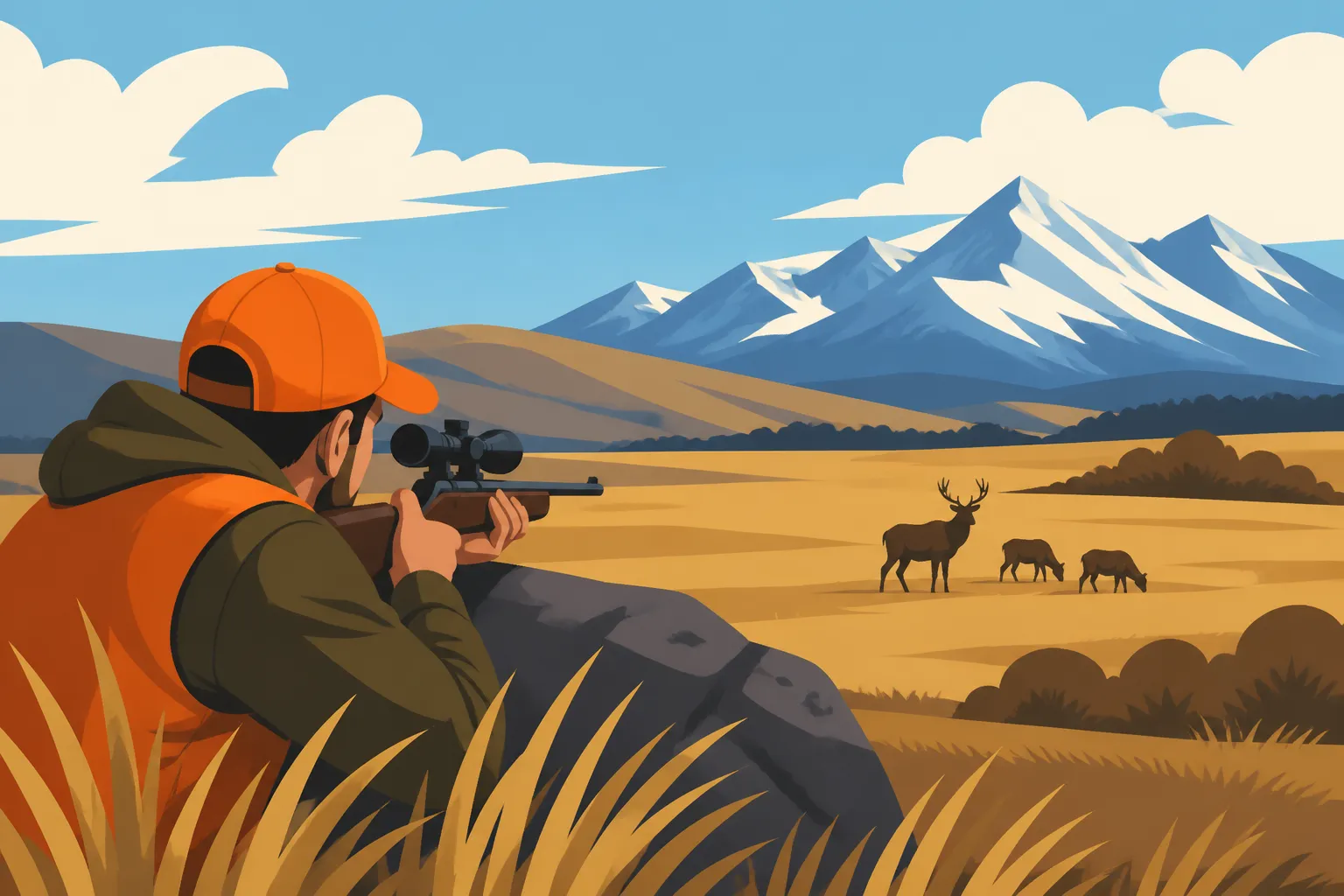
Given the open nature of many community pastures, a spot-and-stalk approach is often the most effective method, especially for mule deer and antelope. This involves using optics (good binoculars and a spotting scope are indispensable) to scan large areas, locate game, and then carefully plan a stalk using topography and available cover to close the distance.
- Glassing: Spend significant time glassing from high points or vantage points that offer wide views. Don't just glance; methodically pick apart the landscape, especially the edges of cover, coulee bottoms, and the backside of ridges. Mule deer are masters of blending in, and a still form can easily be overlooked. Glassing an Alberta Coulee for Mule Deer is a critical skill here.
- Still-Hunting: In areas with more pockets of brush or timber, still-hunting can be productive. Move slowly, taking a few steps, then pausing to observe for several minutes. Use the wind to your advantage, and pay attention to every detail in the landscape.
- Patience is Key: Game on community pastures often moves at specific times – dawn, dusk, or in response to weather changes. Don't expect to see animals constantly. Be prepared to sit and watch for extended periods.
- Minimize Disturbance: Try to be as quiet and low-impact as possible. Avoid driving off-road unless explicitly permitted by the leaseholder and stay on designated trails. Loud noises or excessive vehicle movement can push game out of the area or make them exceptionally wary.
Coexistence and Safety on Community Pastures
Hunting on community pastures means sharing the landscape with active livestock operations. Safety and respect are paramount.
- Extreme Caution Around Livestock: This cannot be stressed enough. Never shoot towards, near, or over livestock. Ensure you have a clear shot at your target animal with a safe backdrop. Mistaking a calf for a deer or spooking a herd can have serious consequences, both for the animals and your hunting privileges. If cattle are between you and your target, wait or reposition.
- Know Your Target: Be absolutely certain of your target animal before you ever raise your rifle or nock an arrow. Visibility can be deceiving in open country, and you want to be sure it's a legal game animal, not a domestic one.
- Vehicle Use: In many community pastures, off-road vehicle use (ATVs, trucks) is restricted or entirely prohibited to prevent damage to the rangeland and disturbance to livestock. Always clarify these rules with the leaseholder. If permitted, stick to existing trails and be mindful of your impact. Remember, Quad and Side-by-Side Rules on Crown Land can vary greatly, and community pastures often have stricter guidelines.
- Respect Property and Infrastructure: Fences are there for a reason – to contain livestock. If you open a gate, close it behind you. Do not cut fences, damage signage, or leave trash. Pack out everything you pack in, and then some. Leaving a clean, undisturbed pasture is the best way to ensure continued access for all hunters.
- Visibility and Blaze Orange: Always wear sufficient blaze orange, especially during rifle seasons. Even if you're the only hunter, ranch hands or other recreational users might be in the area. Alberta Blaze Orange Requirements are in place for a reason, and they are especially critical in shared-use areas like community pastures.
Common Species and Season Considerations
Community pastures are often havens for specific big game species and various upland birds, each with their own patterns and preferences for this unique habitat. Knowing what to expect can greatly inform your hunting strategy.
Target Species and Their Habits
- White-tailed Deer: While often associated with bush and timber, whitetails can thrive in community pastures, especially those with good river breaks, willow runs, or small aspen bluffs. They'll use the available cover for bedding during the day and often move out into the more open grasslands or bordering agricultural fields to feed at dawn and dusk. Look for them along the edges of shelterbelts, in deeper coulees, or any patch of timber, as described in Hunting a Shelterbelt Between Two Fields or Hunting a Willow Run in Farm Country.
- Mule Deer: Community pastures are classic mule deer habitat. These deer are masters of using topography to their advantage. They'll often bed down on the open hillsides or in shallow depressions, relying on their keen eyesight and hearing to detect danger. When disturbed, they'll often "crater" – running a short distance and then stopping to assess the threat. Focus your search for mule deer in the more broken, undulating terrain, like the kind found in Mule Deer in Alberta's Open Country.
- Pronghorn: On the more arid, flatter community pastures, particularly in southern Alberta, you might encounter pronghorn. These speedsters are built for open country and rely on their incredible vision to spot threats from afar. Stalking them requires extreme patience and the skillful use of every dip and rise in the land.
- Upland Birds: Don't forget the birds! Many community pastures, especially those with native grasslands or bordering croplands, can hold populations of sharp-tailed grouse and Hungarian partridge. These can offer a fantastic addition to a big game hunt or be a target species in their own right. Look for them near brush patches, fence lines, and the edges of grain fields.
Timing Your Hunt for Success
The timing of your hunt can dramatically impact your success on community pastures.
- Early Season (September/October): This can be a challenging but rewarding time. Game animals are generally spread out, and cover (tall grass, leaves on brush) is at its densest. Spotting can be difficult, but deer might be less wary of human presence if agricultural activities are ongoing. Archery seasons offer a unique chance to get out before rifle season pressure.
- The Rut (Late October/November): This is often the prime time for deer hunters. Whitetails become more active during daylight hours, cruising for does. Mule deer bucks are also highly mobile. The increased movement makes them more visible, but also more vulnerable. However, you'll likely share the pasture with more hunters during this period. Understanding patterns during Hunting the Rut in Early November is crucial.
- Late Season (December): As winter sets in, snow cover can push deer into areas where food or shelter is more readily available, and this can sometimes include community pastures. Snow makes tracking easier and can make deer stand out more against the white landscape. However, the cold can be extreme, and access might become difficult. Remember to be prepared for Hunting Alberta Winter Weather Safely.
No matter the season, always ensure you have the correct Alberta Hunting Licences and What They Cost for the species you intend to pursue and that you understand the specific season dates for your chosen WMU. Community pastures offer a fantastic opportunity for diverse hunting experiences, but they demand a unique blend of preparation, respect, and strategic thinking.
Disclaimer
This article is for general informational purposes only and does not constitute professional advice. Laws, prices and regulations vary by location and change over time. Consult a qualified professional for guidance on your specific situation.