Finding a Grazing Leaseholder’s Contact
Trying to find the contact information for an Alberta grazing leaseholder can feel like looking for a needle in a haystack, especially when you're just trying to do the right thing and get permission to hunt. It's a common frustration for many hunters, as securing access to these prime lands often requires a bit of detective work and a respectful approach. This guide is here to walk you through the process, offering practical steps and insights to help you connect with leaseholders and potentially open up new hunting opportunities.
Understanding Grazing Leases in Alberta
Before you even think about knocking on a door or making a phone call, it's really important to understand what a grazing lease actually is in Alberta, and why they exist. These aren't just private land parcels; they're a unique blend of public and private interests that come with their own set of rules and nuances. Many hunters mistakenly lump them in with deeded private land or assume they're simply public land open for all, and that misunderstanding can get you off on the wrong foot with a leaseholder.
What is a Grazing Lease?
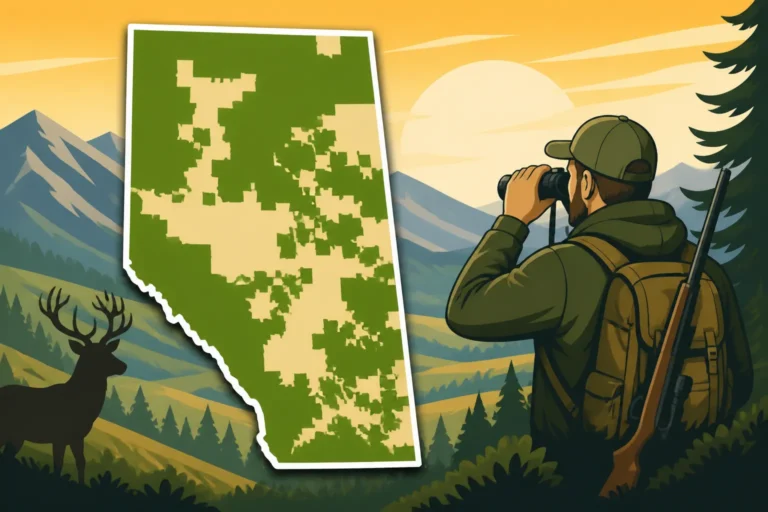
Essentially, an Alberta grazing lease is an agreement where the provincial government allows a rancher or farmer to use a specific parcel of Crown land for grazing livestock, typically cattle. It's still Crown land, meaning it belongs to the public, but the leaseholder has certain rights and responsibilities over that land. They pay a fee to the government for the right to graze their animals, and in return, they are responsible for things like fencing, water development, and range management. Think of it as a long-term rental agreement for a piece of public land, where the "tenant" is actively managing it for agricultural purposes. There are different types, but for hunters, the key takeaway is that livestock management is paramount for the leaseholder. These leases are often substantial parcels, sometimes covering multiple quarter sections, and they can be incredibly productive habitat for game animals, sitting right in the middle of migratory routes or providing critical winter range. This unique status means that while the land is public, you can't just walk onto it without permission, just like you wouldn't walk onto a private farm without asking.
Why Hunter Access is Tricky
This hybrid nature of grazing leases is precisely why hunter access can be such a complex issue. Leaseholders have significant financial and operational investments in these lands. They're trying to make a living raising cattle, and their primary concern is the well-being of their herd. When hunters show up, even well-meaning ones, there's always a potential for disruption. Liability is a massive concern for leaseholders; they worry about accidents, gates being left open, fences being cut, or damage to water infrastructure. They also worry about their livestock being spooked or, in rare and unfortunate cases, mistaken for game animals. There's also the simple fact of inconvenience; imagine having someone unexpectedly walk through your backyard during a busy workday. Many leaseholders have had negative experiences with disrespectful hunters in the past, leading to a general wariness. They might have a specific system for who they allow on their land, or they might simply be overwhelmed by the sheer volume of requests, especially during peak hunting seasons. Understanding these valid concerns is the first step in building a positive relationship and increasing your chances of gaining access. It's not about being difficult; it's about protecting their livelihood and managing their responsibilities to the province.
Initial Steps Before Contacting a Leaseholder
Before you even think about picking up the phone or driving out to a farm, you need to do your homework. Showing up informed and prepared instantly sets you apart from the casual, less serious hunter and shows the leaseholder you respect their time and property. This groundwork is absolutely critical for a successful interaction.
Researching the Specific Lease
The very first thing you need to do is pinpoint the exact grazing lease you're interested in. This means knowing its legal land description (section, township, range, meridian) and its boundaries. This is where modern mapping tools really shine. Platforms like onX Hunt have revolutionized this process, allowing you to clearly see property lines, including Crown land, grazing leases, and deeded private land, all overlaid on detailed topographical or satellite maps. You can easily identify the parcel you're interested in and confirm it's indeed a grazing lease and not private land. Reading Alberta's Crown Land Layers on onX can be a huge advantage here. You'll want to verify the WMU (Wildlife Management Unit) the lease falls within, and confirm that the species you intend to hunt has an open season in that particular WMU. This detailed reconnaissance prevents you from approaching the wrong person or asking for access to land that isn't what you thought it was. It also allows you to understand the terrain, potential access points, and the surrounding land use, giving you a better idea of what you're asking for.
Gathering Necessary Information
Once you've identified the specific lease, you need to gather all the relevant information about it and about your hunt. You'll want the legal land description written down clearly. Know the specific dates you'd like to hunt and the species you're targeting. Are you hunting with a rifle or bow? Are you hunting alone or with a partner? How many people will be in your party? Will you be bringing a vehicle, or will you be on foot? Be ready to answer these questions. It's also helpful to have your WIN (Wildlife Identification Number) card number handy, as some leaseholders might ask for it, or you might mention you have one to show you're a legitimate, licensed hunter. Consider what gear you'll be using, especially if it involves anything that could be perceived as a risk, like ATVs (which generally aren't allowed on grazing leases unless specifically permitted by the leaseholder and often not allowed on Crown land without specific permits anyway). The more prepared you are with specific details, the more confident and trustworthy you'll appear to the leaseholder. This preparation demonstrates that you've put thought into your request and that you're a responsible individual, not just someone randomly trying their luck. This step is also crucial for you to ensure you're compliant with Alberta Landowner Permission Law even on these unique Crown land parcels.
Methods for Finding Contact Information
This is often the biggest hurdle. Alberta doesn't have a centralized, publicly accessible database of grazing leaseholders and their contact information. It's not like looking up a phone number in a directory. So, you have to get creative and persistent.
Using Publicly Available Resources
While direct contact info might be elusive, there are avenues to explore. Your first stop should be the Alberta government's own resources, specifically the department responsible for Crown land management, which is often Alberta Agriculture and Forestry or Alberta Environment and Parks. Sometimes, land titles offices or municipal district offices can provide some insight, though they generally don't give out personal contact information directly. You might be able to find the name of the leaseholder by asking about the specific land parcel, and then use that name for further searching. Some municipal districts have online maps that, while not explicitly showing leaseholder names, might identify land ownership in a general sense which can sometimes hint at who is operating in the area. The Alberta Conservation Association (ACA) also has some excellent resources and partnerships with landowners, so checking their Alberta Conservation Association Access Sites might reveal an opportunity or at least a starting point for areas they have agreements on. It's a bit of a bureaucratic maze, but patience can pay off. Remember, the goal here isn't to get their phone number from the government directly, but to gather enough information (like a name or a related business) that allows you to then find their contact details through other means. The Using Alberta's Recreational Access Mapping Tool can sometimes provide clues or points of contact related to Crown land parcels.
Leveraging Local Knowledge
This is often the most effective method, though it requires you to get out into the community. If you know the general area where the grazing lease is located, start asking around at local businesses: the small-town general store, the co-op gas station, the local diner, the feed store, or the auction mart. These places are often hubs of community activity, and locals usually know who lives where and who runs cattle on which lease. Explain your situation politely and clearly: "I'm a hunter looking for access to the grazing lease on legal land description X, and I'm trying to find out who the leaseholder is so I can respectfully ask for permission." You might be surprised how helpful people can be, especially if you present yourself as courteous and responsible. Similarly, attending local community events or even checking community bulletin boards can sometimes yield dividends. Local R.M. (Rural Municipality) offices or agricultural societies might also be able to point you in the right direction, again, without necessarily giving out direct contact info. This approach requires a bit more time and effort, but it builds goodwill and taps into the invaluable resource of local connections.
Digital Tools and Platforms
Beyond onX Hunt, which is excellent for identifying the land itself, general online searches can sometimes yield results. If you have a leaseholder's name, a quick search might turn up a farm website, a social media presence (especially for younger generations of ranchers), or business listings. Websites like GoHunt might offer some tools or community forums where hunters share information, though it's less likely to provide direct contact for specific private leaseholders. Sometimes, agricultural directories or regional business associations online might list ranching operations. Remember, you're not trying to stalk anyone; you're trying to find a professional way to initiate a conversation about access.
Be cautious about any services that claim to provide private landowner contact information without their explicit consent. Stick to publicly available information or direct local inquiries. While you might not find a direct phone number listed for "Grazing Leaseholder of Section 12-34-5-W4," you might find "Smith Ranch, near Smallville, AB," and then use that to find contact information for the Smith family.
Crafting Your Approach: The Hunter's Etiquette
Once you have a name and a number (or at least a good idea of where they live), how you approach the leaseholder is paramount. This isn't just about asking; it's about making a positive impression and building trust. Many hunters simply show up unannounced or make a curt phone call, which often leads to a quick "no."
What to Say When You Call or Visit
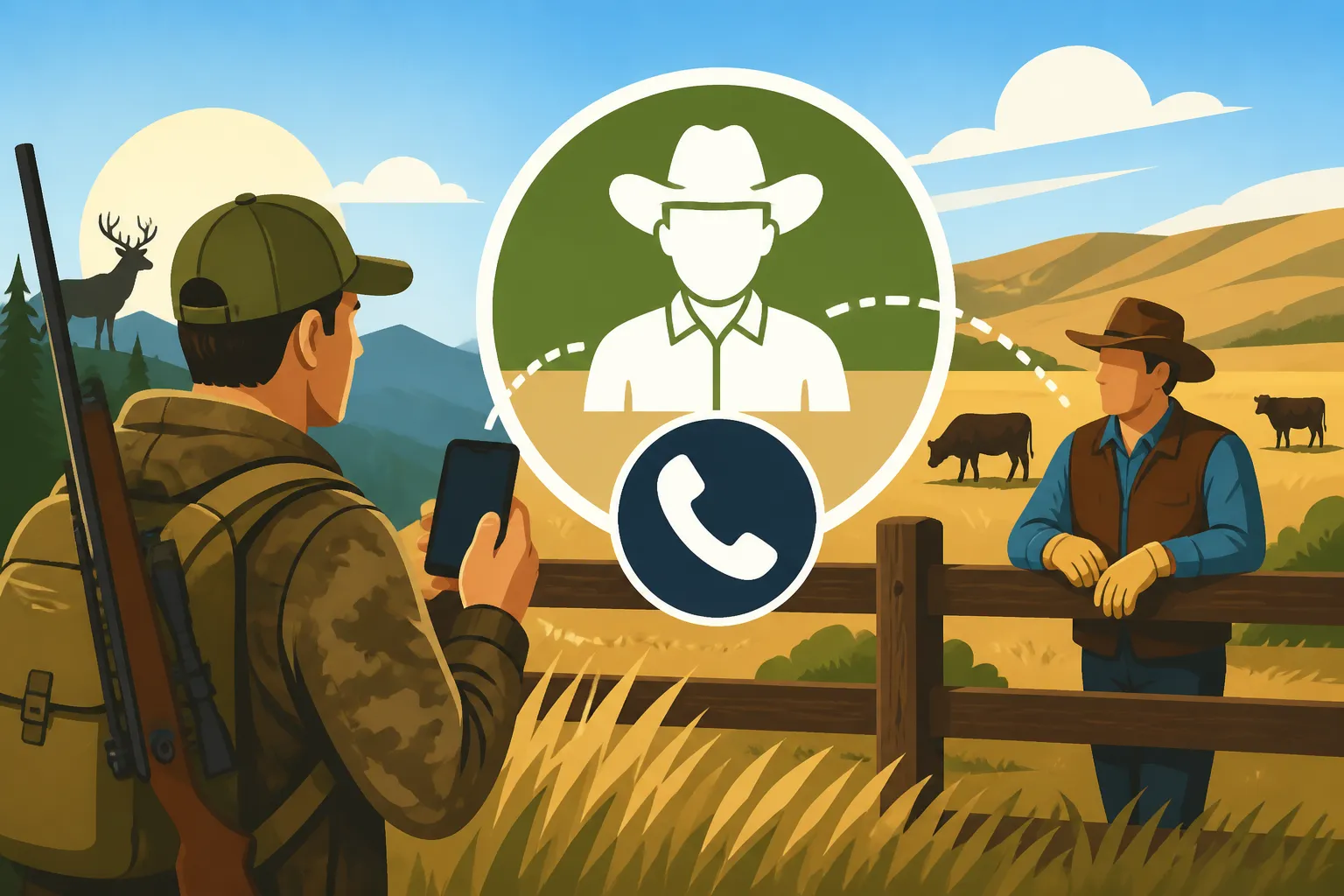
When you finally make contact, whether by phone or in person, your demeanor is everything. Be polite, respectful, and clear about your intentions. Start by introducing yourself, stating that you're a licensed hunter, and mentioning that you're interested in seeking permission to hunt on the grazing lease at the specific legal land description. For example: "Hello, my name is [Your Name], and I'm a hunter from [Your Town]. I'm calling because I'm interested in hunting on the grazing lease located on Section 12, Township 34, Range 5, West of the 4th Meridian, and I believe you're the leaseholder. I'm hoping to get permission to hunt deer there this fall."
Be prepared to answer questions about your experience, how many people are in your party, when you'd like to hunt, and what species you're after. Emphasize that you understand it's an active ranching operation and that you are committed to respecting their property, livestock, and any rules they might have. Offer to meet in person if you've made initial contact by phone. A face-to-face conversation can build rapport much more effectively. Be concise, but don't rush. Give them time to consider your request. Remember that you're essentially applying for a privilege, not demanding a right.
Understanding Their Concerns
As mentioned before, leaseholders have legitimate concerns. When you speak with them, acknowledge these concerns proactively. You might say something like, "I understand you have livestock on the land, and I assure you I'll be extra careful to keep gates closed and respect your fences." Or, "I'm very mindful of fire safety and will take all precautions." Show them you've thought about their perspective. This isn't just lip service; it's genuinely trying to mitigate their potential worries.
| Concern | Hunter's Commitment |
|---|---|
| Gates left open | "I will always close any gate I open, and ensure latches are secure." |
| Damaged fences | "I will be extremely careful around fences and report any pre-existing damage." |
| Livestock disturbance | "I will give all cattle a wide berth and avoid disturbing them at all costs." |
| Fire risk | "I understand the fire risk and will take no open flames or unnecessary vehicles." |
| Property damage | "I will stick to agreed-upon access points and leave no trace behind." |
| Liability | "I understand I am responsible for my own safety and actions on your land." |
They might have specific instructions about where you can park, where you can't go, or what times are best to avoid disturbing cattle. Listen carefully and be prepared to adhere to all their conditions without argument. Showing that you respect their wishes is far more valuable than trying to negotiate or push for more access than they're comfortable with. Building a reputation as a trustworthy hunter who follows the rules is key for future access.
Offering Value or Reciprocity
Sometimes, a simple "thank you" and a promise to be respectful isn't quite enough. Think about what you might be able to offer in return, especially if you plan to seek access year after year. This isn't always about money; often, it's about a helping hand or a gesture of appreciation. Could you offer to close any gates you see open even if you didn't open them yourself? Maybe pick up any trash you come across? Perhaps help them spot fence breaks or check on a remote water trough?
If you have a successful hunt, a small gesture like offering some backstrap, a bottle of local jam, or even just a thoughtful thank you card can go a long way. The goal is to establish yourself as a responsible, considerate person who is an asset, not a burden, to their operation. Many leaseholders are simply looking for hunters who are respectful, communicate well, and don't create extra work for them. Building a positive relationship can transform a one-time permission into an ongoing opportunity, potentially even leading to access on other nearby Hunting a Cattle Pasture Draw.
Navigating Challenges and Alternatives
Despite your best efforts, sometimes finding contact info or getting permission just doesn't work out. It's a common part of hunting on private land or leases, and it's important to know when to pivot and explore other options without burning bridges.
When You Can't Find Contact Info
There will be times when, despite your best detective work and local inquiries, you simply cannot find reliable contact information for a specific leaseholder. This can be incredibly frustrating when you've identified a promising piece of ground. In these situations, it's crucial to resist the temptation to just "chance it" and assume no one will notice you. That's a sure way to earn a bad reputation and contribute to the problem of limited access for all hunters.
If you hit a dead end, it's time to respectfully move on. Don't leave notes on gates, as these can easily blow away or be seen as intrusive. Don't linger around the property hoping to bump into someone, as this can be perceived as suspicious. Instead, go back to your maps, like onX Hunt, and identify another potential grazing lease or piece of private land where you can restart your research. Sometimes, you might find that while you can't access that specific lease, there's another one nearby that might be less actively managed, or perhaps bordered by public access points that allow you to reach other hunting areas like Hunting a Willow Run in Farm Country. Remember, the goal is to hunt legally and ethically, and sometimes that means accepting that certain parcels are simply not accessible.
If Permission is Denied
Even if you successfully contact a leaseholder and present yourself in the most respectful manner, you might still hear "no." This can sting, especially if you had your heart set on a particular area. However, it's absolutely vital to accept their decision gracefully and without argument. Do not try to persuade them, guilt-trip them, or question their reasons. Simply thank them for their time and move on. A polite "I understand, thank you for considering my request. I appreciate your time" leaves a far better impression than an argument, and who knows, circumstances might change next year. The leaseholder might remember your polite acceptance and be more open to a request in the future, or might even suggest another nearby property owner who might be more amenable.
Many reasons exist for denials that have nothing to do with you personally: they might have had bad experiences, they might have family or friends who hunt it, they might have cattle calving or breeding, or they simply might not want anyone else on their property. Whatever the reason, it's their land to manage, and their decision. Respecting that decision is paramount to maintaining a positive image for hunters in general.
Alternative Public Access
If direct access to a specific grazing lease proves impossible, don't despair! Alberta has a significant amount of public land that is open to hunting, though it often requires more effort to access or is subject to different regulations. Explore nearby Crown land, including Public Land Use Zones (PLUZs), which are designated for a variety of recreational activities, including hunting. The Alberta's Public Land Use Zones Explained article can offer valuable insights here. These areas might require more walking or different hunting strategies, but they provide reliable, legal access.
You can also look into Alberta's Provincial Grazing Reserves Explained. While these are also managed for livestock, many grazing reserves have specific access points and rules for hunters that are publicly documented. Some of these reserves even have designated camping areas, which can be a huge bonus. Always check the current regulations for any public land you plan to hunt, as rules and access can change. Additionally, keep an eye on Alberta Conservation Association (ACA) properties. The ACA often acquires or secures access agreements on private and Crown lands specifically for public recreation, including hunting. Their website provides maps and details on these access sites. Don't forget that even though a specific lease might be off-limits, the adjacent public land might still offer excellent hunting opportunities for species like White-Tailed Deer, Alberta's Most Hunted Big Game or even Mule Deer in Alberta's Open Country. It just takes a bit more scouting and determination on your part.
Disclaimer
This article is for general informational purposes only and does not constitute professional advice. Laws, prices and regulations vary by location and change over time. Consult a qualified professional for guidance on your specific situation.