Hunting the Bighorn Backcountry
For many hunters, the thought of chasing bighorn sheep in Alberta's rugged mountains is the ultimate dream, but it's often clouded by daunting logistics, intense physical demands, and the sheer mystery of how to even begin. This comprehensive guide is here to demystify the process of hunting the Bighorn Backcountry, offering realistic insights into what it takes to pursue these magnificent animals in some of the most challenging, yet rewarding, terrain Alberta has to offer.
Understanding Alberta's Bighorn Backcountry
The Bighorn Backcountry isn't just a catchy name; it refers to a vast, untamed expanse of mountainous terrain in west-central Alberta, primarily encompassing the rugged peaks, alpine meadows, and deep valleys of the Rocky Mountains and their eastern slopes. This is the heartland for many of Alberta's bighorn sheep populations, and it presents a hunting experience unlike any other. It’s where the air is thin, the climbs are steep, and the views are breathtaking, but the rewards are often measured in memories and personal achievement as much as a trophy.
What Defines the Bighorn Backcountry?
When we talk about the Bighorn Backcountry, we're really talking about a collection of Wildlife Management Units (WMUs) that share similar characteristics: high elevation, challenging access, and prime bighorn sheep habitat. These aren't the gentle rolling hills of the parkland or the flat expanses of the prairie; this is vertical country, dominated by rock, scree, timberline, and expansive alpine. Access can be extremely limited, often requiring horseback travel or serious backpacking just to get into the hunting zones. You're far from any road, and even farther from cell service, which means self-reliance is paramount. The very nature of this landscape dictates the kind of hunt you'll have: physically demanding, mentally taxing, and utterly unforgettable. Many of these WMUs are part of what's known as the "Green Area," meaning they are primarily public Crown land managed for forestry, recreation, and wildlife. Hunting Alberta's Mountain WMUs and Their Access details some of the specific challenges.
The Unique Challenges and Rewards of Mountain Hunting
Hunting bighorn sheep in the Bighorn Backcountry is a true test of grit and determination. The physical demands are immense; you'll be gaining thousands of feet in elevation, navigating treacherous footing, and carrying heavy loads, all while battling unpredictable mountain weather. The air is thinner, making every step feel like a monumental effort, especially if you're not acclimatized. This isn't a hunt where you can just drive up, step out of the truck, and expect success. It's a commitment to grueling ascents and careful descents, often in pursuit of an animal that is perfectly adapted to its environment and possesses incredible eyesight.
Beyond the physical, there's a mental game at play. The vastness of the mountains can be overwhelming, and the solitude can be intense. You might go days without seeing another soul, let alone a legal ram. Frustration is a natural part of the process, but so is the immense satisfaction of earning every inch of ground and every glimpse of a sheep. The rewards, however, extend far beyond just punching a tag. It's about witnessing incredible wilderness, pushing your personal limits, and connecting with nature on a profound level. The camaraderie among a small mountain hunting crew is also second to none; you truly rely on each other in this environment. For a deeper dive into the species, read Bighorn Sheep in Alberta's Mountains.
Planning Your Bighorn Backcountry Expedition
You don't just "decide" to hunt the Bighorn Backcountry; you plan for it, meticulously, often years in advance. This isn't a spontaneous weekend trip. The planning involves understanding the regulatory framework, securing the right permits, and ensuring you have reliable access to these remote areas. Skipping any step here can mean a wasted trip, or worse, a dangerous situation.
Navigating the Draw System and Licences
Alberta residents aren't required to enter a draw for a class 1 (trophy) sheep licence; they simply buy one. Draws do exist for resident class 2 (non-trophy) sheep (draw 29) and for five resident WMU-special class 1 draws (410, 437, 444/446, 408 and 438), which are incredibly competitive, especially in prime WMUs. In the 410, 437, 444/446 and 408 special draws, it's not uncommon for hunters to accumulate many years of priority points before being successful. This reality can be disheartening, but it's a testament to the value and limited nature of this incredible resource. Understanding Alberta's Draw Priority Point System is crucial, as is keeping track of application deadlines.
Whether you buy a class 1 licence or are successful in a draw, you'll still need to purchase your Alberta hunting licence and a Wildlife Certificate. The costs, while not as prohibitive as the draw itself, are important to factor into your budget. For non-resident Canadians, a class 1 sheep draw (draw 31, once in a lifetime) is available, while non-resident aliens (non-Canadians) typically need to book with an outfitter, making it a significantly more expensive endeavour. Regardless of residency, expect to submit your sheep head for CWD testing in certain WMUs. Learn more about the overall costs by checking Alberta Hunting Licences and What They Cost.
Accessing Remote Mountain Terrain
This is where the rubber meets the road, or rather, where the boots hit the scree. The Bighorn Backcountry is, by definition, remote. Many prime sheep hunting areas have no road access, meaning you'll need to use alternative methods to get in and out. Horseback is a traditional and highly effective way to cover vast distances and carry heavy loads in mountain terrain. If you don't own horses, this means either hiring an outfitter or packer, or finding a friend with the equine resources and expertise. This is a significant logistical and financial consideration.
For those who prefer to go it on foot, be prepared for some serious backpacking. Backpacking Into Alberta Sheep Country offers a more in-depth look at what this entails. This isn't just a day hike; you'll be carrying several days' worth of food, water, shelter, and hunting gear into truly challenging country. Using tools like onX Hunt or GoHunt with their detailed topographical maps and public land overlays becomes absolutely invaluable here. These apps can help you identify potential access points, track your movements, and mark crucial waypoints like water sources, potential sheep bedding areas, and escape routes. Always remember to download offline maps, as cell service will be non-existent.
Key Planning Considerations for Bighorn Backcountry Hunts
| Aspect | Description | Importance |
|---|---|---|
| Licence/Tag | Residents buy class 1 sheep licences; draws apply to class 2 and special WMUs. Non-resident aliens require an outfitter. | Critical |
| Access | Primarily horseback or strenuous backpacking. Limited road access. Plan routes carefully. | High |
| Physical Prep | Intense cardio and strength training months in advance. Must be prepared for high altitude and steep climbs with heavy packs. | Critical |
| Navigation | GPS, satellite messenger, and detailed maps (onX Hunt, GoHunt are excellent) are essential. Download offline maps. | Critical |
| Weather | Highly unpredictable. Expect rapid changes, from summer sun to winter storms. Pack layers for all conditions. | High |
| Survival Gear | First-aid kit, fire starting, water purification, emergency shelter, signaling devices. | Critical |
| Food & Water | Lightweight, high-calorie food. Plan water sources; bring purification. | High |
| Meat Care | Plan for quartering and packing out meat immediately in often-warm conditions. Meat Care in Alberta's Cold and Warm Swings | High |
Hunting Strategies and Tactics for Bighorn Sheep
Once you've navigated the draws, prepared your body, and planned your access, the real work of hunting begins. Sheep hunting is a game of patience, glassing, and relentless effort. It’s not about covering vast distances quickly; it's about covering them thoughtfully and deliberately.
The Art of Glassing and Locating Rams
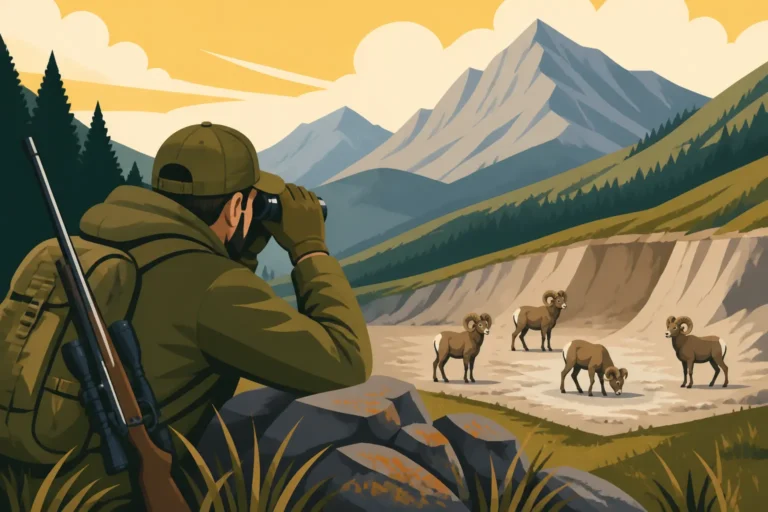
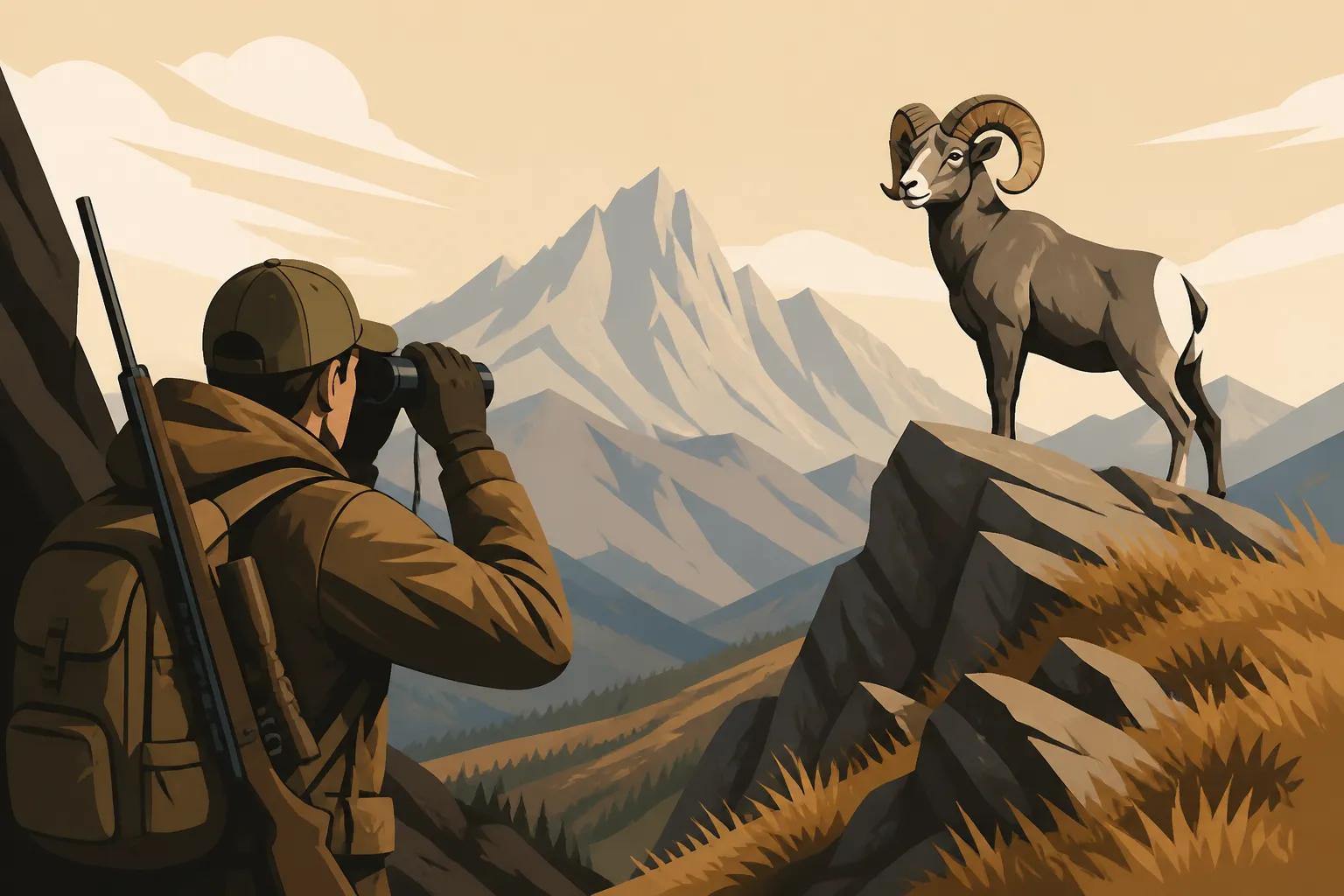
Bighorn sheep live in vast, open, and often incredibly rugged terrain. Their natural camouflage makes them incredibly difficult to spot, even at relatively close distances. This is why high-quality optics are your most important tool. You'll spend an enormous amount of time glassing – meticulously scanning distant mountainsides, basins, and rock slides with binoculars or a spotting scope mounted on a tripod. Find a high vantage point with a good view of sheep habitat, set up comfortably, and start picking apart the landscape, inch by painstaking inch.
Patience is key here. You’re not just looking for a whole sheep; you're looking for an antler tip, a patch of white against the rock, a movement, or a subtle change in texture that suggests an animal. Many sheep are found tucked into shady spots, bedded down, or moving slowly across terrain that blends them in perfectly. It's often the small details that give them away. Glassing Alpine Basins for Bighorn Sheep provides further tips. Don't be afraid to spend hours in one spot, returning to areas you've already scanned, as sheep can appear seemingly out of nowhere.
Stalking and the Physical Demands of the Pursuit
Once a ram is located and evaluated – ensuring it's a legal, full-curl ram (a critical and often challenging judgment to make from afar, as discussed in Judging a Full-Curl Bighorn Ram) – the stalk begins. This is where your physical conditioning truly pays off. Stalking a bighorn sheep in its natural environment involves navigating steep, broken ground, often exposed to the elements. You'll need to use every available piece of cover, whether it's a rock outcrop, a fold in the terrain, or a patch of stunted timber, to close the distance without being detected by an animal with incredible eyesight.
The process can take hours, even a full day, involving long detours to stay out of sight, and careful, slow movements when you're in the open. Wind direction is critical, as is staying low and quiet. The final approach can be mentally exhausting, as every step feels like it could be the one that gives you away. Remember, sheep are often on the move, so your stalk might need to adapt to their patterns. After a successful harvest, the physical demands don't end; then comes the arduous task of packing out heavy quarters of meat and the skull through the same challenging terrain. Packing Out of Alberta's Mountain WMUs is a must-read for this stage.
Essential Gear for the Bighorn Backcountry
Your gear isn't just an accessory in the Bighorn Backcountry; it's an extension of your survival and hunting capability. Every item needs to be carefully chosen for its weight, durability, and functionality. There's no room for excess or unreliable equipment when you're days from the nearest road and potentially hours from any assistance.
Clothing and Layering Systems
Mountain weather is notoriously fickle. You can experience all four seasons in a single day, or even within a few hours. A cold, driving rain can quickly turn to snow, even in August. Therefore, a robust layering system is non-negotiable. Start with a good moisture-wicking base layer to manage sweat, which can quickly lead to hypothermia if you get chilled. Mid-layers for insulation (fleece or lightweight puffies) are next, followed by a durable, waterproof, and windproof outer shell. This shell needs to be able to stand up to abrasion from rock and brush.
Don't forget extras: a warm hat, gloves, and a neck gaiter are crucial, even in early season. Proper footwear is perhaps the most critical item. Invest in high-quality, broken-in mountain hunting boots with excellent ankle support and stiff soles for stability on rocky terrain. Waterproofing is a must. Bring multiple pairs of socks, preferably wool or synthetic, to keep your feet dry and prevent blisters. Read What to Wear on a Late Season Hunt for advice applicable to shoulder seasons.
Navigation, Safety, and Communication
In the vast, trackless expanse of the Bighorn Backcountry, getting lost is a serious risk. Your primary navigation tools should include a reliable GPS unit and a physical map and compass, and critically, knowing how to use them without relying on batteries. Modern hunting apps like onX Hunt and GoHunt can be invaluable on your smartphone, but they should be used in conjunction with, not instead of, traditional navigation. Make sure to download all relevant maps for offline use before you leave home, as you won't have service.
Communication is equally vital. A satellite messenger or satellite phone is non-negotiable for emergency communication in areas without cell service. These devices allow you to send and receive text messages and, most importantly, trigger an SOS in a life-threatening situation. Always carry a comprehensive first-aid kit tailored for backcountry use, fire-starting materials, a headlamp with extra batteries, and an emergency shelter (like a lightweight tarp or bivvy sack). Bear spray is also highly recommended, as you'll be in grizzly country. For more on preparing for the worst, look at Emergency Plans in Alberta's Backcountry.
| Gear Category | Essential Items | Why It's Crucial |
|---|---|---|
| Optics | 10×42 Binoculars, Spotting Scope (20-60x or higher), Tripod | Locating sheep at extreme distances in vast terrain; essential for ram judging. |
| Shelter | Lightweight 3-season tent or bivvy, sleeping bag (rated for cold temps), sleeping pad | Protection from unpredictable mountain weather; essential for multi-day hunts. |
| Navigation | GPS device, physical map, compass, satellite messenger/phone (e.g., Garmin inReach), downloaded onX Hunt maps | Preventing getting lost in remote, unmarked territory; emergency communication. |
| Clothing System | Moisture-wicking base layers, insulating mid-layers, waterproof/windproof outer shell, warm hat, gloves, neck gaiter | Adapting to rapid weather changes, regulating body temperature to prevent hypothermia or overheating. |
| Footwear | Sturdy, waterproof, broken-in mountain boots with good ankle support; multiple wool socks | Traction on steep, rocky terrain; protection from elements; blister prevention. |
| Pack System | Multi-day hunting pack (65-80L) with a meat shelf, day pack/summit pack | Carrying all gear efficiently; hauling heavy meat and trophy out after a successful kill. |
| Cooking/Water | Lightweight stove & fuel, pot, water filter/purifier, collapsible water bottles | Staying hydrated and nourished in the backcountry. |
| Safety/Survival | Comprehensive first-aid kit, bear spray, fire starter, headlamp, emergency bivy, whistle, rope | Handling injuries, animal encounters, and unexpected emergencies. |
| Weapon | Reliable rifle or bow suitable for big game, ample ammunition, cleaning kit | Effective and ethical harvesting of game. |
Hunting the Bighorn Backcountry is an endeavor that demands respect, preparation, and an unwavering spirit. It's a journey into true wilderness, where the challenges are as grand as the landscapes themselves. By understanding the draw system, preparing for the physical and logistical demands, and equipping yourself with the right knowledge and gear, you'll be well on your way to experiencing one of Alberta's most iconic hunts.
Disclaimer
This article is for general informational purposes only and does not constitute professional advice. Laws, prices and regulations vary by location and change over time. Consult a qualified professional for guidance on your specific situation.