Hunting a Sheep Lick Basin
Hunting bighorn sheep in Alberta’s rugged mountains is a challenging pursuit, and one of the most effective ways to locate these elusive animals is by understanding and targeting sheep lick basins. These natural mineral deposits draw sheep in, offering hunters a unique opportunity to intercept them in predictable locations. This guide will walk you through everything you need to know about finding and hunting sheep around these critical resources.
Understanding Sheep Licks and Their Importance
Sheep licks are fascinating natural phenomena, critical to the health and behaviour of bighorn sheep. If you’ve ever spent time in Alberta’s mountains, you might have stumbled across one without realizing its full significance. For a hunter, understanding these areas is like unlocking a secret chapter in the sheep’s playbook.
What is a Sheep Lick?
At its core, a sheep lick is simply an exposed area of mineral-rich soil, rock, or clay that bighorn sheep and other wildlife frequent to ingest essential minerals. These aren't just random patches of dirt; they often have a distinctive look, appearing chewed, pawed, and sometimes even a little muddy, especially after rain. The specific minerals vary, but often include sodium, calcium, magnesium, and other trace elements crucial for everything from bone development to lactation in ewes. Think of it as nature's own supplement bar for wild animals.
These licks are typically found in sheltered areas or on specific slopes where geological processes have concentrated minerals close to the surface. You might find them along creek beds, on steep banks, or in concave basin features where water runoff has eroded the soil to reveal these rich deposits. The terrain around them is often well-traveled, with visible game trails leading to and from the lick site, carved deep into the earth by generations of hooves. It's truly a testament to how vital these spots are.
The Nutritional Imperative
Why do sheep go to such lengths, often traveling considerable distances and navigating treacherous terrain, just for a mouthful of dirt? The answer lies in their diet and overall health. Mountain forage, while abundant, can be deficient in certain key minerals, particularly sodium, especially at specific times of the year. During late spring and summer, when green vegetation is rapidly growing, the high potassium content in fresh plants can deplete sodium levels in a sheep’s body, creating a strong physiological craving for salt.
Ewes also have an increased demand for minerals during gestation and lactation, when they’re supporting the growth of lambs. Rams, too, need these minerals for antler growth and overall body maintenance, particularly after the strenuous rut. Visiting a lick isn't just a casual snack; it's a nutritional imperative that helps them thrive in a harsh environment. This predictable need creates a reliable pattern of movement that hunters can capitalize on, provided they understand when and why the sheep are using these spots.
Prime Locations for Licks
Finding a sheep lick isn't always easy, as they can be tucked away in surprisingly remote corners of the mountains. However, there are some common denominators that can help narrow down your search. Licks are almost always associated with specific geological features and water sources. Look for areas where shale, clay, or ancient sedimentary rock layers are exposed, often through erosion from water or glacial activity. These geological formations are more likely to contain the mineral deposits sheep seek.
Beyond geology, consider the surrounding terrain. Licks are frequently found in steep, rugged basins, often near escape cover. They might be nestled in a small draw, along a timbered edge, or at the base of a cliff face that provides both security and a vantage point for the sheep. Water is another key factor; a lick often has a small spring, seep, or creek nearby, as moisture helps expose and concentrate the minerals, and sheep will want to drink after consuming the salty earth. The more remote and undisturbed an area, the more likely a lick is to be heavily used by mature rams seeking solitude.
Scouting and Locating Lick Basins
Locating a sheep lick basin requires a combination of modern technology and old-school boots-on-the-ground effort. You can't just stumble onto these places and expect to succeed; a thorough scouting approach is absolutely essential to increase your odds. This is where your pre-season homework truly pays off.
Digital Reconnaissance
Before you even tie your hiking boots, spend significant time pouring over maps and satellite imagery. Tools like onX Hunt and GoHunt are invaluable for this stage of scouting. Start by looking for areas that fit the profile of a potential lick: exposed rock faces, steep slopes, natural basins, and areas where water sources might run. Pay close attention to changes in vegetation colour or bare earth patches that stand out against the usual green of the alpine. Sometimes a lick will appear as a lighter or darker patch on satellite photos, indicating exposed mineral soil or heavily disturbed ground.
Use the topographical features to identify potential travel corridors that sheep might use to access these areas. Are there natural funnels, benches, or ridges that lead into a particular basin? Look for south-facing slopes, which tend to melt out earlier in spring and often hold richer forage, drawing sheep to the general vicinity. Mark any promising spots as waypoints on your onX Hunt app for later ground truthing. This digital groundwork can save you days of aimless wandering in the mountains and help you prioritize which basins to investigate when you finally hit the trail.
Boots-on-the-Ground Scouting
No amount of digital scouting can replace actually putting your boots on the ground and seeing the terrain for yourself. Once you have your promising waypoints, plan a scouting trip (or multiple trips) well before the season opens. The best time for this is often in the late spring or early summer, when sheep are actively using the licks, but hunting pressure is non-existent. When you approach a potential lick basin, move slowly and methodically, constantly glassing the surrounding slopes.
Look for definitive signs of use: tracks, droppings, and the characteristic "chewed" appearance of the lick itself. Deep, well-worn trails leading to and from the lick are a dead giveaway that sheep are actively visiting. Pay attention to the size of the tracks and droppings – larger signs indicate bigger rams. You might even find shed horns nearby, offering clues to the quality of rams in the area. Remember, you're not just looking for a lick; you're looking for an active lick that mature sheep are using. For deeper insights into locating rams, check out Glassing Alpine Basins for Bighorn Sheep.
Patterns of Use
Sheep don't just randomly show up at a lick; their visits are often influenced by the time of day, weather, and seasonal needs. Understanding these patterns is key to being in the right place at the right time. Generally, sheep tend to visit licks more frequently in the early morning and late evening, similar to their feeding patterns. Mid-day is often reserved for bedding in secure areas, though they might still visit a lick if the weather is cool and overcast.
Weather plays a significant role as well. After a good rain, the minerals might be more accessible and enticing. Cooler temperatures often encourage more movement. Conversely, extreme heat might push them to higher, shadier ground or force them to restrict their movements to the cooler parts of the day. Herd dynamics also matter; ewes and lambs might visit more often or in larger groups, while mature rams might be more secretive, making their visits solitary and shorter. Patience is paramount here. Sometimes, it means sitting for hours, or even days, observing a lick from a distance, just to understand the precise rhythm of the sheep that frequent it. This information gathered through observation is invaluable for your actual hunt plan.
Strategies for Hunting Sheep Near Licks
Hunting bighorn sheep is often described as one of the most physically and mentally demanding pursuits, and hunting near a lick basin is no exception. It requires meticulous planning, an understanding of sheep behavior, and a huge dose of patience. Your success will hinge on your ability to remain undetected and execute a flawless stalk.
The Approach and Stalk
Once you’ve located an active lick and confirmed the presence of a desirable ram, the real work begins: the approach and stalk. This is not a time for rushing. Start by carefully planning your route, taking into account wind direction, available cover, and the sheep's likely escape routes. Sheep have incredible eyesight and a keen sense of smell, so staying downwind and out of sight is non-negotiable. Use topographical maps from resources like GoHunt to identify draws, ridges, and timber pockets that can shield your movement.
Move slowly, deliberately, and take advantage of every piece of cover, no matter how small. A common mistake is to try and cover ground too quickly, which inevitably leads to spooking the animal. Often, the best approach involves climbing above the sheep and working your way down, as their primary escape mechanism is to run uphill. If the sheep are at the lick, they are often focused on ingesting minerals, which can sometimes make them slightly less alert than when they are feeding or bedding, but never underestimate their senses. Be prepared to crawl, backtrack, and wait for hours if necessary for the conditions to be just right. Remember to reference Backpacking Into Alberta Sheep Country for broader tips on mountain hunting logistics.
Glassing from Afar
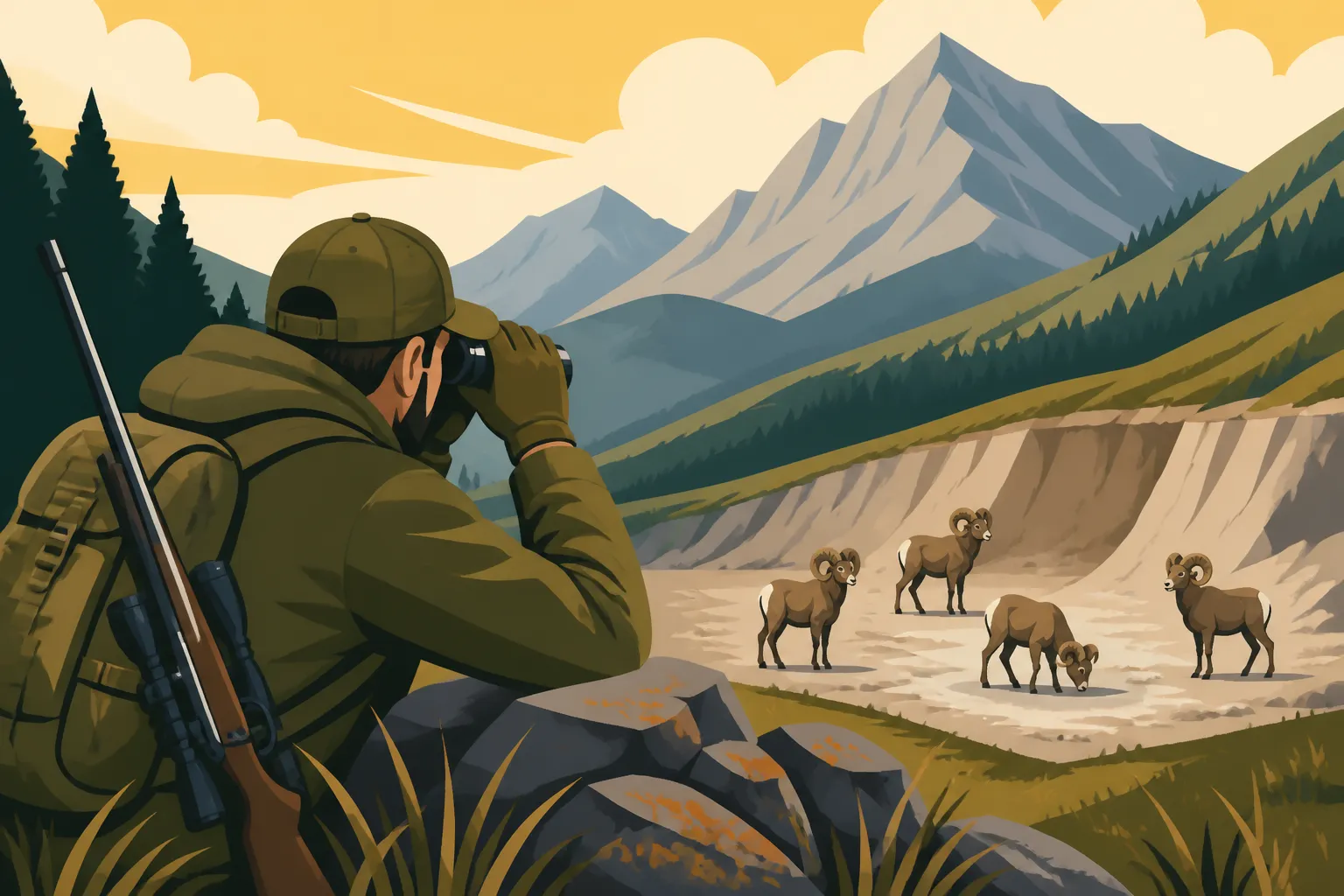
Many successful lick basin hunts begin not with a stalk, but with patient, long-distance glassing. Instead of immediately moving in, find a vantage point that offers a clear, unobstructed view of the lick and its surrounding approach and escape routes, often several kilometers away. Set up your spotting scope and binoculars, get comfortable, and commit to spending hours, if not days, simply observing. This is where high-quality optics truly shine.
Glass the entire basin repeatedly, looking for movement, subtle colour changes, or even just the flick of an ear. Sheep can blend into their environment incredibly well, and what might look like a rock from afar could be a ram bedded down. Watch not only the lick itself but also the trails leading to it and the adjacent slopes where sheep might be bedding or feeding before or after a visit. Identifying the precise ram you want and understanding his pattern of movement before you commit to a stalk will dramatically increase your chances of success. For more on this critical skill, read Glassing Alpine Basins for Bighorn Sheep.
Ethical Considerations
Hunting bighorn sheep, especially a magnificent ram, is a privilege that comes with significant ethical responsibilities. When hunting near a lick, always ensure you have a clear, ethical shot opportunity. This means verifying the animal's legal status (e.g., full curl, or specific point requirements depending on the WMU), having a stable shooting platform, and knowing you can make a clean kill. Avoid rushing a shot just because the ram is at the lick. The mountains are unforgiving, and a wounded animal can quickly disappear into impossible terrain.
Furthermore, consider the retrieval challenges. A ram taken at a lick basin might be in a very steep, difficult-to-access area. Have a solid plan for getting the animal out. This often means having multiple strong partners, appropriate gear for packing out meat and trophy, and the physical endurance to handle the task. Wasting game meat is illegal and unethical. The pride of taking a ram from a lick should be matched by the respect you show for the animal and the environment, ensuring a clean harvest and efficient recovery. You can find more details on responsible packing in Packing Out of Alberta's Mountain WMUs.
Gear and Preparation for Alpine Lick Hunts
Hunting high in Alberta’s mountains for bighorn sheep, especially around a remote lick basin, demands specific gear and a high level of physical conditioning. This isn't your average whitetail hunt from a treestand; it's an expedition that will test you and your equipment. Being prepared for anything the mountains throw at you is paramount for both success and safety.
Essential Optics and Backpack Gear
When you're dealing with vast alpine landscapes, your optics are your most critical tools. A high-quality spotting scope (20-60x or 25-75x) on a sturdy, lightweight tripod is non-negotiable for identifying sheep at extreme distances and judging their size. Pair this with a good set of binoculars (10×42 or 12×50) for handheld glassing. Rangefinders are also essential for accurate shot placement in steep terrain, where distances can be deceiving.
Beyond optics, your backpack is your lifeline. A comfortable, well-fitting pack capable of carrying 40-80 pounds is a must, as you'll likely be packing in several days' worth of supplies and potentially packing out hundreds of pounds of meat and trophy. Inside, you’ll need a lightweight tent or shelter, a warm sleeping bag rated for alpine conditions, a cooking system, water filtration, and enough food for the duration of your trip, plus a buffer. Don't forget a first-aid kit, a headlamp, and navigation tools like your GPS or a loaded onX Hunt app, along with physical maps and a compass as backup.
Clothing and Footwear for Mountain Terrain
The weather in Alberta’s mountains can change dramatically in minutes, swinging from warm sunshine to freezing rain, snow, or high winds. Layering is key. Start with a moisture-wicking base layer, add an insulating mid-layer (fleece or puffy jacket), and top it with a waterproof and windproof outer shell. Bring duplicates of crucial items like socks and gloves, as staying dry is critical for preventing hypothermia.
Your footwear is arguably the most important piece of gear. You need sturdy, waterproof, high-ankled mountaineering boots that are well broken in and provide excellent support and traction on steep, uneven, and often slippery terrain. Consider boots that can accept gaiters to keep out scree and snow. Good quality wool or synthetic socks are vital to prevent blisters. Remember, you'll be putting thousands of vertical feet and miles on your feet each day, so don't skimp on this. If you want more specifics, check out Boots for a Foothills Hunt, which offers relevant insights into rugged footwear.
Physical Demands and Conditioning
Hunting sheep around lick basins is an incredibly demanding physical challenge, and it's not for the faint of heart. You'll be climbing steep slopes, navigating unstable scree fields, crossing boulder patches, and potentially packing heavy loads over long distances at high altitudes. This requires excellent cardiovascular endurance, muscular strength, and incredible mental fortitude. Your preparation for this hunt should start months, if not a year, in advance.
Focus on exercises that mimic the movements of mountain hunting: hiking with a weighted pack, stair climbing, lunges, squats, and core strengthening. Don’t just hit the gym; get out into hills or mountains near you and practice hiking with a heavy pack. The better shape you are in, the safer and more enjoyable your hunt will be, and the higher your chances of success. A guide cannot carry you up the mountain, and a ram won't wait for you to catch your breath. For a full breakdown of physical preparation, refer to Fitness for an Alberta Sheep Hunt. This level of preparation ensures you’re not just ready for the hunt, but also for the challenge of retrieving your hard-earned trophy.
Disclaimer
This article is for general informational purposes only and does not constitute professional advice. Laws, prices and regulations vary by location and change over time. Consult a qualified professional for guidance on your specific situation.