Hunting a Crown Quarter Surrounded by Deeded Land
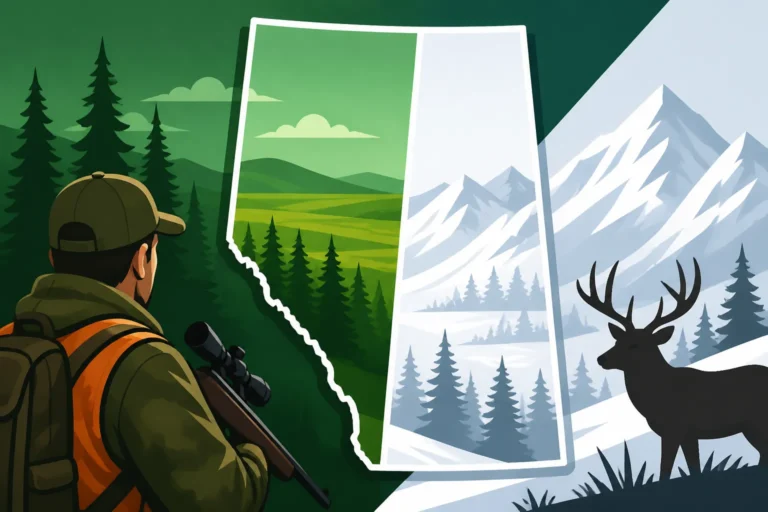
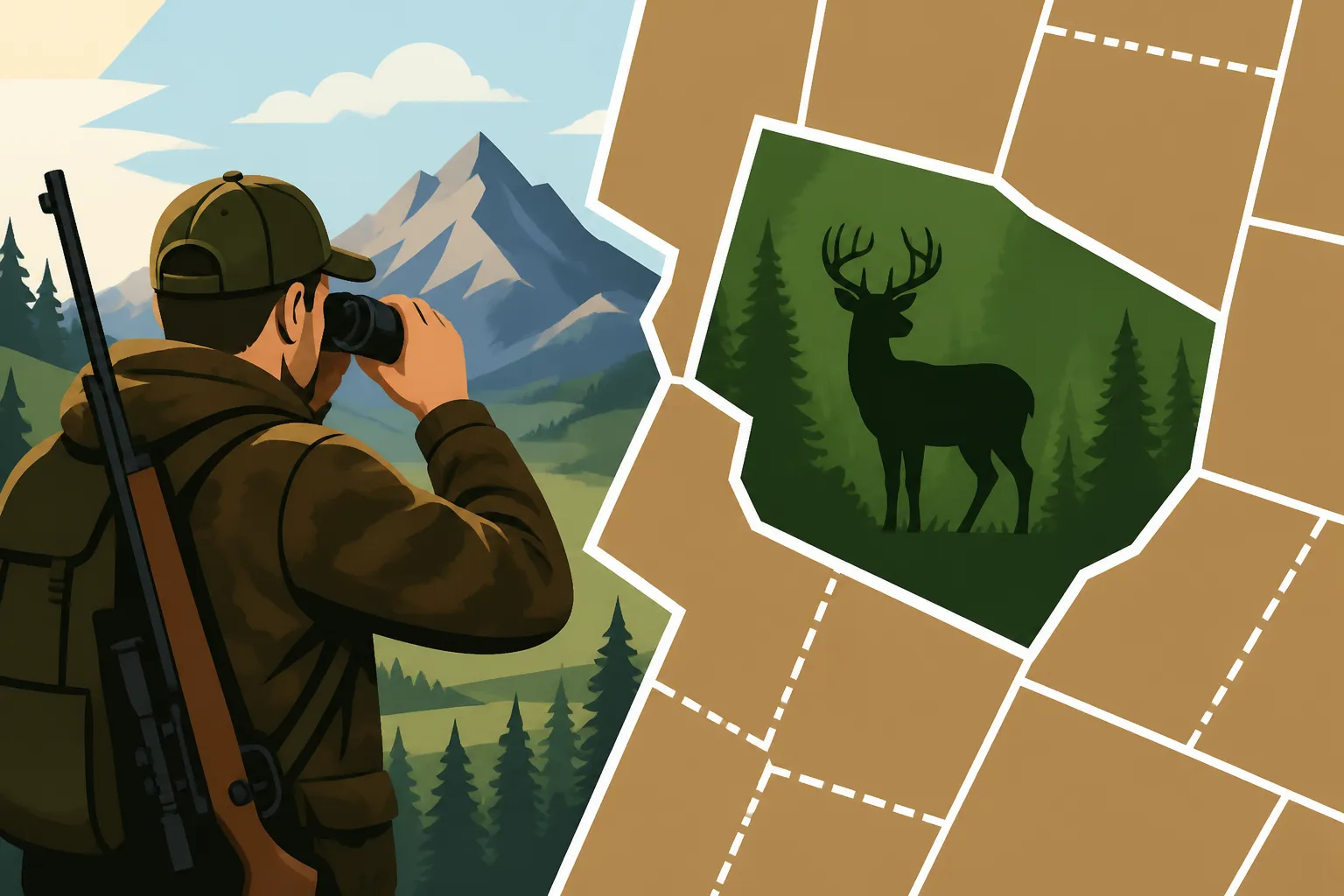
It’s a scenario many of us have faced: poring over a map, eyes lighting up as you spot a perfect-looking quarter section of Crown land, only to realize it’s an isolated island completely surrounded by private deeded property. That sinking feeling hits when you see that prime habitat, knowing it's public, but with no obvious way to actually get your boots on the ground. This guide is here to walk you through the realities of hunting these landlocked parcels in Alberta, covering everything from legal access to ethical considerations and the tools you'll need to make it happen.
The Reality of Landlocked Crown Land in Alberta
Discovering a parcel of Crown land that appears to be prime hunting ground is exciting, but the immediate joy can quickly turn to frustration when you zoom in on the map and see it's entirely boxed in by private property. These "landlocked" Crown quarters are a unique challenge for hunters across Alberta, from the aspen parkland to the prairie fringe. They exist for a variety of historical and geographical reasons, often remnants of land grants or survey lines that created public pockets amidst expanding agricultural or privately owned tracts. The key takeaway here, and it's absolutely crucial, is that while the land itself is public, accessing it requires crossing private property, which always means you need permission. Ignoring this fundamental rule can lead to significant legal trouble and damage the reputation of all hunters.
What "Landlocked" Truly Means for a Hunter
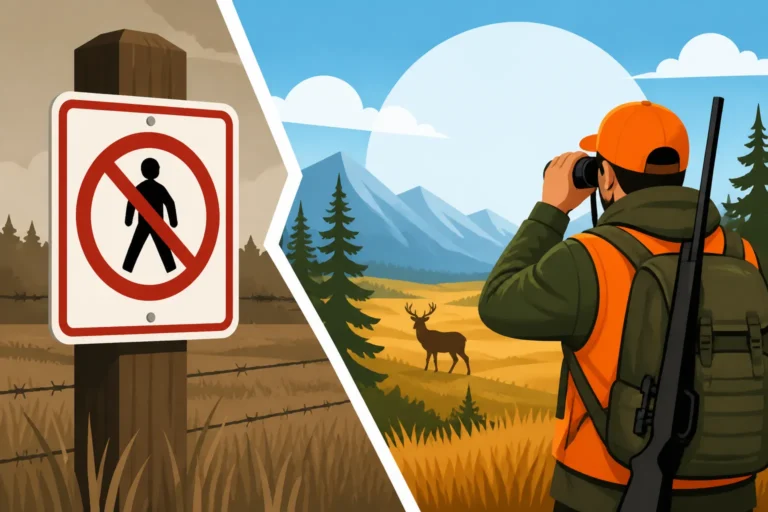
When we talk about a "landlocked" Crown quarter, we're not just talking about a piece of land that's hard to get to. We're talking about a parcel of public land that has no direct, legal public road or right-of-way connecting to it. Imagine it like a valuable treasure chest, but the only way to get to it is by walking through someone else's yard. You wouldn't just stroll through their yard, would you? The same principle applies here. The Crown land is yours to hunt, but the surrounding private land is not yours to cross without explicit permission from the landowner or leaseholder. This isn't a suggestion; it's a legal requirement under Alberta's Trespass Act. Many hunters mistakenly believe that because the land is Crown, they have some inherent right to access it. This is simply not the case, and it’s a mistake that has burned many a well-intentioned hunter and caused endless headaches for landowners.
Why These Landlocked Parcels Are So Appealing
Despite the access challenges, these isolated Crown quarters can be incredibly appealing to hunters, and for good reason. Often, they are overlooked by others precisely because of the access difficulty, leading to lower hunting pressure. They can act as natural sanctuaries for game animals, especially if the surrounding private land is agricultural and the Crown parcel offers dense cover, water sources, or diverse forage. Imagine a small block of dense aspen bluffs or a willow-choked creek bottom, surrounded by fields of canola or wheat. Deer, moose, and even elk will often seek refuge in these pockets, using them for bedding, security, and shelter from the elements. A mature whitetail buck, for instance, might live his entire life within such an isolated block, rarely venturing out during daylight hours due to the constant activity on surrounding private lands. This can make them incredibly productive spots if you can get in. You might be the only hunter who puts in the effort to gain access, giving you a truly unique hunting opportunity in an area that others dismiss out of hand.
Gaining Legal Access: Your Options and Approach
So, you've identified one of these alluring landlocked Crown quarters. Now comes the real work: securing permission to cross private land. This is where many hunters either give up or make critical errors. It requires patience, respect, and a good dose of persistence. There are generally two main paths to explore, and both hinge on building a positive relationship with the people who control the land around your desired hunting spot.
Asking the Landowner for Permission
This is, without a doubt, the most common and often the most successful strategy for gaining access to landlocked Crown land. It involves directly approaching the owner of the private property surrounding your desired hunting area. This can be intimidating, especially if you're not used to knocking on doors, but it’s a skill every Alberta hunter should cultivate.
Here’s a general approach that has worked for me over the years:
- Do your homework first: Before you even think about knocking, use tools like the Alberta Recreational Access Mapping Tool or apps like onX Hunt or GoHunt to confirm who owns or leases the land. Get a legal land description if you can. Know exactly which parcel of Crown land you want to access and exactly whose land you need to cross.
- Timing is everything: Avoid harvest season, calving season, or any time when farmers or ranchers are incredibly busy. Weekends or early evenings are often best, but be mindful of family time. Spring and summer, well before hunting season, can be a great time to introduce yourself without the pressure of a looming hunt.
- Appearance and demeanor: Dress respectfully, leave your hunting gear in the truck, and approach with a friendly, open attitude. A sincere smile and a firm handshake go a long way. This isn’t the time for your camo.
- State your intentions clearly: Start by introducing yourself and where you're from. Explain that you've identified a parcel of Crown land that you're interested in hunting and that it appears to be surrounded by their property. Be specific about the quarter section you want to access.
- Offer something in return (if appropriate): Sometimes, a simple offer to help with a small chore, keep an eye on their property, or even share some wild game can open doors. Don’t push it, but be open to the idea.
- Respect their answer: Whether it's a "yes" or a "no," always be respectful and thank them for their time. A "no" today doesn't mean a "no" forever. Sometimes, a positive interaction even without permission can pave the way for future access or an introduction to another landowner. If they say no, ask if they have any other suggestions for access, or perhaps if they know of other nearby landowners who might be more amenable. Maybe they know someone who is getting too much game damage and would welcome hunters. You never know until you ask.
- Get it in writing: If you do get permission, it’s always a good idea to get it in writing. A simple text message or email confirming the dates and specific access points can save a lot of headaches later. This protects both you and the landowner.
Building these relationships can be incredibly rewarding, not just for hunting access, but for truly understanding the landscape and the people who work it. It's often how some of the best, low-pressure hunting opportunities are secured. For more tips on this, check out Asking an Alberta Landowner for Permission.
Exploring Other Legal Access Avenues
While direct landowner permission is paramount, there are a few other less common avenues you might research, though they are usually more complex and less likely to apply to a truly landlocked Crown quarter.
- Grazing Lease Access: If the surrounding land is a Provincial Grazing Reserve or a grazing lease on Crown land, the rules can be a little different. While the leaseholder has primary use, the land remains Crown and generally allows for public recreational access, unless specifically restricted. However, you still need to notify the leaseholder, and some leases might have specific gates or routes for access. This is why tools like Using Alberta's Recreational Access Mapping Tool are so helpful, as they can sometimes indicate grazing lease boundaries and who to contact. Always consult the specific regulations for grazing leases in that WMU, as they can vary. The leaseholder can still deny vehicle access or access through specific areas for legitimate reasons (e.g., calving pastures). Always communicate with them.
- Public Land Use Zones (PLUZs): Some large tracts of Crown land are designated as Public Land Use Zones, particularly in the foothills and mountains. These have specific rules for recreational use, including hunting, and often have designated access points, trails, and rules for off-highway vehicles. However, a truly "landlocked" Crown quarter typically isn't within one of these large, contiguous PLUZs; it's usually an isolated block. If by chance your landlocked parcel borders a PLUZ, then legal access through the PLUZ may be an option, but this is a rare scenario for truly isolated quarters. The rules on PLUZs can be quite specific, so a deep dive into Alberta's Public Land Use Zones would be essential.
| Access Strategy | Pros | Cons | Likelihood of Success |
|---|---|---|---|
| Direct Landowner Ask | Builds relationships, offers flexibility, most common. | Requires social skills, can be refused, time-consuming. | High |
| Grazing Leaseholder Ask | Land is still Crown, might be more open to access. | Leaseholder notification required, potential restrictions, specific rules vary. | Medium |
| Public Right-of-Way | Legal and guaranteed (if one exists). | Very rare for truly "landlocked" parcels. Requires research. | Low |
| Adjoining Crown Land | No private land crossing needed (if accessible). | Very rare, by definition, the quarter is surrounded by deeded land. | Very Low |
Remember, the vast majority of success stories for hunting these landlocked Crown quarters start with a polite, respectful conversation with the landowner.
Planning Your Hunt: Scouting, Strategy, and Ethics
Once you've successfully navigated the access puzzle, the real fun begins: planning your hunt. However, just because you have permission to cross doesn't mean you have free rein. Careful scouting, a well-thought-out strategy, and impeccable ethics are vital to ensuring a successful hunt and maintaining those valuable landowner relationships.
Pre-Season Scouting and Observation
Gaining access is one thing; understanding the landlocked quarter and how game uses it is another. Since you likely won't have unlimited access to scout, making the most of your permitted visits is key.
- Remote Scouting is Your Best Friend: Before you step foot on the property, leverage satellite imagery and topographic maps. Services like onX Hunt or GoHunt are invaluable here. Look for natural funnels, pinch points, bedding areas (dense cover, south-facing slopes in winter), water sources, and any signs of game trails leading into or out of the Crown quarter. Identify potential stand locations or stalking routes. Scouting With Satellite Imagery in Alberta can give you a real leg up.
- Boots-on-the-Ground Reconnaissance: If the landowner grants you scouting access, use it wisely. Walk the perimeter, paying close attention to where game might be entering and exiting. Look for tracks, rubs, scrapes, and droppings. How does the wind typically blow through this specific parcel? Are there unique features like an old shelterbelt, a small slough, or a creek bottom that would attract game? Where would a deer feel safest bedding down during daylight hours?
- Understanding Animal Movement: These landlocked quarters, especially if small, often serve as bedding cover during the day, with animals moving out onto surrounding private lands to feed at night. Your hunting strategy might need to focus on catching animals as they move to or from their bedding areas at first and last light. You might want to consider hunting a Hanging a Stand on an Alberta Bush Edge if the Crown land has a clear boundary with agricultural fields.
Developing Your Hunting Strategy
Your strategy will largely depend on the specific features of the Crown quarter and the type of game you're after.
- Patience and Stealth: Since these spots are often small, minimizing your impact is paramount. One noisy walk through the middle of the quarter could blow out every animal for days. Plan your entry and exit routes carefully, ensuring you don’t spook game. Consider still-hunting or setting up a ground blind or tree stand in a high-traffic area.
- Wind is Critical: Always, always, always hunt with the wind in your favour. Your scent will be the biggest giveaway in a smaller, confined area. If the wind isn't right for your chosen spot, change your spot or come back another day. This is particularly true if you are Hunting a Cutline Intersection for Whitetails or Hunting a Willow Run in Farm Country, where animals might be using very specific travel corridors.
- Hunting Pressure: Remember, just because you have access doesn't mean you're the only one. Other hunters may have also secured permission, or the landowner might hunt it themselves. Always be aware of your surroundings and any signs of other hunting activity. If you know the area sees a lot of pressure, your strategy might need to shift to finding undisturbed pockets within the Crown quarter.
- Ethics Beyond the Boundary: Your permission typically only covers crossing the private land to get to the Crown parcel. It does not give you permission to hunt the private land, or even to track a wounded animal onto it without further, explicit permission. This is a critical ethical and legal point. If you wound an animal that runs onto private property, you must contact the landowner immediately to request permission to retrieve it. Having their phone number handy is essential. Failing to do so can quickly sour your relationship and potentially lead to charges of trespassing. Remember, you represent all hunters when you're out there.
Essential Tools for Identifying and Navigating Crown Land
Modern technology has revolutionized how hunters find and navigate public and private lands. For hunting landlocked Crown quarters, these tools are not just helpful; they are absolutely indispensable. They allow you to understand property boundaries, topography, and even game movement patterns, all from your device.
GPS and Mapping Applications
Gone are the days of solely relying on paper maps and guesswork. Today's GPS units and smartphone apps provide incredibly detailed, layered information right in the palm of your hand.
- onX Hunt: This app is a game-changer for many hunters. It overlays property lines (public and private) onto satellite imagery and topographic maps. You can clearly see where Crown land begins and ends, who owns the adjacent private parcels, and even mark potential access points or stand locations. Being able to see who owns each parcel is crucial for knowing whose door to knock on. It also shows WMU boundaries, which is incredibly important for staying legal. When you're trying to figure out how to get to that small Crown "island," seeing the precise boundaries is the first step.
- GoHunt: Similar to onX Hunt, GoHunt offers detailed mapping features that allow hunters to identify public land, track their movements, and mark waypoints. Its strengths often lie in its species-specific features and draw odds information, but its mapping capabilities are robust enough to help identify landlocked Crown parcels and the surrounding private ownership.
- Alberta Recreational Access Mapping Tool (RAMP): This is a fantastic free resource provided by the province. It allows you to view Crown land, grazing leases, and other public access opportunities. While not as feature-rich as a paid hunting app for tracking and waypoint management, it's invaluable for understanding the overarching land designations and often provides contact information for grazing leaseholders. I highly recommend checking RAMP before you even consider knocking on a door; it’s a crucial first step in Finding Access on Alberta Crown Land.
Understanding WMU Boundaries and Regulations
No matter how great your maps are, they’re only useful if you understand the rules that apply to the land you're hunting. Each Wildlife Management Unit (WMU) in Alberta has specific regulations, season dates, and bag limits.
- WMU Specifics: Even if your landlocked Crown quarter is small, it falls within a specific WMU, and you must adhere to that WMU's rules. This means knowing Alberta General Licences Without a Draw options, or if a special draw is required for certain species in that WMU. This is especially important for species like mule deer, which often have different regulations than whitetails, or if you’re looking to hunt antlerless deer with a Alberta Supplemental Antlerless Licences.
- Reading the Regulations: Always, always, always consult the current Alberta Hunting Regulations Guide. This is your bible. Don't rely on what you heard from a buddy or what you think you remember from last year. Regulations change. The WMU numbers and their boundaries are clearly defined, and you need to ensure your licence is valid for that specific WMU and season. The mapping tools mentioned above will usually display WMU boundaries, helping you confirm you're in the right spot with the correct tag.
- Blaze Orange and Safety: Remember to follow all safety regulations, including Alberta Blaze Orange Requirements, especially when hunting in areas where you might encounter other hunters (even if you think you're alone!). Always know your backdrop and beyond. A small Crown quarter might mean shots taken closer to private land boundaries, so extreme caution is warranted.
Hunting a landlocked Crown quarter in Alberta can be a challenging but incredibly rewarding experience. It demands extra effort, a commitment to ethical hunting, and a willingness to engage respectfully with private landowners. By utilizing modern mapping tools and understanding provincial regulations, you can transform these seemingly inaccessible pockets into some of your most cherished hunting spots.
Disclaimer
This article is for general informational purposes only and does not constitute professional advice. Laws, prices and regulations vary by location and change over time. Consult a qualified professional for guidance on your specific situation.