Hunting Alberta Ground With Cattle On It
It's incredibly frustrating, isn't it? You've scouted a promising piece of Alberta hunting ground, maybe a lush coulee or a thick bush edge, only to find it's being actively grazed by cattle. Suddenly, you're not just thinking about whitetails or mule deer, but about property lines, animal safety, and whether you're even allowed to be there. Navigating hunting areas where livestock are present can feel like walking a legal and ethical tightrope, leaving many hunters scratching their heads or, worse, avoiding potentially prime spots altogether. This guide will help you understand the nuances of hunting Alberta land with cattle on it, ensuring you stay legal, respectful, and effective.
Understanding Grazing Leases and Private Land
Before you even think about lifting a rifle or drawing a bow, it's absolutely crucial to understand the distinction between different types of land that might host cattle. In Alberta, finding cows out on the landscape is incredibly common, but the rules for interacting with them, and the land they occupy, vary wildly depending on who actually owns the ground.
The Difference Between Crown Land Grazing Leases and Deeded Land with Cattle
Many hunters mistakenly assume that if they see cattle, it must be private land. This isn't always the case, especially in Alberta. A significant portion of our public land, often referred to as Crown Land, is leased out by the provincial government for agricultural purposes, primarily cattle grazing. These are known as grazing leases or grazing reserves. While a rancher holds the lease for grazing rights, the land itself remains Crown Land, and this often means different recreational access rules apply.
On the other hand, there's deeded private land where a landowner holds full title to the property. This land is typically part of a farm or ranch operation, and the cattle on it belong to that private landowner. The key difference here is ownership and, by extension, the fundamental legal requirements for access. While a grazing lease on Crown Land may grant you public access for recreational activities like hunting under certain conditions, deeded private land always requires explicit permission from the landowner, no exceptions. You can often find excellent hunting in these areas, especially in the central Alberta's Parkland Country and Its WMUs or Alberta's Prairie WMUs.
Identifying Ownership: How to Know What You're On
The first step to knowing how to proceed is knowing exactly whose land you’re standing on, or planning to hunt. This isn't always obvious from the ground, especially if fences are absent or property lines are subtle. This is where modern technology truly shines for hunters.
Mapping applications like onX Hunt or GoHunt are absolute game-changers. These tools use GPS data and satellite imagery, layering it with public and private land ownership information. You can zoom in and see exactly where Crown Land begins and private land ends, and importantly, identify grazing leases on Crown Land. This isn't just about avoiding trespassing; it's about understanding the specific regulations that apply to that parcel of land. Before you even head out, you can sit down with your app, scout potential areas, and clearly define your huntable zones. Ignoring this step can lead to serious headaches, legal issues, and a ruined hunt. It's a small investment in a yearly subscription for these apps, but it pays dividends in peace of mind and ethical hunting.
| Land Type | Ownership | Access for Hunting | Key Consideration |
|---|---|---|---|
| Crown Land Grazing Lease | Provincial Government | Generally accessible for recreational use (with rules) | Respect livestock and infrastructure |
| Deeded Private Land | Private Individual | Explicit permission always required | Build landowner relationships |
Navigating the Legality: What the Rules Say
The legal framework surrounding hunting on land with cattle in Alberta is designed to balance recreational access with agricultural livelihoods. Understanding these regulations isn't just about avoiding a ticket; it's about being a responsible land user and respecting the people who make their living off the land.
Accessing Grazing Leases: The General Rules
Alberta's Recreational Access Regulation is your best friend when it comes to understanding public access on Crown Land, including grazing leases. Generally speaking, hunters are allowed to access grazing leases on Crown Land for recreational purposes, provided they adhere to specific rules. This is a critical point that many new hunters miss, as they see cattle and automatically assume it's off-limits.
However, "generally accessible" doesn't mean "do whatever you want." The primary rule is that you cannot interfere with the rancher's agricultural operations. This means:
- Respecting Infrastructure: Close all gates you open, don't damage fences, and avoid driving vehicles where you shouldn't. If you're using an ATV or side-by-side, know the Quad and Side-by-Side Rules on Crown Land.
- Minimizing Disturbance to Livestock: You cannot intentionally harass, disturb, or endanger livestock. This isn't just about the law; it's about common decency. Running a quad through a herd of cows, letting your dog chase calves, or shooting near cattle are all clear violations of this principle. The goal is to be invisible to the rancher and their animals, if possible.
- Vehicle Use: While some grazing leases might have designated roads or trails for access, others may restrict vehicle use to minimize damage or disturbance. Always check local regulations or signage, and when in doubt, default to foot access. Knowing Using Alberta's Recreational Access Mapping Tool can often show specific rules for areas.
It's also worth noting that some grazing leases might have unique conditions or even be posted as temporarily closed to public access for specific management reasons. Always look for signage and, if possible, contact the leaseholder beforehand. Many leaseholders are more than happy to have respectful hunters on their land, especially if you take the time to Asking a Grazing Leaseholder for Access.
Private Land with Cattle: Always Get Permission
This cannot be stressed enough: if the land is deeded private property, the presence of cattle changes absolutely nothing about the access rules. You must obtain explicit permission from the landowner before stepping foot on their property for any reason, including hunting. This is covered by Alberta's Alberta Trespass Act and Hunting. Even if there's no fence, no "No Trespassing" sign, and you see other people seemingly coming and going, you need permission.
Hunting on private land without permission is trespassing, a serious offence that can lead to fines, confiscation of your hunting equipment, and loss of hunting privileges. Beyond the legal ramifications, it erodes the crucial trust between landowners and hunters. Many landowners are incredibly generous with access to their property, particularly if you approach them respectfully and at the right time. They appreciate a polite knock on the door or a phone call, asking permission directly. This is your chance to build a relationship, and potentially secure access to some fantastic hunting ground year after year. Hunters who consistently trespass make it harder for everyone else to gain access, so always be courteous and follow the rules.
Practical Considerations: Being a Respectful Hunter
Beyond the legalities, there are practical and ethical considerations when hunting near or among cattle. Remember, these animals are a rancher's livelihood, and your actions can directly impact their well-being and the rancher's bottom line.
Minimizing Disturbance to Livestock
Your primary goal should be to be as unobtrusive as possible. Think about it from the rancher's perspective: they want their cattle to be calm, to graze peacefully, and to gain weight. Stressing them out can have real financial consequences.
- Walk Around Herds: If you encounter a herd of cattle, give them a wide berth. Don't walk directly through them, especially if there are calves present. Try to skirt around them quietly and slowly.
- Manage Hunting Dogs: If you're hunting with dogs for upland birds or predators, ensure your dog is under strict control. A bird dog flushing pheasants through a herd of yearlings is one thing; a coyote hound chasing a calf is another entirely. If you have any doubt about how your dog will react, keep them leashed or avoid that area.
- Close Gates and Report Issues: This is basic outdoor etiquette but bears repeating. If you open a gate, close it. If you find a fence cut or damaged, report it to the landowner or leaseholder immediately. You might save them a lot of trouble rounding up stray cattle.
- Avoid Disturbing Water Sources: Livestock rely on specific water sources, especially during dry periods. While you might be tempted to hunt a Hunting a Grazing Lease Water Hole, be mindful not to contaminate it or make the cattle hesitant to use it.
By minimizing disturbance, you not only comply with regulations but also build a reputation as a responsible hunter, which can only benefit the hunting community as a whole.
Safety First: For You and the Animals
Hunting around livestock isn't just about avoiding a ticket; it's also about personal safety and the well-being of the animals.
- Bulls and Cows with Calves: Be acutely aware of your surroundings. While most cattle are docile, a protective cow with calves can be aggressive, and a bull can be unpredictable. Maintain a safe distance, especially if you see any signs of agitation (head down, pawing the ground). Don't put yourself between a cow and her calf.
- Disease Transmission: While less common for hunters, it's a good practice to minimize direct contact with livestock. Wash your hands thoroughly, especially if you're handling game meat, to prevent any theoretical disease transmission between wild and domestic animals.
- Shooting Lanes: This is paramount. Always, always be aware of your backdrop. Never take a shot at a game animal if there's any chance a bullet could strike a domestic animal, a farm building, or a vehicle. It’s better to let a deer walk than to risk harming livestock or property. This is especially true when hunting areas like Hunting a Cattle Pasture Draw, where game and cattle often mingle.
- Retrieving Game: If you harvest an animal on land with cattle, make every effort to retrieve it quickly and efficiently. Do so in a way that minimizes stress to any nearby livestock. Hauling a deer out through a herd of cows isn't ideal for anyone. Consider the best extraction route beforehand.
Tips for Hunting Effectively Around Livestock
While cattle can certainly add a layer of complexity to your hunt, they don't necessarily mean the end of your opportunities. In fact, understanding how cattle interact with the landscape and local wildlife can actually give you an edge.
How Cattle Influence Game Movement
Cattle are big, noisy, and often change the landscape. But game animals, particularly deer and elk, are incredibly adaptable.
- Grazing Pressure: Cattle are massive grazers, and their presence keeps grasslands and certain bush areas more open. This can create new forage for deer or reduce cover, altering their movement patterns. Sometimes, areas heavily grazed by cattle can draw deer in, especially if fresh green shoots come up after heavy grazing.
- Water Sources: As mentioned earlier, cattle need water, and they'll frequent any available sources. Game animals will often use these same water holes, particularly in dry prairie conditions. Scouting these shared water points can be highly effective.
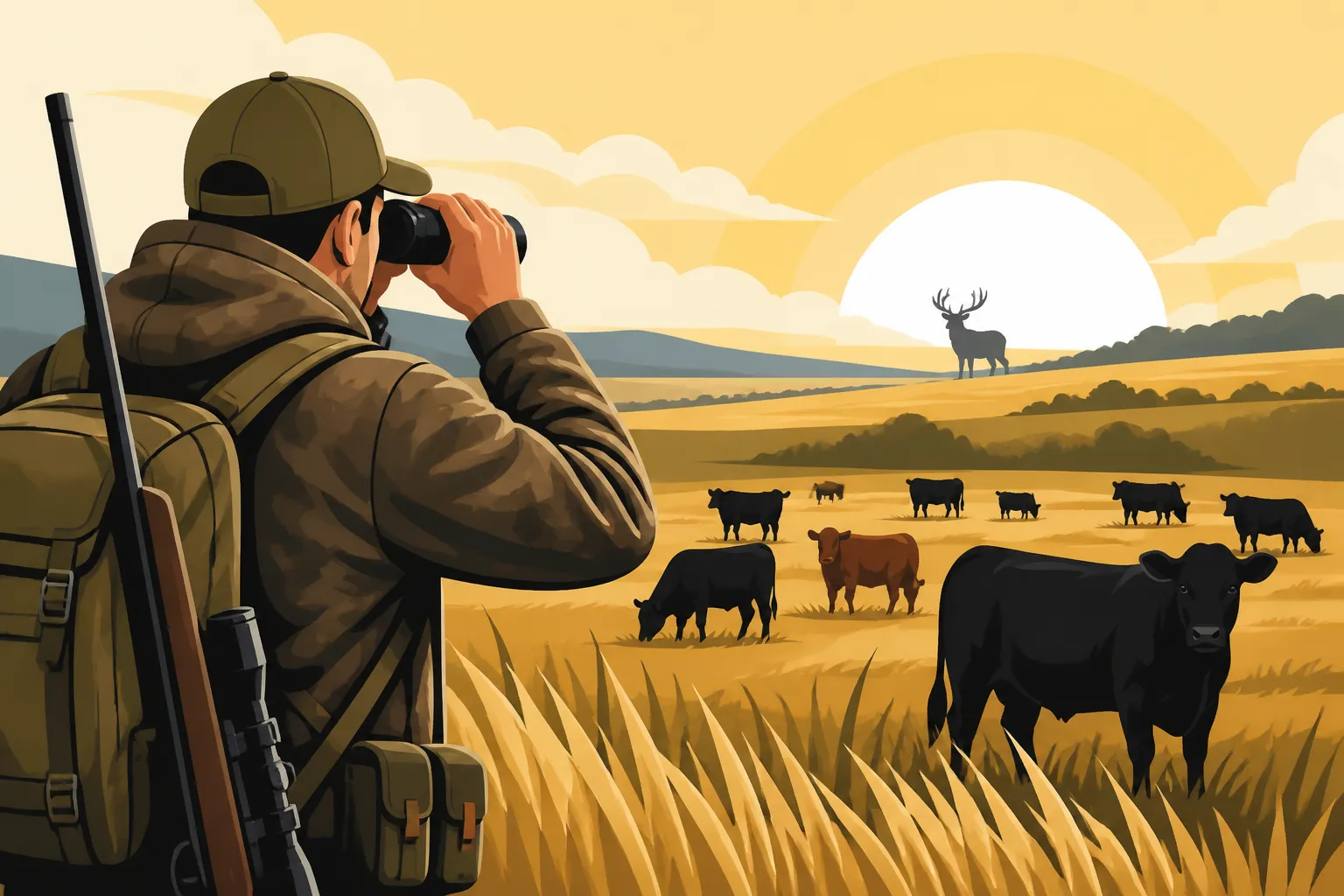
- Disturbance Factor: While some deer will avoid cattle altogether, many get used to their presence. I've seen countless whitetails grazing right alongside cows in a field. The deer often become accustomed to the low-level noise and movement, making them less wary of your presence if you're subtle. However, intense, sudden disturbance (like a quad ripping through) will push both cattle and game out.
- Edge Habitat: Game often uses the edges of grazed pastures where the cover transitions to heavier brush or timber. These are excellent places to focus your efforts. Hunting a Shelterbelt Between Two Fields or Hunting an Aspen Bluff on Farm Ground are prime examples where cattle might be in the field, but deer use the edges for security and movement.
Strategies for Success
Hunting where cattle roam requires patience, observation, and a slightly different approach than pristine wilderness.
- Focus on Transition Zones: The boundary where grazed land meets ungrazed cover (bush, coulees, riparian zones) is often where you'll find game. Deer and elk will move out of cover to feed in grazed areas, but quickly retreat if threatened. Think about Hunting a Prairie Coulee Bottom or the edges of a Hunting a Cattle Pasture Draw.
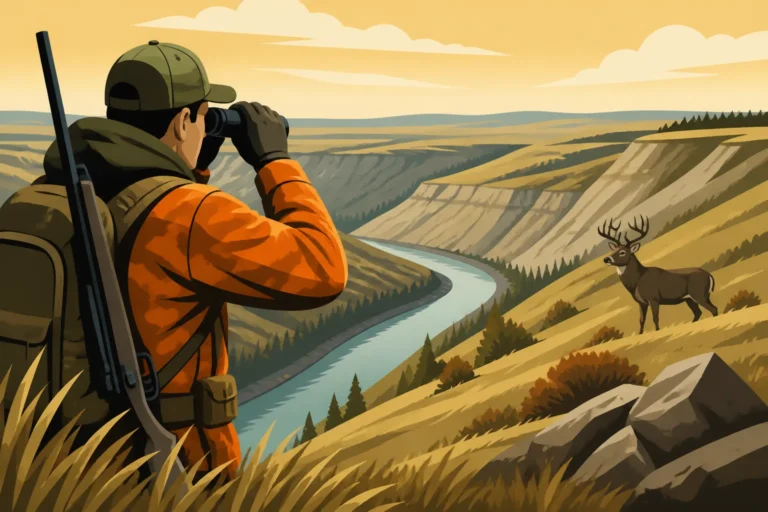
- Glassing and Patience: Spend more time glassing these areas from a distance. Let the landscape settle. Watch for deer or elk movements that aren't cattle. A good pair of binoculars and a spotting scope are indispensable. Sometimes, waiting for the cattle to move off a prime feeding area will reveal hidden game.
- Hunt Early or Late: Game animals tend to be most active at dawn and dusk. This is often when they'll move into open, grazed areas. Plan your approach and exit to avoid disrupting cattle during these times.
- Use Topography: If the land has rolling hills, coulees, or river breaks, use these features to your advantage. Game will often use these for cover and movement, regardless of cattle presence. These natural breaks can also hide your approach. For instance, Hunting a Coulee Above a River can be excellent, even with cattle grazing the flats.
- Respect Fences and Boundaries: Fences are there for a reason, usually to manage cattle. Don't climb over them in a way that damages them; use gates or designated crossings. If you're unsure of a boundary, assume it's private and gain permission, or find another way around using your onX Hunt or GoHunt app.
- Be Adaptable: If a herd of cattle is exactly where you want to hunt, don't force it. Be ready to change your plans, move to a different section, or wait them out. Flexibility is key when hunting in agricultural landscapes.
Remember, every time you successfully and respectfully hunt land with cattle, you’re helping to maintain access for all hunters. It’s about being a good neighbour, even if you’re just visiting for a few days of the season.
Disclaimer
This article is for general informational purposes only and does not constitute professional advice. Laws, prices and regulations vary by location and change over time. Consult a qualified professional for guidance on your specific situation.