Ammunition Rules at the Canadian Border
Crossing the Canadian border for a hunting trip to Alberta can be an exciting prospect, but the thought of navigating customs with your firearms and ammunition often brings a knot of anxiety. It's perfectly understandable; no one wants their well-planned hunting adventure derailed by a misunderstanding at the border. This guide is here to walk you through the essential ammunition rules, helping you understand what's permitted, how to declare it, and how to avoid common pitfalls so you can focus on the hunt ahead.
Understanding Canadian Firearms Laws for Hunters
Navigating another country's regulations, especially when it involves firearms and ammunition, can feel like trying to read a map printed in a foreign language. The key is to be informed and prepared well in advance of your trip. Canada has clear, albeit sometimes detailed, rules for non-residents bringing in hunting ammunition, and understanding these is your first line of defence against delays or complications at the border.
The Basics of Ammunition Regulations
When it comes to ammunition, Canada is primarily concerned with its type and quantity. For most common hunting scenarios, you'll be dealing with what's generally considered "ordinary" ammunition – think standard rifle cartridges like .30-06, .270, or 7mm Rem Mag, and shotgun shells for waterfowl or upland birds. These are typically allowed, provided they are for the declared firearms you are bringing in and are within prescribed limits. The core principle is that the ammunition must be suitable for hunting and not fall into any prohibited categories designed for military or law enforcement use.
It’s about common sense, really. If you're bringing ammunition that's readily available at any sporting goods store for hunting purposes, you're usually on the right track. For instance, a box of 12-gauge shotgun shells loaded with steel shot for Field Hunting Geese in Alberta Stubble or a few boxes of soft-point .308 rounds for deer hunting are standard fare. Just remember, these rules are in place for security, so clarity and honesty are paramount.
Specific Prohibitions You Need to Know
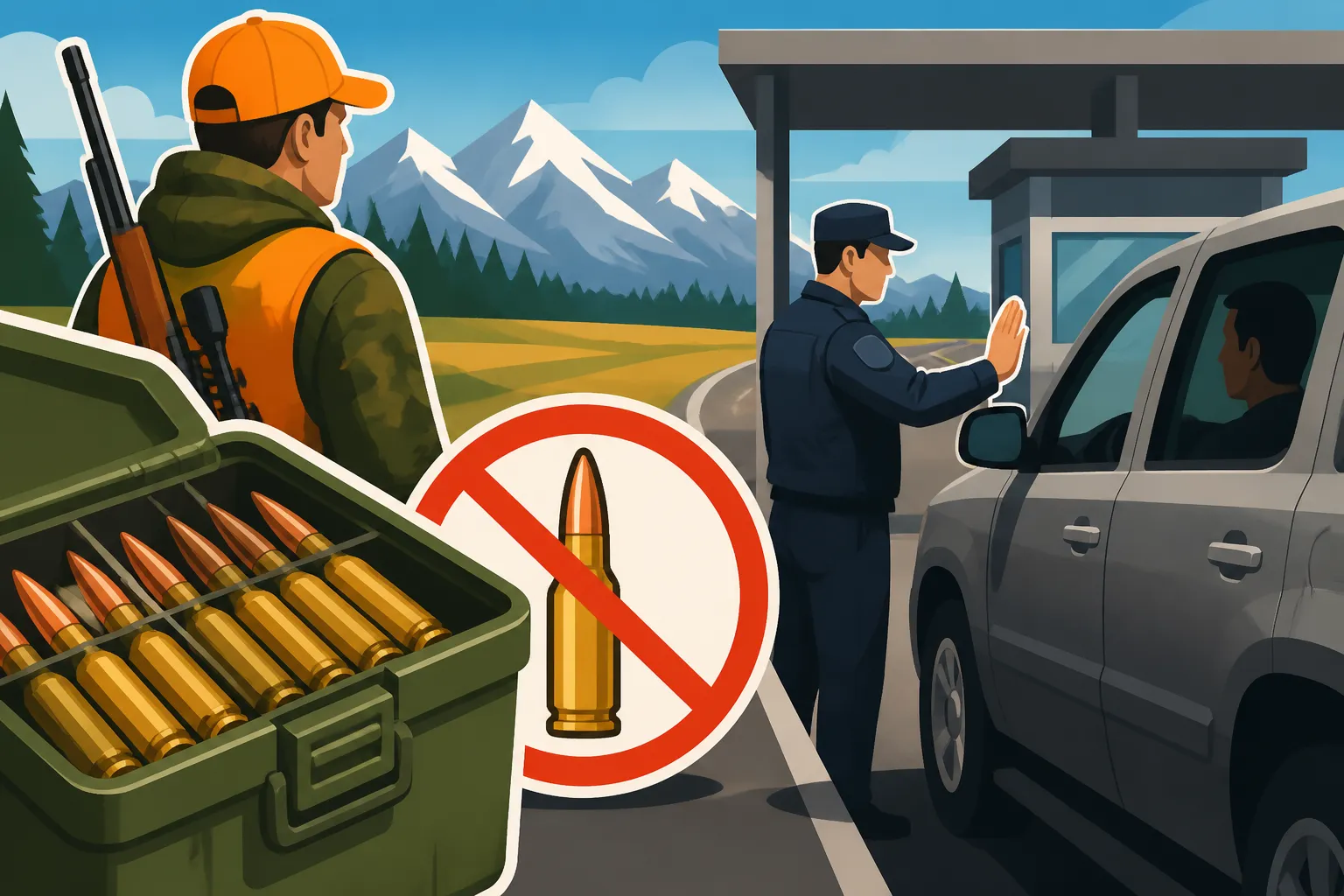
This is where many hunters can unwittingly run into trouble. Canada has very specific prohibitions on certain types of ammunition. Broadly, any ammunition designed for military or armour-piercing purposes, as well as tracer rounds, incendiary rounds, and full metal jacket (FMJ) bullets for handgun calibers are generally prohibited. While FMJ rifle rounds are often permitted for hunting, especially for larger game where deep penetration is desired, the critical distinction lies in the caliber and intent.
For instance, bringing along a few boxes of 9mm FMJ rounds for a handgun you aren't bringing (because handguns are largely prohibited for non-residents) would be a red flag. Even if you mistakenly pack a box of military-surplus 7.62x39mm FMJ rounds for your SKS rifle, which is legal to bring in, the type of ammunition could cause an issue if interpreted as "military-grade." It's always best to stick to commercially manufactured soft-point, hollow-point, or expanding bullet designs specifically marketed for hunting. If there's any doubt about a specific bullet's classification, err on the side of caution and leave it at home, or clarify with the Canadian Border Services Agency (CBSA) beforehand.
Declaring Your Ammunition at the Border
One of the biggest mistakes you can make is failing to declare your firearms and ammunition. This isn't just a minor oversight; it can lead to severe penalties, including seizure of your property, fines, and even a ban from entering Canada. The process begins with the "Non-Resident Firearm Declaration Form" (RCMP 5589). You absolutely must fill this out truthfully and completely.
When you arrive at the border, you will explicitly declare all firearms and ammunition you are bringing. Have the completed, but unsigned, form ready. The border services officer will review it with you, ask questions, and then have you sign it. This declaration acts as a temporary registration for your firearms and confirms your compliance with ammunition rules. The key is transparency. Don't try to hide anything, even if it's just a few rounds rattling around in a forgotten pocket. Being upfront and having your The Non-Resident Firearm Declaration Form in order makes the process much smoother and instills confidence in the border officials that you are a responsible hunter following the rules.
Quantities, Packaging, and Storage for Border Crossing
Once you know what types of ammunition are allowed, the next step is to understand how much you can bring, and how it needs to be packaged and stored. These details might seem minor, but they are crucial for a hassle-free entry into Canada.
How Much Ammunition Can You Bring?
Generally, non-residents are allowed to bring up to 200 rounds of ammunition per firearm for hunting purposes. However, there's a generous exception for shotgun shells, which often allows up to 5,000 rounds. This distinction is vital for waterfowl hunters who might burn through hundreds of shells in a single day. For most big game hunters, 200 rounds per rifle is more than ample for a typical week-long hunt. If you're targeting multiple species or planning an extended trip, you might need to carry ammunition for different calibers, but always ensure each firearm's accompanying rounds stay within its limit.
It's important to stress that these numbers can sometimes be subject to the discretion of the border officer and specific, often updated, regulations. Always check the official Canadian Border Services Agency website or the RCMP website for the most current figures just before your trip. The worst thing you could do is show up with several thousand rounds of rifle ammunition, expecting no questions asked, only to find you're far over the limit. Planning your hunt, perhaps by consulting resources like GoHunt for expected game encounters, can help you accurately estimate your needs.
Proper Packaging for Travel
The way you pack your ammunition is almost as important as the quantity and type. All ammunition must be securely packaged in a manner that prevents accidental discharge and theft. The best practice is to keep ammunition in its original manufacturer's packaging. These boxes are designed to hold the rounds securely and clearly label the caliber and bullet type. If you've reloaded your own ammunition, it should be in sturdy, secure containers, clearly marked with the caliber.
Never, under any circumstances, should you have loose ammunition scattered in bags, glove compartments, or mingled with other items. This presents a safety risk and a major red flag to border officials. Ammunition should also be stored separately from your firearms during transit. While your rifle might be in a locked case in one part of your vehicle, your ammunition should be in another secure, locked container, preferably out of immediate reach. This separation is a critical safety measure and a legal requirement for Transporting Firearms Into Alberta and throughout Canada.
Storage During Transit and in Camp
Once you've successfully crossed the border, the rules for ammunition storage continue to be important, both for safety and legal compliance. In your vehicle, ammunition should remain in a secure, locked container, separate from your firearm. This prevents unauthorized access and ensures safety during travel, especially if you stop for a meal or gas.
When you're in camp, whether it's a lodge, a remote wall tent, or a truck camper, ammunition should always be stored safely and out of reach of children or anyone who shouldn't have access. Many hunters use locked strongboxes or safes for their ammunition. If you're staying at an outfitter's camp, like those found through BookYourHunt, they will often have secure storage options or specific guidelines for keeping your firearms and ammunition safe. Always follow their instructions. Remember, while you're focused on Rifle Hunting Alberta's General Seasons or another specific hunt, safety and legal compliance are ongoing responsibilities.
Common Pitfalls and How to Avoid Them
Even with the best intentions, it's easy to make a mistake when crossing an international border with hunting gear. Being aware of the most common pitfalls can save you a significant amount of stress and potential headaches.
The Importance of Double-Checking Everything
This might sound like a broken record, but it cannot be overstated: double-check, triple-check, and then ask a buddy to check again. Before you even leave home, go through every piece of luggage, every duffel bag, every pocket of your hunting clothes. A single forgotten round in a coat pocket, or a box of prohibited ammunition mistakenly packed, can turn a simple border crossing into a lengthy, uncomfortable, and potentially costly ordeal.
Think about the last hunting trip you took. Did you toss a few extra rounds into a backpack "just in case"? Did you grab a box from the shelf without scrutinizing the specific bullet type? These are the scenarios that catch people off guard. Create a checklist for your firearms and ammunition, and meticulously go through it. When you're standing at the border, wishing you had done one last check, it'll be too late. A methodical approach, starting days or even weeks before your departure, is your best defense against such slips.
Specific Bullet Types to Be Wary Of
While we touched on prohibited types earlier, it's worth re-emphasizing the ambiguity that can exist. Some jurisdictions might have different definitions for what constitutes "armor-piercing" or "military-grade." Even what you consider a standard hunting round might have features that a border agent, unfamiliar with hunting ammunition specifics, could question. For instance, while expanding hunting bullets (like soft points or bonded bullets) are explicitly permitted and ideal for most Whitetail Hunting in Alberta scenarios, some highly specialized self-defense hollow-point rounds could be misinterpreted if their design is overly aggressive or if they are primarily associated with tactical use.
To mitigate this, always choose mainstream, clearly labeled hunting ammunition from reputable manufacturers. Avoid any rounds with terms like "black tip," "green tip," "AP" (armor-piercing), "tracer," or "incendiary" in their description or packaging. If you’re unsure, a quick search on the RCMP website for their current firearms reference table can offer definitive guidance on specific types of ammunition. It's better to be overly cautious than to have your hunting trip cut short due to a technicality.
Navigating Border Patrol Interactions
The border crossing experience can be intimidating, but a calm, polite, and honest demeanor goes a long way. When you pull up to the customs booth, have all your documentation readily accessible: your passport, your Bringing a Rifle Across the Border declaration form, and any other relevant permits. When asked about firearms and ammunition, answer clearly and directly. Don't volunteer extra information unless asked, but don't withhold anything either.
If an officer has questions or wants to inspect your vehicle or gear, cooperate fully and patiently. They are doing their job to ensure national security and enforce regulations. Trying to argue, being evasive, or showing any frustration will only complicate the situation. A simple, "Yes, officer, I have one rifle and 80 rounds of hunting ammunition for it, all declared on my form," delivered confidently and truthfully, sets the right tone for a smooth interaction. Remember, they encounter thousands of travelers; a clear, compliant individual makes their job easier and yours less stressful.
Planning Your Ammunition Needs for an Alberta Hunt
Beyond simply getting your ammunition across the border, it's smart to plan your overall needs for the duration of your Alberta hunting trip. This involves assessing how much you'll realistically use, knowing your options if you need more, and understanding the process for bringing unused ammunition back home.
Assessing Your Hunt's Requirements
Before you even pack your bags, take some time to realistically assess your ammunition needs. Consider the species you're hunting, the length of your trip, and your personal shooting habits. For instance, a single Moose Hunting Alberta's Boreal Forest trip might only require a handful of rounds for zeroing your rifle and the actual harvest, whereas a prairie hunt for Upland Bird Hunting in Alberta could see you going through several boxes of shotgun shells. If you’re participating in a mentored youth hunt or a first-timer experience, you might need extra rounds for practice.
Factor in potential re-zeroing after travel, or if you plan to do some target practice before the hunt begins. Most experienced hunters will bring enough ammunition for their primary hunt, plus a small buffer for these contingencies. Don't overpack to the point where you risk violating quantity limits, but certainly don't underpack and find yourself rationing precious rounds on a multi-day hunt. Think about your hunting style – are you a one-shot-one-kill kind of hunter, or do you prefer to have a few follow-up shots readily available? This self-assessment, combined with research on your specific WMU or outfitter expectations (perhaps gathered from resources like BookYourHunt), will guide your packing decisions.
Buying Ammunition in Alberta
What if you find yourself short on ammunition, or decide it's easier to buy it once you're in Canada? Thankfully, buying hunting ammunition in Alberta is straightforward, provided you meet certain criteria. As a non-resident who has declared a firearm and obtained a valid hunting licence, you can typically purchase the appropriate ammunition for your declared firearm from most sporting goods stores, gun shops, and even some general retailers in larger towns.
You will need to present your Non-Resident Firearm Declaration Form (which acts as a temporary registration) and likely your hunting licence or WIN card (Wildlife Identification Number) to prove you are legally allowed to possess a firearm and hunt. The cost might be slightly different than what you're used to, and availability can vary, especially for specialized calibers or during peak hunting season. It's a good idea to call ahead to stores in the area you'll be hunting to check stock if you plan to rely on local purchases. For example, if you're Hunting Alberta's September Archery Opener with a rifle backup plan, ensuring your rifle ammo is available locally can be a good safety net.
Returning Home with Unused Ammunition
Just as you prepared for entry into Canada, you need to be prepared for re-entry into your home country. If you're heading back to the United States, you'll need to declare any remaining ammunition to U.S. Customs and Border Protection. Generally, the U.S. allows citizens to import ammunition for personal use, but there are often quantity limits and prohibitions on certain types, similar to Canada.
Always check the most current regulations for your home country before you leave Alberta. Don't assume that because it was legal in Canada, it's automatically legal to bring back home. Keep your ammunition securely packaged and separate from your firearms. Having all your original receipts for ammunition purchased in Canada can also be helpful, though usually not required. Being thorough on the return journey will ensure that your successful Alberta hunting trip ends smoothly, without any last-minute surprises at the border.
Ammunition Type Comparison
| Category | Generally Permitted in Canada for Hunting | Generally Prohibited in Canada | Notes |
|---|---|---|---|
| Bullet Type | Soft Point (SP) | Armor-piercing (AP) | Most common hunting rounds for rifles and handguns. |
| Hollow Point (HP) (Hunting/Defense) | Tracer rounds | Check specific designs for defense rounds; hunting HP is usually fine. | |
| Expanding/Bonded Bullets | Incendiary rounds | Designed for controlled expansion on game. | |
| Lead core, copper jacket/solid | Full Metal Jacket (FMJ) for handgun calibers (unless for specific, pre-approved events) | FMJ rifle rounds are often permitted for hunting, but check specific rules. | |
| Quantity | Up to 200 rounds per firearm (most calibers) | Bringing excessive quantities beyond personal hunting needs | Shotgun shells often have higher limits (e.g., 5,000 rounds). |
| Packaging | Original manufacturer's packaging | Loose rounds, unsecure containers | Must be safe, secure, and clearly labeled. |
| Sturdy, clearly marked containers (reloads) | Mixed with other items in luggage | Ammunition should be separate from firearms during transport. | |
| Intent | For legal hunting with declared firearms | For military, tactical, or unauthorized purposes | Your declared reason for bringing ammo must be consistent with the rules. |
Disclaimer
This article is for general informational purposes only and does not constitute professional advice. Laws, prices and regulations vary by location and change over time. Consult a qualified professional for guidance on your specific situation.