Emergency Plans in Alberta’s Backcountry
Stepping into Alberta's vast backcountry for a hunt is an incredible experience, but it comes with a serious understanding that things can go wrong, and they can go wrong quickly. Whether you're miles into the Boreal forest chasing moose or deep in the foothills glassing for elk, an injury, a sudden change in weather, or getting disoriented can turn a dream hunt into a nightmare if you're not prepared. This guide is all about equipping you with the knowledge to create and execute a solid emergency plan, ensuring you can face the unexpected with confidence and, most importantly, get home safely.
The Unpredictable Nature of Alberta's Wilds: Why You Need a Plan
Alberta's hunting landscapes are breathtakingly beautiful, but they are also wild, untamed, and unforgiving. From the sprawling prairies and rolling parkland to the dense boreal forests and jagged Rocky Mountain foothills, each environment presents its own unique set of challenges. It's easy to get caught up in the excitement of the hunt, focusing solely on tracking and stalking, but ignoring the potential for unforeseen circumstances is a risk no hunter should ever take.
Think about it: a sudden shift in the weather can bring a whiteout blizzard in minutes, even early in the fall. A simple misstep on uneven terrain could lead to a twisted ankle, or worse, a broken bone, leaving you immobile far from any road or trail. Your trusty quad could break down miles from camp, or your GPS might malfunction just as dusk sets in. Wildlife encounters, though rare, can also become dangerous if you stumble upon a sow with cubs or surprise a bull moose. These aren't just abstract "what ifs"; these are very real scenarios that seasoned hunters have faced and often overcome only because they had a plan. This reality is why resources like Wildlife Safety in Alberta Bear Country are so vital to review before heading out.
The immense scale of Alberta's wilderness means that help isn't always around the corner. Cell phone service is non-existent in vast swathes of hunting country, making traditional communication impossible. Search and rescue operations can take hours, even days, to reach remote locations, especially if the weather turns or precise coordinates aren't available. Understanding this inherent isolation isn't about fear-mongering; it's about fostering a healthy respect for the environment and driving home the absolute necessity of being self-reliant and prepared for the worst.
Essential Gear for Backcountry Communication and Navigation
When you're out in the Alberta backcountry, your most valuable assets, after your hunting skills, are your ability to communicate and navigate. Without these, even a minor issue can escalate into a full-blown emergency. Relying solely on your smartphone is a gamble, as batteries drain quickly in the cold, and cellular towers are often non-existent once you're beyond the fringes of civilization.
Satellite Messengers and Personal Locator Beacons (PLBs)
These devices are, quite frankly, lifesavers. A satellite messenger, like those from Garmin inReach or Zoleo, allows you to send and receive text messages virtually anywhere on the planet, regardless of cell service. More importantly, they feature an SOS button that, when activated, sends a distress signal with your precise GPS coordinates to a 24/7 emergency monitoring center. This center then relays the information to the appropriate search and rescue authorities. Some models even allow for two-way communication with rescuers, giving you crucial updates and allowing you to provide more details about your situation. They often have tracking capabilities, too, letting your contacts back home follow your progress, which is another layer of safety. When planning a hunt, some platforms, even those that help you book a hunt, like BookYourHunt, will often recommend carrying such devices, especially for remote wilderness trips.
Personal Locator Beacons (PLBs) are simpler, often smaller devices. They transmit a one-way distress signal directly to satellites, which is then picked up by the Cospas-Sarsat international search and rescue system. While they don't offer two-way communication, they are incredibly reliable for initiating a rescue in a dire situation. The key is to understand the difference: a satellite messenger offers ongoing communication, while a PLB is a "break glass in case of emergency" signal. Both are excellent options, but consider what level of communication you'd prefer in a crisis. Many seasoned hunters won't step foot into remote areas without one or the other. You can learn more about these in Satellite Messengers in the Backcountry.
Dedicated GPS Devices and Old-School Navigation
While your phone might have a GPS app, a dedicated GPS unit is far more robust for backcountry navigation. These devices are built to withstand the elements, have longer battery life, and often come preloaded with topographic maps that show terrain features, trails, and access points. Learning how to use one effectively before your hunt is paramount. Mark your truck, camp, and any crucial landmarks as waypoints. Knowing how to plot a course and follow it is a fundamental safety skill. Many hunters use mapping services like onX Hunt, but a dedicated device ensures you always have a power source and rugged reliability. For those DIY hunts you might find through services like GoHunt, understanding your navigation thoroughly is often highlighted as critical.
Complementing your GPS, never underestimate the power of a good old-fashioned map and compass. Electronics can fail – batteries die, screens crack, signals drop. A waterproof topographic map of your hunting area and a reliable compass are fail-safes. More importantly, know how to use them. Practice taking bearings, orienting your map, and understanding contour lines. A whistle is also a simple yet effective signaling device – three short blasts is a universal distress signal. A small signaling mirror can also catch the eye of aircraft from a great distance.
Here's a quick comparison of communication and navigation tools:
| Device Type | Primary Function | Key Advantages | Key Disadvantages |
|---|---|---|---|
| Satellite Messenger | Two-way communication, SOS | Global coverage, text messages, weather, tracking | Subscription required, battery life (better than phone), cost |
| PLB | One-way SOS signal | Extremely reliable for distress, long battery life | No two-way communication, only for emergencies |
| Dedicated GPS Unit | Navigation | Rugged, long battery, accurate, detailed mapping | No communication, requires map skills, cost |
| Smartphone (GPS apps) | Communication, navigation | Multi-purpose, familiar, convenient for known areas | Poor battery in cold, no signal in backcountry, fragile |
| Map & Compass | Navigation | No batteries, robust, reliable | Requires skill, limited by visibility |
| Whistle/Mirror | Short-range signaling | Simple, lightweight, battery-free | Limited range, requires direct line of sight |
Developing Your Personalized Backcountry Emergency Protocol
Having the right gear is only half the battle; knowing how to use it and having a plan for when to use it is the other. Your personalized emergency protocol is essentially your roadmap for survival when things go sideways. It's not a one-size-fits-all solution; it needs to be tailored to your specific hunt, location, and the people you're with.
Before You Even Leave Home: The Trip Plan
This is arguably the most critical step. Before you step foot out the door, a detailed trip plan needs to be created and shared with at least two trusted contacts who are not going on the hunt with you. This plan should include:
- Your Itinerary: Specific dates of departure and return, primary hunting area (WMU), specific roads or trails you plan to use, and your intended camping locations.
- Team Details: Names of everyone in your hunting party, their contact information, and any relevant medical conditions or allergies.
- Vehicle Information: Make, model, license plate, and a description of your primary vehicle(s). Also include the location where your vehicle will be parked.
- Check-in Times: Establish specific times when you will check in with your contacts, either daily or at predetermined intervals. If a check-in is missed, your contacts know to initiate the next step of your plan.
- Emergency Contacts: List numbers for local RCMP, Fish and Wildlife officers, and your satellite messenger's emergency contact number if applicable.
- What to Do if Missed: Clearly outline what your contacts should do if you miss a check-in. This includes waiting a specified period, attempting to contact your satellite messenger, and then contacting authorities with all the detailed information from your trip plan.
- Backcountry Safety Resources: Remind your contacts that organizations like Alberta Fish and Wildlife or local search and rescue teams are the primary authorities. This proactive step helps them avoid panic and gives them concrete actions to take. When it comes to something like What to Do If You Get Stuck in the Bush, having this framework is invaluable.
First Aid, Survival Skills, and Your Go-Bag
Beyond a trip plan, you need to be personally equipped and skilled. Taking a basic wilderness first aid course is an absolute game-changer. Knowing how to treat common injuries like cuts, sprains, or even how to manage hypothermia or severe bleeding can literally buy you critical time until professional help arrives. Your first aid kit should be comprehensive, tailored to the number of people and duration of your hunt, and accessible.
Alongside first aid, understanding basic survival skills is essential. This includes knowing how to build a fire in wet conditions, constructing an emergency shelter, finding and purifying water, and signaling for help. Remember the "rule of threes": you can survive approximately three minutes without air, three hours without shelter in extreme conditions, three days without water, and three weeks without food. These rules highlight what should be prioritized in an emergency.
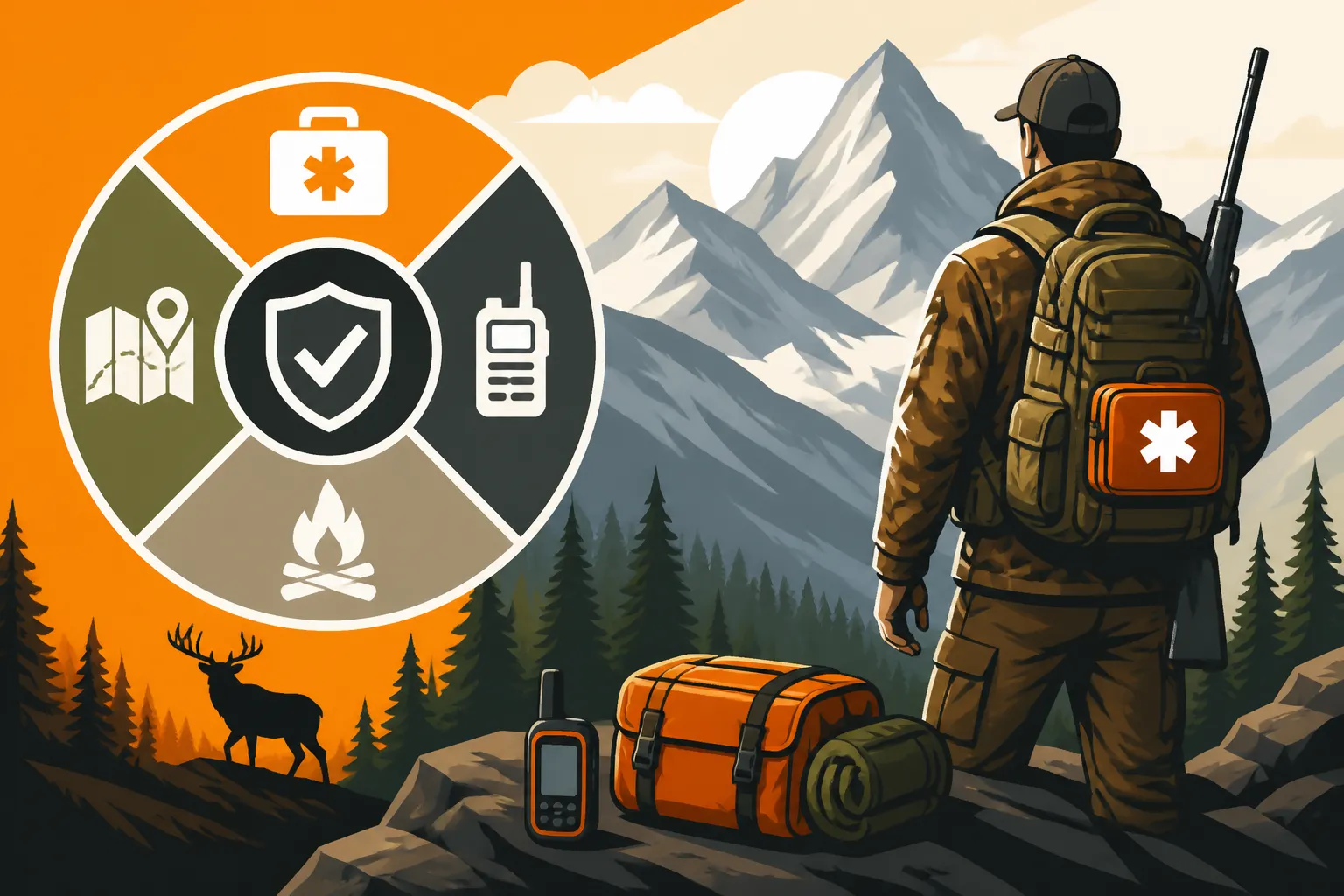
Every hunter should carry a personal "go-bag" or emergency kit that is separate from their main hunting pack. This kit should contain essentials like:
- Fire starting materials (waterproof matches, lighter, ferro rod)
- Emergency shelter (space blanket, lightweight tarp, emergency bivy)
- Water purification tablets or a small filter
- High-energy food bars
- Headlamp with extra batteries
- Multi-tool or knife
- Signaling devices (whistle, mirror)
- Compass and a small, laminated map section of your immediate area
- Communication device (satellite messenger/PLB)
- Basic first aid supplies and any personal medications
This bag should always be on your person, even if you leave your main pack to stalk an animal. Think of it as your ultimate backup, ensuring that even if you get separated from your primary gear, you still have the means to survive and signal for help. Ensuring your Winter Truck Kit for an Alberta Hunt is just as robust is also a good idea.
Contingency Planning: "What If" Scenarios
It's helpful to mentally walk through "what if" scenarios. What if you're hunting alone and break your leg? You'd activate your satellite messenger, use your go-bag for warmth and shelter, and stay put. What if your hunting partner becomes unresponsive? You'd immediately call for help and administer first aid while staying with them. What if a sudden heavy snowfall makes travel impossible? You'd hunker down, conserve energy, and signal your position.
Discuss these scenarios with your hunting partners before you leave. Agree on rendezvous points if you get separated, establish clear communication protocols, and understand each other's capabilities and limitations. Knowing your partners' medical conditions and where their personal medications are stored can be crucial. This kind of detailed planning often gets overlooked, but it's the bedrock of real backcountry safety. When researching destinations or guides, keep an eye out for how they address emergency preparedness; even if you're DIY hunting, sites that list hunt opportunities often mention the remoteness of locations, which is a good prompt for your own plans. Camping Rules on Alberta Crown Land also sometimes have safety implications regarding emergency access.
Activating Your Plan: When and How to Call for Help
The decision to call for help is often the hardest, but waiting too long can be fatal. It's about judgment and understanding the severity of your situation. Don't activate your SOS for a flat tire (unless that flat tire has put you in a truly life-threatening situation in extreme cold) or a lost hat. Save it for real emergencies where life, limb, or immediate survival is at stake.
The Decision Point: Is it an SOS?
An SOS signal should be reserved for situations like:
- A severe injury or medical emergency that prevents you from self-evacuating.
- Becoming hopelessly lost and unable to navigate to safety before darkness, severe weather, or dwindling resources pose a critical threat.
- Being caught in life-threatening weather conditions (e.g., severe blizzard, flash flood) with no immediate shelter.
- Threatening wildlife encounters where you cannot safely extract yourself.
- Any situation where you genuinely believe you cannot survive or reach safety without external assistance.
It’s easy to second-guess, but err on the side of caution if you're facing a rapidly deteriorating, truly life-threatening situation. It's better to call for help and have it turn out to be less severe than you thought, than to wait and have it be too late.
Communicating Your Situation to Rescuers
Once you activate your SOS, whether through a satellite messenger or PLB, the monitoring center will receive your location. If you have a two-way device, they will immediately try to establish communication. Be prepared to provide critical information:
- Your exact location: The device will transmit this, but if you have a map and can give coordinates or landmarks, that's even better.
- The nature of the emergency: What happened? (e.g., "broken leg," "hypothermia," "lost").
- Number of people in your party: Are you alone? How many need assistance?
- Injuries: What type of injuries, if any, and current condition of the injured.
- Equipment: What kind of shelter, food, water, and communication devices do you have?
- Visibility: What are the weather conditions like at your location? Can a helicopter land?
Be as calm and clear as possible. Every piece of information helps rescuers understand the situation and plan their response.
Staying Put and Staying Safe
Once you’ve activated your SOS, the most important thing you can do is stay put. Moving makes it incredibly difficult for search and rescue teams to locate you, especially in dense bush or broken terrain.
- Build a visible signal: If possible and safe, create a large "X" or "SOS" sign on the ground with brightly colored tarps, branches, or rocks.
- Build a fire: Smoke is a universal signal during the day, and flames are visible at night.
- Conserve energy: Don't expend unnecessary energy. Keep warm, stay hydrated, and ration any food you have.
- Prepare for arrival: Clear an area if possible for a helicopter landing, but only if it's safe to do so.
Alberta's backcountry is incredible, but it demands respect and preparation. By understanding the risks, carrying the right gear, crafting a detailed emergency plan, and knowing when and how to call for help, you significantly increase your chances of a safe and successful hunting adventure. Remember, the best emergency plan is the one you never have to use, but having it ready provides invaluable peace of mind. For more specific regional considerations, you might look into topics like Backpacking Into Alberta Sheep Country or Hunting Alberta's Boreal Forest Country to understand unique challenges.
Disclaimer
This article is for general informational purposes only and does not constitute professional advice. Laws, prices and regulations vary by location and change over time. Consult a qualified professional for guidance on your specific situation.