Drop Camps in the Backcountry
Many hunters dream of a true backcountry experience in Alberta, immersing themselves in the wilderness, far from the crowds and road noise. However, the cost of a fully guided, multi-day mountain hunt can be prohibitive for many, and the logistics of organizing an unassisted deep-woods trip can feel overwhelming. This guide explores drop camps in Alberta's backcountry, offering a fantastic middle-ground solution for those seeking adventure without the full outfitter price tag or the burden of solo logistical planning.
What Exactly is an Alberta Drop Camp?
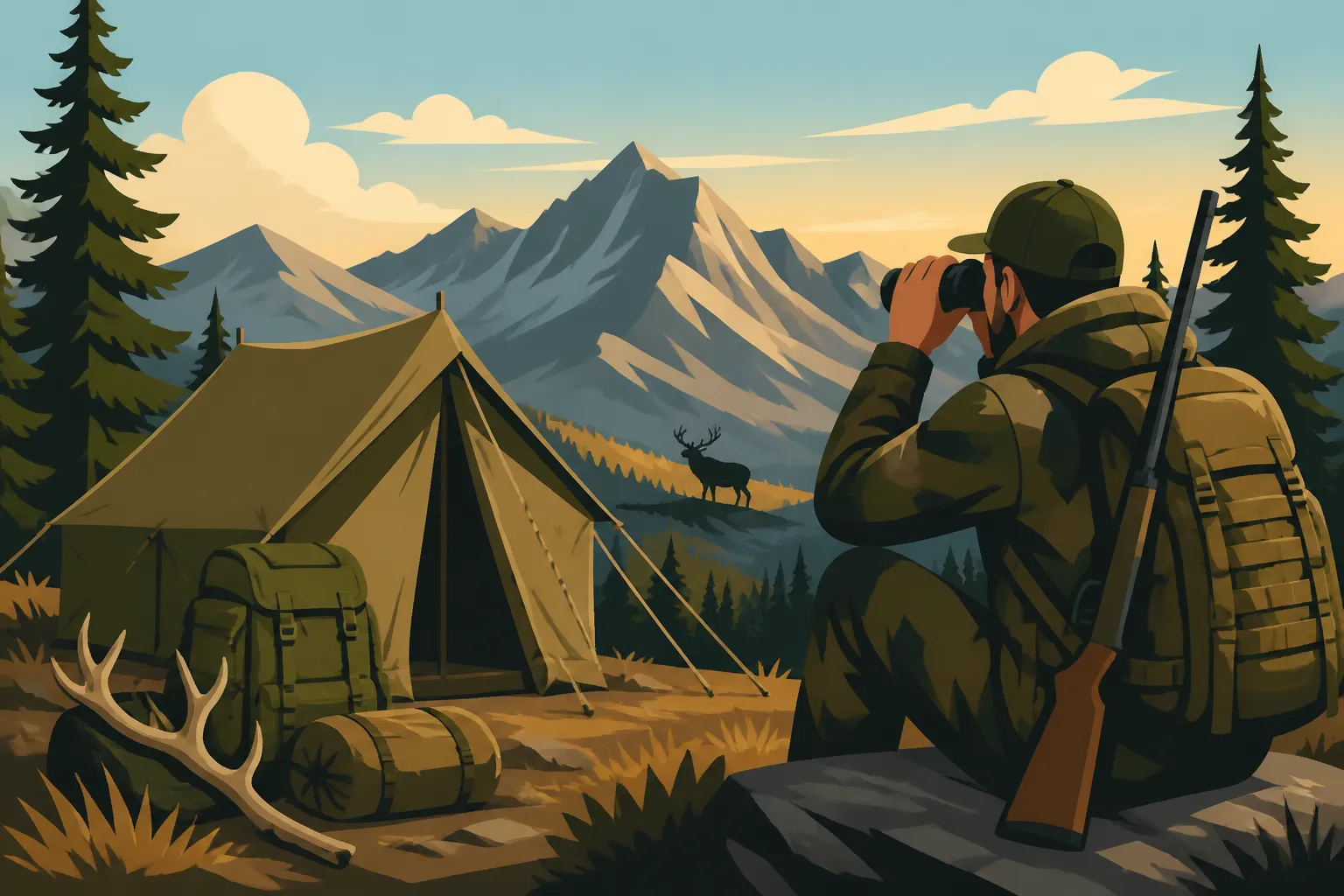
A drop camp, in the context of Alberta's vast hunting grounds, is an arrangement where an outfitter provides transportation (often by horse, ATV, boat, or even small plane) and a basic camp setup in a remote location, then leaves you to hunt on your own. It's not a guided hunt; the outfitter isn't with you in the field, doesn't offer hunting advice, and doesn't track game for you. Instead, they drop you off, check in periodically (as pre-arranged), and pick you up at the end of your scheduled hunt, along with any game you've harvested.
The Philosophy Behind a Drop Camp
The appeal of a drop camp really boils down to self-reliance and immersion. You're getting into areas that are often inaccessible by vehicle, giving you a taste of true wilderness hunting that few people experience. It's about testing your skills, making your own decisions, and truly earning your harvest in a wild setting. This setup is perfect for experienced hunters who know how to navigate, scout, track, and process game, but lack the means or desire to get deep into the backcountry with all their gear on their own two feet or horseback. You're still responsible for all your food, personal gear, hunting strategy, and safety, but the heavy lifting of getting into and out of a remote spot is handled.
Think of it as a wilderness Airbnb, but instead of an apartment, it's a tent, and instead of a car service, it's a horse train. It allows you to focus on the hunt itself, rather than spending days on a grueling pack-in or worrying about horse management. You still get that profound sense of accomplishment and connection to the land that comes with a true backcountry hunt, but with a crucial logistical assist.
What You Can Expect vs. a Fully Guided Hunt
The differences between a drop camp and a fully guided hunt are significant, primarily in terms of support and cost. With a fully guided hunt, you have a professional guide by your side, providing expertise on local game movements, habitat, tracking, calling, and even field dressing. They often handle camp chores, cooking, and have contingency plans for almost anything. The price reflects this comprehensive service.
A drop camp, on the other hand, is a much leaner operation. The outfitter typically provides robust wall tents, cots, a wood stove, and perhaps some basic cooking equipment (pots, pans, axes) at the camp. Beyond that, you're on your own. You bring all your food, sleeping bags, hunting gear, first-aid, navigation tools, and personal effects. The outfitter ensures your safety by arranging check-ins and emergency contact, but they are not actively hunting with you. This translates to a significantly lower cost, making the backcountry more accessible for budget-conscious hunters who still crave that remote experience. You trade direct guidance for greater independence and a lighter wallet.
Planning Your Alberta Drop Camp Adventure
Successfully executing an Alberta backcountry drop camp hunt requires meticulous planning. It's not just about packing your rifle and hoping for the best; it's about strategizing every aspect, from who you hunt with to how you'll handle a quartered moose.
Finding the Right Outfitter
The first step is finding a reputable outfitter who offers drop camp services in the areas you're interested in. Not all outfitters provide this option, as it requires a different kind of logistics and liability management. Start by looking at outfitters that specialize in mountain or deep bush hunts, as they'll have the necessary gear and experience for remote operations. Online platforms like BookYourHunt and GoHunt can be great resources for researching outfitters, reading reviews, and understanding what's available. You'll want to ask very specific questions:
- What exactly is included in the camp setup (tents, stove, cots, cooking gear, water)?
- What are the transportation methods (horses, ATV, boat, plane)? What are the weight limits for gear and game?
- What are the check-in protocols? How often do they check on you? What's the emergency plan?
- What is their policy for game extraction? How many trips will they make? What happens if you get a moose far from camp?
- Can they provide references from previous drop camp clients?
Ensure the outfitter is properly licensed in Alberta and has a clear understanding of the specific WMU (Wildlife Management Unit) regulations you'll be hunting. Some areas are very particular about access and even camping practices. You'll need to secure your own Alberta Hunting Licences and What They Cost and any required special draw tags, as the outfitter only handles access and camp services.
Gear, Logistics, and Preparation
Once you've booked your drop camp, the real planning begins. Your gear list will be extensive, covering everything from food and water filtration to navigation and first aid. Remember, you're responsible for everything once you're dropped off. You'll need a reliable GPS, a satellite communication device (like a Garmin inReach or Zoleo) for emergencies, and a comprehensive first-aid kit. Pack enough food for the duration of your trip, plus a few extra days in case of weather delays. Consider durable, calorie-dense foods that don't require refrigeration.
Logistically, you need to coordinate with your hunting partners. How will you split food, tents, and other communal gear to meet weight limits? What's your hunting strategy? Will you split up to cover more ground or stay together? Make sure everyone is clear on navigation, emergency procedures, and how to react to wildlife encounters. It's also crucial to be physically prepared for the demands of backcountry hunting. Backpacking Into Alberta Sheep Country is a good example of the kind of fitness required, even if you're not carrying everything in. Practice shooting your rifle or bow under various conditions, and make sure your gear is broken in and reliable.
Understanding Access and Regulations
Hunting in Alberta's backcountry often means navigating specific regulations tied to public land use. Many drop camps operate within Public Land Use Zones (PLUZs) or other designated Crown Land areas. It's vital to understand the specific rules for your chosen WMU and the particular PLUZ. This includes restrictions on vehicle use, camping, fire restrictions, and even specific hunting regulations like antler point restrictions or draw-only species. Your outfitter should be knowledgeable about these, but it's ultimately your responsibility as a hunter to confirm and adhere to them.
Some areas might have special considerations, such as proximity to national parks (where hunting is strictly prohibited) or areas with caribou protection zones. Familiarize yourself with detailed maps, ideally using a GPS app with Crown Land layers, to ensure you stay within legal hunting boundaries. The outfitter usually has access permits for the land they operate on, but you need to know what those permits cover. Don't assume anything; ask for clarification on boundaries and access points. You'll want to look at Hunting Alberta's Public Land Use Zones and Hunting Alberta's Crown Land for more information.
The Realities of a Backcountry Drop Camp
A drop camp offers incredible opportunities, but it also comes with a unique set of challenges. Being prepared for these realities is key to a safe and successful hunt.
The Freedom and the Responsibility
The freedom of a drop camp is truly exhilarating. You set your own schedule, choose your hunting grounds, and make all the tactical decisions. There's no guide telling you where to go or what to do; it's just you and your partners, pitting your skills against the wilderness. This sense of independence is a huge draw for many hunters. However, with that freedom comes immense responsibility. Every decision you make, from where you set up your personal sleeping area to how you cross a river, falls squarely on your shoulders.
If someone gets injured, if you get lost, or if you run into dangerous wildlife, there's no immediate professional backup. You and your team are the first responders. This means everyone needs to be proficient in navigation, basic first aid, and wildlife safety (especially in bear country). Being able to assess risks, make sound judgments under pressure, and work effectively as a team are not just beneficial; they are essential for a drop camp hunt. It's truly a test of your hunting and outdoor skills.
Dealing with Unexpected Challenges
Backcountry hunting in Alberta will inevitably throw unexpected challenges your way. Weather can change drastically and quickly, especially in the mountains. A warm, sunny morning can turn into a blizzard by afternoon. Being prepared for sudden temperature drops, heavy rain or snow, and high winds is paramount. This means packing appropriate layers, waterproof gear, and knowing how to properly set up your tent to withstand the elements.
Wildlife encounters are another reality. You're deep in their territory. Knowing how to react to bears, moose, and even territorial elk is crucial. Always carry bear spray and know how to use it. Injuries, even minor ones, can become serious problems when you're days away from medical help. A twisted ankle or a deep cut needs to be addressed promptly and effectively. This reinforces the need for a well-stocked first aid kit and at least one person in the group with wilderness first aid training. Having a robust Emergency Plans in Alberta's Backcountry is non-negotiable.
Meat Care and Extraction Strategies
Perhaps the biggest logistical challenge for a drop camp hunt, especially if you're successful with a large animal like a moose or elk, is meat care and extraction. Unlike a guided hunt where the guide often has a clear plan and resources (like horses or ATVs) for getting game out, with a drop camp, this responsibility rests largely with you. You'll need to field dress and quarter your animal promptly and efficiently to prevent spoilage, especially if temperatures are mild. Understanding Meat Care in Alberta's Cold and Warm Swings is critical.
The outfitter will pick up your meat, but you're usually responsible for getting it to a designated pick-up point, which might be a long, arduous pack. Discuss weight limits for game with your outfitter beforehand. If you harvest a large animal, you might need to make multiple trips to pack out the meat and head, which can be exhausting and time-consuming. Having game bags, a good pack frame, and strong backs in your group is essential. Some outfitters might offer extra assistance for an additional fee if you call them in, but don't count on it as standard. You also need to consider your plan for Getting a Moose Out With a Quad if that's an option, or how you'll manage quartering and packing if you're on foot in rugged terrain.
Is a Drop Camp Right for You?
Deciding if a drop camp is the right choice isn't just about the money; it's about your experience, your skills, and your expectations. It's not for everyone, and it's certainly not an entry-level hunt.
Evaluating Your Skills and Experience
A drop camp is best suited for hunters with a solid foundation in wilderness skills. This includes proficiency in:
- Navigation: Map and compass, GPS, and the ability to read terrain. You won't have a guide pointing the way.
- Field Dressing & Meat Care: Knowing how to quickly and cleanly field dress an animal, quarter it, and protect the meat from spoilage and scavengers.
- Backcountry Camping: Setting up a secure camp, managing a wood stove, water purification, and leaving no trace.
- Physical Fitness: The ability to hike rugged terrain, often with a heavy pack, and to pack out meat.
- Wildlife Safety: Understanding bear behavior and being proficient with bear spray.
- Problem-Solving: The ability to adapt to unforeseen circumstances and make critical decisions in a remote setting.
If you're new to hunting or lack extensive backcountry experience, a drop camp might be too much too soon. Consider a guided hunt for your first few backcountry trips to learn the ropes, or start with shorter, less remote self-guided trips to build your skills.
Cost-Benefit Analysis
While a drop camp is significantly cheaper than a fully guided hunt, it still represents a substantial investment. You're paying for transportation, camp infrastructure, and the outfitter's logistical expertise. However, the savings often allow hunters to access prime backcountry areas that would otherwise be out of reach.
Let's look at a general comparison of what you might save or gain:
| Feature | Fully Guided Hunt | Drop Camp Hunt |
|---|---|---|
| Cost | Higher (often several thousand more) | Lower (hundreds to a few thousand less) |
| Guide Presence | Guide actively hunting with you | No guide, self-guided |
| Camp Services | Guide often cooks, maintains camp | Hunter responsible for all camp chores |
| Hunting Strategy | Guide plans and executes | Hunter plans and executes |
| Meat Extraction | Guide assists or handles | Hunter primarily responsible, outfitter picks up |
| Experience Level | Suitable for all, including beginners | Best for experienced backcountry hunters |
| Independence | Less, follow guide's lead | High, complete autonomy |
| Learning Opportunity | Learn from an expert | Learn by doing, testing your own skills |
The benefit isn't just financial; it's also the profound satisfaction of a self-reliant hunt. If you value independence, are confident in your skills, and want to experience Alberta's wild landscapes on your own terms, a drop camp could be the perfect adventure for you. For more on the financial side, check out What an Alberta Guided Hunt Costs to compare.
Ultimately, a drop camp hunt in Alberta’s backcountry offers an unparalleled blend of adventure, challenge, and self-reliance. It’s a chance to truly connect with the wilderness and yourself, far from the conveniences of modern life. Just be sure to go in prepared, realistic, and with a healthy respect for the wild country you’re venturing into.
Disclaimer
This article is for general informational purposes only and does not constitute professional advice. Laws, prices and regulations vary by location and change over time. Consult a qualified professional for guidance on your specific situation.