Hunting a Willow Run in Farm Country
Finding prime whitetail habitat in Alberta's vast farm country can feel like searching for a needle in a haystack. With so much open land, deer often concentrate in the limited cover available, and one of the most overlooked, yet incredibly productive, spots is the humble willow run. This guide will walk you through exactly what makes these areas so attractive to whitetails and how you can effectively scout and hunt them to your advantage.
Understanding Willow Runs as Deer Habitat in Alberta Farm Country
In the expansive mosaic of Alberta's agricultural landscapes, where fields of canola, wheat, and barley stretch for miles, dense cover is a precious commodity for deer. Whitetails, being creatures of edge and security, gravitate towards any feature that offers concealment, thermal protection, and a travel corridor. This is precisely where willow runs become invaluable. They might not look like much at first glance – often just a tangled ribbon of brush winding through a field or along a drainage – but to a deer, they're an oasis.
What Exactly is a Willow Run?
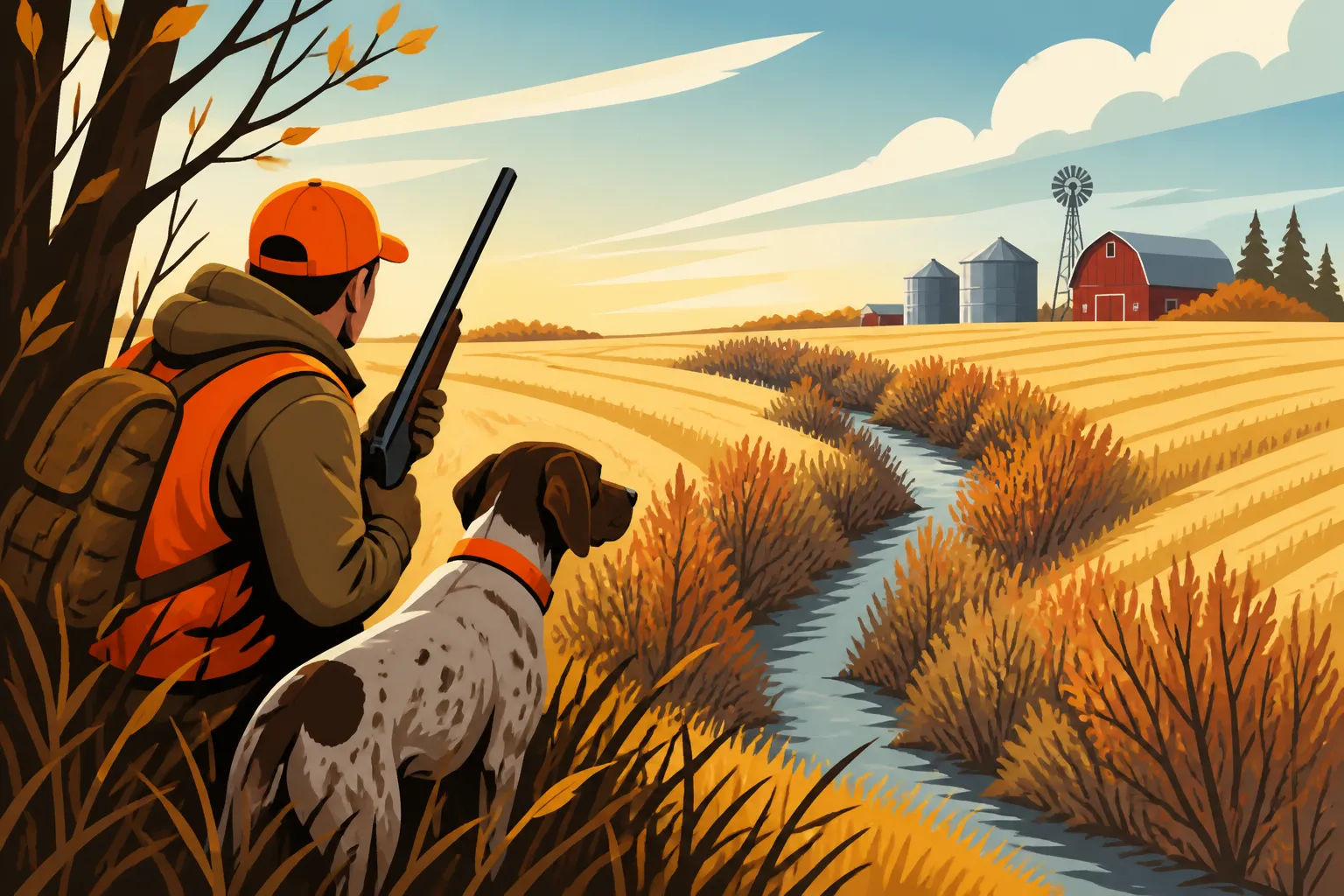
Picture a low-lying area, perhaps an old drainage ditch, a seasonal creek bed that might only hold water during spring runoff, or even just a natural depression in the landscape. Over time, these areas, often too wet or uneven for cultivation, become choked with dense stands of various willow species. You'll see several types, from the tall, stout Bebb's willow to the shrubby, multi-stemmed sandbar willow, all woven together with dogwood, wild rose, and other hardy bushes. This creates an almost impenetrable thicket, typically a few dozen yards wide and sometimes stretching for hundreds of yards, even miles. Unlike a larger bush patch or an aspen bluff, a willow run is often linear, acting like a natural highway system for deer moving between bedding areas, feeding grounds, and water sources. They are the arteries of deer movement in open country, largely ignored by human activity.
Why Deer Rely Heavily on These Areas
Deer, especially mature bucks, are masters of using cover to their advantage. In farm country, where pressure from agriculture and human presence is high, they become incredibly adept at remaining unseen. A willow run provides multiple critical needs:
- Exceptional Concealment: The dense, often thorny branches of willows, particularly when they're fully leafed out, offer incredible visual cover. A deer can disappear completely just a few yards into one of these thickets. During the fall and winter, even after leaves drop, the sheer density of the intertwined stems still breaks up a deer's outline effectively. This allows them to bed down, move discreetly, and avoid detection from predators and hunters alike.
- Thermal Regulation: In the scorching heat of late summer or the biting winds of an Alberta winter, the dense canopy and understory of a willow run offer crucial thermal protection. It can be surprisingly cooler in summer and significantly warmer and less windy in winter compared to the open fields. This makes them ideal bedding areas, particularly during harsh weather.
- Forage and Water: While often overlooked, willow runs and the areas immediately adjacent to them can provide year-round forage. Young willow shoots are browsed, as are dogwood and rose hips. More importantly, these low-lying areas often retain moisture longer, leading to lusher vegetation, and frequently have small pockets of standing water or access to seasonal creeks that serve as essential water sources for deer.
- Travel Corridors: This is perhaps their most vital function. Imagine a deer needing to travel from a bedding area in a small bluffy patch to a distant field of standing canola. Moving across open ground during daylight hours is a huge risk. A willow run offers a safe, concealed route, allowing deer to travel with confidence, even in the middle of the day. They act as natural funnel points, guiding deer movement and making them predictable if you know how to read the terrain. You'll often find these runs connecting larger blocks of bush, linking slough edges, or leading directly to prime feeding areas.
Effective Scouting Strategies for Willow Runs
Successful hunting in willow runs hinges entirely on thorough scouting. Because the cover is so dense, a casual drive-by won't cut it. You need to get boots on the ground, or use modern tools, to understand how deer are utilizing these linear thickets.
Utilizing Modern Mapping Tools for Initial Assessment
Before you even step foot on the property, modern mapping applications like GoHunt can be your best friend. Start by identifying potential willow runs from satellite imagery. Look for those distinct, often darker green, snaking lines or patches that stand out against the lighter hues of cultivated fields. Pay attention to how these runs connect different habitat features:
- Do they link up with a larger block of timber?
- Do they lead from a known bedding area to a feeding field?
- Do they run along a natural drainage or connect a series of sloughs?
Using GoHunt, you can trace these features and identify pinch points or intersections where deer movement might be concentrated. Look for where a wider run narrows, or where two runs converge. Also, note any subtle elevation changes; even a slight rise can be a preferred bedding spot within the run, offering a vantage point. These tools allow you to prioritize which runs to investigate further, saving you invaluable time. Remember, the goal is to predict movement, and mapping helps you build that picture.
On-the-Ground Sign Reading: What to Look For
Once you've identified promising runs on your map, it's time for some old-fashioned boots-on-the-ground scouting, ideally outside of hunting season to minimize disturbance. This is where you confirm your hypotheses and find the exact spots deer are using.
- Entry and Exit Points: Look for clear, well-used trails leading into and out of the willow run, especially where it meets a field edge. These are often the most obvious signs of deer activity. Pay attention to the size of the tracks and the frequency of use. If you see signs of larger tracks, you know big bucks are using it.
- Internal Trails and Rub Lines: Once inside the run (which can be a challenge due to the density), look for internal trails. These paths, often barely discernable, are used by deer to navigate the thicket. More importantly, look for rub lines. Bucks will rub their antlers on small willow saplings or larger shrubs within the run, especially during the pre-rut and rut phases. A series of fresh, well-defined rubs is a strong indicator of a buck's presence and travel path. Don't forget to look for scrapes as well, though they might be less obvious in the dense undergrowth. Understanding Reading Whitetail Sign in Alberta Aspen Bluffs can give you a similar approach to sign in dense cover.
- Bedding Areas: Within the thickest parts of the willow run, look for flattened areas in the vegetation where deer have bedded down. These might be sheltered pockets, often on slightly higher ground if available, providing a bit of a view. Pay attention to fresh droppings and tracks around these beds. Finding a "community" of beds tells you it's a popular resting spot, while an isolated, larger bed could indicate a mature buck's core bedding location.
- Browse and Droppings: Check for signs of browsing on willow shoots and other vegetation. Freshly nipped branches indicate recent feeding. Abundant fresh droppings are another clear indicator of consistent deer activity. The location and freshness of these signs will help you gauge how and when deer are using the run. Are they simply passing through, or are they bedding and feeding there regularly?
Remember, when scouting, move slowly and observe. The more time you spend, the better you'll understand the intricate patterns of deer movement in these unique environments.
Strategic Hunting Approaches for Willow Runs
Hunting a willow run requires a blend of patience, stealth, and strategic positioning. Because of the linear nature and dense cover, traditional open-field tactics won't work. You're essentially hunting a natural tunnel, so your approach needs to respect that.
Stand Placement for Ambush Points
If you plan to hunt from a stand, strategic placement is critical. Your goal is to intercept deer as they use the run for travel.
- Edge Placement: The most common and often most effective strategy is to place your stand just inside or along the edge of the willow run, overlooking a main trail or an entry/exit point into a field. This gives you a clear shooting lane into the field or along the edge of the cover. Consider prevailing winds to ensure your scent isn't blowing directly into the run. A well-placed stand here allows you to catch deer transitioning from cover to feed, especially in the early morning or late evening.
- Internal Intersections: If you've found a spot where two willow runs merge, or where an internal trail offers a good shooting window, consider placing a stand inside the run itself. This is more challenging due to limited visibility and shooting lanes, but it can be deadly during the middle of the day when deer are moving within the thickets. It requires meticulous scouting to find those small openings. Hanging a stand on an Alberta bush edge is a similar concept, just on a smaller, more linear scale here.
- Pinch Points and Funnels: Look for natural bottlenecks in the run – perhaps a spot where the willow thicket narrows significantly, or where it's squeezed between a field and a fence line. Deer are funneled through these spots, making them prime ambush locations. A mobile setup like a treestand or a ground blind can be moved to capitalize on these areas. Using a mapping tool like GoHunt can help you quickly identify these funnels from an aerial perspective before you even set foot on the ground.
When setting up, always prioritize safety and ensure you have clear shooting lanes. You might need to do some selective trimming of small branches (where permitted) to create these lanes, but do so minimally to avoid alerting deer.
Still-Hunting the Thickets
For those who prefer a more active approach, still-hunting through a willow run can be incredibly exciting and effective. This method involves moving very slowly and deliberately, pausing frequently to observe and listen.
- Patience is Key: The density of the cover means you'll often be very close to deer before you see them. Move at a snail's pace, taking only a few steps, then stopping for several minutes to scan, listen, and let the woods settle. Use your binoculars to pick apart the shadows and look for horizontal lines (a deer's back) in a vertical world (the willow stems).
- Wind and Stealth: Always hunt into the wind to keep your scent from blowing ahead of you. Wear quiet clothing that won't snag on branches. Focus on placing your feet silently, avoiding crunchy leaves or breaking twigs. You're trying to mimic the movement of another animal in the bush.
- Listen Closely: With the limited visibility, your ears become your most important tool. Listen for the rustle of leaves, the snap of a twig, or the soft blowing of a deer. These sounds can often betray a deer's presence long before you see it. When still-hunting, you might encounter a deer at very close range, so be ready for a quick, decisive shot.
- Hunting Partners: Sometimes, still-hunting a willow run with a partner can be effective, especially if the run is long and relatively straight. One hunter can slowly push through, while the other positions themselves at a downwind exit point. Communication is crucial here, and safety paramount.
Rattling and Calling Tactics
Willow runs, especially those bordering open farm fields, can be excellent locations for employing rattling and calling strategies, particularly during the rut. The dense cover allows bucks to feel secure, but the open surroundings mean they're also keenly aware of any sounds.
- Blind Calling: Find a good vantage point just inside the willow run, or at its edge, with a clear view of an adjacent field or a good section of the run itself. Start with a series of grunt calls, interspersed with soft rattling. The goal is to pique a buck's curiosity without directly alerting him to your presence. Sometimes, a buck will circle downwind to scent-check the source of the sound, so be aware of your wind direction and potential approach routes.
- Aggressive Rattling: During the peak of the rut in early November, you can be more aggressive with your rattling sequences. Bucks are often eager to challenge rivals. Perform a crashing sequence of rattling, followed by grunts and snort-wheezes. Then, be prepared for a quick shot. Bucks often come in fast and silently. The thick cover of the willow run can make a buck feel bolder to investigate a perceived fight, knowing he can use the cover to his advantage. Consider the effect of Rattling Volume in Open Parkland – too loud might spook, but just enough to carry, can draw them in.
- Decoy Use: If you have access to a good buck or doe decoy, positioning it at the edge of the willow run, where it meets a field, can be incredibly effective when combined with calling. A decoy gives a visual focal point for an incoming buck, drawing his attention away from your actual position. Just be mindful of safety, especially when hunting with others, and ensure your decoy is clearly identifiable.
- Grunt Calls Late in the Rut: Even after the peak, Grunt Calls Late in Alberta's Rut can still be effective. Bucks might be tired but are still looking for any remaining receptive does. A soft doe bleat followed by a tending grunt can sometimes entice a weary buck to investigate.
Maximizing Your Success: Timing and Conditions for Willow Run Hunts
Beyond scouting and strategy, timing and environmental conditions play a massive role in your success when hunting willow runs. Deer behavior is heavily influenced by the clock and the calendar, as well as the weather.
Best Times of Day
While deer can use willow runs at any time, certain periods offer higher odds for an encounter:
- Dawn and Dusk: These are the classic "magic hours" for whitetail hunting. Deer will be moving out of or into the willow runs to feed in adjacent fields. Setting up an ambush point on the edge of a run before first light or staying until last light will give you the best chance to catch them transitioning. They feel safer traveling in low light.
- Mid-Day Movement (Rut and Cold Weather): Don't dismiss the middle of the day, especially during the rut or in periods of cold, nasty weather. During the rut, bucks are constantly on the move, searching for does, and a willow run offers excellent security for this daytime cruising. Similarly, if the wind is howling or temperatures plummet, deer will often seek the thermal refuge of a dense willow run, and may shift bedding positions or browse within it throughout the day. Still-hunting during these times can be very productive.
Weather Influences on Deer Movement
Weather can significantly dictate how and when deer use these vital strips of cover.
- Windy Conditions: High winds are a mixed blessing. While they make it harder for deer to hear and can cover your own noise, deer generally dislike moving in strong winds in open areas. They will often seek the shelter of the willow run, sometimes bedding down tight within it. This is a prime time for a slow, methodical still-hunt into the wind. However, they can also be jumpy as the wind makes them feel less secure.
- Rain and Snow: Light rain or snowfall can often stimulate deer movement. It quiets the forest floor, making them feel more confident moving. Heavy rain or a blizzard, however, will push them into the densest cover for shelter. Again, still-hunting within the run can be your best bet, as deer will often be bedded down tight, trying to stay out of the elements. After a fresh snowfall, tracks will be easy to read, revealing exactly where deer are concentrated.
- Temperature Swings: Extreme cold or hot temperatures will often send deer into the thermal cover of a willow run. In frigid Alberta winters, the insulation provided by a dense willow run can be crucial for survival, leading deer to bed there for extended periods. Conversely, in hot weather, the shade and slightly cooler temperatures make them appealing daytime bedding sites. For more on late season conditions, consider Hunting Deep Cold Late in the Season.
By combining meticulous scouting, strategic hunting methods, and an understanding of deer behavior influenced by time and weather, you can transform these seemingly small, overlooked willow runs into some of your most productive hunting spots in Alberta's farm country. Don't underestimate the power of these linear havens for whitetails!
Here's a quick look at how different factors influence deer behavior in willow runs:
| Factor | Deer Behavior in Willow Run | Hunting Strategy Implications |
|---|---|---|
| Dawn/Dusk | High movement between bedding and feeding. | Stand hunt on edges, ambush travel routes. |
| Mid-day | Bedded, or cruising during rut/cold. | Still-hunt internal trails, rattling during rut. |
| High Wind | Seek shelter, bedded tight within run. | Slow still-hunt into the wind; focus on sheltered areas. |
| Light Rain/Snow | Increased movement, quieter travel. | Still-hunt or stand hunt; tracks easy to read after fresh snow. |
| Heavy Rain/Blizzard | Tight to dense cover for thermal protection. | Still-hunt very slowly within thickets; deer may be less aware. |
| Extreme Cold | Prioritize thermal cover, bedded longer. | Focus on internal bedding areas; still-hunt carefully. |
| Rut Peak | Bucks actively cruising, seeking does. | Aggressive rattling and grunting; focus on travel corridors and intersections. |
| Hunting Pressure | Become nocturnal, use thickest cover, travel discreetly. | Hunt tight to cover, focus on low-light transitions, use stealth. |
Disclaimer
Hunting is a challenging and rewarding pursuit that carries inherent risks. The information provided in this guide is for informational purposes only and is not a substitute for professional advice, local regulations, or personal judgment. Always consult the most current Alberta hunting regulations, secure appropriate licenses and permissions, and prioritize safety above all else. Practice ethical hunting principles and respect wildlife and the land.