Hunting Alberta’s Sandhill Cranes Over Decoys
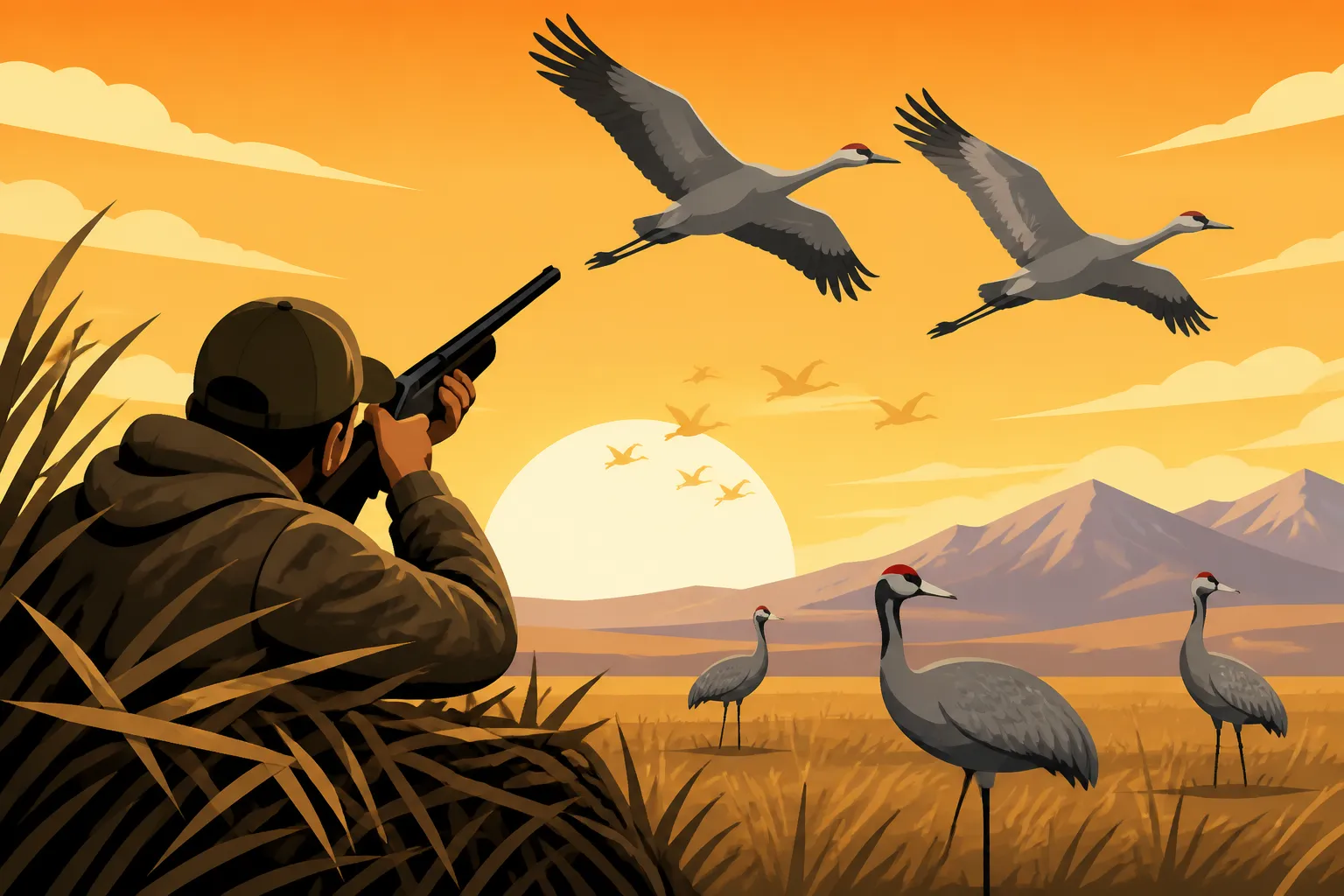
Hunting sandhill cranes in Alberta can feel like trying to outsmart a seasoned general. These magnificent birds are notorious for their incredible eyesight, wary nature, and a tendency to abandon a field at the slightest hint of danger. If you've spent hours tucked away, only to have a flock flare at 200 yards, you know the frustration. This comprehensive guide is here to equip you with the knowledge and tactics to successfully bring these "ribeye of the sky" birds into your decoy spread, making those early morning efforts truly pay off.
The Allure and Challenge of Alberta's Sandhill Cranes
Alberta holds a special place in the migration path of sandhill cranes, offering crucial staging and feeding grounds. But don't let their abundance fool you; these birds are a whole different ballgame compared to ducks or even most geese. Their intelligence and survival instincts are finely tuned, making them one of North America's most challenging — and rewarding — migratory game birds to pursue.
Understanding Crane Habits and Alberta's Role
Sandhill cranes are truly a sight to behold, with their elegant stature and prehistoric calls. However, that gracefulness comes with an extreme wariness that makes them incredibly difficult to fool. They possess remarkable eyesight, often described as having "binocular vision," allowing them to spot unusual shapes or movements from incredible distances. This means your concealment and attention to detail must be absolutely flawless.
Their diet in Alberta is primarily agricultural. They are huge fans of waste grain, especially peas, lentils, barley, and wheat left behind in harvested fields. They also have a particular fondness for potatoes, so if you can find a freshly dug potato field, you're likely sitting on a goldmine. Understanding their preferred food sources is the first step in successful scouting and setting up your decoy spread in the right location. They’re looking for high-energy carbohydrates to fuel their long migration south, making Alberta's vast agricultural landscape a critical stopover.
Key Migration Periods and Staging Areas
Alberta sits squarely in the Central Flyway, making it a prime location for sandhill cranes during their southward migration. While some cranes may nest in Alberta's northern reaches, the real hunting opportunities arise during the fall staging. Typically, the earliest birds start arriving in late August, but the bulk of the population and the peak hunting periods are usually throughout September. However, keep a close eye on the Alberta Sandhill Crane Season Dates as they can vary slightly by zone and year, and early season often means warmer weather which can make birds less predictable.
These magnificent birds tend to concentrate in areas with abundant feed and nearby roosting water, often shallow marshes, large wetlands, or even sandbars in larger rivers. The Peace River region, central Alberta's parkland, and the agricultural areas south of Edmonton and Calgary are well-known hotspots where large numbers of cranes will stage before continuing their journey. Weather plays a significant role in their movements; a sudden cold snap can trigger a mass exodus, while mild weather might keep them around longer. Local conditions, such as crop harvest schedules and water levels in roosting sites, also heavily influence where cranes will decide to feed and rest. A field that was hot one week might be barren the next if a new, more appealing food source opens up nearby.
Decoy Spreads and Concealment: The Foundation of Success
When it comes to hunting sandhill cranes over decoys, realism and invisibility are your two greatest allies. These birds are not easily fooled, and a poorly set spread or inadequate blind will send them soaring out of range faster than you can say "crane."
Choosing and Arranging Your Decoys
Forget about those beat-up duck decoys; sandhill cranes demand realism. Full-body decoys are unequivocally the best choice. Their lifelike appearance, especially when made from durable materials that minimize glare, will give you the edge you need. While full-bodies can be an investment, they pay dividends in drawing in these sharp-eyed birds. If a large spread of full-bodies isn't feasible, you can supplement with high-quality silhouette decoys, but try to ensure your landing zone and the most visible parts of your spread are dominated by full-body realism.
Quantity absolutely matters with cranes. They feel safer feeding in large flocks, so mimicking this natural behavior is crucial. A spread of 2-3 dozen full-body decoys should be considered a minimum, but if you can deploy 50 or more, you'll significantly increase your odds. The spread pattern itself should be designed to invite cranes to land directly in front of your blinds. A common and effective layout is a loose U-shape or J-hook, with the open end of the "U" facing directly into the wind, acting as a natural landing strip. Cranes, like most large birds, prefer to land into the wind, giving them better control and lift. Place your blinds at the closed end of the "U" or "J," ensuring the birds will be focused on landing in the open space directly in front of you.
Don't underestimate the power of motion. While cranes aren't as responsive to spinning wing decoys as ducks, a few strategically placed full-body decoys with subtle motion (e.g., wind-activated heads or subtle flags that mimic a crane stretching or preening) can add a crucial layer of realism. Manual flagging, where you use a large, dark flag to simulate a landing bird or a crane stretching its wings, can be incredibly effective in grabbing the attention of distant flocks and convincing them to investigate your spread.
Masterful Concealment for Wary Cranes
This cannot be stressed enough: if sandhill cranes see you, they will not come in. Their eyesight is legendary, and any exposed skin, a shiny gun barrel, or an unnatural lump in the field will send them packing. Full concealment is not an option; it's a necessity.
Layout blinds are the gold standard for crane hunting in open fields. They allow you to remain completely horizontal and blend seamlessly into the stubble or cover. Ensure your layout blind is thoroughly brushed in with local vegetation – stubble, weeds, or even dirt clods from the field you're hunting. The goal is to make it disappear. Don't just toss a bit of straw on it; take the time to truly integrate it into the surroundings. If you're hunting a field with more substantial cover, like a fence line or a brushy ditch, an A-frame blind or a natural blind made from heavy brush can also work, provided it offers 360-degree concealment and a good shooting lane.
Always consider your background. Never position your blind where you'll be silhouetted against the sky. Instead, try to have a darker background behind you, like a distant treeline, a dark patch of unharvested crop, or even a slight rise in the terrain. Cranes approaching from the direction of the sun can be particularly challenging, as their vision is already somewhat obscured, but they'll still pick up on anything out of place. This is where diligent Scouting Fields for Alberta Waterfowl beforehand truly pays off, allowing you to identify ideal blind locations that offer both concealment and good shooting opportunities. Remember, the birds will be focused on your landing zone, not necessarily your blind, but if something looks amiss in the periphery, they'll avoid the entire area.
Calling, Shooting, and Ethical Considerations
Even with a perfect spread and masterful concealment, you'll still need to bring those birds the final distance with effective calling. And once they commit, knowing how to ethically harvest a sandhill crane is paramount.
Effective Calling for Sandhill Cranes
The call of a sandhill crane is unmistakable – a loud, rolling, trumpeting bugle that sounds almost prehistoric. It's a truly unique sound in the bird world, and mastering it is key to convincing wary flocks that your spread is a safe place to land. Unlike geese, where volume is often king, crane calling requires more nuance and realism.
Start with single notes, mimicking the sound of cranes communicating casually on the ground. As a flock approaches, you can increase the cadence to a rolling or chattering call, simulating excited birds feeding or calling to each other. When a flock is working directly overhead and appears to be committing, a series of quick, sharp "crane rattles" can often be the final convincing factor. However, resist the urge to overcall. If the birds are already locked on your spread and losing altitude, less is often more. Let your realistic decoys do the heavy lifting, only adding calls as needed to reassure them or to grab the attention of birds that seem to be drifting.
Practice your calls at home, listening to recordings of real cranes. It's not about being the loudest, but about being the most authentic. A poorly executed call can be as detrimental as a visible hunter, sending a clear signal of danger to intelligent birds.
Shot Placement, Gear, and Regulations
Sandhill cranes are large, tough birds with dense feathers and surprisingly strong bones. This means you need a shotshell that delivers ample energy and a tight pattern to ensure a clean, ethical harvest. Steel shot in sizes #2, BB, or even BBB are excellent choices, offering the necessary penetration and knockdown power. A modified or full choke is generally recommended to keep your pattern dense at typical shooting distances.
When a crane commits to your decoys, aim for the head, neck, or the wing butt if the bird is quartering away. These areas offer the best chance for a quick, humane kill. Avoid body shots, especially in the breast or gut, as these often wound birds without dispatching them quickly, leading to unnecessary suffering and potentially lost game. Remember, your maximum effective range should be no more than 30-40 yards. Pushing beyond this dramatically increases the chance of wounding a bird.
It's absolutely critical to remember that Non-Toxic Shot Requirements for Migratory Birds are in effect throughout Alberta for all migratory game bird hunting, including sandhill cranes. Using lead shot for cranes is illegal and can result in significant penalties. Ensure you have the correct federal Alberta Migratory Bird Permits and are well-versed in the current Alberta Game Bird Seasons and Limits before heading out. Respecting these regulations is not just about legality; it's about responsible hunting and ensuring the future of this incredible species.
Locating the X and Other Essential Tips
Finding where the cranes want to be – often referred to as "finding the X" – is perhaps the most crucial element of successful sandhill crane hunting. Without it, all the best decoys and calling in the world won to amount to much.
Scouting Is Non-Negotiable
Sandhill cranes are creatures of habit to an extent, but their feeding locations can change daily based on factors like weather, harvest progress, and hunting pressure. What was a hot field yesterday might be completely devoid of birds today. Therefore, meticulous pre-hunt scouting is not just recommended; it's an absolute necessity.
Spend time driving roads in known crane staging areas, especially in the late afternoon or early morning, watching for birds flying to and from roosting areas. Once you spot birds in a field, park well away and use binoculars or a spotting scope to confirm they are actively feeding. Look for disturbed stubble, visible droppings, and listen for their distinctive bugling calls. Pay attention to how they enter and exit the field, which will help you plan your approach and blind placement.
Digital mapping tools, like the ones you find on platforms such as GoHunt, can be incredibly helpful for analyzing satellite imagery, identifying potential feeding fields, and even understanding topography without ever setting foot in the field initially. These tools can help you narrow down vast tracts of land and focus your ground scouting efforts more effectively. Remember to mark potential fields and roosting areas on your map, noting the date and time you saw birds there.
Field Access and Respectful Hunting
A significant portion of Alberta's prime crane habitat is on private agricultural land. This means that Getting Permission for a Goose Field (or crane field in this case) is not only a legal requirement but a fundamental part of ethical hunting. Never assume you can hunt a private field without explicit permission from the landowner.
Approach landowners respectfully, ideally in person and well in advance of your hunt. Be polite, clearly state your intentions, and always offer to share some of your harvest or help with a small chore if appropriate. Demonstrate that you are a responsible hunter who will respect their property, close gates, and leave no trace. Digital tools, like GoHunt, can often provide land ownership information, helping you identify who to speak with before knocking on doors. Building a good relationship with landowners can open up consistent hunting opportunities for years to come.
Adapting to Conditions
Successfully hunting sandhill cranes also means being a master of adaptation. Wind direction is paramount for decoy placement, as cranes will always land into the wind. Ensure your landing zone and blinds are set up accordingly. A strong, steady wind can actually be your friend, making birds commit harder and helping to mask your presence.
Overcast days are often more productive than bright, sunny ones, as the subdued light makes it harder for cranes to pick out anomalies in your spread or blinds. Clear, bluebird skies can make cranes even more wary, often circling high above before veering off. You might need to adjust your expectations or even switch fields on such days.
Timing can also be crucial. While mornings are often touted as the best time, hitting Hunting a Swathed Grain Field at Dusk can also be incredibly productive, especially as cranes move from roosting areas to feed one last time before settling in for the night. Pay attention to the birds' patterns and be willing to adjust your schedule to match theirs. Flexibility is key to putting cranes in the bag.
Decoy Selection for Sandhill Cranes
Choosing the right decoys can make a significant difference in your success rate. Here's a brief comparison of common options:
| Decoy Type | Pros | Cons | Ideal Use |
|---|---|---|---|
| Full-Body | Most realistic, best for wary birds. | Expensive, bulky to transport, can be heavy. | Primary decoy for main landing zone, best results. |
| Silhouettes | More affordable, easy to transport, lightweight. | Less realistic, can appear flat from certain angles. | Augment full-body spreads, increase perceived flock size. |
| Shells | Lighter than full-bodies, stackable. | Can lack realism and depth compared to full-bodies. | Budget-friendly option, good for adding numbers. |
| Flags/Motion | Adds critical movement, highly visible. | Requires manual operation or specific conditions (wind). | Attracting distant birds, convincing hesitant flocks. |
Ultimately, a combination of these, leaning heavily on high-quality full-bodies for the core of your spread, will yield the best results for Alberta's discerning sandhill cranes.
Disclaimer
Always consult the current Alberta hunting regulations and federal migratory bird regulations before planning any hunting trip. Seasons, limits, and legal requirements can change, and it is the hunter's responsibility to be informed and compliant.