Hunting Spruce Grouse in Black Timber
Hunting spruce grouse in Alberta's dense black timber can feel like searching for a needle in a massive, evergreen haystack. These little birds are masters of camouflage in their preferred dark, coniferous hideouts, and their calm, often unmoving nature can make them incredibly tough to spot. If you've ever walked through a thick spruce stand wondering where the grouse are, this guide is for you. We're going to break down the unique world of the spruce grouse and equip you with the knowledge and tactics to successfully pursue them in Alberta's challenging black timber.
The World of Alberta's Spruce Grouse
Spruce grouse, often affectionately (or sometimes frustratingly) called "fool hens," are unique members of Alberta's upland bird family. Unlike their more skittish cousins, the ruffed grouse or sharp-tailed grouse, spruce grouse rely heavily on camouflage and stillness to avoid predators, making them a peculiar challenge and a rewarding target for hunters willing to delve into their dense world. Understanding their habitat and behaviour is the first step to finding them.
Decoding Black Timber Habitats
When we talk about "black timber," we're not just referring to any wooded area. For spruce grouse, this means specific, dense coniferous stands, primarily dominated by spruce and fir trees. These areas are typically characterized by their thick canopy, low light penetration, and often damp, mossy, or even boggy undergrowth. In Alberta, you'll find these prime spruce grouse habitats scattered across the northern boreal forest, throughout the foothills, and in regions like the Swan Hills or the Hinton/Grand Cache country.
These birds thrive in such environments because the dense, dark needles provide perfect camouflage against their mottled grey and black plumage. The thick cover also offers excellent protection from aerial predators like hawks and owls, and ground predators alike. Look for areas with a high density of mature spruce, often near the edges of muskegs, bogs, or other wetlands. These damp conditions encourage the growth of specific berries and plants that supplement their diet, even if spruce needles are their primary fare. You might even discover productive zones by looking at satellite imagery on tools like GoHunt, identifying those deep green, unbroken canopy areas.
Spruce Grouse Lifestyle and Diet
Spruce grouse are highly specialized feeders, with their diet consisting predominantly of conifer needles, especially from spruce and pine trees. This specialized diet means they don't need to travel far to find food, contributing to their relatively sedentary nature. They'll also forage on buds, berries, fungi, and insects when available, particularly during the summer months, but it's the evergreen needles that sustain them through the colder seasons. This direct reliance on coniferous trees ties them irrevocably to their black timber homes.
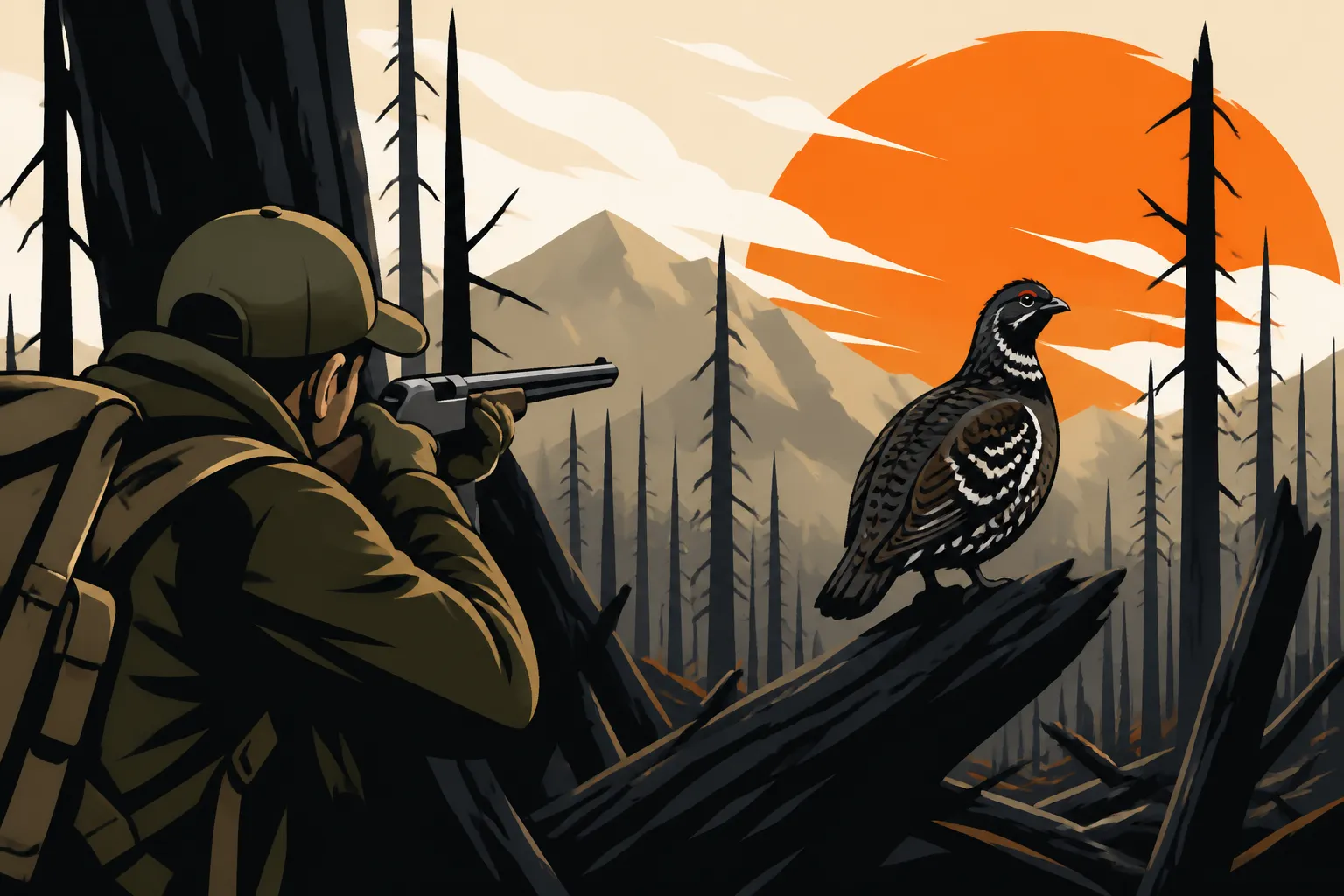
Their notorious "fool hen" reputation stems from this lack of flight instinct and their tendency to hold incredibly tight when approached. Instead of flushing dramatically, a spruce grouse will often freeze in place, trusting its camouflage. If it does move, it might simply walk a few steps or fly a short distance to perch on a low branch, watching you intently. This unique behaviour means that quick, reactive shooting isn't always the name of the game. Instead, it often allows for careful observation and precise shot placement, if you can spot them first. This calm demeanor makes them an excellent target for new hunters, including youth hunters, who are learning to identify game and make ethical shots.
Essential Gear for Black Timber Expeditions
Hunting spruce grouse in black timber isn't like walking open fields for pheasants. The terrain is often challenging, dense, and can be wet. Having the right gear isn't just about comfort; it's about safety and effectiveness in an environment that can easily disorient or soak you.
Dressing for Dense, Damp Cover
Your clothing and footwear are arguably the most critical pieces of gear when you're crashing through dense spruce thickets. You need protection from thorns, branches, and dampness. Start with sturdy, waterproof boots that offer excellent ankle support, as the ground can be uneven, boggy, and riddled with fallen logs. Brands like Lacrosse or Muck Boot offer excellent waterproof options that stand up to the abuse.
Next, invest in durable brush pants or chaps. Denim simply won't cut it against constant abrasion from spruce branches. Look for materials like Cordura or tightly woven synthetics that resist tears and shed water. For your upper body, layering is key. A moisture-wicking base layer, a warm fleece or wool mid-layer, and a waterproof, breathable outer shell will allow you to adapt to the fluctuating temperatures and exertion levels. The black timber often creates its own microclimate, cooler and damper than more open areas, even on a sunny day. Bring a comfortable hat to keep needles out of your hair and a good pair of gloves to protect your hands. A blaze orange vest or hat is always a smart safety choice, especially when hunting with others.
Choosing Your Firearm and Ammo
Given the close-quarters nature of spruce grouse hunting and their tendency to hold tight, heavy-hitting firearms are often overkill and can damage the meat. A lightweight shotgun is usually the weapon of choice. A 20 gauge or even a .410 loaded with light game loads (7.5 or 8 shot) is more than sufficient. These smaller gauges and lighter loads are effective at close range without blowing the bird apart.
Some hunters, especially when targeting stationary birds on a branch, prefer a .22 rifle or pistol for headshots. This method ensures maximum meat preservation and can be incredibly satisfying. However, safety is paramount. Always be aware of your backdrop, local regulations regarding Legal Firearms and Bows for Big Game and small game, and never take a shot unless you are absolutely certain of your target and what lies beyond it. The goal is a clean, ethical harvest, not to pepper a bird with excessive shot or cause unnecessary damage to the valuable meat.
Navigation and Scouting Tools
Getting lost in dense black timber is a real possibility, even for experienced woodsmen. The canopy can obscure the sun, and the uniformity of the trees can make landmarks disappear. A reliable GPS unit or a mapping app on your smartphone is non-negotiable. Apps like GoHunt, while primarily geared towards big game, can be invaluable for identifying potential grouse habitat during e-scouting and ensuring you know where you are at all times in dense terrain. Download your maps offline before heading out, as cell service will likely be non-existent.
Beyond technology, carry a traditional compass as a backup and know how to use it. A whistle can be a lifesaver if you get disoriented or need to signal hunting partners. The tactic for finding grouse in this thick cover is often slow and deliberate. Move quietly, pausing frequently to listen. While spruce grouse don't often flush, you might hear the rustle of leaves, a soft clucking, or the subtle snap of a twig as they move. Binoculars can also be surprisingly effective for spotting birds perched motionless in trees, allowing you to scan the branches without constant head movement.
Proven Tactics for Hunting Spruce Grouse
Successfully hunting spruce grouse isn't about covering vast amounts of ground; it's about methodically working prime habitat and leveraging their unique behaviours. Patience, keen observation, and understanding where they are most likely to be found are your greatest assets.
Working the Edges and Openings
While spruce grouse love their dense black timber, they will often frequent the edges of these stands or small openings within them. These areas offer opportunities for sunning, finding grit (small stones they ingest to aid digestion), and accessing a wider variety of food sources like berries, which often grow more profusely where light can reach the forest floor.
Focus your efforts along old logging roads, seismic lines, cutlines, or the boundaries where black timber meets a muskeg or a younger, regenerating forest. These linear features provide easier walking and act as natural travel corridors for grouse. When Hunting an Old Logging Road in the Foothills or any similar opening, move slowly, scanning both the ground and the lower branches of the trees. Grouse often perch low, sometimes just above eye level, or walk slowly along the edge of the vegetation. Pay particular attention to sunny spots on cooler days, as grouse may be out trying to warm themselves. The transition zone between two different habitat types, like a deep spruce stand meeting a small, wet meadow, is often a goldmine for grouse activity.
Slow and Deliberate Stalking
Forget the fast-paced, flushing style of hunting; spruce grouse require a much more measured approach. The "stop and go" method is incredibly effective. Walk a few quiet steps, then stop and scan every branch, every patch of moss, and every shadowy corner. Their camouflage is superb, and you'll often walk right past them if you're not paying close attention. Look for anything that seems out of place – a subtle outline, an unnatural bump on a branch, or even the glint of an eye.
When you do spot a bird, approach cautiously. Their stillness is their defence, and they will often allow you to get quite close. This is where the "fool hen" moniker really comes into play, as they might just sit there, convinced you can't see them. This allows you to identify the bird clearly, assess your shot opportunity, and make a clean, ethical harvest. Using binoculars or even your rangefinder to scrutinize potential birds from a distance can help confirm your target before moving in.
Hunting with Dogs
While not always necessary for spruce grouse due to their tight-holding nature, a good bird dog can significantly increase your success rate, especially in dense cover where visibility is limited. Flushers, like Springer Spaniels or Brittany Spaniels, can work the thickets ahead of you, pushing birds that you might otherwise miss. Their scenting ability is invaluable for locating birds hidden deep within the timber.
Pointers, such as German Shorthaired Pointers or English Setters, can be even more effective. A pointer will lock up, indicating the precise location of a bird, allowing you to walk in and prepare for the shot. This is particularly advantageous with spruce grouse, as their tendency to hold tight means the dog can often be on a solid point for an extended period, giving you ample time to get into position. Just remember the rules for Using a Flushing Dog in Thick Cover and ensure your dog is well-trained and capable of navigating the challenging terrain without getting lost or injured. Always be mindful of your dog's safety in the dense bush.
Field Care and Regulations for Alberta Hunters
Bringing home a few spruce grouse for the dinner table is a fantastic reward for your efforts in the black timber. However, proper field care ensures the meat is delicious, and adhering to Alberta's hunting regulations is paramount for a legal and responsible hunt.
Proper Field Dressing and Storage
Spruce grouse meat is dark, rich, and flavourful, but like all game meat, it requires prompt and proper care to prevent spoilage. As soon as you harvest a bird, field dress it by removing the entrails. This allows the carcass to cool quickly, which is crucial, especially on warmer days, even if the black timber itself feels cool. Simply make a small incision and remove the internal organs.
Once field dressed, wipe any excess blood or debris from the cavity. Place the bird in a breathable game bag to protect it from dirt, leaves, and insects while allowing air circulation. Avoid plastic bags, as they trap heat and moisture, accelerating spoilage. Keep the birds as cool as possible during your hunt and transport them home quickly. If you're out for an extended period, consider packing a small cooler with ice for your harvested birds.
Navigating Alberta's Game Bird Rules
Alberta has specific regulations for hunting game birds, and it's your responsibility as a hunter to know and follow them. Before heading out, always consult the most current Alberta Guide to Hunting Regulations to understand the specific rules for spruce grouse. This includes knowing the open season dates for your chosen Wildlife Management Unit (WMU) and the daily bag limits and possession limits. You can find detailed information on Alberta Game Bird Seasons and Limits in the official regulations.
Ensure you have a valid Wildlife Certificate and a Game Bird Licence with the appropriate federal migratory game bird stamp if you're also targeting ducks or geese on the same trip. While spruce grouse are not migratory, understanding the full scope of game bird regulations is important for any upland hunter. Pay close attention to rules regarding shooting hours, proximity to roads and dwellings, and the legal methods of take. A simple check on albertarelm.com or the official regulations book will keep you on the right side of the law.
| Feature | Spruce Grouse | Ruffed Grouse |
|---|---|---|
| Primary Habitat | Dense coniferous forests (spruce, fir), often boggy | Mixed forests, aspen parkland, poplar bluffs, dense undergrowth |
| Typical Diet | Conifer needles, buds, some berries/insects | Buds, catkins, berries, leaves, insects |
| Behavior | Tends to freeze in place, "fool hen" reputation | More prone to flushing explosively, often running |
| Appearance | Mottled grey/black, reddish comb above eye (male) | Brown/grey mottled, prominent black ruff, fanned tail |
| Difficulty to Spot | High due to camouflage and stillness | Moderate, but can be very hard when holding tight |
| Hunting Method | Slow stalking, keen observation, dogs | Walking trails, flushing from thickets, dogs |
Disclaimer
This guide is intended for informational purposes only and does not supersede official government regulations. Always consult the most current Alberta Hunting Regulations, available through the Alberta government's website or authorized licence issuers, before planning and undertaking any hunting activities. It is the hunter's responsibility to understand and comply with all applicable laws and regulations. Ensure you have all required licences and permits. Hunt safely and ethically.