Asking a Grazing Leaseholder for Access
The search for good hunting ground in Alberta can feel like a never-ending quest, and one of the biggest hurdles many of us face is navigating access to those promising areas that look private but aren't quite. Grazing leases are a prime example of this grey area, often leaving hunters scratching their heads about who to ask and how. This guide is here to demystify the process, offering a realistic, empathetic, and step-by-step approach to respectfully securing hunting access from Alberta grazing leaseholders, significantly boosting your chances of hitting the field.
Understanding Alberta's Grazing Leases
Many hunters are confused by grazing leases, and for good reason. They often look and feel like private property, with fences, gates, and cattle. But they're not quite the same, and understanding that distinction is your first step towards successful access.
What Exactly is a Grazing Lease?
Imagine vast tracts of Crown land – land owned by the public, by all Albertans – that are leased out to ranchers or companies for grazing livestock. That's essentially what an Alberta grazing lease is. The leaseholder has the right to use that land for agricultural purposes, primarily cattle or sheep grazing, and they invest time, money, and effort into managing that land, maintaining fences, and caring for their herd.
This is where the confusion often comes in. From the outside, it operates very much like a private ranch. You'll see fences, sometimes "No Trespassing" signs put up by the leaseholder (which aren't always legally enforceable in the same way as on private deeded land), and you'll certainly see their livestock. This naturally makes many hunters hesitant to approach, fearing they're intruding. However, the key difference is that the underlying land is still Crown land, which generally allows for public recreational access, including hunting, under the province's Recreational Access Regulation. It's a nuanced situation, and it requires a delicate touch to navigate properly, recognizing the leaseholder's operational needs while asserting your right to access public land.
Why Grazing Leases are Different from Private Land
The primary difference, as touched upon, is ownership. Deeded land is private property, and the landowner has almost absolute control over who enters and for what purpose. They can deny access without explanation, and their "No Trespassing" signs are unequivocally binding. Grazing leases, while managed by a private individual or company, are still public land. This means the public generally has a right to recreational access.
However, this public access right is not absolute and comes with important caveats. The leaseholder's agricultural operations take precedence. You cannot interfere with their livestock, damage their property, or impede their work. This is why getting explicit permission, or at least coordinating your access, is not just a courtesy but a practical necessity to avoid conflict and ensure a positive hunting experience. Many leaseholders, having invested so much into the land and dealt with negative experiences in the past (like gates left open or litter), treat it almost as their own. It's a frustration many hunters face when encountering a blanket denial, even though the land is technically public. Your goal isn't to assert legal rights but to build a respectful relationship that grants you access without disrupting their livelihood.
Preparing for Your Access Request
Like any good hunt, asking for access requires preparation. You wouldn't just wander into the bush without scouting, and you shouldn't approach a leaseholder without doing your homework.
Researching the Lease and Landowner
Before you even think about knocking on a door or making a call, you need to know exactly whose door to knock on. Identifying grazing leases and their boundaries is crucial. The Alberta government's Using Alberta's Recreational Access Mapping Tool is an invaluable resource for this. This online tool allows you to pinpoint Crown land, including grazing leases, and often provides contact information for the leaseholder. It's not always perfect or exhaustive, but it's a great starting point. Tools like GoHunt can also be incredibly useful for overlaying land ownership maps with satellite imagery, helping you visualize the terrain, identify potential hunting hot spots, and confirm lease boundaries even before you look up contact details.
Once you've identified the specific lease and hopefully the leaseholder's name, try to find a phone number. Sometimes, the mapping tool will provide it; other times, a quick internet search for the ranch name or individual might yield results. Failing that, your last resort might be to drive by and look for a mailbox with a name, or simply knock on the door, but a phone call is often less intrusive for an initial contact. Understand the specific Wildlife Management Unit (WMU) you're targeting and the species you hope to hunt. Having this information readily available demonstrates you've done your homework and are a serious, prepared hunter, not just someone randomly asking. For deeper insights into the specific area, consider exploring resources like Reading an Alberta WMU Map Before You Go.
Timing and Approach
Timing is everything when asking for access. Avoid the busiest times for a rancher: haying season, calving season, seeding, or harvest. These folks are working incredibly hard during these periods, and your request will likely be an unwelcome interruption. Late spring (after seeding, before haying starts), mid-summer (if they're not too busy), or late fall/early winter (after harvest, before deep snow) are often better. Weekdays are generally preferred over weekends, as weekends might be their only downtime.
When you do make contact, be prepared and respectful. Have your name, phone number, vehicle description (make, model, license plate), the dates you'd like to hunt, the species you're pursuing, and the specific area of the lease you're interested in ready. It shows you're organized and considerate. Your demeanor should be polite and to the point. Start by introducing yourself and clearly stating your reason for calling or visiting. Validate their potential concerns by acknowledging you understand they have an operation to run. For many hunters, the fear of rejection is real, but approaching with confidence and respect can mitigate this. Remember, you're asking for a privilege, not demanding a right, even if the land is technically public. For tips on a more general approach, our guide on Knocking on Doors in Alberta Farm Country offers broader advice applicable here.
Making the Ask: Best Practices for Success
This is where your preparation pays off. The way you communicate and present yourself can make all the difference between a "yes" and a "no."
The Initial Contact and Building Rapport
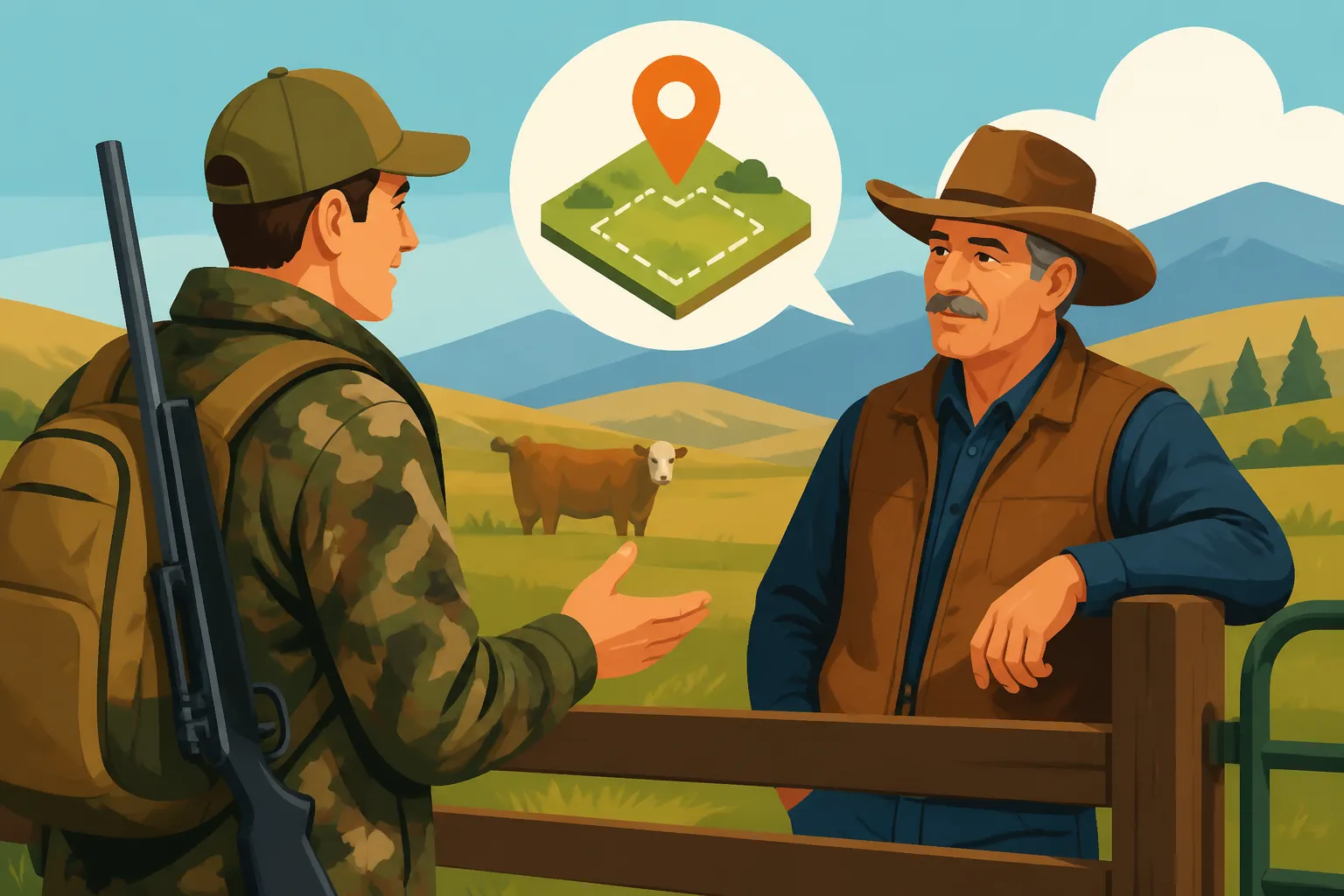
When you finally connect with the leaseholder, whether by phone or in person, your goal is to build trust and rapport quickly. A simple script might go like this: "Hello, my name is [Your Name], and I'm a hunter. I'm calling about the grazing lease you manage near [nearest town/landmark]. I was hoping to gain permission to hunt [species] there on [specific dates or general timeframe]. I understand you have livestock and an operation to run, and I want to assure you that I am very respectful of private property and agricultural activities."
Be transparent about your intentions. If you're hunting deer near a particular Hunting a Grazing Lease Water Hole or exploring a specific coulee, mention it. Offering references, like a conservation officer or another landowner you've hunted for, can sometimes help. You might even offer to do a quick survey of their fences for damage or report on livestock conditions while you're out there. This demonstrates you're not just taking but are willing to be a good steward and potentially provide a service. This kind of initiative can go a long way in establishing a positive relationship, showing them you’re a responsible individual concerned with more than just filling a tag.
Addressing Concerns and Setting Expectations
Leaseholders often have valid concerns based on past negative experiences. These commonly include:
- Gates left open: Leading to livestock getting out or mixing.
- Litter and garbage: Left behind by careless individuals.
- Disturbing livestock: Stressing animals, especially during sensitive times like calving.
- Safety: Concerns about firearms discharge near buildings, vehicles speeding, or general recklessness.
- Too many hunters: Feeling overwhelmed by requests or actual presence.
Follow-Up and Future Access
Whether you're granted access or not, a polite follow-up is always a good idea. If you're denied, thank them for their time and consideration. You might even ask if there's a better time of year or a different section of their lease that might be accessible in the future, but don't push it if they seem firm.
If you are granted access, your job isn't over—it's just begun. Be an exemplary hunter. Follow every rule they set, and then some. Leave the land better than you found it. If you harvest an animal, consider offering them a piece of the meat as a thank you. A small gift around Christmas, like a gift basket or some homemade baking, can also be a wonderful gesture that builds long-term goodwill. A positive experience can open doors for years to come, not just for you but for other respectful hunters. The best way to secure access year after year is to become known as a hunter who is reliable, respectful, and leaves no issues in their wake. Think of it as cultivating a relationship; platforms like GoHunt can help you mark specific access points or agreed-upon no-go zones on your maps, ensuring you stick to your word and maintain that vital relationship.
Navigating Challenges and Denials
Even with the best preparation and a respectful approach, you won't always get a "yes." It's important to understand why and how to react.
When Access is Difficult or Denied
It's a tough pill to swallow when you're genuinely trying to do things right, but sometimes, a leaseholder will say no. And that's okay. It’s rarely personal. There are many legitimate reasons why access might be denied:
- Past bad experiences: A previous hunter might have ruined it for everyone.
- Too much pressure: They might get dozens of requests and simply can't accommodate them all.
- Active operations: Calving, branding, or moving cattle might make hunting unsafe or disruptive.
- Conservation efforts: They might be trying to manage wildlife populations on their lease in a particular way.
- Personal preference: Some leaseholders simply prefer not to have hunters on their land, even if it's Crown land.
If you're denied, always thank them for their time and respectfully ask if there might be another season, a different area, or even a different type of access (e.g., foot access only). If they're still firm, accept it gracefully. Arguing or trying to assert your "rights" will only burn bridges and potentially lead to an unpleasant confrontation, which helps no one. The hunting community thrives on good relationships, and demonstrating respect, even in denial, protects that reputation.
Understanding Your Rights (and Limits)
This is a critical point that often causes confusion. While Alberta's Crown land grazing leases technically allow for public recreational access, the leaseholder still retains significant control over how that access occurs to protect their agricultural interests. The Trespass Act still applies in Alberta, meaning if you enter land without permission and the leaseholder has indicated they do not want you there, you can be charged. This means that while legally the land is public, practically speaking, you still need to gain the leaseholder's cooperation. Our guide on Alberta Landowner Permission Law delves into this further, emphasizing the importance of securing clear consent.
The spirit of the Recreational Access Regulation is about shared use, not unbridled access that disregards the leaseholder's livelihood. Focus on collaboration, not confrontation. Your goal as a responsible hunter is to prove you can be a good neighbor and a beneficial presence, not a legal burden. By doing so, you not only increase your own chances of finding successful hunting spots but also contribute positively to the overall relationship between hunters and landowners/leaseholders in Alberta.
Here's a quick summary of Do's and Don'ts when asking for access to grazing leases:
| Aspect | Do's | Don'ts |
|---|---|---|
| Research & Preparation | Use mapping tools (GoHunt, AB Rec. Access Map) | Approach without knowing who the leaseholder is |
| Understand WMU rules and target species | Assume all grazing leases are the same | |
| Timing & Approach | Choose off-peak times (e.g., not harvest season) | Call during busy farming operations |
| Be polite, respectful, and organized | Be demanding, aggressive, or entitled | |
| Initial Contact | Introduce yourself clearly and state your purpose | Show up unannounced without an introduction |
| Be concise and respectful of their time | Ramble or make small talk excessively | |
| Addressing Concerns | Proactively address common concerns (gates, litter, livestock) | Dismiss their concerns or argue with their rules |
| Offer to help (e.g., check fences) | Make promises you can't keep | |
| Conduct During Hunt | Follow all agreed-upon rules and boundaries | Leave gates open, litter, or disturb livestock |
| Pack out all trash, leave no trace | Hunt outside the agreed-upon areas | |
| After the Hunt | Thank the leaseholder, even if denied | Burn bridges if denied |
| Consider a small thank-you gesture | Forget to follow up or maintain the relationship |
Disclaimer
Please remember that hunting regulations and access rules can change. Always consult the most current Alberta hunting regulations and official government resources before planning any hunt. This guide provides general advice and best practices based on common experiences in Alberta.