How Alberta’s Draw Application Works
It's no secret that navigating Alberta's hunting draw system can feel like trying to solve a puzzle blindfolded. The rules, the deadlines, the priority points—it's enough to make even seasoned hunters scratch their heads. If you've ever felt frustrated by the complexity or wondered why you just can't seem to draw that coveted tag, you're in the right place. This comprehensive guide will pull back the curtain on how Alberta's special licence draw application process works, helping you understand the mechanics, strategize your applications, and ultimately, improve your chances for a successful hunt.
Deciphering the Alberta Draw System's Foundation
Before you even think about applying for a special licence, it's crucial to understand the very bedrock of Alberta's draw system. It’s not just about luck; it's a carefully designed system intended to manage wildlife populations and provide equitable hunting opportunities for species that have limited numbers or require careful management.
Why We Have a Draw System at All
The Alberta draw system isn't there to make things difficult, despite how it might feel sometimes. Its primary purpose is sound wildlife management. For many of our iconic big game species—like moose, elk, mountain goat, and pronghorn—populations can fluctuate, and certain areas can only sustain a specific number of animals harvested each year without negatively impacting the overall health of the herd. Without a draw system, these limited opportunities would likely be chaotic, leading to overharvesting in popular areas and potentially jeopardizing species recovery efforts.
Consider a healthy elk herd in the foothills, for instance. If everyone could just go out and buy an elk tag over the counter, that herd would quickly dwindle. The draw ensures that only a set number of tags are issued for specific Wildlife Management Units (WMUs), allowing biologists to control harvest levels and maintain sustainable populations. This contrasts sharply with species like white-tailed deer or black bears, which have much larger populations across vast areas and are often available via general licences, meaning you can typically buy a tag over the counter without going through a draw.
The Cornerstone: Your WIN Card and Wildlife Certificate
You can't even get your foot in the door of the draw system without first ensuring you have your Alberta Wildlife Identification Number (WIN) Card and an active Wildlife Certificate. These aren't just pieces of plastic or digital confirmations; they are your fundamental credentials for hunting in Alberta. Think of your WIN Card as your unique hunter ID, a permanent number that tracks all your hunting activities, including your special licence applications and, critically, your priority points.
Your Wildlife Certificate, on the other hand, is your annual permission to hunt in Alberta for the current licence year. It's a non-refundable, annual fee that funds wildlife conservation efforts. You must have a valid Wildlife Certificate before you can purchase any hunting licence, including applying for special licence draws. Without both of these in place, the system simply won't let you proceed with any applications. If you're new to Alberta hunting or need to renew, make sure you look into Getting an Alberta WIN Card and understand What the Wildlife Certificate Covers well in advance of the draw deadlines.
Understanding Wildlife Management Units WMUs
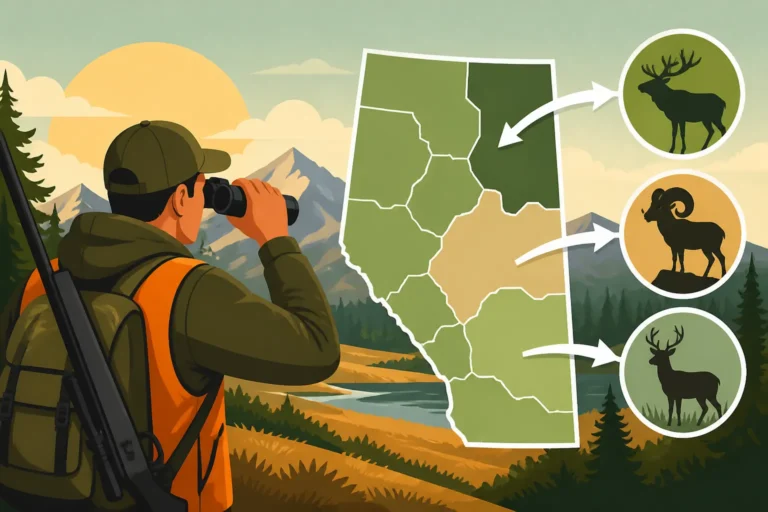
Alberta is divided into 219 specific geographical areas known as Wildlife Management Units, or WMUs. These aren't just arbitrary lines on a map; they are the backbone of how wildlife is managed and how hunting opportunities are allocated. When you apply for a special licence draw, you're not just applying for "an elk tag"; you're applying for an antlered elk tag in a specific WMU for a specific season.
Each WMU has unique habitat features, wildlife populations, and therefore, different hunting regulations and draw odds. A WMU in the northern boreal forest will have vastly different species and opportunities than one in the southern prairie or the Rocky Mountain foothills. Understanding these units is critical for successful draw applications. For example, a moose tag in WMU 350 might have very different draw odds and point requirements than a moose tag in WMU 510, even though both are for the same species. Taking the time to research specific WMUs for the species you're interested in is paramount to building a sound draw strategy. Get familiar with Alberta's 219 Wildlife Management Units to make informed decisions.
Navigating the Application Process Itself
Once you have your WIN Card and Wildlife Certificate sorted, and a basic understanding of WMUs, it’s time to dive into the actual application process. This part can feel daunting, but breaking it down into manageable steps makes it much clearer.
The Application Timeline: Deadlines and Key Dates
Missing a deadline is arguably the most heartbreaking way to miss out on a draw. The Alberta special licence draw system operates on a very strict timeline, and there's no flexibility once those cut-off dates pass. Generally, the main draw application period for most big game species runs from early May to mid-June each year. This is your window to submit your choices for elk, moose, sheep, goat, pronghorn, and certain mule deer opportunities.
Once the application period closes, the draw process begins, and results are typically posted in late June or early July. It's like waiting for exam results – the anticipation can be intense! Following the initial draw, any remaining special licences (often for antlerless animals or in less popular WMUs) might be offered in supplemental draws or go on sale over-the-counter later in the summer. Always consult the current Alberta Hunting Regulations for the exact dates each year, as they can shift slightly. You’ll want to be well-versed in Alberta Draw Deadlines and Result Dates to avoid any last-minute scrambles.
Step-by-Step Through the Online Portal AlbertaRELM
The vast majority of special licence applications are submitted online through the AlbertaRELM portal (albertarelm.com). If you're not already familiar with it, this platform will become your best friend in Alberta hunting. Once you log in with your WIN Card number and password, you’ll navigate to the "Special Licence Draws" section.
Here’s a simplified breakdown of the steps:
- Select Your Species: You'll choose the big game species you want to apply for (e.g., Antlered Moose, Antlered Elk, Bighorn Sheep).
- Choose Your WMU(s): For each species, you'll be prompted to select up to three WMU choices in order of preference (1st, 2nd, 3rd choice). This is where your WMU research really pays off. Be realistic with your choices based on your priority points.
- Party Application (Optional): If you're applying with friends or family, you'll enter their WIN Card numbers here. More on this in the next section.
- Confirm and Pay: Review all your selections carefully. This is your last chance to catch any errors. There's a small, non-refundable application fee for each draw you enter. Once confirmed, you submit your application, and a confirmation number will be provided.
It’s a straightforward process, but rushing through it can lead to mistakes. Always double-check your WMU numbers and ensure you've selected the correct antlered/antlerless option. For a detailed walkthrough, you can refer to Buying Licences on albertarelm.com.
Applying as a Party: Pros and Cons
Alberta's draw system allows you to apply as a party, typically up to four individuals for most species. The idea is simple: if one person in the party draws the tag, everyone in the party draws it. This is fantastic for groups of friends or family who want to ensure they can hunt together. However, there's a significant catch: when you apply as a party, the system takes the average priority points of all members in the group.
Let’s say you have 10 priority points for moose, but your hunting buddy has only 2. If you apply as a party of two, your combined priority for that moose draw will be (10+2)/2 = 6 points. This could significantly lower your chances for a high-demand WMU where you might have drawn easily on your own. Conversely, if all members have similar high priority points, applying as a party doesn't really hurt, and ensures everyone gets to share the experience. The biggest 'pro' is undoubtedly the camaraderie and shared experience of a hunt. The 'con' is the potential dilution of high individual priority points. It requires a strategic conversation among your hunting party to decide if the benefit of hunting together outweighs the potential impact on individual draw odds.
The Intricacies of Priority Points
Priority points are the currency of Alberta's special licence draw system. They are probably the most misunderstood and debated aspect of the entire process, yet they are absolutely fundamental to increasing your odds for those highly coveted tags.
How Priority Points Are Accumulated
The concept of priority points is designed to reward persistence. For each species you apply for in a special licence draw, if you are unsuccessful in drawing a tag, you receive one priority point for that species for the following year. These points accumulate year after year, provided you continue to apply for that specific species. You don't get points for species you don't apply for, and you don't get points if you withdraw your application or are otherwise deemed ineligible.
For example, if you apply for an antlered moose tag in 2024 and don't draw it, you'll have 1 priority point for moose in 2025. If you apply again in 2025 and still don't draw, you'll have 2 priority points for moose in 2026. This system means that the longer you go without drawing a specific species, the better your chances become in subsequent years as your points stack up. It’s a long game for those dream tags, but a fair way to distribute limited licences over time.
The Impact of Priority Points on Draw Odds
Simply put, the more priority points you have for a given species, the better your statistical odds of drawing a special licence for that species. The draw system operates by allocating tags first to applicants with the highest priority points. If there are more applicants at a certain priority level than available tags, a random draw occurs among those applicants. This is why you often hear stories of someone drawing an elk tag with 15 points, while another hunter with 12 points misses out – it often comes down to who gets lucky in the random draw within the highest point tier.
For highly sought-after WMUs or species (like certain prime elk zones or special sheep WMUs), it's not uncommon for successful applicants to have 10, 15, or even 20+ priority points. You simply won't draw these tags with 1 or 2 points, no matter how lucky you are, because the system prioritizes those who have consistently applied and waited their turn. Many hunters find resources like GoHunt incredibly helpful for analyzing historical draw data and understanding the true point requirements for various WMUs. By looking at the point levels of successful applicants in previous years, you can get a realistic idea of what it takes to draw in a specific area.
When Priority Points Reset and What That Means
This is perhaps the most critical aspect of the priority point system to understand, as it can be a source of both joy and profound strategic dilemma: when you successfully draw a special licence for a species, your priority points for that specific species reset to zero. This is a fundamental rule designed to cycle through the waiting list and give everyone a fair chance eventually.
Let’s clarify with an example: If you finally draw that antlered moose tag you've been building points for, your moose priority points reset to zero for the next year. However, if you also applied for an antlered elk tag in the same year and didn't draw it, your elk priority points would continue to accumulate. Only the species you successfully drew will have its points reset. This creates a significant strategic choice: do you burn your high priority points on a "sure thing" WMU that might not be your absolute dream hunt, or do you continue to hold out, accumulating more points for that truly exceptional, once-in-a-lifetime opportunity? The decision can be agonizing for many, as Why Getting Drawn Resets Your Points explains.
Strategic Considerations for Draw Success
Simply applying isn't enough; to truly maximize your chances in Alberta's draw system, you need a thoughtful strategy. This involves careful research, realistic expectations, and an understanding of how different licence types interact.
Researching Draw Odds and Historical Data
This is where your inner detective needs to shine. The Alberta government provides previous year's draw statistics, detailing how many applicants applied at each priority level for every WMU and how many tags were issued. This data is gold. By analyzing these statistics, you can see the minimum priority points required to draw a tag in a particular WMU, and observe trends like "point creep"—where the average priority points needed for a successful draw slowly increase year over year due to growing popularity.
For instance, if you see that a specific WMU for antlered moose consistently draws at 8+ priority points, and you only have 3, it's highly unlikely you'll draw that year. You might be better off applying for a less competitive WMU or continuing to build points. Many veteran hunters use platforms like GoHunt to deep-dive into historical draw results, allowing them to make informed decisions that align with their accumulated priority points and hunting goals. These tools can often present the data in more digestible formats, making complex statistics easier to interpret.
Balancing Desirability and Practicality
Every hunter dreams of drawing a record-book bighorn ram tag, but the reality is that residents can buy a class 1 (trophy) sheep licence without entering a draw, while the special WMU draws (410, 437, 444/446, 408 and 438) are highly competitive and take a significant dose of luck. A key strategy is to balance your dream hunts with practical, attainable options. This might mean applying for less competitive WMUs, or considering antlerless tags when available.
Supplemental antlerless licences, for example, are often available over-the-counter or in subsequent draws with lower (or no) priority point requirements. These tags offer a fantastic opportunity to fill your freezer, gain valuable hunting experience, and scout new areas, all without burning your hard-earned priority points for a premier antlered tag. Understand the nuances of Alberta Supplemental Antlerless Licences to broaden your opportunities. It's a smart way to stay active in the field while you patiently build points for that truly special draw.
The Strategic Use of Draw-Only vs. General Licences
Alberta's hunting landscape offers both draw-only special licences and general licences. Many of the most sought-after big game species—moose, elk, mountain goat, and pronghorn—are predominantly or entirely draw-only, meaning you must successfully draw a special licence to hunt them, while resident class 1 (trophy) sheep licences can be purchased without a draw. However, other species like white-tailed deer and black bears offer robust general seasons, where you can purchase a licence over the counter without entering a draw.
A wise strategy often involves pursuing these general season opportunities, such as Whitetail Hunting in Alberta, or Black Bear Hunting in Alberta, while simultaneously applying for special draws to steadily build your priority points for other species. This ensures you still have hunting opportunities each year, keeping your skills sharp and your freezer stocked, even if you don't draw that coveted elk or moose tag. For example, you might spend your fall hunting general season white-tailed deer in the parkland, while diligently applying for a Moose Hunting Alberta's Boreal Forest draw, patiently building points until your number comes up. By diligently building priority points for species like Moose or Elk, while enjoying the abundant opportunities of general whitetail or black bear seasons, hunters effectively maximize their time afield. Tools such as GoHunt can help track point accumulation and compare draw odds for various species, assisting hunters in crafting a multi-year strategy.
Alberta Big Game Special Draw Overview
| Species | Primary Draw Type | Typical Priority Points Needed for Desirable WMU (Estimate) | General Licence Options Available? |
|---|---|---|---|
| Moose | Antlered, Antlerless | 5-15+ | No |
| Elk | Antlered, Antlerless | 3-12+ | Limited General Tags in Specific WMUs |
| Bighorn Sheep | Antlered (Full Curl) | 10-25+ (Highly variable by WMU) | No |
| Mountain Goat | Any Goat | 8-15+ | No |
| Pronghorn | Antlered | 4-10+ | No |
| Mule Deer | Antlered, Antlerless | 0-10+ (Variable by WMU, some general seasons exist) | Yes, in some WMUs |
| White-Tailed Deer | Antlered, Antlerless | 0 (General season, some supplemental draws) | Yes |
| Black Bear | Either Sex | 0 (General season) | Yes |
Note: "Typical Priority Points Needed" are general estimates and can fluctuate significantly based on WMU popularity, tag allocation, and applicant pool size each year. Always consult current draw statistics for precise information.
Common Pitfalls and Troubleshooting
Even with the best intentions and a solid strategy, the draw system can throw curveballs. Knowing what common mistakes to avoid and how to react when things go wrong can save you a lot of grief.
Avoiding Common Application Errors
It's astonishing how many hunters miss out on opportunities not due to low priority points, but due to simple, avoidable errors. The most frequent mistakes include:
- Incorrect WMU Numbers: A common slip-up is transposing digits or mistakenly selecting the wrong WMU. Always double-check your chosen WMUs against a current map and the regulations.
- Expired WIN Card or Wildlife Certificate: An inactive WIN Card or an expired Wildlife Certificate will immediately disqualify your application, no matter how many points you have. Ensure these are valid before you apply.
- Party Application Eligibility: If applying as a party, ensure all members have valid WIN Cards and Wildlife Certificates and are eligible for the draw. One ineligible member can sink the entire party's application.
- Missed Payment: Though rare with online systems, sometimes a payment fails or isn't fully processed. Always confirm your payment and receive a confirmation number.
- Forgetting to Apply: Perhaps the most frustrating error – simply forgetting the deadline. Set reminders well in advance!
Take your time when filling out your application on albertarelm.com. A few extra minutes of careful review can prevent a year of regret.
What Happens if You Miss the Deadline or Make a Mistake?
Unfortunately, the Alberta draw system operates with a very firm hand when it comes to deadlines. If you miss the application window, there is no recourse. You simply cannot apply for that year's special draws, and you'll have to wait until the next season. It's a tough lesson many learn the hard way.
If you make a mistake on your application (e.g., wrong WMU, wrong species choice), it might be possible to edit or cancel your application if you catch it before the application deadline. However, once the deadline passes, your application is locked in. If the mistake renders you ineligible (e.g., applying for a species you can't hunt), your application will be disqualified, and you will not receive a refund for the application fee. Your priority points will still accrue, as you technically didn't draw a tag, but you'll have missed a year's opportunity. The best "troubleshooting" is preventative action – be meticulous!
Dealing with Unsuccessful Draw Results
The reality of the draw system is that most hunters will not draw a tag every year, especially for high-demand species or WMUs. It's simply the nature of limited opportunities. When the results are posted, often in late June or early July, you'll log into your AlbertaRELM account to check your status.
If you are unsuccessful, it's easy to feel disheartened. However, there's always a silver lining: you gained another priority point for that species! This means your chances are incrementally better for the following year. Use the experience as motivation to refine your strategy. Did you apply for a WMU that was too competitive for your points? Should you consider applying as a party next year, or perhaps for a different species or an antlerless tag? Don't get disheartened if you don't draw a tag. Many use the off-season to pour over resources, perhaps even with data analysis from platforms like GoHunt, to refine their strategy for the following year's application. This iterative process of applying, learning, and refining is a fundamental part of the journey in Alberta hunting.
Disclaimer
The information provided in this guide is for general knowledge and informational purposes only, and does not constitute legal advice. While every effort has been made to ensure accuracy, hunting regulations and policies in Alberta are subject to change. Always refer to the official Alberta Hunting Regulations published annually by the Government of Alberta, as well as the AlbertaRELM website, for the most current and accurate information before planning any hunting activities.