Alberta Tag Attachment and Cancellation Rules
The adrenaline rush of a successful hunt in Alberta is unparalleled, but that excitement can sometimes make the critical, often complex, rules around tag attachment and cancellation feel like an afterthought. Many hunters have faced that moment of panic, wondering if they’ve done everything correctly, or if a simple oversight could lead to trouble. This guide is here to untangle the complexities of Alberta's tag attachment and cancellation rules, ensuring you stay compliant and confident in the field.
The Importance of Proper Tagging in Alberta
The humble tag, often a small piece of paper or plastic, is your most vital piece of identification for a harvested animal. It’s the legal proof that the animal you’ve taken was done so under the appropriate licence and within the regulations. Mismanaging your tag isn't just a minor oversight; it's a serious breach of hunting ethics and regulations that can have significant consequences.
Understanding Your Licence and Tag
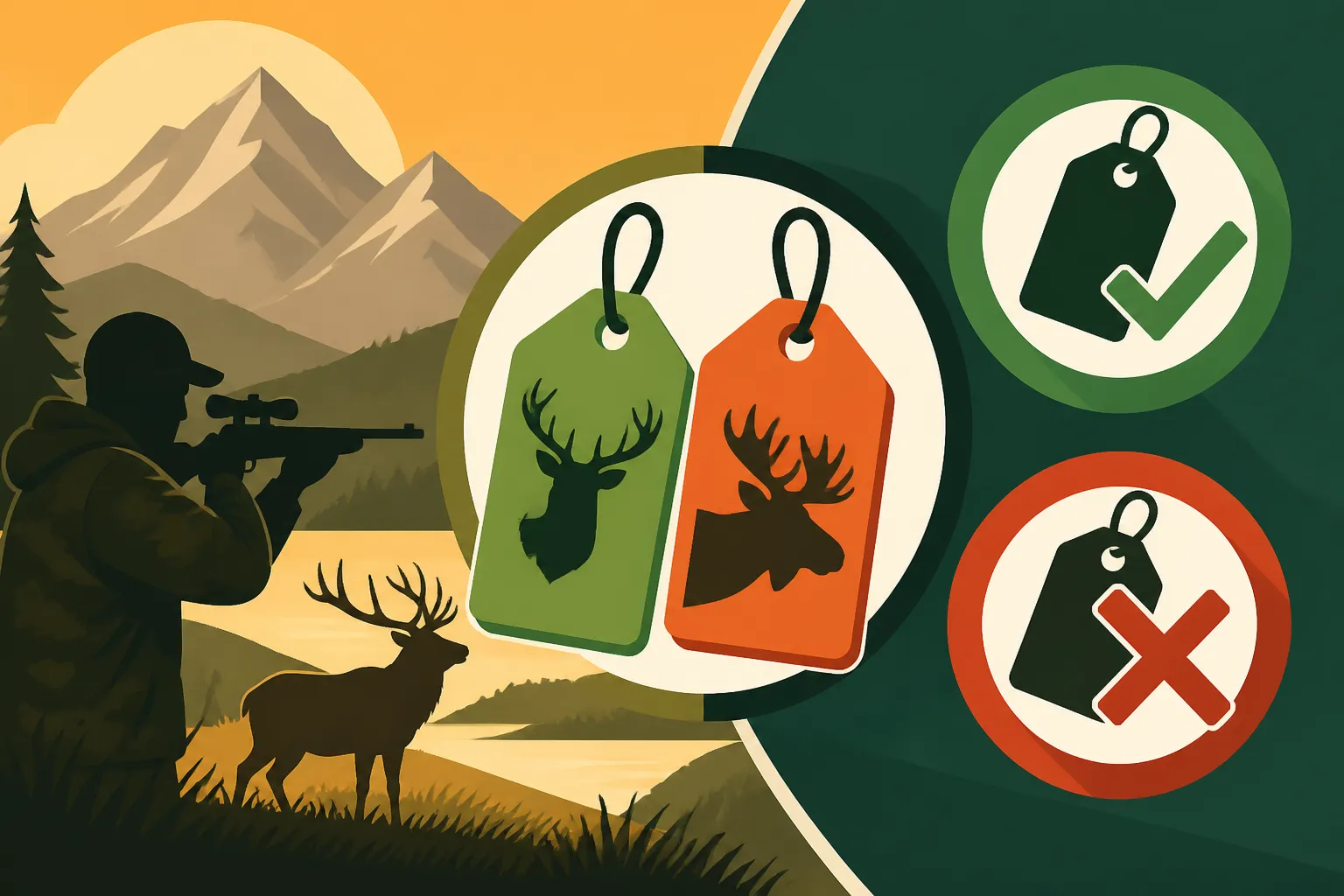
First, let's clarify what we're talking about. When you purchase a hunting licence in Alberta, whether it's a general Whitetail tag, a draw-only Moose tag, or a resident game bird licence, you're essentially buying the privilege to hunt a specific species within a defined area and timeframe. Attached to many of these licences, especially for big game, is a physical tag. This tag is unique, often bearing a serial number that links directly back to your hunter profile.
This tag isn't just generic; it's specific to the species, the type of animal (e.g., antlered or antlerless), and often the Wildlife Management Unit (WMU) you applied for or purchased it in. Imagine you're out in the boreal forest with a general deer licence, hoping for a whitetail, when suddenly a magnificent bull moose steps out. The excitement might be overwhelming, but if you don't hold a valid moose special licence tag for that specific WMU, pulling the trigger is not an option. That general deer tag, while valid for deer, offers no legal coverage for a moose. Similarly, if you were fortunate enough to draw a specific antlered moose tag for WMU 510, that tag is only valid for an antlered moose in WMU 510 during the prescribed season dates. Trying to use it for an antlerless moose or in a different WMU would be a violation. Understanding these nuances before you head out is paramount. You can always check your Alberta Resident Licence Options or Alberta General Licences Without a Draw to confirm what you have and what it covers.
Immediate Attachment Upon Harvest
This is perhaps one of the most critical rules and one that often causes confusion, especially when emotions are running high after a successful hunt. Alberta regulations are clear: once you have lawfully harvested an animal, you must immediately attach your valid tag to the carcass. "Immediately" means as soon as is practicably possible, and before you move the animal from the kill site. This isn't a suggestion; it's a hard and fast rule.
Think about it: you've just dropped a deer deep in a remote cutblock, miles from your quad. The euphoria is immense, and your first thought might be to field dress quickly and get the meat cooled. However, the regulation demands that your tag be securely affixed to the animal before you start the process of moving it, or even quartering it. This provides instant, irrefutable proof to any conservation officer (CO) who might encounter you that the animal was legally taken. I've heard stories of hunters, in their eagerness, starting to quarter an animal only to realize they hadn't tagged it, leading to uncomfortable conversations when a CO arrived on scene. It’s a moment where adrenaline meets bureaucracy, and bureaucracy wins every time. Having everything ready – your tag easily accessible, a pen that writes in cold weather, and a solid plan – makes this step seamless, even when your hands are shaking from excitement or the cold.
The Mechanics of Tag Attachment
Once you’ve successfully taken an animal, the next crucial step is ensuring your tag is properly filled out and securely affixed to the carcass. This isn't just a formality; it's how you legally convert your hunting privilege into a legitimate harvest. Any mistakes here can unfortunately invalidate your efforts, so paying close attention to these details is essential.
Filling Out Your Tag Correctly
Every big game tag in Alberta requires specific information to be legibly filled out by the hunter. This usually includes the exact date and time of the kill, as well as the WMU (Wildlife Management Unit) where the animal was harvested. These details are critical for wildlife management purposes, helping officials track harvest rates and population data across different zones. Imagine you finally connect with that old whitetail buck you’ve been chasing all season. Your hands are probably trembling, but it's vital to take a breath and clearly write down the month, day, and hour, along with the WMU number.
I've seen tags that look like they were filled out during an earthquake, and while conservation officers understand the excitement, illegible information can raise questions. If the date is unclear, or the WMU seems incorrect, it could lead to further scrutiny. Always carry a reliable pen that works in cold weather – a pencil or a crayon can be a good backup. The goal is clarity and accuracy. A common mistake is writing the current year instead of the harvest date, or mixing up the AM/PM designation. Double-check your work, even when you're knee-deep in fresh snow and the light is fading. Remember, this small piece of paper is your legal proof of a successful hunt.
Physical Attachment to the Carcass
Once filled out, your tag needs to be physically attached to the animal. The regulations typically specify that the tag must be securely affixed to the carcass. For antlered game, it’s often attached to an antler. For antlerless animals, it can be around a leg or through the ear. The key is securely and visibly. Most tags come with a self-locking plastic strap or can be attached with string or zip ties. The point is to make it impossible for the tag to accidentally fall off during transport.
Picture this: you’ve got a massive mule deer buck down in a coulee, miles from the truck. You’ve field-dressed him, meticulously filled out your tag, and secured it to an antler with a zip tie. Now comes the arduous pack-out, dragging or carrying the animal through brush, over rough terrain, and maybe even across a frozen slough. If that tag isn't robustly attached, it could snag on a branch and be torn off. Suddenly, you're transporting an untagged animal, which is a big problem. I always carry extra zip ties in my pack for exactly this reason – you never know when the provided one might be flimsy or when you might need to reinforce it. The tag should remain attached to the largest portion of the game meat until it reaches its final destination or is completely processed, so planning for its journey from the field to the freezer is crucial. You also need to retain proof of sex for big game.
Proof of Sex and Species Identification
Attaching the tag is just one piece of the puzzle. Alberta regulations also mandate retaining certain parts of the animal as "proof of sex and species" when transporting game meat. This is particularly important if you plan to quarter your animal in the field, which many backcountry hunters do to make extraction easier. For most antlered species, this means keeping the head or antlers naturally attached to a portion of the carcass until it reaches your primary residence or a meat processor. For antlerless animals, it might mean retaining the reproductive organs or a specified portion of the carcass that clearly indicates sex.
These rules are in place to prevent the illegal harvest of specific animals, like antlered-only tags being used on antlerless deer, or vice-versa. It’s not enough to simply have the tag; you must also be able to prove, at any point during transport, that the animal you took matches the tag. Imagine a scenario where you've quartered an antlered elk in the mountains. If you only take out the meat without the head or antlers attached to one of the quarters, you could face questions from a CO about the legality of your harvest. It's best practice to keep the head or antlers naturally attached to the largest portion of the meat until you get home or to a butcher. This ensures you comply with regulations regarding Transporting Game Meat and Proof of Sex and avoids any ambiguity. Always consult the current Alberta hunting regulations to confirm specific requirements for each species you hunt, as these details can sometimes change.
Navigating Tag Cancellation Harvest Reporting
Once your animal is tagged and safely out of the field, your job isn’t quite done. The final, crucial step in the legal process is cancelling your tag through harvest reporting. This is not optional; it’s a mandatory requirement for all big game hunters in Alberta and plays a vital role in wildlife management.
Mandatory Harvest Reporting
In Alberta, successfully harvesting a big game animal requires you to report your kill. This isn't just a courtesy; it's a legal obligation. The information you provide—species, sex, WMU, and date of harvest—is critical data for Alberta Fish and Wildlife. It helps them monitor population trends, assess the effectiveness of hunting seasons, and make informed decisions for future management. Without accurate reporting, the province can't properly manage its wildlife resources, potentially impacting hunting opportunities for everyone in the long run.
The deadline for reporting your harvest is usually within 72 hours of the kill, although it's always best to do it as soon as possible. After the excitement and hard work of the hunt, remembering this final step can sometimes slip the mind. That's why it's good practice to make it part of your post-hunt routine, right alongside processing the meat and cleaning your gear. Many hunters even use dedicated apps like the GoHunt app or similar tools on their phones to quickly reference regulations or navigate to the reporting portal. It saves a lot of headaches later on. Neglecting to report your harvest is a violation and can lead to penalties, so don't let a successful hunt turn into a legal issue. You can find more detailed information on this process in the guide to Reporting a Harvest in Alberta.
The Cancellation Process for Successful Harvests
The actual cancellation of your tag typically happens when you submit your harvest report. Most Alberta hunters will use the online system via the My Wild Alberta portal or the AlbertaRELM website, or sometimes through a mobile app that integrates with these systems. When you log in, you'll be prompted to enter your WIN card number, select the appropriate licence and tag, and then input the required harvest details: the exact date and time of the kill, the WMU where the animal was taken, and the sex of the animal.
Once you submit this information, the system marks your specific tag as "cancelled" or "used." This means that particular tag number is no longer valid for another harvest. It's a straightforward process, but accuracy is key. Ensure the WMU you input matches where you actually harvested the animal, and that the date and time are correct. For instance, if you successfully hunt an elk in WMU 412, you'd log into your account, select your elk tag, and enter 412 along with the precise date and time. It’s all about maintaining an accurate record for both you and wildlife management. Take your time, double-check your entries, and confirm the submission. You'll usually receive an email confirmation once the report is successfully processed, which is a good record to keep.
Dealing with Unused Tags and Accidental Cancellations
What happens if you have an unsuccessful season and don't fill your tag? Thankfully, for most general licences, unused tags simply expire at the end of the season. There's usually no action required on your part to "cancel" or surrender an unused tag; it just becomes invalid after the specific season dates for which it was purchased. You can always check When Hunting Licences Expire for specific dates. However, special draw licences often have different rules, so it’s always best to check the regulations specific to those tags.
A more frustrating scenario arises if you accidentally cancel the wrong tag or report a harvest in error. For example, imagine you have two deer tags and, in a moment of confusion or a lapse in concentration, you report the harvest against the wrong tag number. Unfortunately, once a tag is cancelled in the system, it is usually permanently cancelled and cannot be "uncancelled" or reinstated. This is a critical point that emphasizes the need for careful, deliberate action when reporting. It’s a hard lesson to learn, but the system is designed to prevent fraud and ensure data integrity. Before clicking that final "submit" button, always review all the entered information one last time to ensure accuracy. This vigilance can save you from a major headache and potentially losing a valid tag due to a simple mistake.
Common Pitfalls and Best Practices
Understanding the rules around tag attachment and cancellation is one thing; consistently applying them in the field and remembering them when the adrenaline is pumping is another. Let's look at some common mistakes and how to avoid them, along with practical tips to ensure you stay on the right side of the law.
Avoiding Tagging Violations
Nobody wants to face a conservation officer for a tagging violation, especially after putting in all the effort to successfully harvest an animal. The consequences of not tagging, improperly tagging, or failing to report a harvest can range from hefty fines to the loss of hunting privileges for a period of time, or even seizure of the harvested animal. These aren't minor penalties; they're designed to deter illegal activity and ensure compliance.
Common violations include forgetting to attach the tag immediately, attaching it insecurely so it falls off, or not filling out all the required information clearly. Another serious violation is attempting to use someone else's tag, or letting someone else use yours. Hunting licences and tags are non-transferable; they belong solely to the individual whose name and WIN card number are on them. Imagine you're hunting with a buddy, and he fills his tag, but you haven't. If he then tries to tag your animal with his tag, or vice-versa, that's a direct violation of the rules. These regulations are in place to maintain the integrity of our wildlife management system. Always review the current Alberta Penalties for Hunting Violations section of the regulations to be fully aware of the consequences.
Leveraging Technology for Compliance
In today's digital age, technology can be a huge asset in staying compliant with hunting regulations. Mobile apps like GoHunt are invaluable tools for hunters in Alberta. These apps often provide quick access to regulation summaries, real-time WMU maps, and even direct links or portals to report harvests. Instead of fumbling through a printed regulations booklet in the field, you can quickly verify season dates, WMU boundaries, or specific tagging requirements right on your phone.
For instance, when you're deep in the bush and unsure of a specific boundary, apps that overlay WMU lines on satellite imagery can clarify exactly where you are and what regulations apply. This is incredibly helpful when you're trying to figure out Reading an Alberta WMU Map Before You Go. Furthermore, having quick access to the harvest reporting portal can help ensure you meet the mandatory reporting deadline, even if you’re still miles from home. Of course, cell service can be spotty in many prime hunting areas, so don't rely solely on technology. Always have a backup plan, like printed maps and a physical copy of the regulations, but use digital tools to augment your preparedness.
Preparation is Key
Ultimately, avoiding issues with tag attachment and cancellation comes down to thorough preparation. Before you even step foot in the woods, review the current Alberta hunting regulations carefully, paying specific attention to the species you intend to hunt. Understand your Alberta Big Game Season Dates and specific WMU rules. Don't just skim them; read them. This also includes understanding What the Wildlife Certificate Covers, as it's a foundational element of your hunting privileges.
Beyond regulatory knowledge, practical preparation is essential. Always carry your physical licence and tag(s) in a waterproof, easily accessible pouch. Bring multiple pens or pencils that write reliably in cold and wet conditions. Many hunters also carry spare zip ties or durable string in case the one provided with the tag breaks or is insufficient. When scouting, pay attention to the specific WMU boundaries, as this impacts which tags are valid in what areas – something you can research when Scouting an Alberta WMU Before Season or by utilizing Alberta's Recreational Access Mapping Tool. Know your plan for when you successfully harvest an animal: where will you tag it? How will you keep proof of sex? How will you transport it? How and when will you report it? By thinking through these steps before the moment of truth, you can reduce stress and ensure you comply with all Alberta's tag attachment and cancellation rules, allowing you to focus on the joy of the hunt. This proactive approach is fundamental to your Alberta Hunter Education Course Requirements and is simply good practice.
| Species | Tag Attachment Location | Proof of Sex/Species Requirement (for transport) | Harvest Reporting Deadline |
|---|---|---|---|
| Whitetail Deer | Antler (if present), or leg/ear | Antlers/head attached to carcass or largest portion of meat | Within 72 hours of kill |
| Mule Deer | Antler (if present), or leg/ear | Antlers/head attached to carcass or largest portion of meat | Within 72 hours of kill |
| Moose | Antler (if present), or leg/ear | Antlers/head attached to carcass or largest portion of meat | Within 72 hours of kill |
| Elk | Antler (if present), or leg/ear | Antlers/head attached to carcass or largest portion of meat | Within 72 hours of kill |
| Black Bear | Secured to the carcass | Evidence of sex (e.g., male reproductive organs) must remain naturally attached to hide or carcass | Within 72 hours of kill |
| Pronghorn | Secured to the carcass | Head or specific identifying features may be required (check current regs) | Within 72 hours of kill |
Disclaimer
Please remember that hunting regulations can change. While every effort has been made to provide accurate and up-to-date information, it is the individual hunter's responsibility to consult the most current Alberta Hunting Regulations Guide published by the Government of Alberta before heading into the field. This guide is for informational purposes only and does not constitute legal advice.