Coyotes in Alberta Farm Country
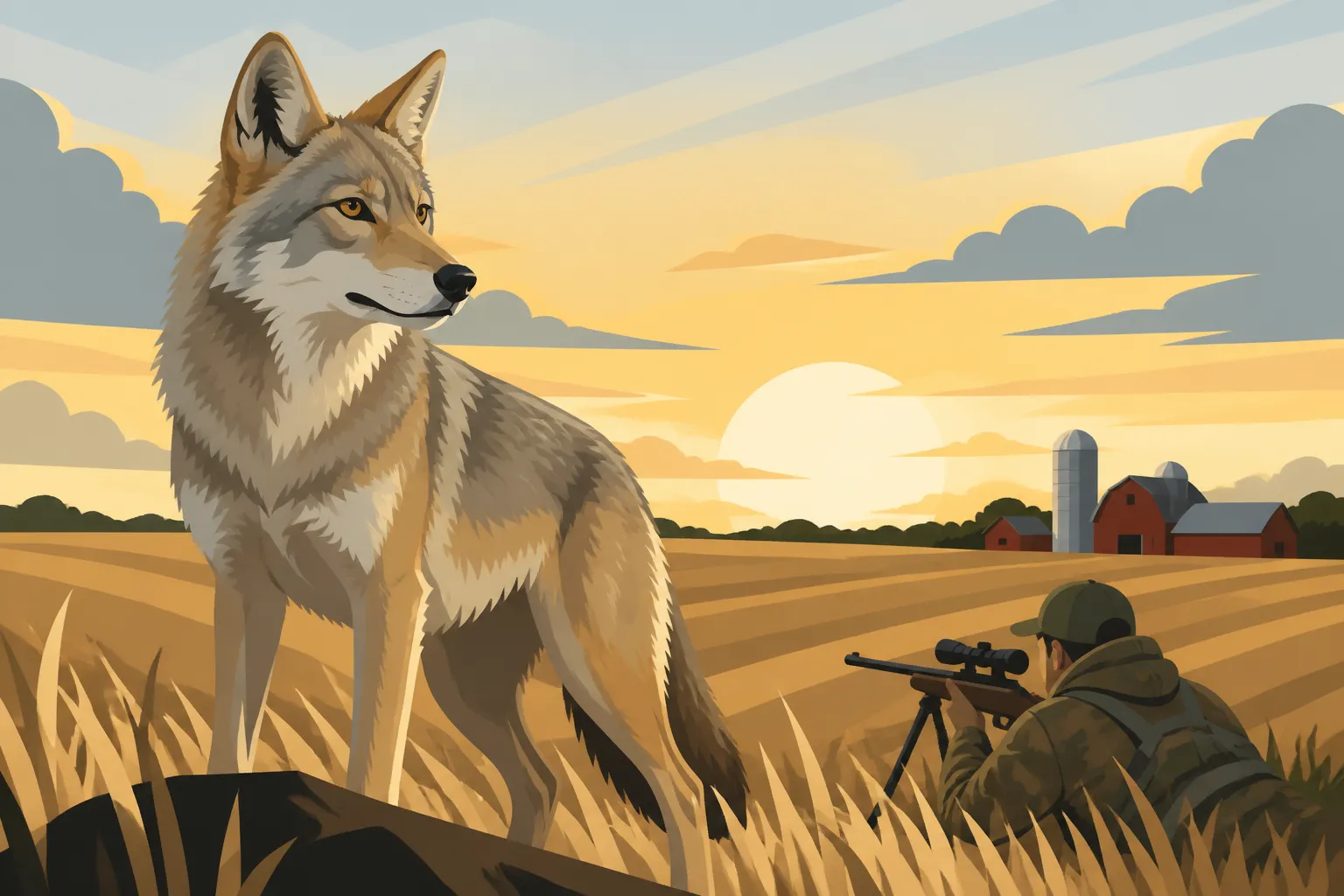
For anyone living or spending time in Alberta's vast agricultural regions, the persistent presence of coyotes is an undeniable reality. These intelligent and adaptable canines are a common sight, often seen loping across a stubble field or heard howling in the distance as dusk settles over the prairies. While their presence is a natural part of the ecosystem, it often brings with it a complex mix of admiration, frustration, and sometimes, significant challenges for landowners and hunters alike. This comprehensive guide will explore the life of coyotes in Alberta farm country, their impact, and effective, ethical strategies for managing their populations and interacting with them responsibly.
Understanding the Coyote's Place in Alberta's Agricultural Landscape
Alberta's farm country, a mosaic of cultivated fields, pastures, shelterbelts, and sloughs, provides an incredibly rich habitat for coyotes. Far from being wilderness specialists, these highly adaptable predators have thrived alongside human expansion, learning to exploit the resources found in agricultural settings. Their success is a testament to their intelligence and resilience, often outsmarting or outmaneuvering other predators that haven't adapted as well to human proximity.
The Adaptable Predator: Why Coyotes Thrive on Farmland
Coyotes are true generalists, which is a major reason they've become so widespread and successful in Alberta's agricultural zones. Unlike some other predators that require vast, unbroken tracts of wild land, coyotes are perfectly content with fragmented habitats. The edges of fields, the sparse timber of aspen bluffs, and even the overgrown ditches along rural roads provide ample cover for denning, resting, and ambushing prey. They are incredibly opportunistic, quickly learning new food sources and adapting their hunting strategies to suit whatever environment they find themselves in.
Their intelligence is a critical factor here. Coyotes quickly learn human patterns, understanding when farm equipment is running, when livestock are unattended, and where easy meals might be found. They possess an uncanny ability to evade detection, often moving silently and making themselves scarce the moment they sense a human presence. This wariness, combined with their ability to quickly reproduce, makes them incredibly difficult to truly eradicate from an area, ensuring their continued dominance in these modified landscapes.
The agricultural landscape itself offers a unique suite of benefits. Farm fields, especially after harvest, become veritable buffets of leftover grain and abundant rodent populations. Shelterbelts provide crucial thermal cover during harsh winters and escape routes when pressured. Even abandoned farmsteads or old equipment piles can serve as safe havens or denning sites. This blend of food, cover, and a somewhat consistent, if altered, environment, makes Alberta farm country a perfect storm for thriving coyote populations, reinforcing why Alberta has so many coyotes.
Diet and Habits: What Coyotes are Eating in Agricultural Areas
The diet of coyotes in Alberta farm country is incredibly diverse, reflecting their opportunistic nature. Small mammals, particularly voles, mice, and ground squirrels, form the backbone of their diet for much of the year. These rodents are often abundant in and around crop fields, providing a consistent and relatively easy source of protein. Hunters often observe coyotes meticulously "mousing" in fields, pouncing on unseen prey with surprising agility.
Beyond rodents, their diet expands to whatever else is available. In certain seasons, they'll target rabbits and hares, which also thrive in the brushy edges of farmland. During nesting season, game birds like Hungarian partridge and pheasants, along with their eggs and young, can become targets. Furthermore, carrion from roadkill or natural animal deaths is never overlooked, providing an essential food source during leaner times, especially in winter.
When the opportunity arises, and particularly when other food sources become scarce, coyotes will turn to larger prey. This is where the conflict with agricultural interests often emerges. Young or sick calves, lambs, and domestic poultry can become targets, causing significant financial and emotional distress for livestock producers. While small mammals might be their bread and butter, it's their occasional predation on livestock that often brings them into direct conflict with humans.
Seasonal Movements and Territorial Behavior
Coyote movements and territorial habits in farm country are heavily influenced by the seasons, food availability, and breeding cycles. In the spring, pairs will establish dens, often in dense brush, abandoned buildings, or even in the protective banks of a coulee bottom. This is when they are most focused on raising their pups, and their hunting efforts become more intense to feed the growing family. During this time, they tend to stay closer to their den sites, exhibiting more pronounced territoriality.
As summer progresses and pups grow, family groups will range more widely. You might see several coyotes together, hunting as a coordinated unit. This is often a learning period for the young, as they hone their hunting skills. Their range can expand considerably during this time, covering several square miles as they exploit different food sources that become available throughout the growing season. This expanded movement can sometimes lead them into new areas, potentially increasing their interactions with different farm operations.
Come fall and winter, as food becomes scarcer and young coyotes disperse, individual coyotes or smaller packs may become more nomadic. They might follow deer herds for carrion opportunities, or concentrate their efforts in areas where large numbers of rodents are still active. The territorial boundaries might become less rigid, especially for dispersing juveniles looking for new stomping grounds. Understanding these seasonal shifts in movement and behavior is crucial for anyone trying to predict their presence or implement effective hunting or management strategies.
Impacts of Coyotes on Alberta Farmers and Landowners
While coyotes are a natural and often beneficial component of the ecosystem, helping to control rodent populations, their presence in agricultural areas can unfortunately lead to significant challenges for farmers and landowners. The impacts can range from direct economic losses to broader ecological and emotional tolls on rural communities. It's a complex dynamic where appreciation for wildlife often clashes with the harsh realities of agricultural production.
Livestock Predation: Concerns for Calves, Lambs, and Poultry
For many Alberta livestock producers, coyotes represent a very real threat to their livelihood. Calves, particularly newborns, are highly vulnerable targets, especially if born in remote pastures or left unsupervised. Coyotes are cunning hunters and will exploit any weakness or opportunity. Similarly, young lambs and kid goats can suffer high mortality rates from coyote predation. While robust adult cattle or sheep are generally safe, the smallest and most vulnerable are always at risk, leading to heartbreaking losses for farmers.
Poultry operations, from small backyard flocks to larger free-range setups, are also prime targets. Chickens, ducks, and geese, unaccustomed to wild predators, often fall victim easily. A single coyote can wreak havoc on a chicken coop in one night, and the financial loss of even a few birds can be substantial for a small producer. The frustration is compounded by the feeling of helplessness, as simply fencing often isn't enough to deter a determined coyote.
The economic impact of livestock predation extends beyond just the loss of the animal itself. There's the cost of prevention, such as improved fencing, guard animals, or even the added labour of checking herds more frequently. There's also the emotional toll on farmers who invest countless hours and resources into raising their animals, only to lose them to a predator. This constant vigilance and the ever-present threat contribute to the complex relationship between landowners and coyotes.
Game Species Interactions: Competition and Predation on Deer and Upland Birds
Coyotes don't just impact domestic animals; they also play a significant role in the dynamics of wild game species in farm country. They are efficient predators of fawns, particularly whitetail and mule deer fawns during their vulnerable first few weeks of life. While a healthy deer population can often absorb some level of fawn predation, high coyote numbers in certain areas can put pressure on local deer herds, especially if other factors like harsh winters or habitat loss are also at play.
Beyond deer, coyotes are also known to prey on upland birds and their nests. Species like sharp-tailed grouse, Hungarian partridge, and pheasants, which are often found in the same brushy cover and field edges favoured by coyotes, can become regular menu items. During nesting season, coyote activity can depress hatching success, and young birds are easily caught before they can fly. This competition for game species can be a point of concern for hunters, as well as for conservationists working to maintain healthy populations of these birds.
It's important to remember that coyotes are just one piece of a much larger ecological puzzle. Their impact on game species is influenced by many factors, including the availability of other prey, habitat quality, and the overall health of the game populations themselves. However, acknowledging their role as a significant predator of both young deer and upland birds is crucial for understanding the broader ecological picture in Alberta's agricultural zones.
The Financial and Emotional Toll on Rural Communities
The financial burden of coyote predation is a tangible concern for many farmers. Losing livestock directly impacts income, and the costs associated with implementing preventative measures can be substantial. This can range from investing in new fencing technologies, hiring more staff for herd checks, or purchasing and maintaining guard dogs or llamas. These are expenses that directly cut into profit margins, making already challenging agricultural ventures even tougher.
Beyond the direct economic hits, there's a profound emotional and psychological toll. Farmers often develop deep connections with their animals, and losing them to predation can be heartbreaking. The constant worry about potential losses, the vigilance required, and the feeling of being at the mercy of factors outside their control can lead to stress and frustration within rural communities. This isn't just about economic loss; it's about the well-being of the people who dedicate their lives to working the land.
Furthermore, the need to manage coyote populations can sometimes lead to divisive discussions within communities. While some advocate for aggressive control measures, others emphasize coexistence and non-lethal deterrents. Finding a balanced approach that respects both agricultural needs and ecological values is a continuous challenge, and it requires open communication and a willingness to understand different perspectives within Alberta's diverse rural landscape.
Hunting Coyotes in Alberta Farm Country: Regulations and Ethics
For many in Alberta, hunting coyotes is a key component of wildlife management in agricultural areas, and for some, it's a thrilling pursuit in its own right. However, approaching coyote hunting, especially in farm country, requires a solid understanding of the regulations, a strong commitment to ethical practices, and an unwavering respect for private land and landowners. It's not just about taking an animal; it's about responsible participation in wildlife stewardship.
Alberta's Coyote Hunting Regulations: What You Need to Know
Unlike many big game species, coyotes in Alberta often have very liberal hunting regulations, reflecting their robust populations and their status as a general predator. Generally, coyotes are classified as furbearers and predators, and they can often be hunted year-round across much of the province. This open season reflects the ongoing need for population management, especially where they impact livestock. However, it's crucial to always check the most current Alberta hunting regulations for specific Wildlife Management Unit (WMU) details, as rules can vary or be updated. You can often find this information readily available on government websites or through resources like GoHunt.
While the season might be open, there are still important rules regarding hunting methods, firearms, and safety. For instance, there are specific Night Rules for Alberta Predator Hunting that dictate when and how you can hunt after dark, often requiring special permits or being restricted to certain types of land. Legal firearms and ammunition must be used, and hunter safety regulations, such as wearing blaze orange during general big game seasons, are paramount. Always ensure your equipment is appropriate for the task and that you are proficient in its use, as a clean, quick harvest is always the goal.
Perhaps the most critical aspect of coyote hunting in farm country is land access. While coyotes can be found on Crown land, a significant portion of Alberta's agricultural areas is private property. Hunting on private land always requires explicit permission from the landowner. This isn't just a courtesy; it's a legal requirement under Alberta Landowner Permission Law. Failing to secure permission can result in charges under the Alberta Trespass Act and severely damage the reputation of hunters in the community.
Ethical Hunting Practices and Landowner Relations
Ethical hunting goes far beyond simply following the rules; it's about respect for the animal, the land, and other people. For coyotes, this means striving for clean, humane kills and making every effort to recover any animal that is shot. Leaving a wounded animal to suffer is not only unethical but reflects poorly on all hunters. Practicing your shooting skills and knowing your effective range are crucial before heading into the field.
Building and maintaining positive landowner relations is paramount, especially when Hunting a Quarter Section You Just Got access to. When asking for permission to hunt, approach landowners with respect, clearly state your intentions, and offer to share any harvested game or help with predator control on their property. Being courteous, mindful of their property, and responsive to their concerns (e.g., avoiding certain fields, being aware of livestock) can turn a one-time permission into a lasting hunting opportunity. Always close gates, stay on designated access routes, and remove any garbage you bring in.
Furthermore, understanding the farmer's perspective on coyotes is key. While you might be there for sport, they might view it as essential pest control. Respecting their motivations and showing a genuine willingness to help mitigate their predation issues can go a long way. Always be clear about your hunting plans, including dates and times, and check in with them after your hunt. Good communication is the cornerstone of responsible hunting in private land settings.
Understanding Public vs. Private Land Access
Navigating land ownership is one of the biggest challenges for hunters in Alberta, particularly when pursuing coyotes in agricultural areas. Alberta's landscape is a mix of Crown land (public land), private land (deeded land), and various leasehold lands like grazing leases. While you generally have the right to hunt coyotes on most Crown land, the vast majority of prime farm country is private. This means knowing the boundaries and securing permission is non-negotiable.
Tools like GPS apps and online mapping systems are invaluable for identifying land ownership boundaries. Before you even leave home, you should be able to clearly delineate private sections from any accessible public land. When dealing with private land, securing permission isn't just a nicety; it's a legal requirement. Asking a Grazing Leaseholder for Access also requires communication, as while it is Crown land, a leaseholder has rights and responsibilities that need to be respected. They can refuse access, so building a relationship is key.
Table: Land Access Types for Coyote Hunting in Alberta Farm Country
| Land Type | Description | Permission Required? | Key Considerations |
|---|---|---|---|
| Private (Deeded) Land | Owned by individuals or corporations, often cultivated fields and pastures. | YES (always) | Strict adherence to Alberta Trespass Act. Build landowner relationships. |
| Crown Land | Public land, includes many forested areas, some prairie breaks. | NO | Generally open access for hunting. Check local regulations and any Public Land Use Zone (PLUZ) rules. |
| Grazing Leases | Crown land leased to ranchers for livestock grazing. | YES (from leaseholder) | Legally Crown land, but leaseholders have rights. Courtesy dictates asking permission before entry. |
| Provincial Parks/Rec Areas | Protected areas. | NO (generally) | Hunting is typically prohibited in Provincial Parks. Always verify specific area rules. |
| ACA Lands | Lands managed by Alberta Conservation Association for public access. | NO (check specific site) | Often have specific rules or restrictions. Verify on ACA website or signboards. |
Always carry proof of permission, such as a written note or a clear text message, when hunting on private or leased land. This simple step can prevent misunderstandings and potential legal issues. Knowing where you are and whose land you're on is fundamental to responsible hunting in Alberta. You can learn a lot more by Reading an Alberta WMU Map Before You Go.
Effective Coyote Hunting Strategies in Agricultural Environments
Coyote hunting in Alberta farm country can be incredibly challenging, but also immensely rewarding. These animals are smart, wary, and have a home-field advantage in their familiar territories. To be successful, hunters need a blend of patience, stealth, and a deep understanding of coyote behavior, coupled with the right strategies and equipment. It's an active pursuit that demands constant adaptation to conditions and animal responses.
Calling Techniques: Mastering the Art of Decoying and Sounds
Calling is arguably the most popular and effective method for hunting coyotes in farm country. The goal is to mimic prey or other coyotes to draw them into shooting range. There are generally two main categories of calls: distress calls and vocalizations. Distress calls, like a rabbit in agony or a dying fawn, tap into a coyote's hunger and predatory instinct. They are often most effective when coyotes are actively hunting and looking for an easy meal. Electronic callers, such as those made by Foxpro, allow for a wide range of realistic sounds and can be particularly effective because of their volume and variety.
Coyote vocalizations, like howls, barks, and challenges, appeal to a coyote's territorial nature and social instincts. Howling can be used to locate coyotes or to challenge a dominant male into approaching. Pup-in-distress calls can also be incredibly potent, especially during the spring and early summer when adult coyotes are protective of their young. When Calling Coyotes in Alberta Stubble, success often hinges on reading the terrain, setting up with the wind in your favour, and being absolutely still once you start calling. Many experienced hunters will use a decoy, such as a moving rabbit or bird, to provide a visual focal point, drawing the coyote's attention away from the hidden hunter.
A successful calling sequence often involves starting softly, then increasing volume if there's no response, and varying the sounds. Patience is key; coyotes might circle downwind, taking their time to assess the situation before committing. Be prepared for a shot quickly, as they can appear suddenly and vanish just as fast. Understanding the nuances of when to use which call, and how aggressively to call, develops with experience.
Spot-and-Stalk and Ambush Tactics in Open Country
While calling is powerful, it's not the only strategy. Spot-and-stalk hunting can be highly effective, especially in the vast, open landscapes of Alberta's prairie and parkland. This method involves using optics—high-quality binoculars or a spotting scope—to locate coyotes at a distance, then carefully planning an approach to get within shooting range. This often requires considerable patience and a keen understanding of the terrain.
When glassing, focus on natural travel corridors like coulee bottoms, fence lines, and the edges of shelterbelts, particularly during early morning or late evening when coyotes are most active. Once a coyote is spotted, the stalk begins. This is where stealth, wind direction, and terrain knowledge become critical. You'll want to use any available cover—folds in the land, clumps of brush, or even the shadows of a cloudy day—to move undetected. Keep the wind in your face or crosswind to prevent your scent from carrying to the coyote.
Ambush tactics, often combined with scouting, also work well. Identify areas where coyotes frequently travel or funnel, such as a frozen slough crossing, a gate in a fence line, or a narrow point in a coulee. Set up downwind and wait. This requires a deep understanding of local coyote patterns, often gained through observation, scouting, or the use of trail cameras (where legal and appropriate). Sitting silently and patiently in a well-chosen ambush spot, especially during periods of high coyote activity, can yield surprising results.
Equipment and Gear for Coyote Hunting Success
Having the right gear is crucial for effective and ethical coyote hunting. For firearms, a flat-shooting rifle in a calibre like .223 Remington, .22-250 Remington, or even a .204 Ruger is popular, offering good range and minimal pelt damage for those interested in fur. Accurate shot placement is vital, so a good scope with clear optics is essential. For close-range encounters, a shotgun loaded with buckshot can be effective, particularly in denser cover. Remember to check specific rules on rifle calibres for big game to ensure you are compliant for all hunting activities.
Beyond the firearm, optics are your best friend. High-quality binoculars (10×42 or 12×50) are indispensable for scanning vast landscapes, while a spotting scope can help identify distant coyotes. A rangefinder is also critical for making accurate shots, especially in open country where distances can be deceiving. Don't forget a comfortable bipod or shooting sticks for stability, as taking a steady shot on an incoming coyote can be challenging.
Dressing for the weather is also key when hunting in Alberta's often unpredictable conditions. Layers of warm, scent-free camouflage clothing are essential. Face masks and gloves help break up your outline and keep you warm. A comfortable backpack to carry all your gear, along with essentials like water, snacks, and a first-aid kit, will make your hunt more enjoyable and safer. If you're going to be out for extended periods, especially in colder weather, consider a sturdy pair of boots that can handle snow and rough terrain.
Managing Coyote Populations: Beyond the Hunt
While hunting is an important tool, effective coyote management in Alberta farm country often requires a broader, more integrated approach. It's about finding a balance between protecting livestock and respecting the ecological role of coyotes, acknowledging that complete eradication is often neither feasible nor desirable. Long-term success usually stems from a combination of methods, carefully tailored to specific situations and informed by sound ecological principles.
Integrated Predator Management Approaches
Integrated Predator Management (IPM) is a holistic strategy that combines multiple techniques to mitigate conflicts between coyotes and human interests, particularly livestock. It recognizes that no single method is a silver bullet, and a layered approach is usually most effective. This can include lethal control (like hunting and trapping), non-lethal deterrents, and habitat modification, all working in concert. For example, rather than relying solely on hunting, an IPM approach might also involve improving calving pasture security and employing guard animals.
Key to IPM is understanding the specific problem. Is it a single problem coyote or widespread predation? Is it affecting calves, poultry, or both? By assessing the situation, farmers can tailor their response, focusing resources where they'll have the most impact. This might involve strategic removal of specific problem individuals that have learned to target livestock, rather than broad, indiscriminate population control. It's a more targeted and often more sustainable approach to management.
Collaboration is also a cornerstone of IPM. Farmers, hunters, wildlife officials, and conservation groups all have a role to play. Sharing information about coyote activity, understanding best practices for carcass disposal to avoid attracting coyotes, and working together on community-wide solutions can significantly improve outcomes. These cooperative efforts often lead to more enduring solutions than individual, isolated attempts at management.
Coexistence Strategies and Non-Lethal Deterrents
Not all coyote management involves lethal control. Many landowners are increasingly exploring coexistence strategies and non-lethal deterrents to protect their livestock and property. One of the most common and effective non-lethal methods is the use of guardian animals. Breeds of dogs like Great Pyrenees or Anatolian Shepherds, llamas, or even donkeys, have a natural instinct to protect their flock and can be incredibly effective at deterring coyotes. These animals become part of the herd and actively defend against threats.
Improved fencing is another critical non-lethal tool. While traditional barbed wire might not deter a determined coyote, electric fencing, particularly multi-strand designs that are well-maintained, can create a significant psychological and physical barrier. Fladry—a line of flags attached to a fence that creates a visual barrier and deters coyotes—can be used as a temporary deterrent around vulnerable pastures. Simply moving livestock closer to human activity during vulnerable periods, like calving season, can also reduce predation risk.
Other strategies include reducing attractants. Proper disposal of livestock carcasses, for example, is vital, as leaving them out can attract coyotes to pastures where live animals are present. Clearing dense brush around pastures can reduce cover for ambushing predators. Loud noises, lights, and even specialized "scarecrows" that emit predator calls can also be used as temporary deterrents. These non-lethal methods are about making livestock harder to access and less appealing targets for coyotes.
The Role of Hunter and Landowner Cooperation
The relationship between hunters and landowners is a vital component of effective coyote management in Alberta farm country. Hunters can provide a valuable service by helping to control coyote populations on private land, especially where predation is a concern for livestock. This cooperative effort can benefit both parties: the landowner gets assistance with predator control, and the hunter gains access to prime hunting opportunities.
Successful cooperation relies on open and respectful communication. Landowners appreciate hunters who are transparent about their intentions, respectful of property, and considerate of livestock. Hunters should always ask about specific areas to avoid, preferred times to hunt, and any other concerns the landowner might have. Offering to share information about coyote activity, or even helping with tasks like checking fences, can strengthen these relationships.
For their part, hunters should see themselves as partners in land stewardship. Adhering to Alberta's Landowner Permission Law and behaving ethically while on private property reinforces the positive image of hunters in the community. Good communication and respect can help bridge the gap between rural and recreational interests, creating a sustainable model for managing coyotes and ensuring hunting opportunities for years to come. This kind of collaboration is essential for the future of hunting in Alberta's agricultural heartland.
Disclaimer
This article is for general informational purposes only and does not constitute professional advice. Laws, prices and regulations vary by location and change over time. Consult a qualified professional for guidance on your specific situation.