Alberta’s Grouse Species and Their Country
Alberta is a hunter's paradise for many reasons, but often overlooked in the chase for big game are the fantastic opportunities for upland birds. Sometimes, it feels like hunting these elusive birds is more about luck than skill, especially when you're just starting out or moving to a new area. But understanding the different grouse species found here and the specific habitats they call home can dramatically increase your odds and make for some truly memorable days afield. This guide will walk you through Alberta's diverse grouse populations, their preferred haunts, and what to look for when you're out chasing them.
The Mighty Ruffed Grouse: Drumming in the Aspens
If you've spent any time walking through Alberta's bush, especially in the central and northern parts of the province, you've likely had a ruffed grouse explode from underfoot with a heart-stopping flutter of wings. These birds are arguably Alberta's most iconic and widespread grouse species, and for good reason—they're tenacious, delicious, and offer thrilling hunts.
Identifying the Ruffed Grouse
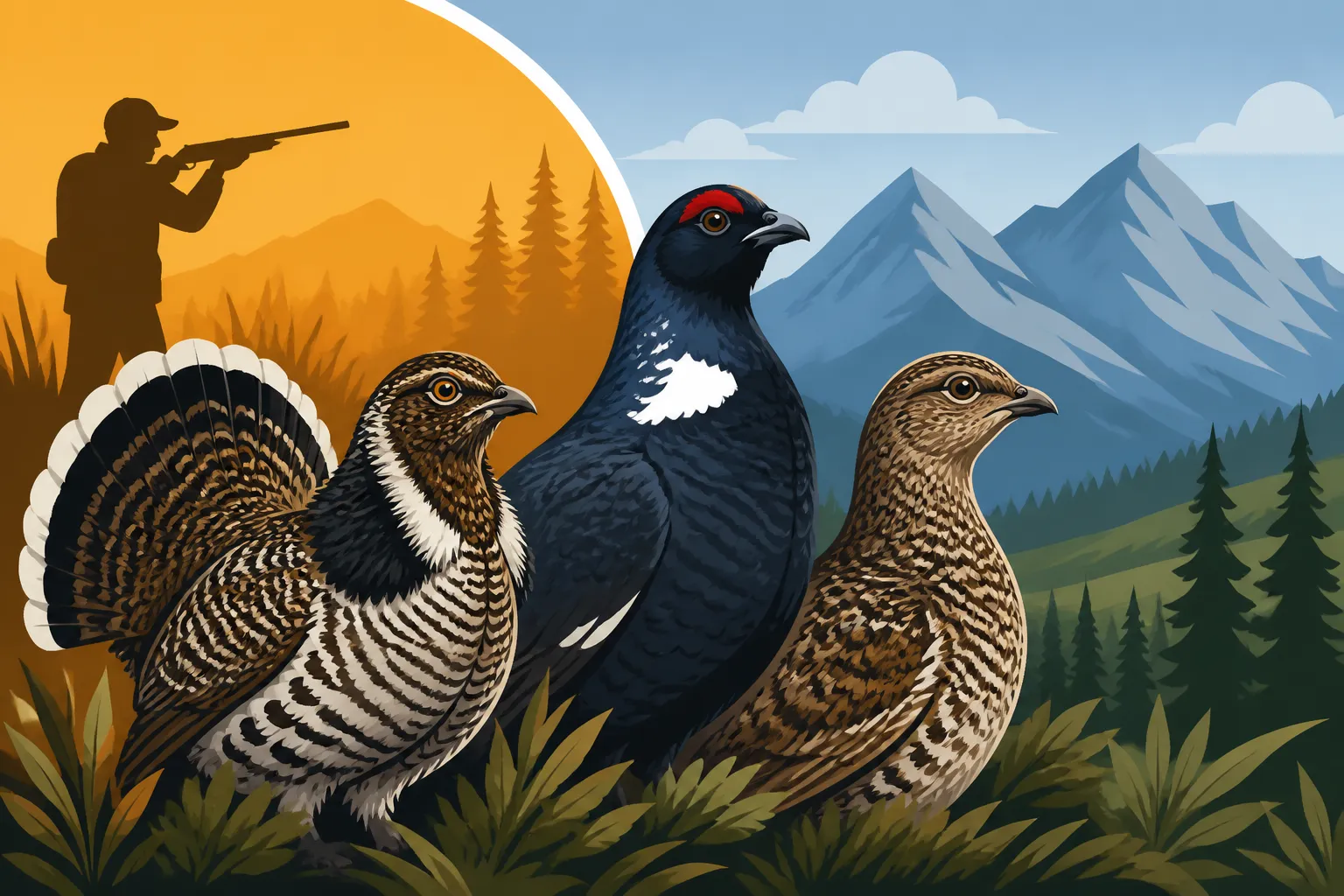
Ruffed grouse are medium-sized upland birds, easily recognized by their distinctive "ruffs" of black or dark feathers on the sides of their neck, which they can fan out when displaying. Their fan-shaped tail features a prominent dark band, often referred to as a subterminal band. Their plumage varies widely from grey to reddish-brown, allowing them to blend seamlessly into their surroundings, whether it's the mottled shadows of an aspen stand or the sun-dappled undergrowth of a mixed forest. You might also notice a small crest on their head, giving them a slightly regal appearance. Males are generally a bit larger and display more prominent ruffs and tail fans.
Their flight is explosive and strong, characterized by rapid wingbeats that create a drumming sound, especially when startled. This burst of flight is designed to put as much distance and as many obstacles as possible between them and a perceived threat, often leading to challenging shots through dense cover.
Preferred Habitat and Range
Ruffed grouse are creatures of disturbance, thriving in young, regenerating forests, mixed woodlands, and areas with dense underbrush. In Alberta, you'll find them most commonly in the aspen parkland belt that stretches across the central part of the province, as well as throughout the boreal forest where aspens, poplars, and willows intersperse with conifers. They particularly love areas with a mosaic of different forest ages: dense young stands for escape cover, slightly older stands for feeding on buds and berries, and drumming logs for the males to attract mates. Look for them along old logging roads, cutlines, creek bottoms, and the edges of agricultural fields where a bush buffer exists.
When you're out for a stroll or even driving slowly down an abandoned road, keep an eye on the edges where the canopy meets the undergrowth. Often, they'll be dusting themselves in a sunny patch or foraging for berries and insects. This preference for mixed deciduous forests means they’re often found in areas that have seen recent timber harvesting or natural disturbances like small fires, as these create the ideal conditions for new growth. Many hunters find success by simply walking these habitats methodically, flushing birds as they go, a technique often shared in discussions about Ruffed Grouse Hunting Alberta's Bush Trails.
Diet and Behavior
Ruffed grouse are primarily herbivores, with their diet shifting throughout the seasons. In spring and summer, they feast on green vegetation, insects, berries, and seeds. As fall progresses and winter approaches, their diet relies heavily on the buds of aspen, birch, and willow trees. This adaptation allows them to survive harsh winters when other food sources are scarce. They're often found high up in the branches, nipping off buds, especially on cold, crisp days.
One of their most iconic behaviors is the male's drumming display during the breeding season. Standing on a favorite log, often a fallen aspen, the male beats his wings against the air to create a low, thumping sound that gradually speeds up, sounding much like a distant, old-fashioned engine starting up. This drumming is a territorial display and a call to hens. While this behavior is most common in spring, keen observers can sometimes hear faint drumming on quiet fall mornings as well. During hunting season, they're often found singly or in small family groups, but they disperse more as the season progresses.
The Stealthy Spruce Grouse: Deep in the Conifers
For hunters who love the deep woods and the scent of pine needles, the spruce grouse offers a unique challenge, or sometimes, a remarkably easy opportunity. Known colloquially as "fool hens" due to their often surprising lack of wariness, these birds are true denizens of Alberta's coniferous forests.
Identifying the Spruce Grouse
Spruce grouse are slightly smaller than ruffed grouse and have a more robust, compact body shape. Males are particularly striking with their dark, sooty-grey plumage, heavily barred flanks, a black breast, and a prominent red comb above each eye during the breeding season. Females are mottled brown and black, providing excellent camouflage in the forest understory. Both sexes have a short, square-tipped tail, usually black with a chestnut or rusty-red band at the tip, though this can be hard to see in the field.
Unlike the ruffed grouse's explosive flight, the spruce grouse often flies reluctantly, preferring to walk away or simply sit tight, relying on its camouflage. When it does fly, it's a short, often silent burst into a nearby tree. This calm demeanor is precisely what earned them the "fool hen" nickname, as they frequently allow a hunter to approach quite closely, sometimes even walking right past them without realizing.
Preferred Habitat and Range
As their name suggests, spruce grouse are intrinsically linked to coniferous forests. In Alberta, this means you'll find them primarily in the boreal forest stretching across the northern part of the province, as well as in the higher elevations of the foothills and mountains where spruce, fir, and lodgepole pine dominate. They prefer dense stands of mature conifers with a thick canopy and an understory of moss, lichens, and low-growing shrubs. Areas with black spruce and tamarack bogs are particularly favored.
These birds are less likely to be found on open roads or clearings. Instead, you'll need to venture into the heart of the evergreen stands. Look for them along game trails within these forests, near wet boggy areas, or on the edges of dense stands bordering slightly more open terrain. They are often found on the ground foraging or perched low in a tree, blending perfectly with the dark bark and needles. Hunting for these specific birds often means actively targeting dense timber, as discussed in Spruce Grouse Hunting in Black Timber. Using a detailed mapping tool like GoHunt can help identify these specific coniferous sections within a WMU.
Diet and Behavior
The diet of the spruce grouse is heavily specialized, especially in winter. Their primary food source is conifer needles, particularly those of spruce and pine. They also consume buds, berries (like cranberries and blueberries when available), fungi, and insects. This unique diet gives their meat a slightly distinct flavour compared to other grouse, which some hunters find less appealing, while others appreciate its robust character.
Spruce grouse are not known for elaborate courtship displays like ruffed grouse. Males have a subtle ground display involving fanning their tail and wing-dragging, accompanied by soft hooting or clucking calls. They are notoriously sedentary birds, often spending their entire lives within a small patch of forest. This territoriality means that if you find spruce grouse in a particular area one year, there's a good chance you'll find them there again in subsequent seasons. Their placid nature makes them quite an interesting contrast to the jumpy ruffed grouse, requiring a different approach from the hunter – one that often involves slow, deliberate walking and keen observation.
The Swift Sharp-Tailed Grouse: Prairie and Parkland Dancers
Moving from the deep woods to the open country, we encounter the sharp-tailed grouse, a bird synonymous with Alberta's prairie and parkland landscapes. These energetic birds offer a thrilling hunt, often requiring a good pair of walking boots and sometimes even a pointing dog.
Identifying the Sharp-Tailed Grouse
Sharp-tailed grouse are medium-to-large grouse, distinctive for their long, pointed central tail feathers, which give them their name. Their plumage is a beautiful blend of brown, buff, and white, creating a heavily mottled appearance that camouflages them perfectly in grasslands and brush. They have a white belly with V-shaped or heart-shaped markings, and a small crest on their head. Males, during the breeding season, display purplish air sacs on their neck, which they inflate during their elaborate courtship dances.
In flight, they are powerful and direct, with rapid wingbeats. When flushed, they often rise with a distinctive cackle or chattering call and fly relatively straight, often for a considerable distance before setting down again. This longer flight makes them a challenging target for wing shooters, and finding where they land is key to getting a second chance.
Preferred Habitat and Range
Sharp-tailed grouse are birds of open or semi-open country, thriving in native grasslands, prairie edges, shrubby coulees, and the transition zone known as the aspen parkland. In Alberta, their stronghold is the vast agricultural lands of the central and southern regions, where patches of natural prairie, aspen bluffs, and shrubby draws remain. They also frequent the edges of cultivated fields, especially those planted with cereal grains like barley or wheat, which provide both food and cover.
Look for them in pastures that haven't been heavily grazed, along the edges of shelterbelts, in patches of willow and saskatoon bushes, and especially in the grassy bottoms and slopes of coulees. They are often found in larger coveys than ruffed or spruce grouse, sometimes numbering dozens of birds, particularly as the season progresses and family groups combine. This preference for open country means you might be Walking Up Sharp-Tailed Grouse in Alberta in expansive fields or along brushy fence lines. Navigating private land for these birds requires careful planning and permission, which can be researched using mapping tools and public land information resources.
Diet and Behavior
Sharp-tailed grouse have a diverse diet, consuming a variety of plant matter, including seeds, grains, buds, berries, and green shoots. In agricultural areas, they readily feed on waste grain left in stubble fields after harvest. They also eat insects, particularly during the warmer months. As winter approaches, their diet shifts to buds and catkins of deciduous trees and shrubs, much like the ruffed grouse.
Their most spectacular behavior is the male's courtship display on communal dancing grounds called leks. Here, multiple males perform elaborate dances, stomping their feet, rattling their tails, and inflating their air sacs, all to attract hens. While hunters typically target them in the fall, understanding this behavior gives insight into their social structure. During the hunting season, sharp-tails are often found loafing in the midday sun, hidden in thicker cover, then moving to feed in the mornings and evenings. Their tendency to stick together in coveys makes for exciting flushes and potentially multiple shot opportunities.
Blue Grouse: The Elusive Foothills Resident
The term "Blue Grouse" traditionally referred to a single species, but recent taxonomic changes have split it into two distinct species: the Dusky Grouse and the Sooty Grouse. In Alberta, the species we commonly encounter is the Dusky Grouse, a magnificent bird of the foothills and mountain regions.
Identifying the Blue Grouse (Dusky Grouse)
Dusky grouse are larger than ruffed or spruce grouse, with a plump body and a relatively long, square tail. Males are dark, slate-grey with faint barring, a prominent yellow or reddish-orange comb above each eye, and a patch of white feathers on their flanks that can be flared during display. Females are duller, more mottled brown and grey, providing excellent camouflage against rocky or wooded backgrounds.
Their tail feathers are typically dark grey with a lighter grey band at the tip, which can be helpful for identification. When flushed, a dusky grouse will often burst upward with strong wingbeats, sometimes "treeing" in a conifer or flying directly downhill. They are less prone to the "fool hen" reputation of the spruce grouse, being more wary, but also not as explosive as the ruffed grouse.
Preferred Habitat and Range
Dusky grouse are inhabitants of mountainous and foothill country, preferring coniferous and mixed-coniferous forests, especially those on slopes, ridges, and in rugged terrain. In Alberta, you'll find them along the eastern slopes of the Rocky Mountains, from the Crowsnest Pass area northwards into the Grande Cache and Hinton regions. They are often associated with ponderosa pine, Douglas fir, and spruce forests, particularly where there are rocky outcrops or steep, timbered slopes.
Their habitat often overlaps with elk and mule deer country, making for excellent combination hunts. Look for them on south-facing slopes in the morning, where they might be warming themselves, or along logging roads and trails that wind through suitable timber. They often move to higher elevations in late summer and fall, sometimes associating with subalpine fir and spruce. Finding them often means putting in miles on foot, climbing elevations to reach their preferred high ground, a pursuit explored further in Blue Grouse Hunting on a Foothills Ridge.
Diet and Behavior
Dusky grouse primarily feed on conifer needles, particularly those of Douglas fir, spruce, and pine. They also consume berries, seeds, and insects. Like other grouse species, their diet shifts seasonally, relying more heavily on conifer needles during the colder months when other foods are scarce. This specialized diet can also influence the flavor of their meat.
Males have a distinctive hooting call, a deep, resonant series of hoots that can carry a good distance through the mountains. This call is part of their breeding display and can sometimes be heard echoing through the valleys on quiet fall mornings. Dusky grouse often hold tight when approached, relying on their camouflage, but once flushed, they can be strong flyers, making for challenging shots in steep terrain. They can be found singly or in small family groups, often near the edges of dense timber or in rocky clearings.
Ptarmigan: Masters of the Alpine
For the truly adventurous upland hunter seeking solitude and breathtaking scenery, Alberta's high country offers a unique quarry: the ptarmigan. These hardy birds are the ultimate alpine specialists, perfectly adapted to life above the treeline.
Identifying the Ptarmigan Species
Alberta is home to three species of ptarmigan: White-tailed Ptarmigan, Rock Ptarmigan, and Willow Ptarmigan. The White-tailed Ptarmigan is the most commonly encountered in Alberta's Rockies, as it is the only ptarmigan species found exclusively in alpine habitats year-round. Rock and Willow Ptarmigan are more typically found further north in Canada.
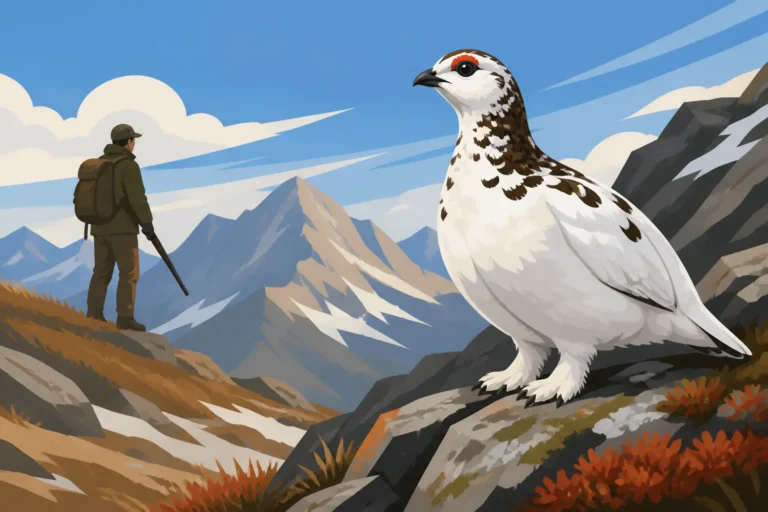
White-tailed ptarmigan are smaller than other grouse species, renowned for their incredible seasonal camouflage. In summer, their plumage is mottled brown and grey, blending seamlessly with rocks and sparse vegetation. In winter, they undergo a complete transformation, becoming entirely white, except for their black eyes and beak, making them virtually invisible against a snowy backdrop. A key identifying feature, regardless of season, is their pure white tail, visible even in summer when their bodies are brown. Their feet are feathered, acting like snowshoes to distribute their weight and keep them warm.
Their flight is often a short, low burst, but they are capable of strong, sustained flight if needed. They typically don't flush explosively like ruffed grouse; instead, they might sit tight until nearly stepped on, then take flight with soft, almost silent wingbeats.
Preferred Habitat and Range
White-tailed ptarmigan are true alpine dwellers, living exclusively above the treeline in the Rocky Mountains of western Alberta. You'll find them on windswept ridges, rocky slopes, alpine meadows, and near permanent snowfields. Their range extends from the southern reaches of the Alberta Rockies up into the northern mountain ranges. Accessing their habitat often requires significant hiking and sometimes even backpacking into remote areas.
Hunting ptarmigan means embracing high-altitude exploration. Look for them in areas with low-growing tundra vegetation, lichen-covered rocks, and patches of willow or dwarf birch that grow close to the ground. In summer, they use the mottled rock and tundra for camouflage, and in winter, they seek out wind-scoured ridges where some vegetation might be exposed, or where they can burrow into snow for warmth. This specialized pursuit is the focus of articles like Ptarmigan Hunting High in the Alpine. When planning such a remote trip, consulting a detailed topographical map or a mapping application like GoHunt is essential for identifying potential high-alpine basins and ridgelines.
Diet and Behavior
Ptarmigan have a hardy diet adapted to their harsh environment. They feed on buds, twigs, catkins, leaves, flowers, and seeds of alpine plants, including willow, dwarf birch, heather, and various sedges. Their digestive system is highly efficient, allowing them to extract maximum nutrients from low-quality forage.
Ptarmigan are typically found in small coveys, especially in the fall and winter. They are remarkably tame, often allowing hunters to approach within very close range before flushing. This behavior, combined with their exceptional camouflage, makes them incredibly challenging to spot. Hunters often rely on their dogs or simply stumble upon them by sheer luck. Their calls are often soft clucks, croaks, or cackles, quite distinct from other grouse. The hunt for ptarmigan is as much about the breathtaking scenery and physical challenge as it is about bagging a bird, offering a profoundly rewarding experience for those willing to venture into their rugged domain.
A Comparative Look at Alberta's Grouse Species
Understanding the differences at a glance can be incredibly helpful when you're out in the field. Here's a quick comparison to summarize key features of the primary grouse species you'll encounter in Alberta.
| Feature | Ruffed Grouse | Spruce Grouse | Sharp-Tailed Grouse | Dusky (Blue) Grouse | White-tailed Ptarmigan |
|---|---|---|---|---|---|
| Typical Habitat | Mixed woods, aspen parkland | Dense coniferous forests, bogs | Grasslands, prairie, parkland | Foothills, mountain conifers | Alpine tundra, above treeline |
| Key ID Feature | Fan-shaped tail with dark band, ruffs | Short, square tail with rusty tip (males black breast) | Pointed tail feathers, V-markings | Dark grey plumage, yellow/red comb, light tail band | Pure white tail, seasonal camouflage |
| Flight/Behavior | Explosive, drumming flush | Reluctant, often silent flush, "fool hen" | Strong, direct flight, cackling | Strong uphill/downhill flight, hooting | Short, soft flush, very tame |
| Typical Diet | Buds, berries, insects | Conifer needles, buds, berries | Seeds, grains, buds, berries | Conifer needles, berries | Alpine buds, twigs, sedges |
| Hunting Strategy | Walk dense cover, focus on edges | Slow walk through thick timber | Walk open fields, coulees, dogs | Hike steep slopes, timber | High-altitude hiking, observation |
General Tips for Upland Bird Hunting in Alberta
No matter which grouse species you're pursuing, a few general principles apply to make your Alberta upland hunting experience more successful and enjoyable.
Scouting and Habitat Recognition
Before you even step into the field, spend some time scouting. This doesn't just mean looking for birds, but understanding their habitat. Learn to identify the different tree species and ground cover that each grouse prefers. For example, knowing that ruffed grouse love regenerating aspen stands or that spruce grouse prefer dense black spruce bogs can save you a lot of aimless wandering. Tools like satellite imagery (often found on mapping apps or services like GoHunt) can be incredibly useful for identifying these specific habitat types from home. You might also want to consult resources like Scouting With Satellite Imagery in Alberta.
Remember that habitat can change even within a single quarter section. A marshy bottom might hold woodcock, while the dry aspen ridge above it holds ruffed grouse. Understanding the nuances of the terrain and vegetation, especially within an Alberta Wildlife Management Unit (WMU), is paramount. Familiarize yourself with Reading an Alberta WMU Map Before You Go to understand public and private land boundaries, as well as general habitat classifications.
Using Dogs for Upland Birds
A good bird dog, whether a pointing breed or a flusher, can be an invaluable asset for grouse hunting. Dogs not only help locate birds you might otherwise walk past but also aid in retrieving downed birds from thick cover, minimizing losses.
- Pointing Dogs: For species like sharp-tailed grouse in open country, or even ruffed grouse in slightly more open bush, a pointing dog can be a game-changer. They locate the bird, freeze on point, allowing you to approach for a shot. This is especially true for Using a Pointing Dog on Alberta Prairie.
- Flushing Dogs: In dense cover, where birds flush quickly and offer snap shots, a flushing dog can be just as effective. They work close, pushing birds out from under thick brush, providing you with a target. This is particularly useful when Using a Flushing Dog in Thick Cover for ruffed grouse.
Training your dog to handle the unique challenges of Alberta's diverse habitats—from thick bush to open prairie—will greatly enhance your hunting success and enjoyment.
Seasons, Regulations, and Access
Always consult the current Alberta hunting regulations for specific season dates, bag limits, and legal methods for upland birds. These can vary by WMU, so confirm your target area's rules before heading out.
Access is another critical consideration. While Alberta has vast tracts of Crown Land, particularly in the Green Area, much of the White Area is private. Always obtain permission before hunting on private land. Understanding Alberta's land classifications, such as Alberta's Green Area and White Area, is essential for responsible hunting. Even on Crown Land, there may be specific restrictions on vehicle use or access. Being a courteous and respectful hunter, regardless of where you hunt, helps ensure continued access for everyone.
Persistence and Enjoyment
Grouse hunting can be challenging. Some days, the birds are everywhere; other days, they seem to vanish. Don't get discouraged. Persistence, patience, and a willingness to explore different types of cover are key. Remember that the joy of upland hunting often comes from the experience itself—the walk in the woods, the camaraderie with your dog or hunting partners, and the beauty of Alberta's wild landscapes. Any bird in the bag is a bonus!
Disclaimer
This article is for general informational purposes only and does not constitute professional advice. Laws, prices and regulations vary by location and change over time. Consult a qualified professional for guidance on your specific situation.