Ptarmigan Hunting High in the Alpine
There's nothing quite like standing on a windswept ridge high in Alberta's alpine, the air thin and crisp, scanning the rocky slopes for a flash of white. Ptarmigan hunting in this country isn't for the faint of heart; it's a demanding pursuit that tests your endurance, your gear, and your resolve against some of the most dramatic and unforgiving landscapes our province has to offer. Many hunters get overwhelmed by the sheer scale of the mountains and the unpredictable weather, feeling lost on where to even begin looking for these elusive birds. This guide aims to cut through that frustration, offering a deeply detailed look into how to successfully hunt ptarmigan above the treeline in Alberta, from understanding their habitat to essential gear and effective strategies.
Understanding Alberta's Alpine Ptarmigan Habitat
Hunting ptarmigan means embracing the high country, a world dramatically different from the familiar forests and farmlands below. This isn't just a walk in the park; it's an expedition into an ecosystem defined by extremes. If you've ever felt dwarfed by the sheer scale of the Rockies, you know the challenge before you.
The Unique Alpine Environment
The alpine environment in Alberta is a truly special place, characterized by its high elevation, rugged topography, and harsh climatic conditions. Typically found above the treeline, this zone is where trees give way to a mosaic of low-growing shrubs, wildflowers, lichens, and vast expanses of rock and scree. We're talking about altitudes often exceeding 2,000 meters (around 6,500 feet) above sea level, where the air is thinner, UV radiation is more intense, and temperatures can plummet without warning, even in late summer or early fall. The ground is often unforgiving – sharp rocks, loose scree, and unstable boulders are the norm, making every step a deliberate act.
Precipitation varies wildly here; one moment you could be basking in glorious sunshine, and the next, a whiteout snow squall or a torrential rain shower can roll in, reducing visibility to mere feet. This extreme variability is precisely why ptarmigan thrive. They are masters of camouflage, their plumage shifting from mottled brown and grey in summer to pure white in winter, allowing them to blend seamlessly with the ever-changing backdrop of rocks, snow, and sparse vegetation. Understanding these nuances is crucial, as ptarmigan won't be found in dense timber, but rather in the open, broken country where they can rely on their exceptional camouflage and keen eyesight to evade predators. It's a tough place, but for those willing to put in the effort, it offers unparalleled beauty and a unique hunting experience.
Identifying Ptarmigan Hotspots
Once you're above the treeline, the landscape can still feel immense and overwhelming. The key to finding ptarmigan is learning to read the terrain and identify those micro-habitats where they prefer to hang out. These aren't birds that are just anywhere; they have specific preferences. You're looking for areas that offer both food and cover from aerial predators like eagles, as well as ground-based threats.
One of the most reliable places to find ptarmigan are rocky fields and scree slopes. These areas provide endless nooks and crannies for cover, and often host the lichens and sparse vegetation that make up a significant portion of their diet. Look for areas with a mix of large boulders and smaller, broken rock. Another prime location is along the edges of willow patches or stunted subalpine fir, especially where these transition into open rock. These shrubby areas provide food, thermal cover, and a sense of security. Ridges and saddles connecting peaks are also excellent spots, particularly on the lee side where they can find some shelter from the relentless wind. These elevated positions also give them a commanding view of their surroundings, allowing them to spot potential threats from a distance. Don't overlook small, persistent snow patches, even later in the season. Ptarmigan will often seek these out for cooling or to access certain plants. Paying attention to these subtle changes in the landscape, rather than just walking aimlessly, will dramatically increase your chances of encountering these birds. Using a tool like Reading an Alberta WMU Map Before You Go can really help you identify these features before you even lace up your boots.
Ptarmigan Species in Alberta and Identification
Alberta is home to several grouse species, but when you're hunting high in the alpine, you're primarily targeting one specific bird, with the rare chance of encountering another. Knowing what you’re looking for is half the battle, especially when they blend in so perfectly.
White-tailed Ptarmigan: The Alpine Specialist
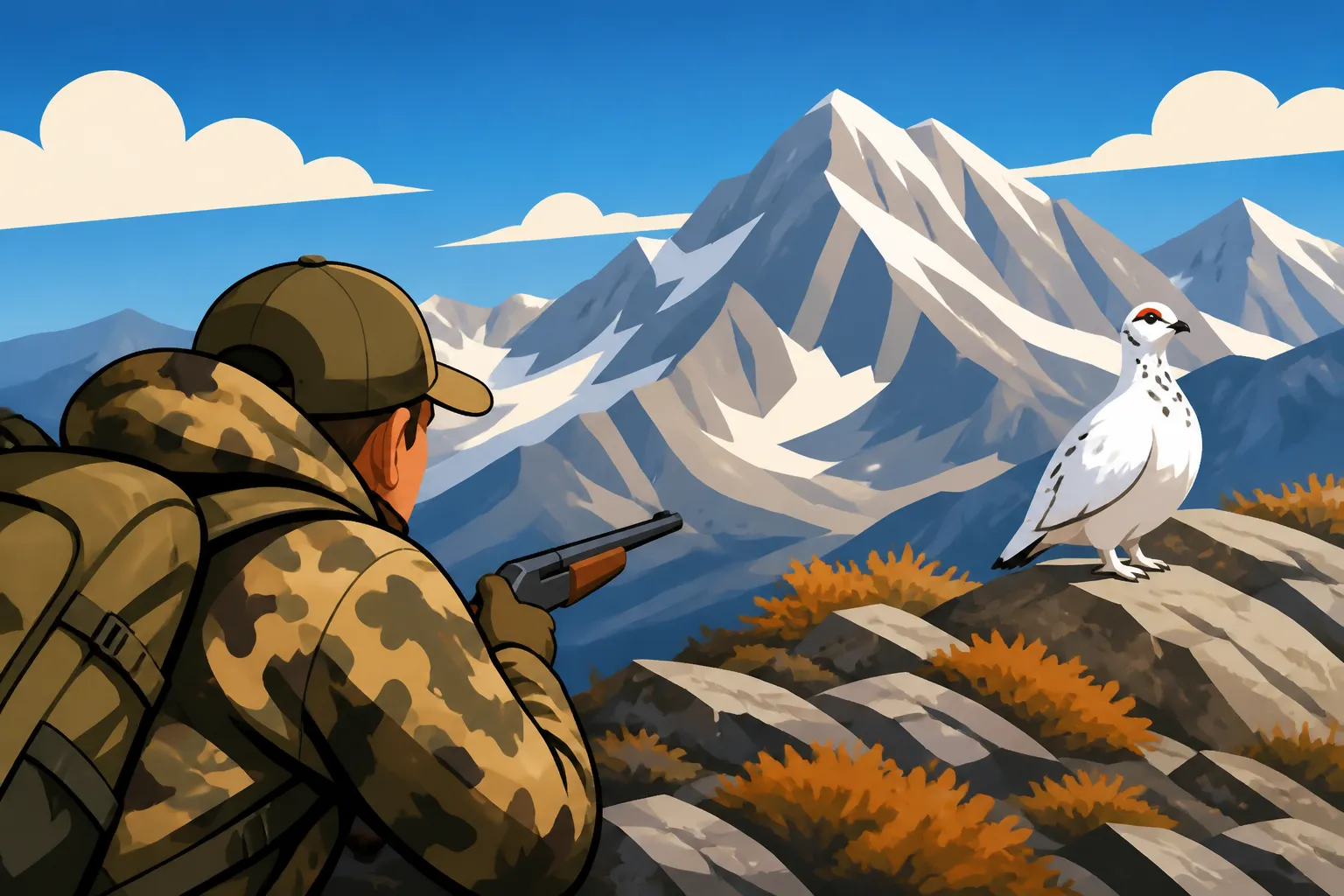
The White-tailed Ptarmigan (Lagopus leucura) is truly the monarch of Alberta's alpine. This is the smallest of the North American grouse species and the only one that remains completely white through the winter months, right down to its tail feathers – hence its name. In summer, their plumage is a beautiful mottled grey and brown, perfectly camouflaged against the rocks and sparse vegetation of their high-altitude home. However, as fall progresses, they begin their impressive molt, gradually transitioning to their pristine white winter coat. This seasonal change is what makes them so unique and challenging to spot, especially if you're hunting in the transitional periods of late fall when snow can be patchy.
You'll find these birds almost exclusively above the treeline, inhabiting the rocky scree slopes, tundra benches, and willow patches of Alberta's mountain ranges. They are exceptionally hardy birds, built for the rigors of this environment. Their feet are fully feathered, acting like snowshoes to distribute their weight and insulated to keep them warm. When disturbed, they often hold tight, relying on their camouflage, sometimes flushing suddenly with a whirring of wings when you're almost on top of them. Their call is a distinctive, low cackling sound, sometimes heard as they flush. Understanding their behavior and their masterly disguise is key to successful Ptarmigan Hunting High in the Alpine.
Willow and Rock Ptarmigan: Occasional Alpine Visitors
While the White-tailed Ptarmigan is the true alpine specialist you’ll most consistently encounter in Alberta’s high country, it’s worth being aware of its close relatives: the Willow Ptarmigan (Lagopus lagopus) and the Rock Ptarmigan (Lagopus muta). These two species primarily inhabit more northern or subalpine regions, but there can be some overlap, especially in the transitional zones or lower alpine elevations.
The Willow Ptarmigan is typically found in dense willow thickets and stunted spruce forests in the subalpine and boreal regions, preferring areas with more extensive shrub cover than its white-tailed cousin. It’s a larger bird than the White-tailed Ptarmigan and, importantly, its tail feathers remain black even in winter, offering a key identification cue. Its call is a loud, almost raucous crowing sound. The Rock Ptarmigan, on the other hand, prefers rockier, more barren tundra and heathlands, often at slightly lower elevations or more northern latitudes than the White-tailed, but still above or near the treeline. Like the Willow, its outer tail feathers are black, even in its white winter plumage. Differentiating between the Rock and White-tailed can sometimes be tricky in summer plumage, but the tail is the giveaway for both. While you're primarily targeting White-tailed Ptarmigan in Alberta's true high alpine, knowing that you might occasionally encounter a Willow or Rock ptarmigan will help you with accurate identification and ensures you're abiding by species-specific regulations if they were to apply (though typically, ptarmigan regulations are fairly broad). Always double-check the current Alberta regulations for Ptarmigan Season and Daily Limit to ensure you're in compliance.
Essential Gear and Clothing for Alpine Ptarmigan Hunts
Heading into the alpine for ptarmigan is not just a walk in the woods; it’s a commitment to a serious backcountry experience. The mountains demand respect, and your gear selection is paramount to both success and safety. Skimping here isn't just uncomfortable, it can be dangerous.
Layering for Extreme Weather
The Alberta alpine is notorious for its rapid and often drastic weather shifts. You can start your morning in crisp, clear sunshine, and within hours be battling driving rain, sleet, or even a full-blown snow squall, sometimes all in the same day. This isn't an exaggeration; it's the reality. The key to staying comfortable, dry, and safe is a well-thought-out layering system. Forget bulky, single-layer parkas; they're useless when conditions change.
Start with a good quality moisture-wicking base layer – synthetic or merino wool is ideal. This is crucial for managing perspiration, which can quickly lead to hypothermia when you stop moving in cold, windy conditions. Next comes your insulating mid-layer. A fleece jacket, a lightweight puffy jacket, or a wool sweater works wonders here. You might even carry two different mid-layers for maximum adaptability. For your outer shell, think waterproof and windproof. A high-quality GORE-TEX or similar breathable membrane jacket and pants are non-negotiable. This shell is your primary defense against the elements, protecting you from driving rain and cutting winds. Don't forget extra items: a warm hat, a buff or balaclava for face protection, and at least two pairs of gloves – a thin liner pair for dexterity and a heavier, waterproof pair for extreme cold. Always pack more than you think you'll need; the weight is worth the warmth and peace of mind when the weather turns nasty. This approach is similar to what's needed for Hunting Alberta Winter Weather Safely, but with the added considerations of high altitude.
Navigation and Safety in the High Country
Beyond clothing, your safety gear is non-negotiable for alpine hunting. Getting lost or encountering an emergency in this remote terrain is a serious situation. Modern technology has certainly made things easier, but a reliance on a single device is foolish.
A reliable GPS unit, loaded with topographic maps of your specific Wildlife Management Unit (WMU), is absolutely essential. Many hunters use smartphone apps like GoHunt or OnX Hunt, which offer excellent mapping capabilities, but always carry a dedicated GPS or ensure your phone is fully charged and you have a portable power bank. Critically, these electronic devices can fail due to cold, impact, or battery drain. Therefore, a physical map and a compass are still mandatory backups, and knowing how to use them is paramount. Before you leave cell service, text your itinerary to someone responsible, including your intended route and expected return time. A satellite communication device (like a Garmin inReach or Zoleo) is another vital piece of safety equipment. It allows you to send and receive messages even when off-grid, and, more importantly, trigger an SOS if a true emergency arises. Don’t just rely on hoping you won’t need it.
Beyond navigation, a comprehensive first-aid kit is crucial, tailored for backcountry use and capable of handling everything from blisters and cuts to more serious injuries. Consider packing a lightweight emergency shelter or bivvy sack, a fire starter, and enough extra food and water (or water purification tablets) to last an extra day or two. When you're in remote areas, knowing What a Guide Does When Someone Gets Hurt often comes down to personal preparedness and the ability to self-rescue or communicate for help.
Footwear and Optics for Rugged Terrain
Your feet are your primary mode of transportation in the alpine, and if they fail you, your hunt is over. Investing in high-quality footwear is one of the most important decisions you'll make. Forget about running shoes or flimsy hiking boots; you need serious support and durability.
Look for sturdy, waterproof hiking boots with excellent ankle support and stiff soles. This rigidity will protect your feet from sharp rocks and uneven terrain, and provide better traction on scree and slippery surfaces. Brands like Kenetrek, Crispi, and Schnee's are popular for a reason – they’re built for this abuse. Break them in well before your hunt to avoid painful blisters. Pair your boots with good quality wool or synthetic socks, and always carry an extra pair or two.
Optics are almost as important as your footwear. You’ll spend far more time glassing than walking when ptarmigan hunting in the alpine. A good pair of 10×42 or 12×50 binoculars will be your best friend, allowing you to systematically pick apart distant slopes and rock fields without expending precious energy. Consider a spotting scope if you plan on covering vast areas from a single vantage point, especially if you’re also Glassing Alpine Basins for Bighorn Sheep or other big game, but for ptarmigan specifically, quality binoculars are often sufficient. A lightweight tripod for your binoculars can also be a game-changer, reducing arm fatigue and allowing for much steadier, more thorough glassing, which is critical for spotting camouflaged birds.
Shotguns, Ammunition, and Carrying Systems
When it comes to firearms for ptarmigan, simplicity and reliability are key. Most hunters opt for a lightweight 12 or 20-gauge shotgun. Over/under or side-by-side shotguns are popular for their balance and ease of carrying, but a reliable pump or semi-automatic will also do the trick. The focus should be on a gun you can comfortably carry up steep slopes for hours on end, so weight is a significant factor.
For ammunition, smaller shot sizes are generally preferred. #6 or #7.5 lead shot is typically effective for ptarmigan, which are not large birds. Remember that while you’re in the alpine, you’re still within Alberta, so refer to the provincial regulations on legal shot sizes. Carry enough shells for your hunt, but don’t overload yourself; 20-30 rounds should be plenty for a day trip.
Perhaps even more important than the shotgun itself is how you carry it. A comfortable sling is essential, but for steep climbs and scrambling over rocks, a hands-free carrying system is invaluable. Chest slings or specialized backpack attachments allow you to keep your hands free for balance, trekking poles, or navigating difficult terrain, while still providing quick access to your firearm. This will significantly reduce fatigue and increase safety on exposed slopes. Also, ensure your shotgun is well-maintained and protected from the elements; a light coating of oil and a good gun cover can prevent rust and keep it functioning reliably in the often-wet and dusty alpine conditions.
Proven Strategies for Alpine Ptarmigan Hunting
Ptarmigan hunting isn't about covering vast distances quickly; it's about methodical searching and understanding the birds' behavior in their unique environment. The strategies you employ need to be adapted to the steep, rocky, and often unpredictable nature of the alpine.
The Spot-and-Stalk Approach
For many alpine ptarmigan hunters, the spot-and-stalk method is king. This strategy minimizes energy expenditure and maximizes your ability to locate birds that are masters of camouflage. It’s all about patience, observation, and meticulous movement.
Start by finding a high vantage point that offers expansive views of suitable ptarmigan habitat – rocky slopes, willow draws, or tundra benches. Use your binoculars, or even a spotting scope, to systematically scan the landscape, breaking it down into smaller, manageable grids. Don't just glance; scrutinize every rock, every patch of vegetation. Look for any anomaly: a slight movement, a darker shadow, a patch of white that doesn't quite look like snow or rock. Ptarmigan will often sit perfectly still, relying entirely on their camouflage. Sometimes, you'll spot them moving or hear their distinctive cackle. Once you spot birds, the "stalk" begins. Plan your approach carefully, using terrain features (ridges, boulders, depressions) to conceal your movement. The goal is to get within shotgun range (typically 20-40 yards) without alerting them. This often involves slow, deliberate steps, sometimes crawling, and using the wind to your advantage to mask your scent and sound. Patience is key; rushing an approach almost always results in a flush out of range. If you spook a bird, mark its flight path, as they often don't fly far, sometimes just over a ridge or into a new patch of cover. This is a highly effective way to hunt these birds, particularly when you’re in an area like Hunting an Alpine Basin in the Mountain WMUs.
Working With a Dog in the Alpine
Hunting ptarmigan with a well-trained bird dog can be incredibly rewarding, but it comes with its own set of challenges in the alpine environment. A good pointing or flushing dog can locate birds that would be impossible for the human eye to spot, especially when they hold tight.
However, the rugged terrain is tough on dogs. Sharp rocks can cut paws, and steep scree slopes can be dangerous. Choose a dog with excellent stamina and protective booties are often a good idea. Training is paramount: your dog needs to be rock-solid on "whoa" or "stay" to avoid flushing birds out of range or chasing them over cliffs. They also need to be accustomed to working at altitude and in varied temperatures. Keep your dog hydrated, and monitor them closely for signs of exhaustion or injury. Working a dog on a contour or across a slope, rather than straight up and down, can be more effective and conserve their energy. When the dog goes on point, approach cautiously, ready for the flush. A flushing dog will work the cover, pushing birds into the air within shooting range. While a dog can dramatically increase your success, it also adds another layer of responsibility and safety considerations. Always ensure you are familiar with Rules for Hunting With Dogs in Alberta's specific regions.
Utilizing Terrain Features
The alpine landscape, while vast, is full of features that can be strategically used to your advantage when hunting ptarmigan. These birds, despite their incredible camouflage, still have predictable patterns based on their need for food, cover, and shelter from the elements.
One of the most effective strategies is to hunt ridgelines and saddles. Ptarmigan will often feed or rest along these elevated areas, especially on the lee side where they are somewhat protected from the wind. These spots also provide them with excellent visibility, so approach them cautiously, using the prevailing wind to mask your presence. Draws and small gullies that contain stunted willows, alders, or other shrubs are also prime locations. These offer both food and crucial overhead cover from aerial predators. Systematically work these features, always being aware of the wind direction. Also, don't ignore persistent snow patches, even in mid-season. Ptarmigan will often seek these out for cooling on warmer days, or to access specific vegetation around their edges. When traversing steep slopes, think about how the ptarmigan would move. They'll generally follow contours or use benches rather than steep, exposed faces. By "thinking like a ptarmigan" and focusing your efforts on these preferred terrain features, you'll greatly improve your chances of success and conserve energy that would otherwise be wasted by aimless wandering.
Accessing Alberta's High Country for Ptarmigan
Hunting high-country ptarmigan means venturing into some of Alberta’s most remote and beautiful landscapes. Access isn't always straightforward, and it demands physical preparation and a solid understanding of the rules that govern these pristine areas.
Navigating Public Land Use Zones and Mountain WMUs
Alberta’s high country is primarily found within its Mountain Wildlife Management Units (WMUs), often overlapping with designated Public Land Use Zones (PLUZs). These areas are managed differently than the "White Area" (privately owned farmland) or even much of the "Green Area" (forest reserves), and understanding the specific regulations for each is critical. For instance, some PLUZs might have restrictions on off-highway vehicle (OHV) use, designated camping areas, or even require specific permits for certain activities. Others might have limitations on where you can discharge a firearm.
Before you even leave home, thoroughly research the specific WMU and PLUZ you intend to hunt. The Alberta government's online recreational access maps and detailed regulations are your best friends here. For hunters looking to go deep, understanding Hunting Alberta's Mountain WMUs and Their Access is absolutely essential. Many of these areas require significant foot travel, backpacking in, or even horseback access. Expect limited or no cell service. Always double-check fire bans, road closures due to weather or forestry operations, and temporary access restrictions. Being caught off-guard by these can derail your hunt before it even starts. Remember, while it's public land, it's a shared resource, and respecting all rules helps preserve these opportunities for everyone. Tools like GoHunt can provide overlays for different land types, making it easier to visualize boundaries and restrictions in the field.
The Importance of Physical Fitness and Preparation
Let's be blunt: ptarmigan hunting in the alpine is physically demanding. This isn't a casual stroll. The thin air, steep inclines, and rugged, uneven terrain will push your cardiovascular system and your leg muscles to their limits. Many hunters underestimate this aspect, and it often leads to a miserable experience or, worse, safety issues.
If you're planning an alpine hunt, start training well in advance. Incorporate regular cardio workouts (hiking, running, stair climbing) and strength training focused on your legs, core, and back. Hiking with a loaded pack is probably the most beneficial preparation you can do. Simulate the weight you'll be carrying on the actual hunt, including your shotgun, water, and emergency gear. Pay attention to your diet and hydration in the weeks leading up to your trip. Acclimatization, if possible, is also beneficial; spending a day or two at a slightly lower elevation in the mountains before your strenuous hunt can help your body adjust to the thinner air. Don't push yourself beyond your limits once you're on the mountain. Take frequent breaks, stay hydrated, and listen to your body. Having a good fitness base not only increases your chances of success but significantly reduces the risk of injury and makes the entire experience much more enjoyable. This level of preparation is similar to what's required for more demanding hunts like Backpacking Into Alberta Sheep Country.
Ethical Hunting and Conservation for Ptarmigan
Hunting in Alberta’s pristine alpine is a privilege, and with that comes a profound responsibility to hunt ethically and contribute to conservation efforts. The beauty and fragility of this environment demand our respect and adherence to best practices.
Respecting the Fragile Alpine Ecosystem
The alpine ecosystem is incredibly sensitive and slow to recover from disturbance. Unlike forests that can regenerate relatively quickly, the high country’s short growing season and harsh conditions mean that damage can persist for decades. As hunters, we are guests in this environment, and it’s our duty to minimize our impact.
This starts with strict adherence to Leave No Trace principles. Pack out everything you pack in, and then some. This includes all trash, spent shotgun shells, and any other waste. Avoid creating new trails; stick to established paths or travel over durable surfaces like rock and scree. If you must travel off-trail, spread out to minimize impact on delicate alpine vegetation. When camping, use existing sites or choose durable, high-impact surfaces like gravel or rock. Keep campfires small and use existing fire rings where permitted, or consider a portable stove. Proper disposal of human waste away from water sources is also critical. Encounters with other wildlife, such as marmots, pikas, or even Mountain Goat in Steep Rock areas, are common. Observe them from a distance and never disturb them. By respecting the land, we ensure that these incredible hunting opportunities remain for future generations.
Understanding Limits and Regulations
Every hunter in Alberta has a responsibility to know and strictly follow all provincial hunting regulations. Ignorance is never an excuse, especially when hunting a species like ptarmigan in unique habitats. Regulations are in place to manage wildlife populations responsibly and ensure sustainable hunting opportunities.
Before every season, obtain a copy of the current Alberta Guide to Hunting Regulations and review it thoroughly, paying particular attention to the sections on game birds, migratory bird permits (if applicable), and specific regulations for the WMU you plan to hunt. Key regulations to be aware of include daily bag limits and possession limits, which dictate how many birds you can harvest and possess. Season dates are also critical; hunting outside of open season is illegal. There are typically no draw requirements for general ptarmigan seasons, but always confirm. Understanding the regulations for Ptarmigan Season and Daily Limit is not just about avoiding fines; it’s about participating in a system designed to protect the resource. Ethical hunting also includes accurate species identification and ensuring you're only targeting legal game. When you respect the rules, you uphold the integrity of hunting and contribute to its positive public perception.
Conclusion
Hunting ptarmigan high in Alberta's alpine is a challenging yet profoundly rewarding experience. It demands physical fitness, meticulous preparation, and a deep respect for the unforgiving beauty of the mountains. From understanding the nuances of their high-altitude habitat to employing thoughtful hunting strategies and carrying the right gear, every detail matters. Embrace the journey, and you'll find more than just a bird; you'll discover a deeper connection to Alberta's wild heart.
Disclaimer
The information provided in this guide is for general informational purposes only and does not constitute legal advice or a definitive statement of the law. Hunting regulations in Alberta are subject to change, and it is the sole responsibility of every hunter to consult the official Alberta Guide to Hunting Regulations and all relevant provincial and federal laws before hunting. Always ensure you have the appropriate licenses and permits, and adhere to all safety protocols.