Ptarmigan Season and Daily Limit
It's incredibly frustrating when you're geared up for an alpine adventure, dreaming of those elusive ptarmigan, only to realize you're not entirely sure about the most up-to-date season dates or bag limits. It feels like navigating a maze sometimes, especially when you're planning a trip to Alberta's stunning, but challenging, high country. This comprehensive guide is here to cut through that confusion, giving you a clear understanding of Alberta's ptarmigan season and daily limits so you can focus on the hunt itself.
Unraveling Alberta's Ptarmigan Season Dates
Hunting ptarmigan in Alberta offers a unique challenge and reward, largely due to their high-altitude habitat and incredible camouflage. Understanding the season dates is your first step toward a successful hunt in the province's rugged mountains. It’s not just about knowing when it opens, but also appreciating the long window hunters are given.
General Provincial Season Overview
For much of Alberta's game, specific seasons vary wildly from one Wildlife Management Unit (WMU) to another, or even change depending on the species and weapon type. However, for ptarmigan, the season is wonderfully consistent across the entire province. Generally, the season runs from September 1st through to March 31st of the following year. This long duration, stretching over seven months, gives hunters ample opportunity to pursue these fascinating birds through various stages of their life cycle and camouflage changes.
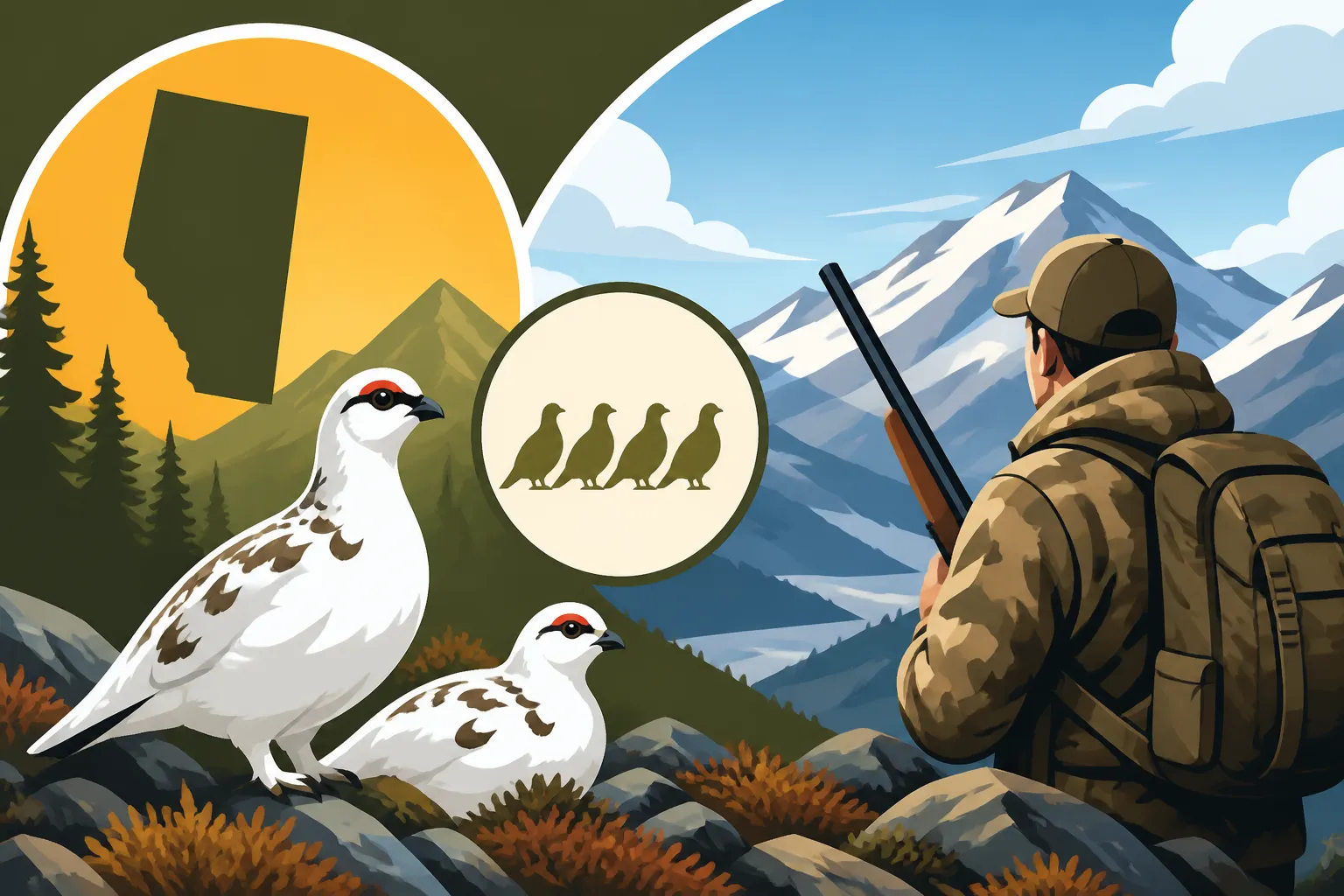
This extended season is a testament to the remoteness and specific habitat preferences of ptarmigan. Unlike more accessible game birds that face higher hunting pressure, ptarmigan live in environments that naturally limit hunter access. Alberta is home to three species of ptarmigan: the Willow Ptarmigan, the Rock Ptarmigan, and the White-tailed Ptarmigan. While all three are fair game under this season, the White-tailed Ptarmigan is the most commonly encountered in the high alpine where most hunters venture. Their season opens alongside other upland birds, offering a fantastic opportunity for an early fall foray into the mountains before the deep snows set in, and continues well into the winter for those brave enough to face the cold. If you're planning for a broader upland bird experience, it's worth checking out the comprehensive guide on Upland Bird Hunting in Alberta for a full picture.
Regional Considerations and Key WMUs for Ptarmigan
While the season dates are consistent province-wide, the reality is that ptarmigan aren't found just anywhere. Their habitat is exclusively the high-alpine tundra, typically above the treeline in the Rocky Mountains. This means that practically, your ptarmigan hunting will be focused on specific WMUs within the 400-series that cover Alberta's mountainous regions. Think areas west of the Forestry Trunk Road, deep in the front ranges, and beyond.
It's crucial to consult the Alberta Hunting Regulations for the specific year you intend to hunt, as regulations, even for consistent species like ptarmigan, can have subtle changes or clarifications. While the general season dates usually remain stable, knowing the boundaries of these specific mountain WMUs and understanding access rules is paramount. Tools like the GoHunt app are invaluable here, as they provide detailed map layers showing WMU boundaries, Crown land, and potential access points, helping you pinpoint where these birds might be found. A good starting point for any hunt, especially in unfamiliar territory, is always Reading an Alberta WMU Map Before You Go. You'll want to pay close attention to the WMUs nestled against the national parks, as hunting within national parks is strictly prohibited, and boundaries can be tricky in the rugged terrain. Knowing how to interpret these maps will save you time and potential headaches, ensuring you're hunting legally and safely in the remote corners of the province.
Understanding Ptarmigan Daily and Possession Limits
Once you've got your head wrapped around the season, the next critical piece of information for any ethical and legal hunt is understanding the bag limits. These limits are set to ensure sustainable populations and fair distribution of the harvest among hunters. Ptarmigan limits in Alberta are quite generous, reflecting the challenge of hunting them and their relatively stable populations in their isolated habitat.
The Combined Bag Limit
Alberta's regulations specify a daily bag limit for ptarmigan. This isn't broken down by species; rather, it's a combined daily bag limit of 10 birds for all ptarmigan species (Willow, Rock, and White-tailed). This means that whether you encounter a flock of Willow Ptarmigan near a willow flat or a covey of White-tailed Ptarmigan high on a rocky ridge, your total harvest for that day cannot exceed 10 birds.
This combined limit is standard practice for many game bird categories where multiple species share similar habitats and hunting methods. It simplifies the regulations for hunters and aids in conservation efforts by ensuring no single species is inadvertently over-harvested. These limits are carefully determined by wildlife biologists based on population assessments, breeding success rates, and the overall health of the ecosystem. Respecting these limits is not just a legal obligation; it's a fundamental part of responsible hunting and ensures that future generations will also have the opportunity to experience the thrill of a ptarmigan hunt.
Possession Limits for Extended Hunts
For hunters venturing into Alberta's remote mountains, often on multi-day backpacking trips, knowing the possession limit is just as important as the daily limit. The possession limit for ptarmigan in Alberta is 30 birds. This allows hunters to accumulate their daily limit over several days without fear of exceeding legal bounds. For instance, if you hunt for three days and bag 10 birds each day, you'd be at your possession limit of 30.
The possession limit is particularly relevant for those who undertake extended backcountry trips, which are often necessary to reach prime ptarmigan habitat. Imagine a scenario where you've hiked miles into the wilderness for Ptarmigan Hunting High in the Alpine, spending several days above the treeline. This possession limit means you don't have to pack out every single bird each day, offering flexibility for hunters committed to a longer stay. However, it's essential to keep accurate records, especially if you're hunting with a party, to ensure the group's collective possession doesn't exceed the legal limits per individual. Proper meat care in the backcountry is also paramount, especially when accumulating birds over several days.
Here's a quick summary of Alberta's Ptarmigan regulations:
| Regulation Type | Detail |
|---|---|
| Season Dates | September 1st – March 31st (Provincial) |
| Daily Limit | 10 birds (Combined, all species) |
| Possession Limit | 30 birds (Combined, all species) |
| Primary Habitat | High-alpine tundra, above treeline (Rocky Mountains) |
| Key WMUs | Predominantly 400-series (Mountain WMUs) |
Strategies for a Successful Alberta Ptarmigan Hunt
Hunting ptarmigan is less about sophisticated calls or elaborate setups and more about physical endurance, keen eyesight, and understanding their unique habitat. Knowing the season and limits is just the beginning; the real challenge lies in finding and ethically harvesting these masterfully camouflaged birds.
Best Times Within the Season for Alpine Success
The long ptarmigan season offers various opportunities, each with its own advantages and challenges.
- Early Season (September – October): This is often the most popular time for ptarmigan hunting. The weather is generally milder, making access to high-alpine areas significantly easier and more pleasant. The birds are in their summer plumage, a mottled brown and black, which can blend incredibly well with the rocky, heathery terrain. However, they're often in larger coveys and less wary than later in the season. Plus, you might combine your trip with scouting for other big game, like those covered in Backpacking Into Alberta Sheep Country, or enjoy other forms of Upland Bird Hunting in Alberta. It’s a fantastic time for a truly multi-species backcountry adventure.
- Late Fall/Early Winter (November – December): As the snow begins to accumulate, ptarmigan start their incredible transformation to their pristine white winter plumage. This period can be particularly exciting as finding them against a patchy snow backdrop can be either incredibly difficult or surprisingly easy, depending on the terrain. The birds will often be concentrated in areas with exposed vegetation or along ridgelines where wind keeps the snow thinner. Keep an eye on how their Ptarmigan Colour Change Through the Season impacts your ability to spot them.
- Deep Winter (January – March): This is for the truly dedicated and well-prepared hunter. The birds are fully white, and while they might stand out against dark rock, they are incredibly well-camouflaged against deep snow. Access becomes a significant challenge, requiring snowshoes, skis, or even snowmobiles to reach viable habitat (where permitted). However, those who brave the cold often find ptarmigan in large flocks, providing an unforgettable hunting experience. Be sure your Winter Truck Kit for an Alberta Hunt is comprehensive if you plan to venture out in these conditions.
Regardless of when you go, monitoring weather patterns is critical. Sudden storms can turn a pleasant high-country outing into a dangerous situation very quickly.
Essential Gear and Scouting for High Country Birds
A successful ptarmigan hunt hinges as much on preparation and gear as it does on hunting skill. The high-alpine environment demands respect and the right equipment.
- Navigation: A reliable GPS device or a smartphone app like GoHunt with downloaded maps is non-negotiable. Topographic maps and a compass are also essential backups. Being able to accurately identify your location, WMU boundaries, and potential escape routes in rapidly changing weather is crucial. Scouting With Satellite Imagery in Alberta beforehand using tools like GoHunt can reveal hidden benches, willow basins, and rocky outcrops that are prime ptarmigan habitat.
- Optics: High-quality binoculars (10×42 or 12×50) are incredibly useful for spotting birds that blend seamlessly into their surroundings. They can save you countless steps by allowing you to glass vast areas from a vantage point.
- Clothing: Layering is key. Even in September, alpine temperatures can fluctuate wildly, and biting winds are common. Waterproof and windproof outer layers are a must, along with warm mid-layers and moisture-wicking base layers. Don't forget a warm hat, gloves, and sturdy, waterproof hiking boots designed for rocky terrain.
- Footwear: Your feet will take a beating. Invest in high-quality, broken-in hiking boots with good ankle support. The terrain is often steep, uneven, and covered in scree and loose rock.
- Safety Gear: A first-aid kit, fire-starting supplies, emergency shelter, plenty of water, and high-energy snacks are non-negotiables. Consider carrying a satellite messenger or personal locator beacon (PLB) for emergencies, as cell service is non-existent in most ptarmigan country. Hunting Alberta Winter Weather Safely provides additional considerations if you're heading out in the colder months.
Accessing Remote Ptarmigan Habitat
The biggest hurdle for most ptarmigan hunters is simply getting to where the birds live. These hardy grouse prefer elevations above the treeline, often requiring significant physical exertion to reach.
- Physical Fitness: There’s no way around it: hunting ptarmigan demands a good level of physical fitness. You’ll be hiking steep inclines, traversing rocky slopes, and navigating uneven terrain, often at high altitudes where the air is thinner. Training with a loaded pack before your trip will pay dividends.
- Mountain Access: Many of Alberta's mountain WMUs allow foot access, but some areas may have restrictions on motorized vehicles. Knowing the specific rules for Hunting Alberta's Mountain WMUs and Their Access is critical. Some prime areas might require multi-day backpacking trips, establishing spike camps, or even utilizing horses for deeper penetration into the backcountry. Always check current public land use zone (PLUZ) regulations, as they can govern vehicle access and camping.
- Planning Your Route: Use topographic maps and aerial imagery (like those available through GoHunt) to plan your ascent and identify potential areas where ptarmigan might hold. Look for bowls, ridgelines, and areas with patchy vegetation above timberline. Understanding the nuances of Hunting a High Ridge Above Timberline can significantly increase your chances. Always have a backup plan in case weather or terrain makes your primary route impassable. Packing Out of Alberta's Mountain WMUs also emphasizes that your exit strategy should be as well-planned as your entry.
Ethical Considerations and Conservation for Ptarmigan Hunters
As with all hunting, pursuing ptarmigan comes with a responsibility to the resource and the environment. Ethical behavior and adherence to conservation principles ensure these unique birds and their stunning habitat remain healthy for future generations.
Respecting the Resource and Alpine Environment
The alpine environment where ptarmigan thrive is beautiful but fragile. Every hunter has a role to play in preserving its integrity.
- Leave No Trace: Pack out everything you pack in, including spent shotshells. Minimize your impact on vegetation and soil. Stick to established trails where possible, and when off-trail, tread lightly.
- Fair Chase: Uphold the principles of fair chase. Do not harass birds or chase them excessively. Ptarmigan can be surprisingly tame, often holding tight even when approached. While this makes them accessible, it's important not to exploit their nature. Take ethical shots and make every effort to recover all downed birds.
- Sustainable Harvest: While limits are generous, always consider your personal needs and what you will actually use. Just because you can take 10 birds doesn't mean you must. Selective harvesting and appreciating the experience are as important as the numbers in your game bag. This mindfulness is a core part of being a responsible hunter and ensuring the sustainability of Alberta's wildlife.
Legalities Beyond Seasons and Limits
While this guide focuses on season dates and limits, remember that these are just two components of Alberta's comprehensive hunting regulations. Being a responsible hunter means understanding and adhering to all rules.
- Hunter Education: All hunters in Alberta must meet specific education requirements. If you're new to the province or hunting in general, be sure to complete the Alberta Hunter Education Course Requirements.
- Blaze Orange: While not mandatory for upland game birds (unless hunting during a big game season or where big game hunting is permitted), wearing blaze orange in the backcountry, especially during peak hunting seasons, is a smart safety practice. This is detailed further in Alberta Blaze Orange Requirements.
- Firearm Regulations: Ensure your firearm (typically a shotgun for ptarmigan) complies with provincial and federal regulations. This includes calibre restrictions for big game (not typically an issue for birds) and safe transport rules.
- Landowner Permission: While most ptarmigan hunting occurs on Crown land, always be aware of land ownership. If you happen to be crossing or hunting near private land, you must have explicit permission. For all the details on access, consult information like Finding Access on Alberta Crown Land.
- Reporting: Currently, there's no mandatory harvest reporting for ptarmigan in Alberta, unlike many big game species. However, always be prepared for changes in regulations and stay informed.
By thoroughly understanding these regulations, combining them with diligent scouting (perhaps with tools like GoHunt!), and approaching your hunt with respect for the animal and its habitat, you're well on your way to a memorable and ethical Alberta ptarmigan hunting experience.
Disclaimer
Please remember that hunting regulations in Alberta can change. While this guide provides information current at the time of writing, it is your responsibility to consult the official Alberta Hunting Regulations (available online via the provincial government website or through authorized vendors) before planning and executing any hunt. Always verify season dates, bag limits, and specific WMU rules to ensure compliance.