Where Alberta’s Elk Herds Winter
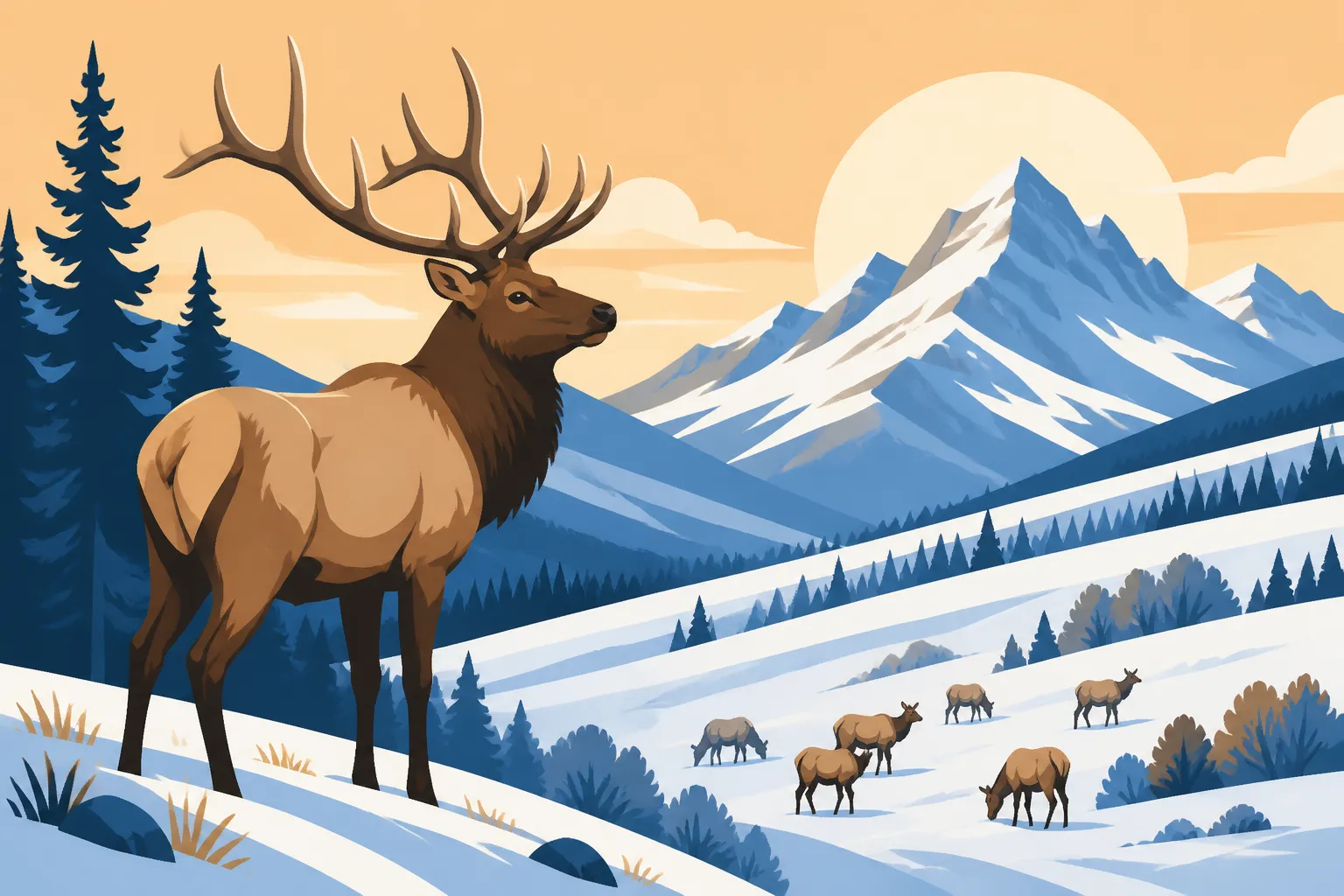
Trying to pinpoint where Alberta's massive elk herds disappear to once the snow flies can feel like a genuine mystery for many hunters. One minute, you're hearing bugles echoing in the mountains; the next, it seems they've vanished from their summer and fall haunts entirely. This shift can be incredibly frustrating, leaving you wondering where to even begin your late-season hunting efforts. This guide is here to shed some light on the elusive winter movements of Alberta's elk, helping you understand their critical survival needs and identifying the key habitats where they seek refuge during the coldest months.
Understanding Elk Winter Behaviour and Survival
Elk are incredibly adaptable creatures, but winter in Alberta presents a formidable challenge. As temperatures drop, snow piles up, and the landscape transforms, their survival hinges on finding specific areas that offer both sanctuary and sustenance. Their behaviour shifts dramatically from the breeding season, moving from rutting grounds and higher summer pastures to more defined winter ranges. It's not just about avoiding hunters anymore; it's about sheer survival.
The Seasonal Shift from Fall to Winter Ranges
As autumn gives way to winter, you'll notice a distinct migration in many elk populations. This isn't always a long-distance, sweeping movement like some caribou herds, but rather a strategic descent or relocation to areas with more favorable conditions. Typically, elk move from higher elevations in the mountains and foothills or deeper into the dense boreal forest, to lower, more sheltered areas. These lower elevations often mean less snow accumulation, which is a critical factor for mobility and accessing forage.
Think about it from an elk's perspective: a foot of snow might not seem like much to us, but for an elk trying to paw through it for sustenance, it's a huge energy drain. Two feet of snow? That's a deal-breaker for sustained foraging. So, as the first significant snowfalls hit, and especially once the cold really clamps down and drifts begin to form, those high ridges and deep timber pockets become less appealing. They need to conserve energy, and that means minimizing effort in travel and feeding. This is why you often find them concentrating in specific, often predictable, winter strongholds.
Key Winter Needs: Thermal Cover and Food Sources
When winter bares its teeth, an elk's primary concerns become thermal regulation and finding enough calories to survive. They're looking for a two-for-one deal: places that offer protection from the biting winds and deep snow, alongside a reliable food source. Without these, they burn through precious fat reserves, making them vulnerable.
Thermal cover is paramount. This typically means dense stands of mature conifers like spruce or pine, which trap heat, break the wind, and intercept snow, creating shallower snowpacks underneath. South-facing slopes are also highly prized because they catch more sunlight, which can melt snow and expose forage, as well as provide a warmer microclimate. These sun-drenched, sheltered pockets become essential bedrooms and loafing areas during the coldest parts of the day. A hunter using tools like GoHunt to scout maps will often identify these south-facing aspects with dense timber as prime candidates for wintering elk.
As for food, their diet shifts from lush summer grasses and forbs to more browse-heavy options. They'll strip bark from aspen and willow, nibble on evergreen shrubs, and graze on any exposed grasses. If they're in proximity to agricultural lands, unharvested grain fields or hay bales can become irresistible magnets, offering a high-calorie, easily accessible meal. This is why understanding where agriculture meets wild land is so crucial when trying to locate wintering herds, as discussed in detail in our article, Elk on Farmland and the Damage Problem. They will literally risk human encounters for a belly full of nutrient-rich grain.
Impact of Snow Depth and Temperature
The severity of winter, particularly the depth of snow and sustained low temperatures, plays a huge role in dictating where Alberta's elk will spend their time. Deep snow is the enemy of an elk's energy budget. Each step through heavy snow burns calories, and finding forage under it becomes a monumental task. This forces elk into areas where snow cover is naturally shallower or where the wind has scoured it away.
River valleys, for example, often have less snow and more exposed browse along their banks. Lower elevation benches and south-facing slopes, as mentioned, are also crucial. When the mercury really plummets and stays there, thermal cover becomes even more critical. Elk will literally yard up in dense timber, standing shoulder-to-shoulder to share body heat and minimize exposure. They'll move less, conserving every ounce of energy, and only venture out to feed during the warmest parts of the day, often at dawn or dusk. Understanding these dynamics is key to anticipating their movements, especially if you're venturing out for Hunting Alberta Winter Weather Safely. It's not just about the deer surviving the cold, it's also about you.
Prime Wintering Habitats Across Alberta's Zones
Alberta's vast and varied landscape means that "winter range" can look quite different depending on which part of the province you're hunting. From the rugged Rockies to the agricultural heartland, elk adapt their wintering strategies to the specific challenges and resources available. Being able to read the landscape for these specific features will give you a significant advantage.
Foothills and Mountain Corridors
In the mountainous and foothill regions, elk typically vacate the highest elevations and move into the sheltered river valleys, lower forested slopes, and the fringes of human development as winter progresses. These areas offer a combination of accessible forage and critical thermal cover. You'll often find them tucked into river breaks, especially those with good south-facing aspects that warm up quicker during the day.
Areas around the Forestry Trunk Road, for instance, are classic examples of this. Elk will utilize lower elevation benches and open clearings adjacent to dense timber. They might even move onto logged blocks that are a few years old, offering a mix of browse and residual cover. Our article on Hunting Elk on Alberta's Forestry Roads goes into more depth on this. These corridors act as natural highways and havens for elk seeking shelter and food when the higher country becomes unmanageable. Look for areas where the terrain breaks, creating natural windbreaks and sun traps.
Parkland and Agricultural Interfaces
This is where things can get particularly interesting – and sometimes frustrating – for hunters. As snow deepens in the more natural parkland and brush country, elk will often push into agricultural areas. They are drawn to the promise of easy calories in unharvested fields of grain, silage pits, or even hay bales left out for livestock. These areas typically have less snow than adjacent bush, making food much easier to access.
You'll find them concentrated along the edges of cultivation, often utilizing small treed bluffs, river bottom brush, or shelterbelts for cover during the day, then moving out into fields to feed at night. This proximity to human activity can make them incredibly wary, but their hunger often overrides their caution. Securing access to these private agricultural lands is crucial here, but it can be challenging due to potential crop damage or conflicts with landowners. However, if you're able to gain permission, these can be incredibly productive spots, especially when you're Hunting a Grain Bin Yard at Dusk or a field edge.
Boreal Forest Pockets
While moose are typically the stars of Alberta's boreal forest, elk herds do exist in these vast northern expanses and also adapt to winter's demands. In deep boreal country, elk won't have the luxury of agricultural fields. Instead, they'll seek out specific forest pockets that offer better conditions. This often means focusing on areas with regenerated browse, like old burn sites or clearcuts from a few years prior, where young aspen, willow, and other shrubs are growing vigorously. They'll also heavily utilize seismic lines, cutlines, and old logging roads, which act as easier travel corridors and often have regenerating forage along their edges.
Dense coniferous stands still provide essential thermal cover here, especially those with thick understories. Look for islands of timber in muskeg country, or specific drainage bottoms that remain relatively snow-free. These wintering groups tend to be smaller and more scattered than their mountain cousins, but they are there. Understanding how Hunting a Burned-Over Boreal Block can produce elk is a unique strategy for these northern hunters.
Here's a quick overview of typical Alberta elk wintering habits:
| Region | Typical Winter Habitat | Key Attractors | Challenges for Hunters |
|---|---|---|---|
| Foothills/Mountains | River valleys, lower slopes, dense coniferous timber | South-facing aspects, exposed browse, thermal cover | Deep snow, rugged terrain, limited access in some areas |
| Parkland/Agriculture | Field edges, treed bluffs, river breaks, unharvested fields | High-calorie crops, less snow, easy forage | Private land access, wary elk, human disturbance |
| Boreal Forest | Old burns, clearcuts, cutlines, dense spruce/pine stands | Regenerated browse, thermal cover, sheltered travel | Remote access, thick cover, lower elk densities |
Strategies for Locating Wintering Elk
Finding wintering elk isn't about luck; it's about systematic scouting, understanding their needs, and being persistent. Their predictable patterns, driven by survival, are your best friend. Even if you've hunted an area all fall, their winter haunts might be completely different.
Scouting and E-Scouting for Winter Sign
Before you even pull on your boots, modern tools can give you a massive head start. E-scouting with satellite imagery and topographic maps is invaluable. Services like GoHunt allow you to analyze terrain for those crucial winter features: south-facing slopes, dense coniferous timber, proximity to agricultural fields, and river bottoms. You can identify potential thermal cover, open feeding areas, and possible travel corridors all from your couch. This is often the first step in Reading an Alberta WMU Map Before You Go.
Once you have a few promising spots identified, it's time for boots on the ground. Look for sign: fresh tracks in the snow are your number one indicator. Pay attention to their direction of travel, leading you to bedding or feeding areas. Look for pawed-out depressions where they've been digging for grass or browse lines on shrubs and trees. Even old rub lines from the rut can indicate general areas they frequent, but in winter, fresh feeding and bedding sign are paramount. The more specific you are in your Scouting With Satellite Imagery in Alberta, the more efficient your ground scouting will be.
Focus on Food and Cover Transitions
Elk, especially in winter, are constantly balancing their need for food with their need for security and thermal comfort. This means they will often be found in transition zones – the edges where dense cover meets more open feeding areas. These could be the timber edge of a large clearcut, the brushy bank of a river valley adjacent to an open bench, or the treeline bordering a grain field.
Glassing these transition areas at dawn and dusk is highly effective. Elk often move into open areas to feed during low light and retreat to cover during the day. During mid-day, they might be bedded in dense timber on a sunny slope. Be patient, use good optics, and scrutinize every dark patch of timber. They are masters of blending in. If you're Hunting Elk in a Foothills Clearcut, understanding these transition zones is key to intercepting them moving between bedding and feeding areas.
Respecting Private Land and Damage Issues
As mentioned, many prime wintering areas for elk, especially in the parkland and agricultural zones, are on private land. This is where the ethical hunter truly shines. Always, always secure permission before entering private property, whether it's for scouting or hunting. This isn't just a courtesy; it's the law in Alberta. Understanding Alberta Landowner Permission Law is non-negotiable.
Elk can cause significant damage to crops, fences, and stored feed, leading to understandable frustration for landowners. Approaching them with respect, offering to help mitigate damage, or even offering to share game meat can go a long way in building positive relationships. It's often through these relationships that you can gain access to highly productive areas that others overlook. Always check whether the landowner expects you to report your presence or sign in and out, and follow any specific rules they set. Patience and politeness are your best tools when Finding Access on Alberta Crown Land might not be an option and private land holds the key.
Disclaimer
This article is for general informational purposes only and does not constitute professional advice. Laws, prices and regulations vary by location and change over time. Consult a qualified professional for guidance on your specific situation.