Red Fox and Swift Fox in Alberta
Many hunters and wildlife enthusiasts in Alberta often spot a flash of red or a quick, low profile scampering across the prairie, but identifying whether it's the common red fox or the rarer swift fox can be a challenge. Understanding these two distinct canid species, their unique characteristics, preferred habitats, and ecological roles is key to appreciating Alberta's diverse wildlife. This guide will delve into the nuances that differentiate red foxes from swift foxes across Alberta's landscapes, helping you better understand these intriguing creatures.
The Widespread Red Fox: An Adaptive Predator of Alberta
The red fox ( Vulpes vulpes ) is arguably one of the most recognizable canids in Alberta, known for its striking coat and cunning nature. Far from being confined to specific niches, the red fox has proven itself to be incredibly adaptable, thriving in a wide array of environments across the province. You're just as likely to spot one in the agricultural fields of central Alberta as you are along the edges of the northern boreal forest.
Identifying Alberta's Red Fox
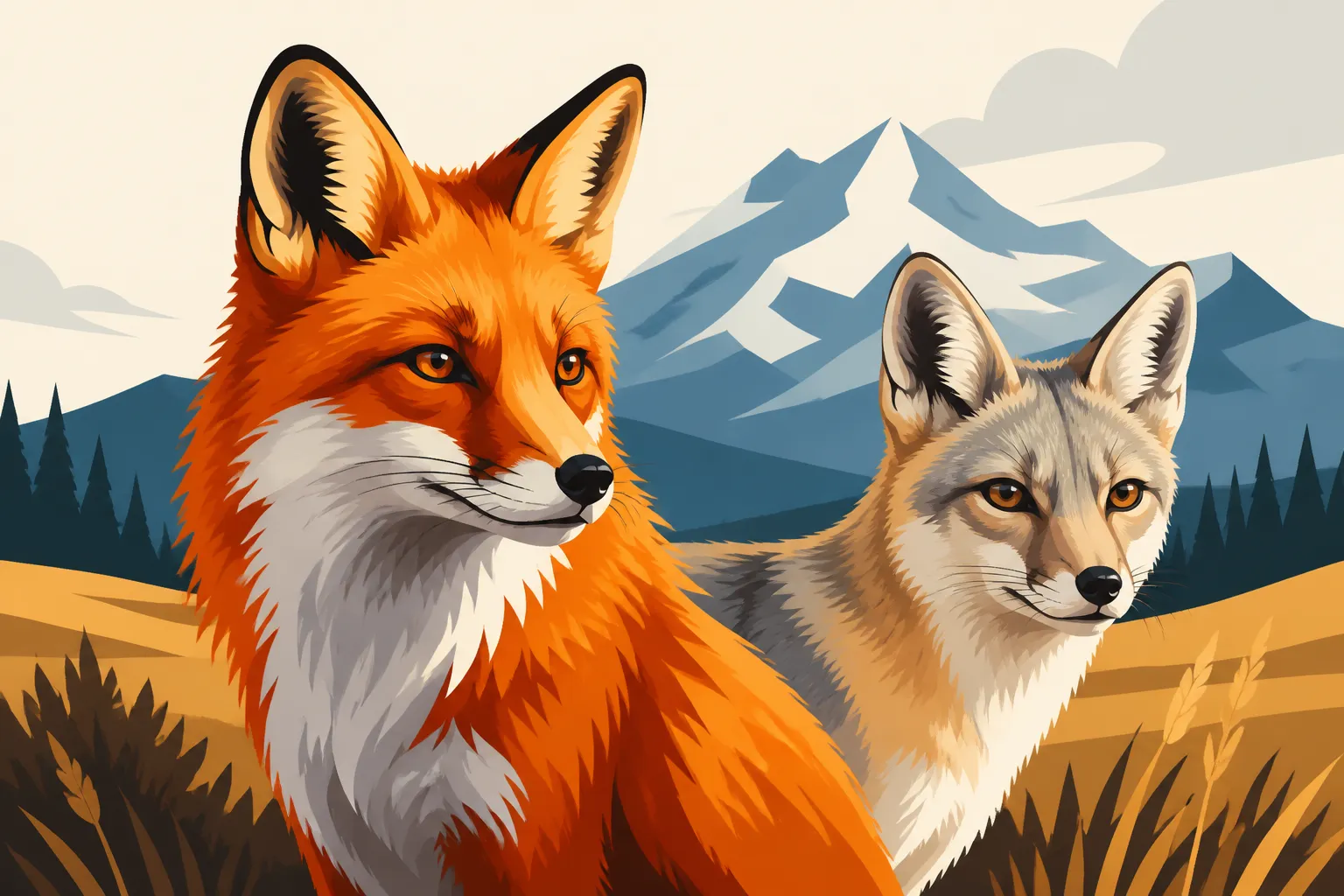
When most people picture a fox, they're likely imagining the red fox. Its most iconic feature is, of course, its rich reddish-orange fur, though variations in color certainly exist. You might encounter individuals that are darker, almost charcoal-grey (known as a "cross fox" or "silver fox"), but they will almost always retain that distinctive white-tipped tail. This white tail-tip is a crucial identifier, present even in the darker color phases.
Beyond its coat, the red fox is a medium-sized canid, typically weighing between 8 to 15 pounds, with a body length ranging from 18 to 35 inches, plus a bushy tail that can add another 12 to 22 inches. They have pointed ears, a slender muzzle, and relatively long legs for their body size, giving them an agile, almost elegant appearance. Observing their posture and gait can also be telling; they often move with a deliberate trot, sometimes pausing to listen intently, ears swiveling.
Despite their general reputation for being elusive, red foxes can sometimes be quite bold, especially in areas where they've become accustomed to human presence, such as rural farmsteads or even urban fringes. Their tracks in snow or mud often show a neat, almost straight line, reflecting their efficient hunting stride, with clear claw marks visible. Learning these visual cues can make identifying them in the field much easier.
Habitat and Range Across Alberta
One of the most remarkable traits of the red fox is its incredible adaptability, which allows it to inhabit nearly every corner of Alberta. From the rolling prairies in the south to the vast Boreal Forest Country in the north, and throughout the Parkland Country and Its WMUs in between, these foxes make a living. They are generalists, meaning they don't rely on one specific type of environment or food source, which contributes to their widespread success.
They particularly favour mosaic landscapes—areas where different habitats blend together. This might include the edges of forests and open fields, agricultural lands interspersed with aspen bluffs, or riparian zones along creeks and rivers. These transitional areas provide excellent hunting grounds, offering a mix of cover for denning and stalking, and access to a diverse prey base. If you're using a mapping tool like GoHunt to scout, look for these "edge" habitats; they're often prime red fox territory.
While red foxes are common throughout the white area (privately owned land, largely agricultural) and much of the green area (public forest land), their densities can vary. In the more open prairie regions, their numbers might be lower where coyotes are abundant, as coyotes are a dominant competitor and sometimes a predator of red foxes. However, the sheer breadth of their range means you're almost never far from red fox territory in Alberta.
Behavior and Diet
Red foxes are primarily crepuscular, meaning they are most active during dawn and dusk, though it's not uncommon to see them during the day, especially if they have young to feed. They are solitary hunters, relying on their keen sense of hearing and smell to locate prey. You might observe a red fox "mousing" in a field, leaping high into the air and pouncing headfirst into the snow or tall grass to catch voles and mice.
Their diet is incredibly varied, a testament to their opportunistic nature. Small mammals like voles, mice, gophers, and rabbits make up the bulk of their meals, but they're not picky. Birds, eggs, insects, fruits, berries, and even carrion are all on the menu. In agricultural areas, they can be a bane to poultry farmers, while in natural settings, they play a vital role in controlling rodent populations, which benefits the overall ecosystem.
Red foxes typically den in burrows, often enlarged from those dug by badgers or marmots, or sometimes they'll utilize natural rock crevices or hollow logs. The vixen (female fox) gives birth to a litter of pups, usually 4-6, in the spring. Both parents participate in raising the young, bringing food back to the den until the pups are old enough to venture out and learn to hunt on their own, usually by late summer or early fall.
The Elusive Swift Fox: A Prairie Conservation Success Story
In stark contrast to the ubiquitous red fox, the swift fox (Vulpes velox) is a true icon of Alberta's native prairie, representing a remarkable conservation comeback. Once extirpated from Canada due to habitat loss and eradication efforts, these small, agile canids have been successfully reintroduced, and their presence is a strong indicator of healthy grassland ecosystems.
Distinctive Features of the Swift Fox
The swift fox is significantly smaller than the red fox, both in body size and overall appearance. They typically weigh a mere 4 to 6 pounds, standing about a foot tall at the shoulder with a body length of 19 to 24 inches. Their fur is a grizzled yellowish-tan or greyish-orange on the back, fading to white or buff on their belly and legs. Crucially, they lack the prominent white-tipped tail of the red fox. Instead, their tail is usually black-tipped, or at least darker at the tip.
Another key feature that sets them apart is their larger ears in proportion to their head, giving them an almost bat-like appearance, and a shorter, more blunt muzzle compared to the red fox. Their eyes often appear larger and darker, giving them a gentle, almost deer-like expression. These foxes are built for speed across open terrain, with a sleek, low-slung body that aids in their "swift" movements, living up to their name.
When you observe a swift fox, you'll notice their movements are quick and darting, often staying low to the ground, almost like a shadow skimming the prairie. Unlike the red fox, they are incredibly shy and wary of humans, a trait essential for their survival in open country. Spotting one is a rare treat, often requiring patience and good optics. If you are scouting using tools like GoHunt to examine Native Grassland Pasture or open prairie areas, understanding their preference for minimal cover is key to knowing where to focus your attention.
Preferred Habitat and Historic Range
The swift fox is a specialist of the shortgrass and mixedgrass prairie ecosystems. Their survival is inextricably linked to these specific habitats, characterized by low-lying grasses, sparse shrubbery, and a distinct lack of dense forest cover. This preference for open landscapes allows them to utilize their exceptional speed to escape predators and hunt small prey. You won't find swift foxes venturing into the forested regions of Alberta; they are truly a species of the arid plains.
Historically, swift foxes roamed vast stretches of the North American grasslands, including the southern portions of Alberta and Saskatchewan. However, due to extensive habitat conversion for agriculture, poisoning campaigns aimed at wolves and coyotes (which often impacted swift foxes inadvertently), and other human pressures, they were extirpated from Canada by the 1930s.
Today, thanks to dedicated reintroduction programs that began in the 1980s, swift fox populations have been re-established in southeastern Alberta and southwestern Saskatchewan. Their current range in Alberta is largely confined to the extreme south, in particular WMUs that fall within the Prairie Series WMUs Cover of native grasslands, such as areas around Manyberries and south of the Milk River. These areas offer the critical habitat they need, including undisturbed prairie dog towns and extensive tracts of native rangeland.
Conservation Status and Efforts in Alberta
The swift fox's journey from extirpation to re-establishment is a testament to persistent conservation efforts. They are currently listed as an Endangered species in Canada under the Species at Risk Act (SARA), highlighting their precarious status despite successful reintroductions. This designation means they receive legal protection, and efforts continue to monitor and support their populations.
Conservation strategies often focus on protecting and restoring native prairie habitat, which is increasingly threatened by development and agricultural expansion. This includes working with landowners and ranchers to implement sustainable grazing practices, minimizing pesticide use, and protecting existing dens and critical foraging areas. Efforts also involve ongoing monitoring through trapping, collaring, and tracking to understand population dynamics, survival rates, and range expansion.
The reintroduction program was a collaborative effort involving various government agencies, conservation organizations, and private landowners. It’s a powerful example of how focused conservation can bring a species back from the brink. The continued presence of the swift fox in Alberta serves as a critical indicator of the health of our prairie ecosystems, reminding us of the importance of preserving these unique landscapes.
Spotting the Difference and Their Ecological Roles
For anyone spending time in Alberta's wild spaces, knowing how to tell a red fox from a swift fox can be immensely satisfying and contributes to a deeper appreciation of our wildlife. While both are members of the canid family, their physical traits and ecological niches are quite distinct.
Key Distinctions for Field Identification
Distinguishing between these two species in the field comes down to a few key identifiers. Here's a quick comparison:
| Feature | Red Fox (Vulpes vulpes) | Swift Fox (Vulpes velox) |
|---|---|---|
| Size | Medium-sized (8-15 lbs, 18-35" body) | Small (4-6 lbs, 19-24" body) |
| Primary Color | Reddish-orange (can vary to silver/black) | Grizzled yellowish-tan or greyish-orange |
| Tail Tip | Always white-tipped | Black-tipped or darker at tip |
| Ears | Proportionate to head, pointed | Larger in proportion to head, more rounded |
| Muzzle | Slender, pointed | Shorter, more blunt |
| Build | Agile, moderately long legs | Sleek, low-slung, built for speed |
| Habitat | Widespread (forest edges, fields, urban) | Open shortgrass/mixedgrass prairie |
| Temperament | Often bold, adaptable to human presence | Very shy, elusive, avoids humans |
When observing from a distance, size and habitat are often your first clues. If you see a larger, red-coated fox in an aspen bluff near a field, it's almost certainly a red fox. If you spot a tiny, tan fox darting across open native prairie in the deep south, you're likely looking at a swift fox. Always try to confirm the tail tip for definitive identification. Even if you're Glassing an Alberta Coulee for Mule Deer and a fox flashes by, these quick identifiers can help.
Additionally, their behavior differs. Red foxes, while wary, might linger longer or even approach if curious or habituated. Swift foxes are rarely seen for long; they tend to disappear quickly, utilizing what little cover is available or simply outrunning perceived threats. Tools like GoHunt can help you understand the vegetation types in an area, aiding in determining which fox species is more likely to be present.
Coexistence and Impact on Alberta's Ecosystems
Both red foxes and swift foxes play important roles as predators within Alberta's ecosystems, albeit in different capacities due to their distinct habitats and diets. The red fox, as a generalist, helps keep populations of small rodents, rabbits, and ground-nesting birds in check across a broad spectrum of landscapes. This can be beneficial in agricultural areas by reducing crop damage from rodents, though it can also lead to conflicts with poultry owners.
The swift fox, on the other hand, is a critical component of the fragile prairie ecosystem. By preying on prairie dogs, gophers, mice, and insects, they contribute to the health and balance of the native grasslands. Their successful reintroduction signifies a step towards restoring the full ecological function of these unique habitats. Given their endangered status, their presence is often celebrated as a sign of a healthy prairie.
While both species are predators, their interactions with other carnivores also differ. Red foxes often contend with larger predators like Coyotes in Alberta Farm Country and wolves, sometimes being displaced or even preyed upon by them. Swift foxes, due to their small size, are vulnerable to a wider range of predators including coyotes, badgers, and raptors, making their swiftness their primary defense. Understanding these intricate relationships helps us appreciate the delicate balance of Alberta's wildlife.
Observing and Coexisting with Alberta's Foxes
Encountering a fox in the wild is always a memorable experience, whether it's the common red fox or the rare swift fox. While hunting specific species like deer or moose, you might cross paths with these smaller predators. Appreciating their presence and understanding how to coexist respectfully is part of being a responsible outdoor enthusiast in Alberta.
Ethical Viewing and Wildlife Etiquette
When you are out hunting or simply exploring Alberta's diverse landscapes, the opportunity to observe a fox can arise unexpectedly. The key to ethical viewing is to always maintain a respectful distance and avoid disturbing the animal. Use binoculars or a spotting scope to get a closer look without intruding on their natural behavior. Sudden movements, loud noises, or attempting to approach them can cause undue stress, especially for shy species like the swift fox.
If you encounter a fox near a den, be extra cautious, particularly during denning season in spring and early summer. Disturbance can cause parents to abandon their pups or lead to unnecessary stress during a critical period. Remember, these are wild animals, and habituating them to human presence by offering food, even inadvertently, can lead to negative outcomes for both the fox and people. Always leave the area as you found it, minimizing your impact.
For those keen on spotting wildlife, strategic scouting can increase your chances. Using detailed mapping resources, like those provided by GoHunt, can help you identify prime fox habitat, whether it's the rich, varied edges preferred by red foxes or the wide-open native grasslands that swift foxes call home. Knowing the terrain and potential food sources will direct you to areas where you're more likely to have a respectful encounter.
Minimizing Conflicts and Supporting Conservation
For landowners and rural residents, particularly those with livestock or poultry, managing interactions with red foxes can be a practical concern. Proper fencing, securing coops, and bringing small livestock indoors at night are effective preventative measures. Understanding that foxes are primarily driven by hunger, and removing easy food sources (like pet food left outdoors) can help deter them from residential areas.
For swift foxes, minimizing conflict is less about direct interaction and more about habitat preservation. Supporting efforts to conserve and restore native prairie, such as those undertaken by various conservation groups, directly benefits these endangered canids. This might involve advocating for sustainable land use, participating in monitoring programs, or simply learning more about the importance of native grasslands.
By being informed about both red and swift foxes, we contribute to a broader understanding of Alberta's wildlife. We can appreciate the red fox for its tenacity and adaptability, and celebrate the swift fox as a symbol of successful conservation. Each sighting is a privilege, reminding us of the wild beauty that exists in our province.
Disclaimer
This article is for general informational purposes only and does not constitute professional advice. Laws, prices and regulations vary by location and change over time. Consult a qualified professional for guidance on your specific situation.